
A Yosemite group tour in a 24-Passenger Mini Bus suits small tour parties, executive retreats, family reunions, and first-class-only groups that want one vehicle and a consistent driver.
Overview
A 24-Passenger Mini Bus is a sensible Yosemite group tour vehicle when the manifest is near 24 passengers and the party wants one driver, one loading plan, and coach-style seating. Typical customers include university alumni groups, corporate leadership retreats, wedding parties staying near Oakhurst or El Portal, and family groups traveling from the Bay Area, Los Angeles, San Diego, Sacramento, Las Vegas, or Reno. The vehicle is compact enough for hotel approaches in Mariposa and Oakhurst but still requires bus-aware planning inside Yosemite. Confirm the actual bus length and width before assigning Mariposa Grove, Wawona, or any narrow side road. A mini bus is not automatically interchangeable with a full motor coach or a passenger van.
A realistic multi-day group tour often uses Day 1 for pickup and Central Valley travel, with a meal, fuel, and driver inspection stop before an overnight near Mariposa, El Portal, Oakhurst, Fresno, or another practical staging point. Days 2 and 3 can focus on Yosemite Valley, Tunnel View, Valley View, El Capitan Meadow, Yosemite Falls, Wawona, Mariposa Grove, or high-country roads when they are open. The group should not build the entire program around Glacier Point or Tioga Road during shoulder season because snow closures and chain controls can alter access. Lodging inside Yosemite is convenient but limited and expensive, so outside-park staging is common. The final day should preserve enough time for loading, a driver break, and the return corridor rather than treating the bus like a private car.
Commercial bus operations inside Yosemite require more than a reservation at a hotel. The carrier must verify its Commercial Use Authorization, transportation authority, insurance documentation, applicable park fees, and any separate activity permits. Vehicles over 21 feet use designated bus parking, and Mariposa Grove requires a bus parking reservation for commercial and noncommercial vehicles over 21 feet during the applicable reservation period. Vehicles cannot enter the Grove itself, and buses must follow posted loading and parking procedures. The park also prohibits oversized vehicles on certain roads, including Hetch Hetchy Road limits for vehicles over 25 feet long and 8 feet wide, while buses over 30 feet or with capacity of 26 or more face restrictions beyond the Badger Pass turnoff under current commercial terms. A dispatcher should verify current park rules before finalizing the route because seasonal reservations, road openings, and parking instructions change.
Fleet Options
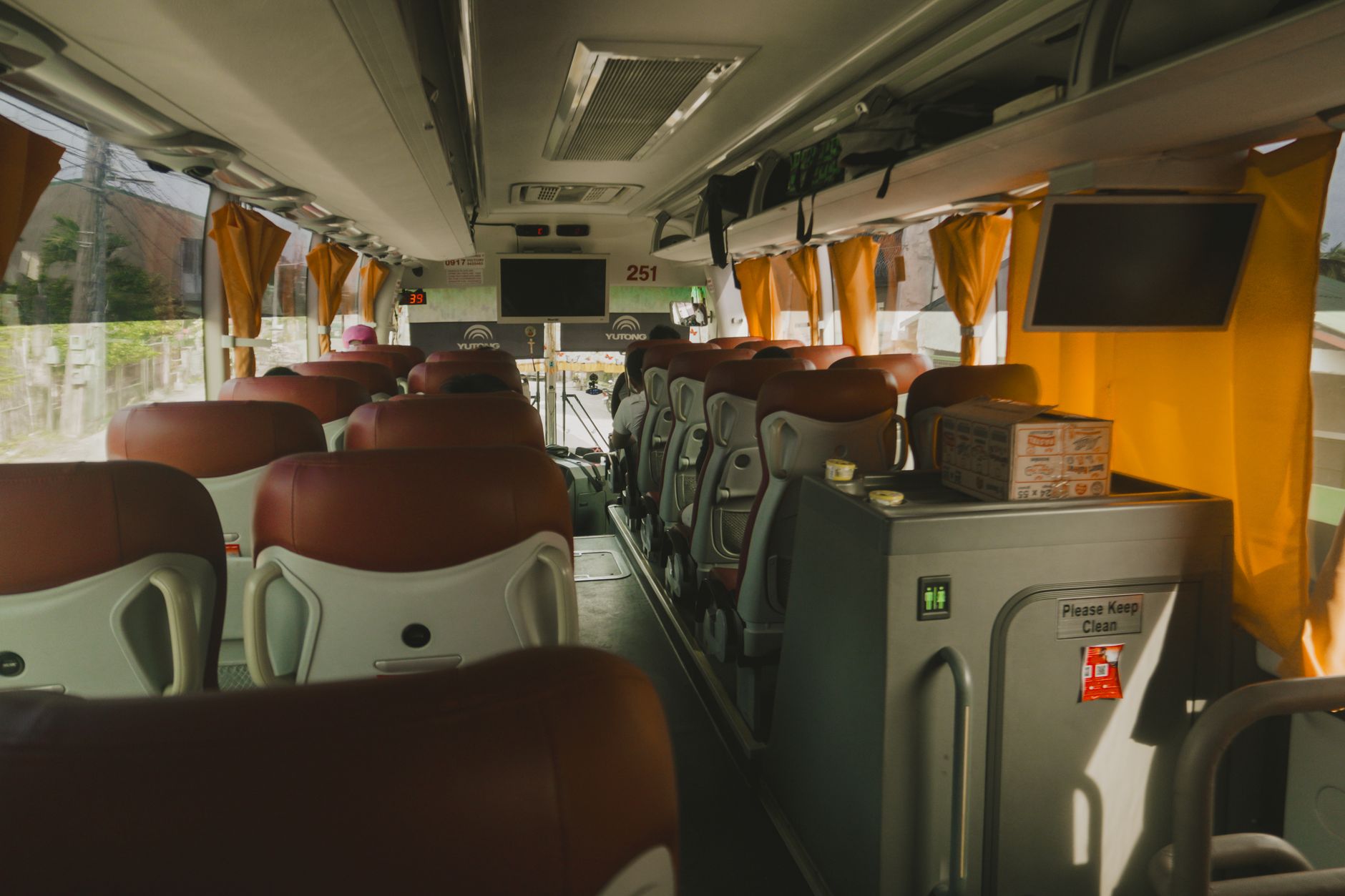
A 24-Passenger Mini Bus is best when the manifest is close to 24 passengers and the group wants one compact vehicle with coach-style seating. Confirm whether the count includes the driver, tour leader, or children, because usable passenger capacity and luggage space are different planning numbers. Rear luggage bays or roof storage can handle moderate baggage, but a large suitcase per passenger may require a larger motor coach or a separate baggage solution. The compact profile helps with hotel approaches and some tighter staging areas, but the vehicle still needs designated bus parking in Yosemite when it exceeds 21 feet. Dispatch should verify the actual bus length, width, turning radius, and park access before promising every scenic road or trailhead.
| Vehicle | Seats | Best For | Notes |
|---|---|---|---|
| 24-Passenger Mini Bus | Up to 24 passengers | Use it when the group wants one comfortable vehicle and the itinerary stays on roads and stops suitable for a mid-size commercial bus. | Compact mini bus with coach-style seats and luggage in the rear or on an approved roof system; strong fit for small tours, executive retreats, and first-class-only groups, but confirm baggage volume and actual vehicle dimensions. |
| 18- to 25-Passenger Mini Coach | 18-25 passengers | Choose it when the final headcount is below 24 or when the operator has a better-matched compact coach available. | Provides similar seating with potentially more usable cargo space or a different wheelbase, but the exact bus specification must be checked for Yosemite parking and road limits. |
| 35- to 40-Passenger Motor Coach | 35-40 passengers | Use it for a larger manifest, substantial luggage, or a group that would otherwise need two mini buses. | Offers more underfloor luggage capacity and aisle comfort for a larger group, while requiring more deliberate hotel access, turning space, and designated bus parking. |
| Executive Sprinter | 10-14 passengers | Use it for a small executive subgroup, airport transfer, or overflow vehicle rather than a full 24-person group tour. | More maneuverable for small parties and limited parking, but has less luggage capacity and a different seating profile than a mini bus, so it is not a direct substitute for 24 passengers. |
Routing, Timing, and On-the-Road Realities
The arrival corridor depends on the origin. Bay Area groups commonly use Interstate 580 and State Route 120 through Manteca, while Sacramento groups may stage through Stockton and Highway 120 or use Highway 99 before turning east. Southern California and Las Vegas groups typically run north on Interstate 5 or US 99 toward Fresno, then approach through Highway 41, Highway 140, or Highway 120 according to lodging and road conditions. Highway 140 through Merced and Mariposa is often the practical approach for El Portal and Yosemite Valley, while Highway 41 serves Oakhurst, Wawona, and the south entrance. Pickup before the morning commute is useful in Los Angeles, San Francisco, Oakland, San Jose, Sacramento, and Las Vegas, but a very early departure must still leave legal driving and rest capacity for the day. Build fuel, meal, restroom, and inspection stops outside the park rather than relying on a quick pullout inside Yosemite.
Inside the park, the bus should unload only at approved passenger areas and then move to designated parking rather than waiting in a travel lane. Commercial vehicles over 21 feet must use bus parking, cannot double-park, cannot stop at shuttle stops, and cannot remain in residential areas. Engine idling is limited under current commercial terms, so the driver should shut down during longer group visits and use a clear reloading procedure. Mariposa Grove requires a separate bus parking reservation for vehicles over 21 feet, and the bus parks near the road rather than at the Grove. Hetch Hetchy has a tighter size rule, and Tioga Road and Glacier Point Road are seasonal routes that may remain closed into late spring. The itinerary should therefore include a primary route, a weather and closure alternative, and a defined pickup time so the driver can manage park congestion without exceeding the service window.
What This Typically Costs
A Yosemite multi-day charter is priced from several moving parts rather than one flat ticket. Most operators apply a daily minimum, then add mileage or an hourly overage when the run exceeds the agreed service window. Deadhead miles from the bus yard to the pickup point and back can materially affect the quote, especially for pickups in Southern California, the Bay Area, Nevada, or Arizona. Peak summer, holiday weekends, fall color dates, and major Yosemite-area events commonly run higher because equipment and drivers are committed well in advance. Driver lodging, parking, tolls, permits, and fuel adjustments may appear as separate line items, while gratuity is usually handled by the group and is not always included. A realistic quote should show the vehicle, service days, included mileage, deadhead, driver overnight costs, park-related fees, and any cancellation or rescheduling terms.
Frequently Asked Questions
How many days should a Yosemite group tour take?
For most groups, plan on three to five days. A three-day group tour can cover arrival, Yosemite Valley, and a departure day, but it leaves little room for weather or traffic delays. Four days is more workable for a Bay Area or Southern California origin because the first and last days include long highway runs. Five or more days make sense when adding Mariposa Grove, Glacier Point when open, Tuolumne Meadows, or nearby stops such as Bass Lake or historic Mariposa. The final schedule should be built around the pickup city, lodging location, road openings, and the group's walking tolerance.
What are the best months for a Yosemite group tour?
May through October offers the broadest operating window, but conditions vary by elevation. Late May through June can provide waterfalls and spring scenery, while July through September usually gives the most reliable access to Tioga Road and Glacier Point Road when those roads have opened. October can be quieter and cooler, but shorter daylight and early storms require a backup plan. Tioga Road is generally closed from approximately November through May, and Glacier Point Road also closes seasonally, so a winter group tour should not be sold around high-country stops. Check current road status and chain requirements shortly before departure.
Does a 24-Passenger Mini Bus need a Yosemite permit?
A commercial operator carrying passengers in Yosemite must meet park commercial-use requirements, including the applicable Commercial Use Authorization and transportation and insurance documentation. The operator is responsible for confirming the authorization that covers the proposed tour and vehicle. A commercial mini bus in the 16-to-25-seat range has historically been treated differently from a small van for park fee and operating purposes, so the current fee schedule must be checked before quoting. A CUA does not guarantee a parking space. Additional permits may be needed for activities outside the authorization, and the group should carry the operator's documentation in the vehicle.
Where can a 24-passenger bus park in Yosemite?
Vehicle dimensions matter more than the seat count alone. Commercial passenger vehicles over 21 feet must use designated bus parking and loading areas, while vehicles 21 feet and under generally use available auto spaces and cannot use bus spaces except at specified locations. At Mariposa Grove, vehicles over 21 feet need a bus parking reservation during the reservation season, and buses cannot drive to or park at the Grove itself. Buses should reverse into marked stalls, avoid shuttle loading areas, and never double-park or block traffic lanes. Commercial vehicles are also prohibited from parking in residential areas and from stopping at shuttle or bus stops.
What does a 24-Passenger Mini Bus fit best?
A 24-Passenger Mini Bus works well for a compact group tour with coach-style seats, a professional driver, and luggage carried in a rear compartment or approved roof storage. It is a good match for small tours, executive retreats, family reunions, and first-class-only groups that value one vehicle rather than splitting into vans. It is less forgiving when every passenger brings a large suitcase, so baggage dimensions and the number of overnight bags should be confirmed before dispatch. The bus should not be assumed suitable for every narrow park road: vehicles over 25 feet long and 8 feet wide are prohibited on Hetch Hetchy Road, and other size or route restrictions apply. A motor coach may be preferable for larger groups or heavier luggage, but its size can reduce access to tight stops and smaller parking areas.
How are driver hours planned for a Yosemite charter?
The driver must follow applicable federal hours-of-service rules, including limits on driving time, on-duty time, and required off-duty rest. A long arrival run from Los Angeles, San Diego, Las Vegas, Sacramento, or the Bay Area should not be paired with a full day of in-park touring without checking the driver's available hours. The cleanest plan is often a staged overnight near Fresno, Merced, Modesto, Sonora, or Mariposa, depending on the origin and route. For especially long multi-day itineraries, a second qualified driver may be required or operationally prudent. Passenger stops, meals, fueling, inspections, park congestion, and hotel loading all consume the service window even when the bus is not moving.
What is a realistic sample Yosemite itinerary?
A practical four-day schedule is Day 1 pickup and travel through the Central Valley, with a meal and inspection stop before staging near Mariposa, El Portal, Oakhurst, or Fresno. Day 2 enters Yosemite Valley for Tunnel View, Valley View, El Capitan Meadow, Yosemite Falls, and an organized lodging return, subject to current access and parking. Day 3 can use a slower in-park program for Glacier Point if open, Wawona and the Pioneer History Center, or Mariposa Grove with the required bus reservation when applicable. Day 4 allows a final Valley morning and the return corridor, with a planned meal and driver break outside the park. The itinerary should retain buffer time because one-lane controls, shuttle congestion, wildlife, snow, and full parking areas can change the sequence.
How to Book
To request a quote, provide the travel dates, pickup address, passenger count, baggage estimate, lodging plan, and every intended Yosemite stop. Include whether the group needs Mariposa Grove, Glacier Point, Tioga Road, airport service, meals, or additional California venues, because those choices affect road access, parking, and driver hours. US Bus Trips can typically return an initial quote within 4 business hours when the itinerary and headcount are complete. The confirmation should identify the vehicle class, service dates, pickup details, included mileage or hours, deadhead, driver lodging, permits, taxes, cancellation terms, and the dispatcher contact for day-of changes.
Related Trips You Might Also Consider
- Badlands — 36-Passenger Mini Coach
- Boston, MA to Portland, ME
- Las Vegas, NV to Los Angeles, CA
- Nashville, TN to Memphis, TN
- Omaha, NE to Sioux Falls, SD
- Choir Competition — Mountain West Region
- Cross-Country Charter Bus Overview
- All Group Trip Types
- See the Full Fleet (Sprinters through 56-pax coaches)
- Get a Free Quote in 60 Seconds