
US Bus Trips arranges charter bus transportation for school bands, choirs, directors, and chaperones traveling to bowl games, Disney competitions, DC and New York festivals, and spring performances.
Overview
A typical Midwest High School Band Tour combines one or more performances with long-distance group travel, campus visits, meals, sightseeing, and overnight hotel stays. A suburban Illinois band may travel from Chicago toward Indianapolis, Columbus, Detroit, Madison, or Minneapolis, while an Ohio group may use I-70, I-71, I-75, or I-90 for a festival or college performance. Chicago is a common hub because it connects I-80, I-90, I-94, major airports, hotels, and venues, but a Chicago origin does not mean every movement should run through downtown. Directors, school activity offices, booster clubs, and tour planners usually need a bus that remains available for several days rather than a simple point-to-point transfer. The motor coach must support early call times, late returns, secure gear handling, and a student supervision plan. Confirming venue access and hotel bus parking is as important as confirming highway miles.
Marching-band volume is especially high around Big Ten football weekends and college-centered events. Relevant stops include Ohio Stadium in Columbus, Michigan Stadium in Ann Arbor, Spartan Stadium in East Lansing, Memorial Stadium in Bloomington and Champaign, Camp Randall Stadium in Madison, Kinnick Stadium in Iowa City, Huntington Bank Stadium in Minneapolis, and major arenas or theaters in Cleveland, Cincinnati, Detroit, Milwaukee, St. Louis, Kansas City, and Des Moines. Choirs and concert bands may instead target festival venues, university music schools, downtown performing-arts centers, or spring adjudication events. DC and New York festival itineraries commonly begin with an overnight eastbound run from the Midwest, while Disney competition trips often require several consecutive service days and controlled hotel loading. Bowl-game travel creates compressed schedules around stadium security, team traffic, and postgame departures. The itinerary should separate performance equipment from sightseeing luggage and identify where each load will wait.
Equipment planning determines whether one charter bus is enough. Standard instrument cases and personal bags generally fit in underfloor bays, but marching percussion, front ensembles, flags, uniforms, props, and rolling trunks can consume the available capacity quickly. Directors should provide a rough inventory before dispatch assigns vehicles, including oversized cases, carts, coolers, risers, and any equipment that cannot be laid on its side. Wheelchairs and other mobility devices need dedicated space and may require an accessible motor coach rather than a standard coach. For groups over one coach, assign students, staff, instruments, and medical responsibilities by vehicle before departure. A reliable High School Band Tour plan uses a loading order, labeled equipment zones, a lead director contact, and a fixed meeting point at every hotel and venue.
Fleet Options
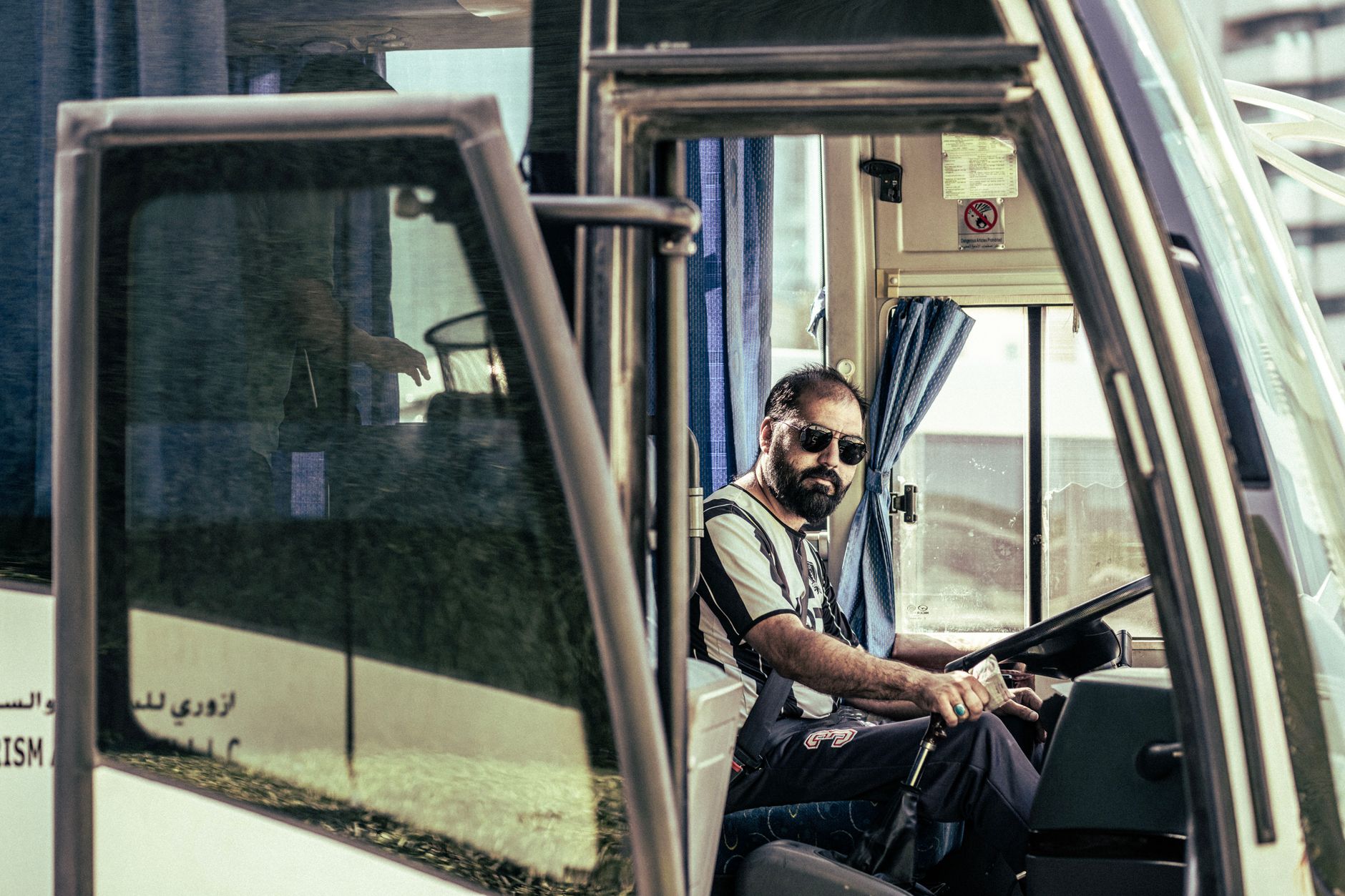
Vehicle selection for a Midwest High School Band Tour starts with headcount, cargo volume, and the number of separate movements in the itinerary. A full-size motor coach is normally the best fit for long I-80, I-90, or I-94 legs because it offers reclining seats, climate control, underfloor storage, and an onboard restroom. Smaller vehicles work better for choir sections, directors, airport transfers, or tight downtown approaches where a large charter bus cannot stage easily. Confirm percussion cases, uniforms, wheelchairs, coolers, and personal luggage before finalizing seats, because a bus at its passenger limit may not have enough usable cargo capacity.
| Vehicle | Seats | Best For | Notes |
|---|---|---|---|
| Full-size motor coach | 50-56 passengers | Use for a complete band, choir, or mixed student group traveling between Midwest metros or staying on the road for several days. | Usually provides the best long-haul comfort, restroom access, and underfloor storage, but needs planned clearance and designated loading space at stadiums and downtown venues. |
| Mini coach | 24-35 passengers | Use for a smaller ensemble, split fleet, director group, or itinerary with frequent campus and theater movements. | Offers more maneuverability than a full-size coach while retaining useful luggage capacity, though large percussion inventories may require a second vehicle or trailer. |
| Mini bus | 18-24 passengers | Use for hotel-to-venue shuttles, section movements, airport transfers, or groups visiting locations with restrictive curb access. | Fits short transfers and smaller loads but usually has less cargo room and fewer long-haul amenities than a motor coach. |
| Executive Sprinter | 10-14 passengers | Use for directors, chaperones, small chamber ensembles, or support staff traveling separately from the main student fleet. | Best for compact staff groups and short repositioning legs, with limited space for instruments, uniforms, and large personal luggage. |
Routing, Timing, and On-the-Road Realities
Midwest routing often follows long, predictable corridors but unpredictable urban approaches. Chicago to Detroit or Ann Arbor typically uses I-94; Chicago to Cleveland, Toledo, or New York uses I-90 or I-80 connections; Chicago to Columbus or Indianapolis may use I-65, I-80, I-90, I-70, or I-74 depending on the origin and destination. I-80 through northern Illinois and Indiana can slow near Joliet, Gary, and the Chicago Skyway, while I-94 traffic regularly affects Chicago, Milwaukee, and Detroit approaches. I-90 and I-94 winter conditions require extra margin across Wisconsin, Minnesota, and Michigan. For a morning performance, schedule the bus to arrive well before student check-in, then confirm where the coach can stage instead of assuming venue curb space is available. Departures after football games, festivals, or concerts should allow for pedestrian release, police controls, and loading delays.
Chicago needs a separate curb and parking plan for nearly every downtown stop. Museum Campus attractions use designated loading areas, Navy Pier does not provide ordinary onsite motorcoach parking, and large vehicles may need to stage at McCormick Place, the Adler area, or another approved lot before returning for pickup. Around Soldier Field, Wrigley Field, United Center, campus venues, and convention facilities, event traffic can change the permitted approach and departure route. In Columbus, Ann Arbor, East Lansing, Madison, Iowa City, Bloomington, Champaign, Minneapolis, Cleveland, Detroit, and Indianapolis, stadium traffic and campus restrictions can also move a drop point away from the main entrance. Driver-hours planning should account for school loading, meal stops, rehearsal wait time, and the return leg rather than counting only highway drive time. For multi-day group travel, schedule required driver rest and overnight lodging before promising an early next-day departure.
What This Typically Costs
Pricing for a Midwest High School Band Tour is built from vehicle time, route distance, and the number of service days rather than a single flat fare. Local event work commonly carries a five-hour minimum, while multi-day group travel is usually quoted by day with mileage and driver-duty requirements reviewed together. Long I-80, I-90, and I-94 runs can add deadhead miles when a coach must reposition from Chicago, Columbus, Detroit, Indianapolis, Minneapolis, or another operating base. A quote may also include driver overnight lodging, parking, tolls, fuel adjustments, and additional relief-driver coverage when the itinerary exceeds normal hours-of-service limits. Seasonal peaks around spring festivals, Disney competitions, bowl games, and Big Ten weekends reduce availability and can raise the operating range. Driver gratuity is commonly handled as a separate line item, and instrument trailers, accessible equipment, or extra staging vehicles should be identified before pricing.
Frequently Asked Questions
How many passengers can a Midwest school band tour bus carry?
Most Midwest High School Band Tour groups fall between 40 and 120 travelers, including students, directors, chaperones, and staff. A single full-size motor coach generally carries about 50 to 56 passengers, but instruments and luggage reduce usable capacity. Groups above roughly 100 passengers commonly use two charter bus vehicles so students, uniforms, percussion equipment, and personal bags are not forced into one loading plan. Smaller chamber ensembles or choir groups may fit a 24 to 35 passenger mini coach or a 10 to 14 passenger executive Sprinter.
What cities are common stops on Midwest band and choir tours?
Common Midwest routing starts in Chicago and branches toward Milwaukee and Madison, Minneapolis and St. Paul, Detroit and Ann Arbor, Indianapolis and Bloomington, Columbus and Cleveland, or Iowa City, Cedar Rapids, and Des Moines. Illinois groups often use I-55 toward St. Louis, I-57 toward Champaign, I-74 toward Indianapolis or Iowa, and I-80 across the northern part of the state. Ohio trips frequently connect Columbus, Cleveland, Cincinnati, and Toledo through I-70, I-71, I-75, and I-80 or I-90. The final route should account for venue loading instructions, not only highway distance.
How do buses handle marching-band instruments and uniforms?
A charter bus can usually carry standard cases, uniforms, music folders, and personal bags in underfloor bays, but percussion cases and marching equipment need an early cargo review. Bass drums, cymbals, racks, tubas, flags, props, and rolling trunks may require several coaches, a cargo van, or a dedicated trailer. Keep aisles, emergency exits, and driver sightlines clear; loose cases cannot be stacked in passenger seating areas. Send an inventory with dimensions and approximate weights before the motor coach is assigned.
How are large school groups split across multiple buses?
Large Midwest group travel moves best with a coordinated fleet plan rather than buses arriving independently. A two- or three-coach operation should use a lead vehicle, shared dispatch contacts, matching pickup instructions, and a loading sequence for instruments before passengers. Keep directors, medical information, and accessibility needs assigned to specific vehicles so a late bus does not separate essential staff from students. For stadium or festival arrivals, schedule a staging point outside the venue and release buses in waves when curb space is limited.
When is the busiest season for Midwest band tours?
The core season runs from late summer through football season, when marching bands travel to bowl-related events, college showcases, and Big Ten weekends. Spring brings the heaviest concentration of choir festivals, adjudicated performances, Disney competition trips, and multi-day educational tours. Winter can include indoor music festivals, holiday performances, and basketball-related travel, but snow and ice require more schedule margin across Iowa, Minnesota, Wisconsin, Michigan, and northern Illinois. Booking early matters most for March through May and for major football weekends in Columbus, Ann Arbor, East Lansing, Madison, Iowa City, Bloomington, Champaign, and Minneapolis.
Can US Bus Trips provide accessible transportation for choir or band tours?
Yes, a wheelchair-accessible motor coach can be requested, but accessible inventory is more limited than standard charter bus inventory. Provide the number of mobility devices, whether passengers remain seated in wheelchairs, and the required lift or ramp clearance. Accessible loading is especially important at stadiums, downtown theaters, and older festival venues where curb space and entrances may be separated. The accessible coach should be assigned before the confirmation is issued, not added after the fleet is already committed.
What should a group know about charter bus parking in Chicago?
Chicago is a frequent Midwest hub, but downtown movement requires venue-specific planning. Museum Campus locations near the Field Museum, Shedd Aquarium, Adler Planetarium, and Soldier Field use designated loading or parking areas, while Navy Pier has no normal motorcoach parking onsite and requires a separate drop-off and staging plan. McCormick Place's marshalling area is commonly used for larger vehicles and overnight staging when available, while the Adler and Wilson areas can serve shorter daytime movements. A dispatcher should also check construction, event closures, height restrictions, and hotel loading rules before sending a full-size coach into the central business district.
How to Book
To request a quote, have the travel dates, pickup address, destination cities, headcount, instrument inventory, wheelchair needs, hotel information, and complete itinerary ready. Include performance call times, rehearsal windows, stadium or festival instructions, and whether the bus must remain with the group between events. US Bus Trips can commonly return an initial quote within 4 business hours, subject to vehicle and driver availability. Confirmation should identify the assigned vehicle type, passenger capacity, pickup plan, itinerary, parking assumptions, driver arrangements, and cancellation terms; contact the booking team by phone or online request form to begin.
Related Trips You Might Also Consider
- Phoenix, AZ to Las Vegas, NV
- Branson — 14-Passenger Sprinter
- Colorado Springs, CO to Denver, CO
- San Diego, CA to Palm Springs, CA
- Agriculture FFA/4-H — South Central Region
- Veterans Group — Pacific Northwest Region
- Cross-Country Charter Bus Overview
- All Group Tour Destinations
- See the Full Fleet (Sprinters through 56-pax coaches)
- Get a Free Quote in 60 Seconds