
Schools book a High School Band Tour bus for bowl games, festival appearances, Disney competitions, spring performances, and multi-city music programs.
Overview
A typical Mountain West High School Band Tour combines a performance commitment with long-distance group travel. School districts, booster clubs, universities, and private tour planners commonly move 25 to 55 students plus directors, chaperones, and support staff. Routes may begin in Denver or Colorado Springs for a bowl game, continue through Salt Lake City, and finish in Las Vegas or Phoenix for a competition or attraction day. Other groups travel from Albuquerque to Santa Fe, Flagstaff, and Phoenix, or from Boise through Salt Lake City toward a festival in Nevada or Southern California. Choirs often carry fewer bulky cases than bands, but uniforms, risers, garment bags, music folders, and luggage still require a deliberate loading plan. The right charter bus is selected after reviewing both passenger count and equipment volume.
Event patterns vary by school calendar and invitation schedule. Football bowl travel often concentrates around late December and may involve campus venues, downtown hotels, stadium bus lots, and compressed arrival windows. Disney competitions commonly require a multi-day stay near Anaheim, with rehearsals, performance blocks, and staggered transfers that can keep a motor coach on standby. DC and NYC festivals are usually national trips from the Mountain West rather than local loops, so planners must allow for long positioning, overnight driving limits, and a return itinerary. Spring performance trips may link Denver, Colorado Springs, Salt Lake City, Provo, St. George, Las Vegas, or Phoenix with museums, concert halls, and university music departments. A school should provide a day-by-day schedule rather than only the final performance time because the bus may need to move uniforms, instruments, and students between several locations.
Venue planning is specific to each metro. Denver itineraries may involve Ball Arena, Empower Field at Mile High, the Colorado Convention Center, or university facilities, while Colorado Springs groups often stage around Broadmoor or campus venues. Salt Lake City and Provo trips may use the Delta Center, downtown convention facilities, or Brigham Young University locations; Las Vegas groups may need convention-center, arena, or hotel loading instructions. Phoenix and Tempe routes can involve State Farm Stadium, Footprint Center, Gila River Arena, or Arizona State University, while Albuquerque programs often use the Pit, Kiva Auditorium, or UNM facilities. Boise, Reno, Billings, Missoula, Cheyenne, Casper, Santa Fe, Flagstaff, and Tucson can have fewer coach staging options, so the operator confirms curb access and parking before dispatch. For national-park days near Yellowstone, Zion, or Rocky Mountain National Park, commercial entry rules and vehicle restrictions must be checked before the itinerary is finalized.
Fleet Options
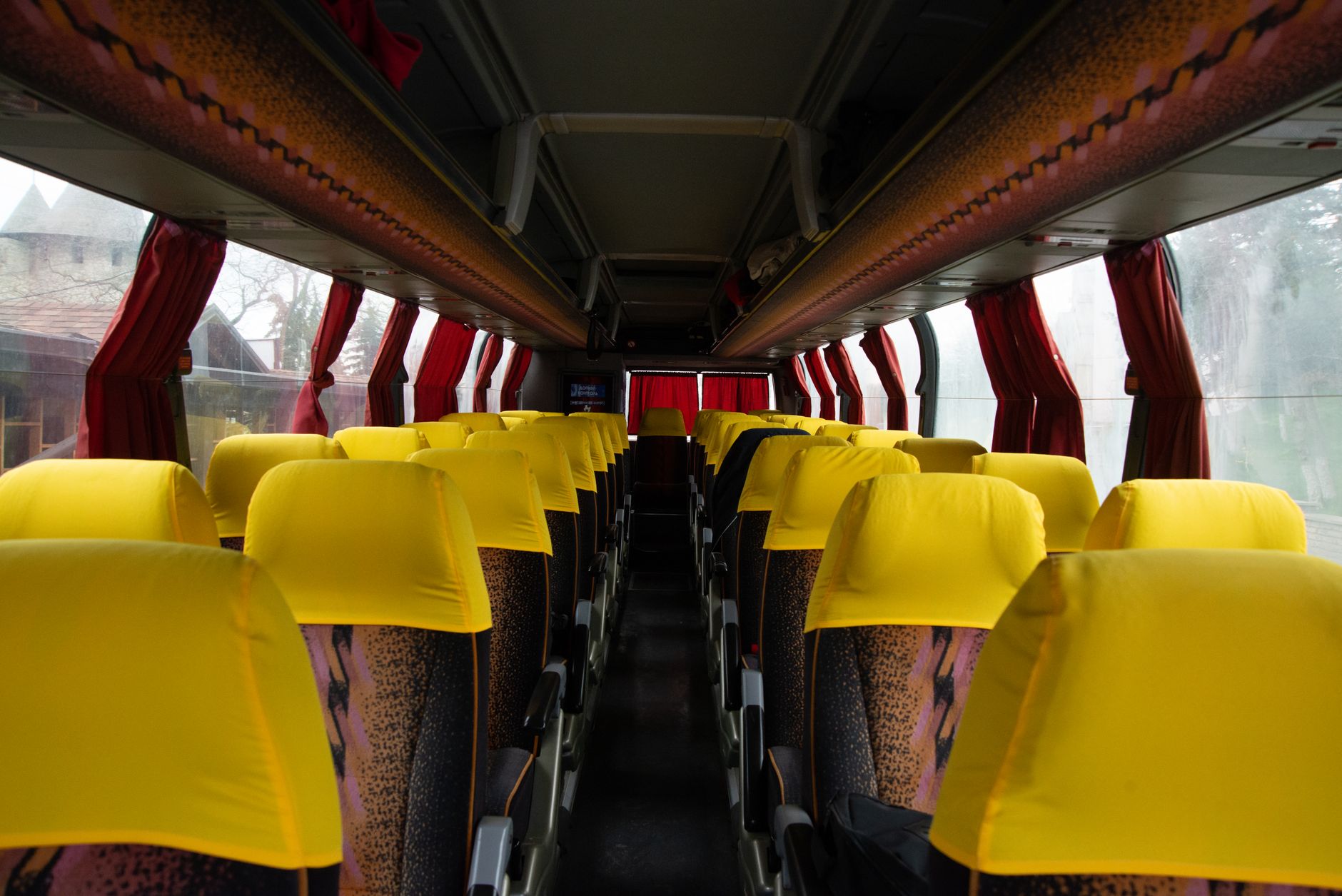
Choose the vehicle around the passenger count plus the cargo footprint, not seats alone. A full-size motor coach gives a Mountain West group the underfloor storage and restroom access needed for long corridors such as Denver to Salt Lake City or Phoenix to Las Vegas. Smaller charter bus and executive Sprinter options work when the ensemble is compact or the itinerary uses tight downtown streets, hotel drives, and limited venue parking. For a large tour, matching coaches simplify rosters and loading, but each unit still needs its own instrument allocation and staff lead.
| Vehicle | Seats | Best For | Notes |
|---|---|---|---|
| Full-size motor coach | 40-56 passengers | Use for a complete band or choir traveling between Mountain West metros, bowl venues, festivals, or national-park gateways. | Best cargo capacity and onboard restroom for long intercity legs; confirm bay dimensions for percussion cases, garment bags, and mobility equipment. |
| Mini coach | 24-38 passengers | Use when the group is too large for a Sprinter but does not need a full-size coach, especially for regional festival shuttles. | A useful middle size for moderate luggage and instruments, but cargo space varies substantially by model and may not include a restroom. |
| Mini bus | 18- thirty passengers | Use for smaller ensembles, staff movements, airport transfers, or split operations around downtown venues. | Manages hotel-to-venue movements and tighter streets better than a full-size coach, though cases may consume passenger space quickly. |
| Executive Sprinter | 10-14 passengers | Use for directors, chaperones, small chamber groups, or a support vehicle rather than a full ensemble. | Fits narrow hotel approaches and short local transfers, but has limited room for large instruments, uniforms, and personal luggage. |
Routing, Timing, and On-the-Road Realities
Mountain West routing is dominated by long corridors between relatively distant metros. A Denver group may use I-25 toward Colorado Springs, I-70 toward Grand Junction and Utah, or I-80 and I-25 for Wyoming connections; Salt Lake City routes commonly use I-15 toward Provo, St. George, Idaho, or Las Vegas. Phoenix and Las Vegas movements often use I-11, US-93, or I-15, while Albuquerque connections may use I-25, I-40, or US-54 depending on the destination. Boise, Idaho Falls, Billings, Missoula, Cheyenne, and Jackson can add substantial positioning miles before the students board. Pickup should normally be scheduled with a meaningful buffer before rehearsal or check-in, especially when the route crosses Colorado passes, Wyoming wind corridors, or Utah construction zones. Downtown hotels, arenas, and convention centers frequently require a timed curb arrival rather than casual parking, so the dispatcher needs venue instructions and a contact number.
Elevation changes affect driver-hours planning even when the map distance appears manageable. A coach climbing from Denver toward the Eisenhower-Johnson Memorial Tunnels, crossing Parleys Summit near Salt Lake City, or moving through Wyoming and Montana winter corridors may need slower travel and weather contingency time. Chain laws and traction restrictions can affect I-70, I-80, I-15, US-191, and other mountain routes; drivers must follow current road controls and may need to stage safely rather than load or unload on a shoulder. The schedule should also account for federal driver-hour limits, required breaks, overnight lodging, and a relief driver when the itinerary cannot be completed legally by one driver. Yellowstone commercial travel requires applicable permits or fees, and Zion regulates commercial vehicle access and limits larger vehicles in parts of the park. For any national-park stop, the school should confirm bus parking, reservations, seasonal road access, and whether the planned activity is permitted before selling the itinerary to families.
What This Typically Costs
Pricing for a Mountain West High School Band Tour usually starts with a vehicle day rate or daily minimum, then adds mileage, deadhead positioning, driver lodging, parking, tolls, permits, and any required relief-driver coverage. In most markets, an overnight motor coach commonly runs a few thousand dollars per day, while a shorter charter bus assignment may price below that when the vehicle remains local and the schedule fits one driver. Long repositioning from Denver, Salt Lake City, Las Vegas, Phoenix, Albuquerque, Boise, or another fleet base can add deadhead miles before the students board. Winter dates, spring-break demand, bowl weekends, Disney competition periods, and major festivals can tighten availability and raise seasonal pricing. Fuel adjustments, campground or venue parking, national-park commercial entry fees, and driver gratuity are commonly separate line items. Ask for an all-in quote that identifies mileage limits, daily minimums, driver overnight and lodging assumptions, cancellation terms, and whether a second driver is required.
Frequently Asked Questions
How early should we book a Mountain West school band or choir tour?
For a typical High School Band Tour, reserve the bus as soon as the performance date, festival registration, or bowl invitation is firm. Spring performance trips and Disney competitions often draw demand from several states, while bowl weekends and DC or NYC festival travel can require vehicles to deadhead from a regional fleet base. For a Mountain West itinerary, earlier booking also helps protect against winter equipment, chain-control delays, and limited coach supply outside major metros. A practical target is several months ahead, with earlier planning for multi-bus groups or holiday periods.
What size charter bus works for instruments, luggage, and uniforms?
A full-size motor coach is usually the best starting point for roughly 40 to 55 passengers when the group has luggage, uniforms, instruments, and several hours between cities. A charter bus may fit a smaller ensemble, but seating capacity alone does not show whether the underfloor bays will hold cases and personal bags. Ask the dispatcher to review instrument dimensions, percussion carts, garment bags, risers, wheelchairs, and coolers before selecting equipment. If the bus must remain with the group during performances, reserve enough cargo capacity for the return trip as well.
Can the bus carry percussion equipment and wheelchairs?
Most operators cannot place large instruments or loose cases in passenger aisles because aisles and emergency exits must remain clear. Clarinets, flutes, music folders, and other compact items can travel inside under staff supervision, while tubas, sousaphones, percussion hardware, cymbal bags, and rolling cases usually need protected cargo space. A motor coach with large underfloor bays is preferable for a full ensemble, but confirm door dimensions and bay availability before loading. Wheelchairs should be declared at quote time so the operator can assign an accessible vehicle or plan a lift-capable unit.
Can a charter bus enter Yellowstone, Zion, or Rocky Mountain National Park?
Yes, but the routing must account for commercial access rules, vehicle length, and designated loading or parking areas. Yellowstone requires commercial travel documentation or applicable commercial tour arrangements, and park rules can restrict commercial vehicles on certain roads or require permits. Zion has specific commercial-use and size restrictions, and vehicles longer than 19 feet may be limited to designated parking near the Zion Lodge area rather than the canyon road. Rocky Mountain National Park also requires the group to check current reservations, seasonal restrictions, and commercial-use requirements before dispatch.
How does winter weather affect a Mountain West band tour?
Winter routing across Colorado, Utah, Wyoming, Montana, Idaho, and northern New Mexico can change after the itinerary is quoted. I-70 over Colorado mountain passes, I-80 across Wyoming, I-15 through Utah and Idaho, and US-191 near Yellowstone can encounter snow, wind, closures, or chain requirements. The operator may need extra running time, a weather hold, alternate staging, or a different corridor rather than attempting a tight performance call. School staff should provide hard arrival times and identify which activities can move if a pass or park road is restricted.
How do you coordinate several buses for a large ensemble?
Large groups are commonly split across two or more motor coaches, with matching pickup windows and a shared movement plan. Each vehicle should have its own roster, staff lead, emergency contacts, luggage allocation, radio or phone plan, and loading sequence. The buses may stage separately at hotels, arenas, or festival sites because curb space rarely supports several coaches at one time. For overnight or extended driving, dispatch also checks driver hours, relief-driver needs, hotel parking, and whether each coach can reach the same meal or performance stop without crossing restricted streets.
What information is needed to quote a High School Band Tour?
The quote request should include dates, pickup address, passenger count, instrument and luggage inventory, wheelchair requirements, performance times, hotel addresses, meal stops, venue contacts, and every planned park or sightseeing stop. Include whether the group needs buses during rehearsals, whether drivers must remain on standby, and whether students return to the original city or finish elsewhere. A dispatcher can normally return a preliminary quote within 4 business hours when those details are complete, although permits and unusual equipment may require follow-up. The confirmation should identify the vehicle type, capacity, pickup schedule, driver contact process, included mileage, daily minimums, parking or permit assumptions, and payment deadlines.
How to Book
Send the dates, pickup address, headcount, itinerary, hotel locations, performance calls, equipment list, and accessibility needs to US Bus Trips. Include every planned stop, including rehearsal halls, airports, national parks, meal locations, and venues with restricted coach parking. With complete information, a preliminary quote typically returns within 4 business hours; complex permits or multi-coach schedules may require operational confirmation. The booking confirmation identifies the assigned vehicle plan, pickup schedule, included mileage, driver and lodging assumptions, parking or permit responsibilities, payment terms, and the best dispatch contact.
Related Trips You Might Also Consider
- Non-Profit Fundraiser — Mountain West Region
- Corpus Christi, TX to Houston, TX
- Phoenix, AZ to Los Angeles, CA
- Saint Paul, MN to Duluth, MN
- Mesa, AZ to Las Vegas, NV
- Denali — 14-Passenger Sprinter
- Cross-Country Charter Bus Overview
- All Group Tour Destinations
- See the Full Fleet (Sprinters through 56-pax coaches)
- Get a Free Quote in 60 Seconds