
American Legion, VFW, and DAV chapters book US Bus Trips for reunions, memorial visits, convention transfers, and Honor Flight-style airport movements.
Overview
A Midwest Veterans Group trip is usually more structured than a standard sightseeing charter. American Legion, VFW, and DAV chapters commonly travel for department conventions, post reunions, memorial dedications, national cemetery visits, military-history museums, and Honor Flight-style airport support. Groups may assemble in a church lot, post home, county fairgrounds, or veterans hospital before moving to a regional airport or a multi-day destination. The passenger list often includes older veterans, spouses, guardians, volunteers, and chapter officers, so boarding cannot be treated like a college sports departure. A motor coach with a restroom, high-back reclining seats, climate control, and a large luggage bay is often the right baseline for a full-day run. A charter bus also gives the group one manifest, one dispatch contact, and one controlled return plan when weather or event traffic changes the schedule.
Chicago is the Midwest's most common transfer and event hub for this type of group travel, with access to O'Hare, Midway, McCormick Place, the Museum Campus, Soldier Field, the United Center, and regional rail connections. Chicago-area itineraries need advance curb planning because downtown loading zones, Museum Campus approaches, and game-day traffic do not operate like a hotel driveway. Soldier Field bus activity is commonly routed through designated loading and parking areas, with Adler Planetarium and McCormick Place used for bus storage depending on event restrictions and availability. In Ohio, groups may visit the National Veterans Memorial and Museum in Columbus, the USS Cod and Rock and Roll Hall of Fame area in Cleveland, or the National Museum of the United States Air Force near Dayton. Michigan routing often centers on Detroit, Grand Rapids, Lansing, and the Gerald R. Ford Presidential Museum, while Indiana groups frequently use Indianapolis, Fort Wayne, South Bend, and the Indiana War Memorial district.
Across Illinois, Wisconsin, Minnesota, Iowa, and Missouri, common stops include the Abraham Lincoln Presidential Library and Museum in Springfield, the Wisconsin Veterans Museum in Madison, the Minnesota State Veterans Cemetery area, the Iowa Gold Star Museum near Des Moines, and the National World War I Museum and Memorial in Kansas City. The route may connect Minneapolis and St. Paul with Madison and Chicago on I-94, or run from Sioux City and Sioux Falls toward an Honor Flight departure, convention, or reunion. Midwest group travel also overlaps heavily with Big Ten football, basketball, and high-school marching-band calendars, especially in Columbus, Ann Arbor, East Lansing, Madison, Minneapolis, Iowa City, Champaign, Bloomington, West Lafayette, and Evanston. That overlap can reduce motor coach availability and complicate hotel parking during September through November. Reserve early when a Veterans Group trip falls near a home football weekend, Veterans Day, Memorial Day, a major convention, or a large downtown event.
Fleet Options
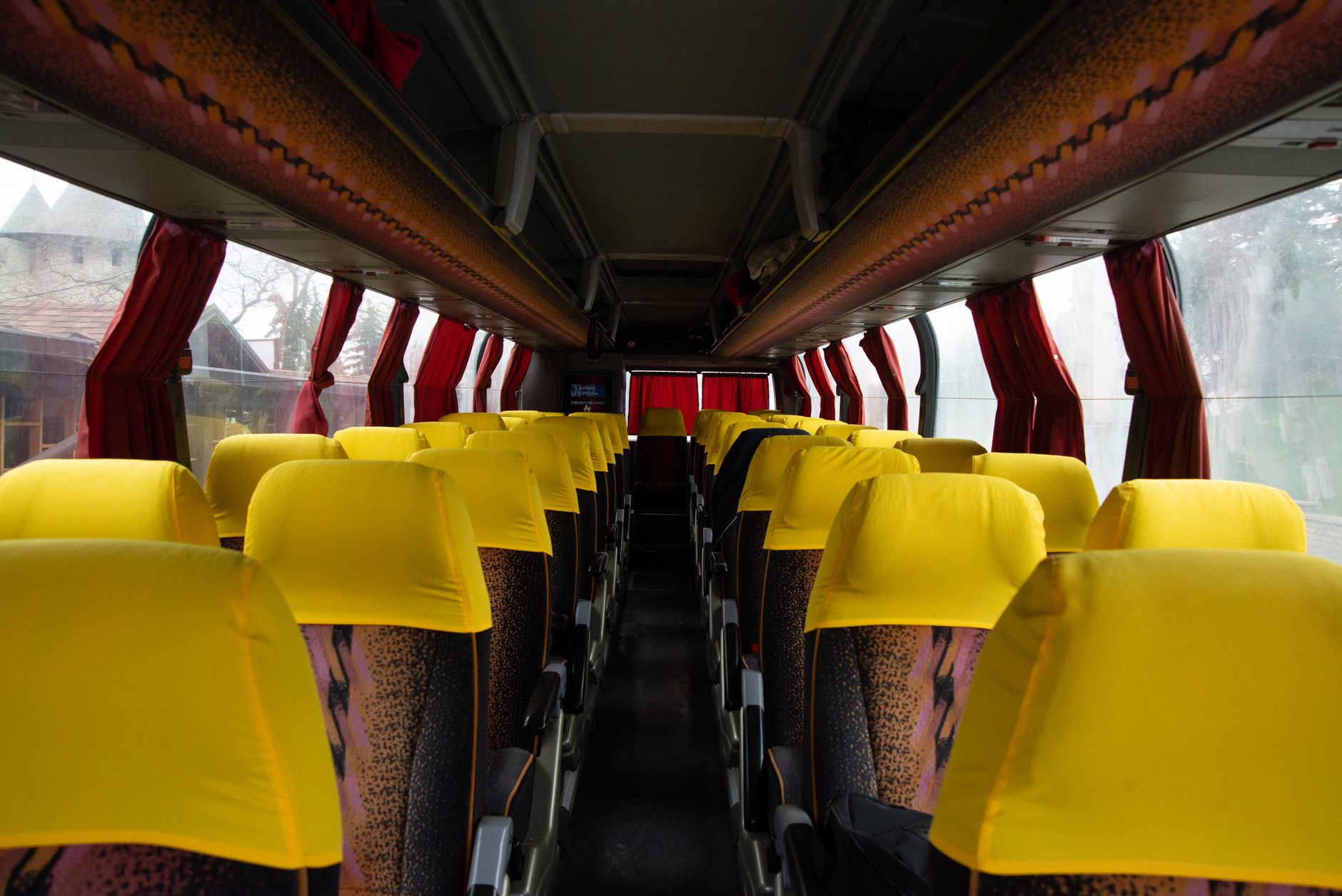
Choose the vehicle around passenger count, mobility needs, luggage volume, and the number of daily stops, not just the seating chart. A full-size charter bus or motor coach is normally the most comfortable option for long I-80, I-90, and I-94 legs because it provides an underfloor luggage bay, reclining seats, climate control, and usually an onboard restroom. A smaller vehicle can handle rural chapter pickups and tight downtown approaches more easily, but cargo capacity drops quickly. Confirm bus parking and curb access at museums, airports, stadiums, and memorials before finalizing the fleet.
| Vehicle | Seats | Best For | Notes |
|---|---|---|---|
| Full-size motor coach | 40-56 passengers | Use for a consolidated chapter reunion, multi-day memorial itinerary, or long Midwest corridor run with substantial luggage. | Best long-haul comfort with luggage-bay capacity, onboard restroom, overhead storage, and room for walkers or organized chapter materials; requires planned bus parking at dense venues. |
| Mini coach | 24-38 passengers | Use when the Veterans Group has fewer than about 40 travelers or must reach smaller hotels, civic centers, and rural venues. | A practical middle option for smaller groups, with easier maneuvering than a full-size bus but less underfloor cargo and commonly no restroom. |
| Mini bus | 18-28 passengers | Use for airport shuttles, local reunion movements, or a feeder route from a chapter hall to a primary charter bus. | Useful for short transfers and split departures, but limited luggage space makes it a poor fit for several overnight bags, wheelchairs, or large ceremonial equipment. |
| Executive Sprinter | 10-14 passengers | Use for a small command group, accessible support team, airport transfer, or an advance vehicle for a larger Veterans Group. | Fits tight streets, small hotel entrances, and short curbside stops, with limited cargo and seating that is less suitable for a full day of highway travel. |
Routing, Timing, and On-the-Road Realities
Long Midwest routes are built around I-80, I-90, and I-94, but the scheduled drive time must include metropolitan approaches, construction, toll plazas, weather, fuel, meal breaks, and controlled loading. I-80 commonly connects Omaha, Des Moines, Iowa City, the Quad Cities, and the Chicago area before continuing toward northern Indiana and Ohio. I-90 links Sioux Falls and the western Midwest with Madison, Chicago, Toledo, Cleveland, and Buffalo-bound traffic, while I-94 carries dense movements between Minneapolis, Madison, Milwaukee, Chicago, Detroit, and the western Michigan corridor. For Chicago pickups, avoid assuming that a bus can wait curbside for an hour; establish a short passenger-ready window and a separate parking plan. Soldier Field and Museum Campus events require approved loading and bus parking arrangements, and Wrigleyville and downtown Chicago have tighter street geometry than suburban hotels. A dispatcher should also confirm whether the venue allows overnight parking, in-and-out movement, or only timed loading.
For a multi-day Veterans Group run, plan driver hours before publishing the chapter agenda rather than after tickets are sold. A practical schedule may use one driver for a moderate day, but extended interstate days, late evening ceremonies, split shifts, or consecutive long days can require a second driver, a relief plan, or a staged overnight. Build pickup buffers around rural Iowa, southern Minnesota, northern Wisconsin, and western Ohio because a single late passenger can disrupt a fixed airport or memorial appointment. At airports, use the assigned commercial bus staging or passenger-loading area and keep veterans together with guardians and mobility equipment. At national cemeteries and museums, ask about group arrival windows, security screening, bus turnaround space, and whether the driver must remain with the vehicle. In fall, allow additional time around Big Ten campuses and high-school football venues, where pedestrian controls and postgame traffic can hold a bus well beyond the planned pickup time. Confirm every venue's current rules shortly before departure because curb assignments, parking passes, and event restrictions can change.
What This Typically Costs
Veterans Group charter bus pricing is usually built from a daily minimum, mileage, trip duration, and the vehicle class required. A one-day local run commonly carries a minimum, while multi-day Midwest group travel is quoted around the full service window, including repositioning and deadhead miles between the bus yard and pickup. Summer reunion season, Memorial Day, Veterans Day, fall football weekends, and major convention dates can tighten availability and raise the operating rate. Driver lodging, parking, tolls, permits, and any overnight security requirements are typically separate line items. Fuel adjustments may apply when diesel prices move materially during a long I-80, I-90, or I-94 itinerary. Plan for driver gratuity as a separate customary expense, and expect the total to commonly run a few thousand dollars per day depending on mileage, vehicle size, and market.
Frequently Asked Questions
Can a charter bus support an Honor Flight-style trip?
Yes, but an Honor Flight chapter may use the bus for airport transfers, a local sendoff, a memorial visit, or a reunion around the flight rather than replacing the flight itself. Midwest Honor Flight serves veterans from South Dakota and portions of northwest Iowa, northeast Nebraska, and southwest Minnesota, with departures from Sioux Falls Regional Airport. A bus can gather veterans from Sioux Center, Sioux City, Worthington, or nearby rural communities and deliver them on a controlled schedule. Confirm the nonprofit or chapter's airport, accessibility, guardian, and luggage procedures before assigning vehicles.
How many people usually travel with a Veterans Group?
For a chapter reunion, the common range is roughly 20 to 55 passengers, often including spouses, guardians, chapter officers, and volunteers. A single motor coach generally covers 40 to 56 passengers when the group has ordinary luggage and limited mobility equipment. Smaller chapters may fit a 14 to 24 passenger mini coach or an executive Sprinter. Large department conventions, combined VFW and American Legion groups, and memorial weekends can require several vehicles and staggered loading.
Which Midwest cities and venues are common on these itineraries?
Typical Midwest routing connects a home chapter with Chicago, Indianapolis, Detroit, Cleveland, Columbus, Cincinnati, Milwaukee, Madison, Minneapolis, St. Paul, Des Moines, Kansas City, St. Louis, or Omaha. Common corridors include I-80 across Iowa and northern Illinois, I-90 through Cleveland, Toledo, Chicago, Madison, and the Twin Cities, and I-94 between Detroit, Chicago, Milwaukee, and Minneapolis. Veterans groups may visit the National Veterans Memorial and Museum in Columbus, the Gerald R. Ford Presidential Museum in Grand Rapids, the Abraham Lincoln Presidential Library and Museum in Springfield, or the National World War I Museum and Memorial in Kansas City. Chicago is often the practical hub for connections, museums, medical travel, and large reunion programs.
Can the bus accommodate veterans with limited mobility?
Tell the operator about wheelchairs, walkers, oxygen equipment, service animals, and the number of passengers who need minimal stairs. Standard motor coaches have a luggage bay and restroom but are not automatically wheelchair accessible. An accessible charter bus may need a lift or ramp and can have fewer usable seats once mobility devices are secured. Keep mobility equipment with the same vehicle as its owner whenever possible, and schedule extra loading time at every stop.
How should instruments, uniforms, flags, and other gear be handled?
Instrument-heavy trips need a different loading plan from a typical reunion. High-school marching-band volume in the Midwest means buses may already be assigned around football weekends, so reserve early if the Veterans Group is traveling during September or October. Put folding chairs, small cases, flags, and uniforms in labeled compartments, while tubas, percussion equipment, and other oversized gear may require a luggage trailer or a second vehicle. Do not block emergency aisles, exits, wheelchair positions, or driver sightlines.
When does a chapter need multiple buses?
A single motor coach is usually simpler when the group travels together and has one hotel, but two or more buses work better when attendees start in different cities or have separate accessibility needs. Use a lead vehicle and a sweep vehicle for large convoys, with one dispatcher-controlled manifest and a shared emergency contact list. Assign loading zones and departure windows rather than asking every passenger to find the bus at a busy venue. For Chicago events, reserve bus parking in advance and verify the venue's approved curbside loading location.
How early should a Veterans Group reserve transportation?
For a multi-day Midwest group travel itinerary, request the pickup address, dates, headcount, passenger ages and mobility needs, luggage or equipment list, hotel locations, venue addresses, meal stops, and desired departure times. Share whether the group needs a charter bus, mini coach, mini bus, or executive Sprinter. The operator should then check driver-hours feasibility, overnight parking, venue access, and whether a second driver or relief plan is needed. Keep a little schedule margin for construction, weather, event traffic, and rural pickup delays.
How to Book
To book, provide the travel dates, pickup address or addresses, passenger count, mobility requirements, luggage and equipment list, hotel locations, venue itinerary, and preferred departure times. Tell us whether the run needs a charter bus, motor coach, mini coach, mini bus, or executive Sprinter, and identify any airport or memorial security requirements. US Bus Trips can normally return a realistic quote within 4 business hours after receiving complete trip details, subject to carrier availability and route review. The confirmation should show vehicle type, service dates, pickup and drop-off points, operating hours, included mileage, parking and lodging assumptions, cancellation terms, and the dispatch contact; reach us through the US Bus Trips booking team by phone or online request.
Related Trips You Might Also Consider
- Government Agency Shuttle — Mountain West Region
- Columbus, OH to Cleveland, OH
- Shenandoah — 36-Passenger Mini Coach
- Indianapolis, IN to Chicago, IL
- Tulsa, OK to Kansas City, MO
- Aurora, CO to Denver, CO
- Cross-Country Charter Bus Overview
- All Group Tour Destinations
- See the Full Fleet (Sprinters through 56-pax coaches)
- Get a Free Quote in 60 Seconds