
Groups book this route for band tours, sports travel, corporate roadshows, weddings, and family reunions moving between Omaha and Kansas City.
Overview
The Omaha to Kansas City corridor is a common Midwest movement for groups that need one vehicle across state lines instead of separate local shuttles. Band tours may load instruments and merchandise near an Omaha hotel, run south on I-29, and continue to a Kansas City concert at T-Mobile Center or a nearby theater. Sports teams often travel with luggage and equipment to the Kansas City stadium district for events at Kauffman Stadium, Arrowhead Stadium, or training facilities in the metro. Corporate roadshows use the route for client visits, sales meetings, and regional conferences, while wedding groups and family reunions often combine airport arrivals, hotel transfers, and a scheduled return. The customer is usually a planner who needs a single dispatch contact and a vehicle that stays on schedule across several stops.
Omaha staging is usually more practical at a Downtown Old Market hotel, an approved OMA airport staging area, or a Council Bluffs casino than on an unrestricted downtown curb. Hotels may limit coach idling or require a specific loading door, and airport pickups need a clear passenger meeting point because the terminal curb is not a long-term waiting area. A Council Bluffs pickup can work well when the group is staying near the casinos or when a larger coach needs easier circulation, but property approval still matters. After loading, the driver typically uses I-80 to connect with I-29, then follows the Missouri River corridor south toward Kansas City. The highway distance is commonly about 185 to 200 miles, and normal one-way wheel time is roughly 3 to 3.5 hours before stops and urban traffic. Exact timing changes with construction, weather, freight traffic, and the Kansas City arrival address.
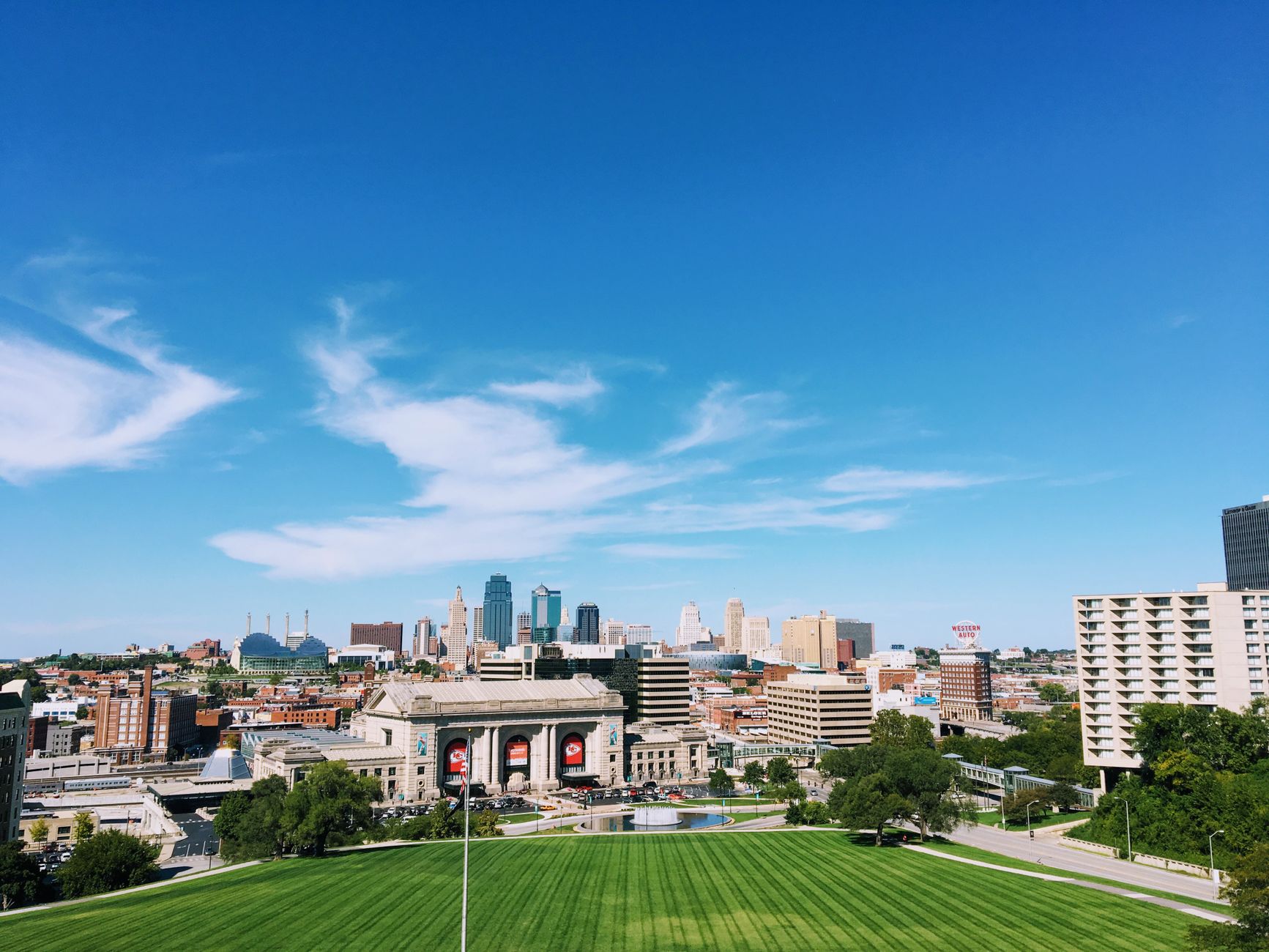
In Kansas City, the right drop-off plan depends on whether the group is headed downtown, to the Country Club Plaza, to a suburban hotel, or to the stadium district. Downtown itineraries may involve the Kansas City Convention Center, T-Mobile Center, Power and Light District hotels, or Crossroads venues, where event closures and limited curb space can change the approach. A stadium trip needs more than a street address: Kauffman Stadium and Arrowhead Stadium events may require bus parking instructions, an access credential, and a specified unloading location. Wedding groups should confirm hotel coach access and whether the reception venue allows a motor coach to wait between movements. Corporate groups often benefit from one vehicle staying with the travelers for client visits, meals, and evening events. A charter bus can reduce missed connections, but only when the schedule includes realistic loading windows and a legal driver rest plan.
Fleet Options
Choose the vehicle around passenger count, baggage, and how much local work the itinerary requires after the highway leg. A charter bus with full underfloor storage is usually better for sports gear, band cases, wedding luggage, or a corporate roadshow than a smaller shuttle. A motor coach gives the best ride comfort for a long-haul day, but a minibus can be easier to place at tight hotel curbs and smaller venues. Confirm accessibility, restroom availability, and whether the vehicle must stay in Kansas City between events before selecting the lowest seat count.
| Vehicle | Seats | Best For | Notes |
|---|---|---|---|
| Executive Sprinter | 10-14 passengers | Use for a small leadership team, airport-connected roadshow, or family group that values flexible local movements over maximum baggage capacity. | Best for light luggage and executive comfort, but limited cargo space makes it a poor fit for instruments, large sports bags, or a full wedding load. |
| 24-passenger minibus | 18-24 passengers | Use for a small corporate group, wedding party, or reunion traveling together on the Omaha to Kansas City corridor. | Compact enough for many hotel approaches and event curbs, with moderate storage; verify luggage volume before assigning it to a multi-day trip. |
| 35-40 passenger motor coach | 35-40 passengers | Use for medium sports teams, band personnel, corporate roadshows, or wedding guests with several scheduled Kansas City movements. | Balances highway comfort, restroom availability on some units, and manageable venue access, while offering substantially more baggage room than a minibus. |
| 50-56 passenger motor coach | 50-56 passengers | Use when a large group wants one bus for the long-haul transfer, especially with checked bags, equipment, or multi-day operations. | Provides the strongest underfloor cargo capacity and passenger comfort, but needs a confirmed bus route, loading zone, and parking plan at downtown or stadium venues. |
Routing, Timing, and On-the-Road Realities
The standard long-haul routing leaves Omaha through the I-80 network and connects to I-29 south toward the Kansas City metro. Depending on the pickup point, the driver may use local Omaha or Council Bluffs arterials before reaching the interstate, so a hotel curb departure is not the same as a highway departure. A practical schedule allows about 3 to 3.5 hours of driving plus passenger loading, a restroom stop, traffic buffer, and final venue access. Early departures generally provide more margin for a same-day meeting, afternoon game, or concert soundcheck, while Friday afternoon and holiday traffic can extend the Kansas City approach. For downtown arrivals, the final miles may be slower than the rural portion because of convention traffic, lane closures, and limited coach curb space. The dispatcher should receive the exact building entrance and group contact rather than only a ZIP code.
Kansas City event routing should be planned around the destination's bus policy and the time the group must be unloaded, not only the estimated interstate arrival. T-Mobile Center, Power and Light District hotels, convention facilities, and stadium properties can have separate motor coach entrances, parking areas, and event-day restrictions. For Kauffman Stadium or Arrowhead Stadium, confirm the bus lot, credential requirements, tailgate rules, and whether the vehicle returns after drop-off or remains parked. For a roadshow or wedding, the itinerary may require several short local legs after the Omaha transfer, and those movements count toward the driver's on-duty schedule. Passenger-carrier rules generally cap driving at 10 hours after 8 consecutive hours off duty and restrict the driver's on-duty window to 15 hours; weekly limits also apply. A one-way Omaha to Kansas City leg normally fits in one shift, but a late return, event wait, or second work assignment can require relief planning or an overnight stop.
What This Typically Costs
Pricing for an Omaha to Kansas City charter bus is usually built from vehicle type, service hours, mileage, and the number of operating days rather than a simple per-seat fare. A one-way transfer can still carry a daily minimum, especially when the carrier must return the motor coach empty or reposition it for another assignment. A round-trip quote commonly includes the outbound leg, the vehicle waiting or working in Kansas City, and the return leg, with long-haul service priced around the full itinerary and any deadhead miles. Peak demand often occurs around spring and fall sports schedules, concert weekends, weddings, graduations, and major convention dates, so vehicle availability can affect the quote. Multi-day work may add driver overnight lodging, meal or travel allowances, parking, tolls, and fuel adjustments. Driver gratuity is commonly shown separately or treated as an optional line item, and the quote should identify any daily minimum, cancellation terms, venue parking charges, and after-hours service fees rather than hiding them in a vague total.
Frequently Asked Questions
How far is Omaha from Kansas City by charter bus?
The normal route is about 185 to 200 miles, with I-29 carrying most of the trip south from Omaha toward the Kansas City area. In normal conditions, a charter bus or motor coach generally needs about 3 to 3.5 hours of wheel time. The actual schedule should allow additional time for loading, restroom stops, construction, weather, and Kansas City traffic. A downtown Omaha pickup and a downtown Kansas City drop-off can take longer than the highway estimate.
Do DOT driver-hours rules affect this route?
Passenger-carrier rules generally allow a driver up to 10 hours of driving after 8 consecutive hours off duty, with a 15-hour on-duty window. The applicable weekly limits are generally 60 hours in 7 days or 70 hours in 8 days, depending on the carrier schedule. An Omaha to Kansas City leg normally fits within one driving shift, but a same-day event, return, and late-night load-out can create a compliance issue. The carrier must count other work for that driver and plan breaks, traffic delays, and event waiting time before dispatching the run.
Where can a charter bus pick up in Omaha?
Omaha pickups commonly use a Downtown Old Market hotel, the OMA airport cell lot, or a Council Bluffs casino when the property has approved bus access. The exact staging point depends on curb restrictions, hotel loading policy, passenger mobility, and whether luggage needs to be loaded before departure. At OMA, the motor coach may need to remain in an approved staging area rather than occupy an active terminal curb. A group should provide one dispatcher contact and keep passengers together so the driver can complete a legal, orderly load.
Where can the bus drop off in Kansas City?
Kansas City drop-off planning depends on whether the destination is downtown, the Country Club Plaza, the stadium district, or an outer suburb. Downtown groups may be headed to the Kansas City Convention Center, T-Mobile Center, Power and Light District hotels, or the Crossroads area, where curb space and event closures can change by date. Sports groups using Kauffman Stadium or Arrowhead Stadium need the event-specific bus entrance, parking pass, and tailgate or unloading instructions rather than a generic stadium address. Hotels and venues may require advance registration, a designated bus lane, or a separate parking fee.
What bus size should we book for Omaha to Kansas City?
A 20 to 24 passenger minibus works well for a small corporate group, wedding party, or family reunion with limited luggage. A 35 to 40 passenger coach suits many band, sports, and roadshow movements while remaining easier to place at hotels and event facilities than a full-size coach. A motor coach with roughly 50 to 56 seats is usually the efficient choice for a large group traveling together with checked bags or equipment. Executive Sprinters can serve a small leadership team, but they provide less baggage capacity and are not a substitute for a full charter bus when the headcount grows.
Is a one-way or round-trip charter cheaper?
One-way service is priced for the Omaha to Kansas City movement but may include a daily minimum or carrier repositioning because the vehicle and driver still have to be managed after drop-off. Round-trip service is based on the full operating plan, including return timing, waiting hours, overnight positioning, and any local shuttle work in Kansas City. For a multi-day band tour, sports trip, or corporate roadshow, keeping the same bus can reduce transfer risk but adds driver lodging and vehicle days. Ask whether the quote includes deadhead miles, tolls, parking, fuel adjustments, and driver accommodations.
What information is needed to get a quote?
The best request includes travel dates, pickup address, passenger count, luggage or equipment volume, Kansas City destination, and every planned movement after arrival. Include hotel names, venue names, game or concert times, accessibility needs, and whether the vehicle must remain available during the stay. US Bus Trips can typically return a quote within 4 business hours when the itinerary is complete and carrier availability is clear. The confirmation should identify the vehicle class, pickup instructions, operating dates, inclusions, payment schedule, cancellation terms, and dispatcher contact.
How to Book
To start a quote, provide the travel dates, Omaha pickup address, passenger count, luggage or equipment needs, Kansas City destination, and the complete itinerary. Include hotel names, venue schedules, accessibility requirements, desired departure time, and whether the bus must remain available after arrival. US Bus Trips typically returns a quote within 4 business hours when the trip details are complete and carrier availability is known. The confirmation identifies the vehicle class, pickup and drop-off instructions, operating dates, included services, payment terms, cancellation policy, and dispatcher contact.
Related Trips You Might Also Consider
- High School Band Tour — South Central Region
- Riverside, CA to San Diego, CA
- Honolulu, HI to Waikiki, HI
- Fresno, CA to Yosemite, CA
- Denali — 14-Passenger Sprinter
- Sacramento, CA to Lake Tahoe, CA
- All Group Tour Destinations
- All Group Trip Types
- See the Full Fleet (Sprinters through 56-pax coaches)
- Get a Free Quote in 60 Seconds