
US Bus Trips arranges charter bus transportation for school bands, choirs, directors, and chaperones traveling across Texas, Oklahoma, Arkansas, Louisiana, and Mississippi.
Overview
A South Central High School Band Tour commonly starts with a school pickup and combines performance travel, sightseeing, and competition movement over two to six days. Texas programs frequently build a triangle itinerary through Dallas-Fort Worth, Waco, Austin, San Antonio, and Houston, using I-35, I-45, US-290, SH-71, and I-10. Other bookings connect Oklahoma City or Tulsa with Dallas, Fort Worth, Fayetteville, Little Rock, or Shreveport, while Louisiana and Mississippi programs often route through Baton Rouge, New Orleans, Jackson, Gulfport, or Hattiesburg. Venues may include AT&T Stadium, Globe Life Field, the Alamodome, NRG Stadium, Toyota Music Factory, Baylor facilities in Waco, the Toyota Music Factory, the Smoothie King Center, the Caesars Superdome, and major university campuses. A charter bus keeps students, directors, and chaperones together instead of creating a convoy of private cars. The itinerary still needs realistic staging for school dismissal, meal service, hotel check-in, rehearsals, and venue security.
The typical customer is a middle school or high school music director working with an activities office, athletic department, booster organization, or tour company. Group size commonly ranges from 30 to 56 passengers for one ensemble, while combined band and choir trips can reach 80 to 150 or more travelers and require multiple vehicles. A full motor coach may carry passengers, personal luggage, garment bags, and moderate instrument cargo, but marching percussion, sousaphones, tubas, cymbals, stands, and risers can use available bay space faster than expected. Send the operator a case count and dimensions, not only the number of students. Trips may include bowl game halftime or pregame appearances, Disney competition blocks, spring festivals, HBCU football classics, rodeo performances, and cultural stops in New Orleans or San Antonio. Destination weddings sometimes share the same South Central fleet pressures, so school groups should reserve early around peak weekends.
Performance travel in this region is shaped by long highway legs and uneven venue access. Houston to New Orleans and Beaumont to Lake Charles sit on the I-10 corridor, while Dallas to Austin and San Antonio run primarily along I-35, with Waco and San Marcos acting as common timing points. Dallas-Fort Worth groups may use I-30 toward Little Rock or Texarkana, and Oklahoma groups may approach North Texas through I-35, US-75, or I-44 depending on the starting campus. In New Orleans, hotel streets, parade closures, Superdome and Smoothie King Center event controls, and limited charter staging can affect the final block of the route. In Dallas, Houston, Austin, San Antonio, Oklahoma City, Little Rock, and Jackson, the bus needs a specific passenger unloading point rather than a general venue address. Good group travel planning separates student movement, equipment movement, and driver parking so a late venue departure does not disrupt the next day's performance.
Fleet Options
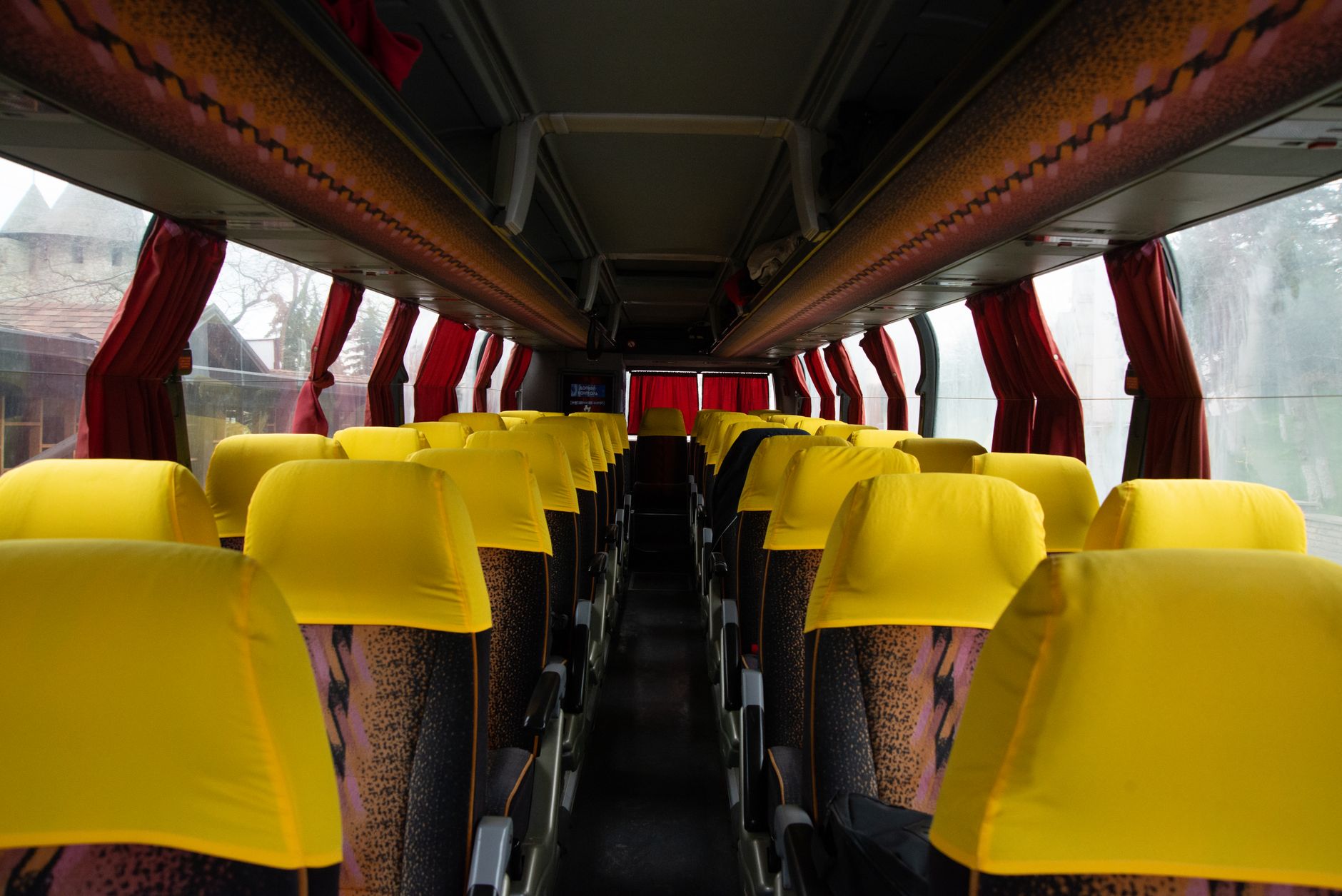
Vehicle selection for a South Central High School Band Tour starts with the passenger manifest, then the cargo plan and route constraints. A full-size motor coach is generally best for a 35 to 56 passenger group with luggage, but a nominal seat count does not guarantee enough bay space for marching instruments and uniforms. Smaller vehicles can work for choirs, directors, or split departures, especially where hotel streets, historic districts, or venue loading areas are tight. Large groups should consider separate passenger and equipment capacity, accessible boarding needs, and whether every vehicle can park at the same venue. For group travel across Texas, Oklahoma, Arkansas, Louisiana, and Mississippi, confirm driver relief and overnight parking before selecting the lowest-capacity option.
| Vehicle | Seats | Best For | Notes |
|---|---|---|---|
| 56-passenger motor coach | 45-56 passengers | Use for a full High School Band Tour with students, chaperones, personal luggage, uniforms, and moderate instrument cargo. | Best comfort and underfloor capacity for a full ensemble, but needs a designated charter loading area and adequate turning and parking space. |
| 40- to 44-passenger charter bus | 35-44 passengers | Use when the roster is below full coach capacity and the cargo list has been measured before booking. | A useful middle option for a smaller ensemble, though large percussion cases and bulky uniforms can consume bay space quickly. |
| 24- to 35-passenger mini coach | 20-35 passengers | Use for a choir, section, chaperone unit, or split group traveling between nearby South Central venues. | Handles tighter hotel approaches and urban drop-offs more easily, but usually has less luggage-bay volume and limited room for large instruments. |
| Executive Sprinter or mini bus | 8-20 passengers | Use for staff, airport transfers, wedding-style support movements, or a small ensemble on short local legs. | Fits small director teams and short transfers, but should not be treated as a substitute for a band coach when cases or uniforms are substantial. |
Routing, Timing, and On-the-Road Realities
The Texas triangle creates the most common South Central routing pattern: Dallas-Fort Worth to Waco and Austin on I-35, Austin to San Antonio on I-35, and San Antonio to Houston on I-10 or connecting state highways. Houston to Austin may use SH-71 and I-10 connections, while Houston to Dallas commonly uses I-45; the best road depends on the pickup side of each metro, construction, and the venue deadline. I-35 congestion around Austin, San Marcos, and Waco can expand sharply during weekday peaks, university events, and sold-out sports dates. Schedule school pickups before the morning peak when possible, and avoid placing a critical performance immediately after a long Friday afternoon departure. For a charter bus entering a stadium, arena, fairground, or downtown hotel, confirm the bus entrance, staging lot, security check, and unloading procedure in advance. Waco fairgrounds and major event sites can funnel several buses onto a limited approach, while New Orleans venues may impose event-specific police or traffic controls.
Longer runs from Oklahoma City or Tulsa into North Texas, Arkansas, Louisiana, or Mississippi need a driver-hours plan that includes breaks, meals, traffic, and the return movement. A same-day motor coach run may work for a short Austin-San Antonio or Dallas-Waco leg, but a Dallas-New Orleans, Houston-Little Rock, or Oklahoma City-Jackson itinerary commonly needs an overnight structure and a clear driver release location. Do not assume the coach can wait curbside during a multi-hour competition; arrange venue parking or a remote staging lot and budget the transfer time back to the group. For bowl games and HBCU football classics, buses should arrive well before gates open because traffic restrictions and postgame pedestrian surges can make the exit slower than the inbound trip. Rodeo weekends and fairground events in Fort Worth, Houston, San Antonio, Waco, and Oklahoma City can fill nearby lots and hotel corridors. Build a manifest check at every departure, keep one lead chaperone on each vehicle, and set a single emergency meeting point when several buses are used.
What This Typically Costs
Pricing for a South Central High School Band Tour is built from vehicle days, mileage, and the time the motor coach is committed, not just the distance between cities. Most operators apply a daily minimum, with longer Texas triangle, I-10, I-35, Oklahoma, Arkansas, Louisiana, or Mississippi runs commonly priced across several service days. Seasonal peaks around bowl games, spring performance trips, Disney competitions, Mardi Gras, rodeo weekends, HBCU football classics, and major festival dates can tighten availability and raise the operating rate. Quotes may include deadhead miles to reach the first pickup and return the coach after the final drop, plus driver lodging and allowable meals on overnight itineraries. Typical line items include parking, tolls, venue access fees, fuel adjustments, and driver gratuity, which is commonly handled separately unless the quote states otherwise. A multi-vehicle group travel plan can cost more because each vehicle needs its own driver schedule, parking position, and operating coverage, but it may be necessary when instruments, uniforms, and passenger capacity exceed one coach.
Frequently Asked Questions
What size charter bus fits a South Central school band or choir?
A full-size motor coach is usually the practical starting point for a High School Band Tour with roughly 35 to 56 travelers. It provides underfloor luggage bays for garment bags, uniforms, percussion cases, personal bags, and limited equipment, while keeping students together with chaperones. A smaller group may fit a mini coach, but confirm the storage layout before assigning large instruments. Schools should provide the passenger count and a basic equipment list rather than relying on seat count alone.
Can a charter bus carry instruments and marching band equipment?
Yes, but instruments and passengers must be planned together. Brass and woodwind cases often ride in overhead bins or secured passenger areas, while marching percussion, sousaphones, tubas, cymbals, uniforms, risers, and folding stands may require underfloor bays, a second vehicle, or a separate equipment truck. Never block aisles, emergency exits, or driver sight lines. Send case dimensions and the number of large items before the vehicle is assigned.
What South Central cities are common on band and choir itineraries?
Common High School Band Tour routes include Dallas-Fort Worth to Austin, San Antonio, and Houston on I-35, I-10, US-290, or SH-71; Houston to San Antonio and New Orleans on I-10; and Oklahoma City or Tulsa to Dallas, Fort Worth, Little Rock, Shreveport, or Fayetteville. Groups may add Waco, Baylor University, the Fort Worth Stockyards, NRG Stadium, AT&T Stadium, the Alamodome, the River Walk, or Space Center Houston. Louisiana and Mississippi itineraries often connect New Orleans with Baton Rouge, Lafayette, Jackson, or Gulf Coast stops. Final routing should match the venue load-in window, not just the hotel location.
How does a Disney competition trip differ from a normal charter bus booking?
For a Disney competition, the group often needs airport or hotel transfers, rehearsal movement, performance-day transportation, and scheduled park or resort transfers. A motor coach can remain assigned to the group, but the itinerary must account for resort bus loops, security procedures, designated charter unloading areas, and equipment handling. Disney-area trips commonly require more than a simple airport transfer because uniforms, instruments, and chaperone-controlled headcounts move on a fixed schedule. Confirm the exact resort, venue, performance time, and whether equipment travels with students each day.
When should a school book multiple buses?
A large South Central group travel program may use two or more motor coaches, with one bus carrying the core student group and another assigned to overflow passengers, chaperones, or equipment-sensitive items. Keep students from the same section or ensemble together when possible, and assign a lead chaperone to every vehicle. Use a written manifest, color-coded luggage plan, radio or phone tree, and fixed departure checkpoints. At hotels and venues, request staged arrival windows so coaches do not queue in a fire lane or block a tour-bus loading zone.
How far in advance should a band tour be reserved?
The main planning constraints are coach availability, school-calendar peaks, driver hours, venue access, and overnight lodging. Bowl games, spring break, Disney competitions, Mardi Gras, rodeo events, HBCU football classics, and spring festivals can consume local inventory quickly. Long I-10 and I-35 moves need realistic rest, meal, inspection, and parking time rather than a schedule based only on map distance. For multi-day trips, the quote should show where the driver is released, where the coach parks, and how the driver reaches overnight lodging.
Can a charter bus accommodate a wheelchair or mobility device?
Wheelchairs and mobility devices should be disclosed when requesting the quote. Ask for a wheelchair-accessible coach if a passenger will remain in a wheelchair during travel, and confirm the number, dimensions, and transfer needs. If the passenger can transfer to a seat, the mobility device may still require dedicated storage space. Accessibility also needs to be checked at hotels, arenas, festival entrances, and performance venues, not only on the bus.
How to Book
To book, provide the dates, pickup address, headcount, student and chaperone split, equipment list, accessible-travel needs, hotel details, venues, and complete itinerary. Include performance call times, rehearsal windows, meal stops, and any required arrival or load-in deadlines. US Bus Trips targets a quote turnaround within 4 business hours when those details are available, subject to route complexity and vehicle availability. Confirmation should identify the vehicle type, service dates, pickup and drop-off plan, driver coverage, major inclusions, and any parking, toll, lodging, or fuel-adjustment items; contact US Bus Trips by phone or its online booking channel to finalize the run.
Related Trips You Might Also Consider
- Dance Competition — Northeast Region
- College Band Tour — Pacific Region
- Charlotte, NC to Nashville, TN
- Raleigh, NC to Asheville, NC
- Dance Competition — Pacific Northwest Region
- Redwoods — 36-Passenger Mini Coach
- Cross-Country Charter Bus Overview
- All Group Tour Destinations
- See the Full Fleet (Sprinters through 56-pax coaches)
- Get a Free Quote in 60 Seconds