
A 56-Passenger Motor Coach is built for a full-group Arches tour with long highway approaches, multi-day luggage, and passengers who need to stay together.
Overview
A 56-Passenger Motor Coach is a sensible workhorse for a full Arches group tour originating in Salt Lake City, Denver, Las Vegas, Phoenix, or another regional gateway. The coach keeps a school group, alumni association, church ministry, senior travel club, or private sightseeing party together across long interstate approaches and Utah's US-191 corridor. Expect a real multi-day operation rather than a day trip: distant departures usually need a travel day into Moab, two or more park days, and a return travel day. Underfloor luggage bays handle rolling bags and equipment better than a collection of smaller vans, while the onboard restroom reduces emergency roadside stops. Confirm the hotel can accept a full-size coach before finalizing the room block, especially near downtown Moab where turning space and curb access can be limited. Build the schedule around legal bus parking and walking time, not just the drive time shown by a consumer map.
The first park morning should be treated as an operating sequence: passenger count, water, restroom stop, commercial paperwork, entrance processing, and a controlled move through the authorized stops. The Arches Visitor Center is a required stop for tour buses under the cited commercial conditions, and the coach restroom must remain unlocked during operations. Windows and Double Arch, Balanced Rock, Courthouse Towers, Delicate Arch Viewpoints, and Devils Garden each require different walking expectations and have limited or designated oversized parking. Wolfe Ranch uses oversized parking opposite the main lot, while some popular trailheads and viewpoints do not accept commercial bus drop-offs. A group that wants Park Avenue, Fiery Furnace, Sand Dune Arch, or the Delicate Arch trail should not assume the 56-Passenger Motor Coach can deliver passengers there under the road-based commercial authorization. Have a guide or trip leader brief passengers on meeting points because a delayed return to the bus can disrupt the driver's legal duty window.
Moab demand follows spring break, national-park season, holiday weekends, fall travel, outdoor events, and local convention patterns, so a group tour should reserve rooms and coach capacity well ahead of the travel dates. Staging in Moab is usually more practical than moving a 56-Passenger Motor Coach between multiple small gateway communities every night. Green River can work as a supply or split-stay point, while Grand Junction, Salt Lake City, and other larger markets may be useful for driver changes, maintenance support, or pre-positioning. Canyonlands, Dead Horse Point, rafting outfits, and local restaurants each have separate access, loading, or reservation constraints and should be added to the operating plan individually. A motor coach can serve Moab's main corridor efficiently but should not be promised access to every trailhead, lodging driveway, or scenic pullout. The final itinerary needs passenger walking tolerance, meal timing, weather alternatives, and a clear plan for where the coach waits legally between stops.
Fleet Options
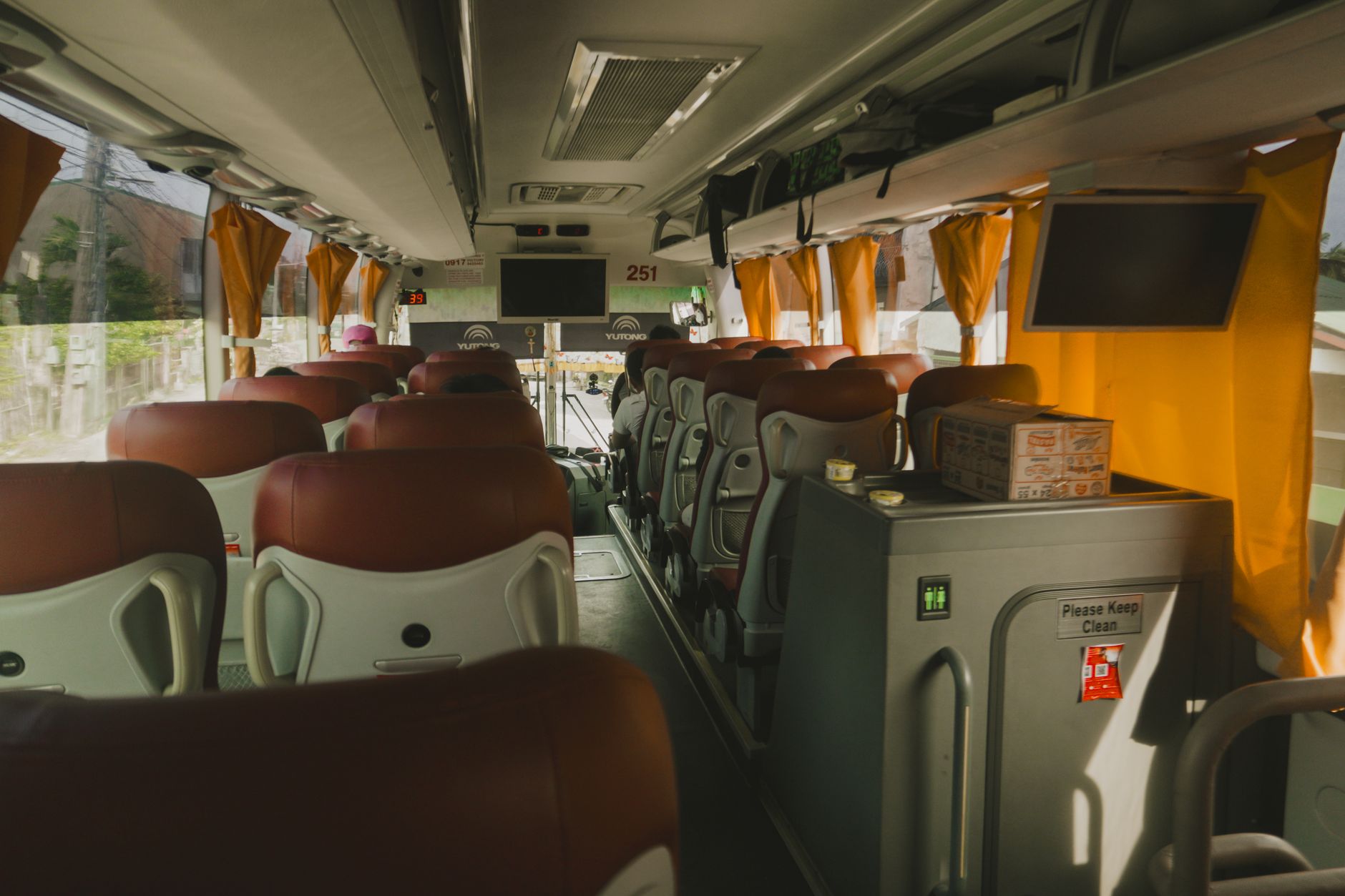
Choose the vehicle around the confirmed headcount, luggage volume, road geometry, and number of hotel moves rather than seats alone. A 56-Passenger Motor Coach gives a full group the strongest long-haul comfort, with reclining seats, overhead storage, a restroom, DVD or USB amenities, and underfloor luggage bays. It is well suited to a multi-day Arches tour with checked bags, coolers, mobility equipment, and consistent group movement. Its size requires advance confirmation of hotel bus parking, restaurant loading space, and legal park bus areas. Smaller vehicles become more practical when the group is below capacity or the itinerary includes tight streets, small lots, or frequent short stops.
| Vehicle | Seats | Best For | Notes |
|---|---|---|---|
| 56-Passenger Motor Coach | Up to 56 passengers | Use for a full-group multi-day Arches tour with substantial luggage and long approaches from regional gateways. | Best long-haul comfort with reclining seats, overhead storage, restroom, DVD or USB amenities, and large underfloor luggage bays; requires deliberate bus parking and hotel access planning. |
| 40- to 50-Passenger Motor Coach | Approximately 40-50 passengers | Use when the group is below full 56-passenger capacity but still needs a restroom, luggage bays, and highway comfort. | Provides similar touring amenities with a slightly smaller footprint, but cargo capacity and available seating vary by operator and should be confirmed against baggage volume. |
| 24- to 35-Passenger Mini Coach | Approximately 24-35 passengers | Use for a mid-sized group, lighter baggage plan, or itinerary with more constrained local access and shorter transfer legs. | Easier to place at smaller hotels and restaurants than a full motor coach, though underfloor storage and onboard amenities are usually more limited. |
| Executive Sprinter or Mini Bus | Approximately 10-24 passengers | Use for small groups, airport shuttles, local Moab movements, or split operations rather than a single full-group long-haul tour. | Handles tight urban streets, small parking areas, and quick transfers well, but has materially less luggage capacity and is less comfortable for a full-day long-haul run. |
Routing, Timing, and On-the-Road Realities
For a long-haul group tour, the approach to Moab commonly uses I-15 and US-6 from Salt Lake City, I-70 and US-191 from Denver or Grand Junction, or I-15 and I-70 from Las Vegas. These corridors can include construction, mountain weather, fuel gaps, and limited services, so dispatch should schedule dependable meal and fuel stops rather than relying on an unplanned roadside break. A pickup before the morning peak is usually preferable in major metros, but the driver still needs a legal pre-trip inspection and passenger-loading window. Entering Moab through US-191 is straightforward compared with park-side circulation, where oversized parking is scarce and popular areas can fill early. Use the Arches webcam and current park notices on the operating day, and keep a flexible order of stops when congestion develops. Do not promise a fixed trailhead arrival without accounting for entrance lines, passenger unloading, walking, and a bus repositioning plan.
Inside Arches, a 56-Passenger Motor Coach should follow the commercial authorization's approved bus route and use only established oversized or bus spaces. Drop-offs and pickups belong in designated loading areas, and blocking the roadway to wait for passengers is not an acceptable staging method. The park's limited oversized spaces mean the group may need an early start, a shortened stop, or a second pass rather than extended parking at a crowded destination. Drivers should count on passenger loading, restroom checks, water stops, traffic control, and waiting time as on-duty work under the trip's hours-of-service plan. If the day begins after a long travel leg, schedule an overnight in Moab or use a second qualified driver instead of asking one driver to stretch the itinerary. Hotel departures, restaurant curb space, and any visit to Canyonlands or Dead Horse Point should be checked separately because a park permit does not automatically authorize every other venue.
What This Typically Costs
A 56-Passenger Motor Coach is usually quoted by the day, with a daily minimum even when the coach is moving only part of the day. The final rate reflects the route, total mileage, number of service days, seasonal demand, and whether the operator must deadhead the coach from another market. Spring, fall, holiday weekends, school breaks, and major Moab event periods commonly price above shoulder-season travel. Budget separately for driver lodging and meals, park or commercial-use fees, tolls, parking, fuel adjustments, and driver gratuity. In most markets, a multi-day Arches group tour commonly runs a few thousand dollars per day before trip-specific extras, while long approaches from Salt Lake City, Denver, Las Vegas, or Phoenix increase mileage and deadhead exposure. Ask for a line-item quote showing revenue days, repositioning miles, included driver hours, overtime treatment, lodging responsibility, and cancellation terms rather than relying on a single all-in figure.
Frequently Asked Questions
How many days should a 56-Passenger Motor Coach Arches group tour take?
For a practical Arches group tour, plan on three to five days from a regional gateway, or add travel days when the group originates in a distant state. A Salt Lake City or Denver departure can require a full travel day each way, while a Las Vegas or Phoenix departure may need similar long-haul staging. A 56-Passenger Motor Coach works best when the group stays together instead of making repeated hotel changes. Build extra time for entrance lines, limited oversize parking, meal stops, and walking from designated bus areas. A compressed two-day schedule is possible from nearby Utah markets but leaves little margin for weather, traffic, or driver-hour compliance.
What are the best months for a multi-day Arches group tour?
April through May and September through October are generally the most workable months for an Arches group tour because daytime conditions are more manageable than midsummer and visitation can be planned around shoulder periods. March and November can work with colder mornings and shorter daylight, but weather and road conditions need monitoring. June through August brings heat, higher demand, crowded trailheads, and greater risk of midday hiking limitations. Weekends, holidays, spring break, and fall event periods in Moab should be treated as peak operations. The park may experience entrance congestion and limited parking even when no advance timed-entry reservation is required, so early arrivals remain useful.
What itinerary works for a multi-day Arches group tour?
A workable sample itinerary is day 1 arrival and first stops in Moab, with a planned lunch stop and a short orientation at the Arches Visitor Center if operating hours and routing allow. Day 2 can cover La Sal Mountains Viewpoint, Courthouse Towers, Balanced Rock, Windows and Double Arch, and Delicate Arch Viewpoints, using only authorized bus areas and realistic walking times. Day 3 can focus on Devils Garden, the bus-accessible short walks permitted under the applicable commercial authorization, and a Moab town meal or recovery period. Day 4 can provide a second park morning, Canyonlands or Dead Horse Point if separately permitted and operationally suitable, followed by the first leg home. A five-day version adds a dedicated travel day on each end or preserves a weather and fatigue buffer.
Does a 56-Passenger Motor Coach need a permit at Arches?
A commercial tour operator carrying a group in a single vehicle with 16 or more passenger capacity needs a current, signed Commercial Use Authorization and must keep it accessible during park operations. The motor coach must follow the authorization's approved locations, parking rules, loading zones, and hiking limits. Buses may park only in legal bus or oversized spaces and may load or unload only in designated zones, generally for no more than 15 minutes. The tour must stop at the Arches Visitor Center so passengers can use restrooms and refill water, and the coach restroom must remain unlocked. Confirm the current authorization conditions before dispatch because park procedures and seasonal entry systems can change.
Where can a motor coach park inside Arches National Park?
Arches has limited oversized parking, and a 56-Passenger Motor Coach cannot be treated like several passenger cars. The approved bus pattern includes the Visitor Center, La Sal Mountains Viewpoint, Courthouse Towers, Balanced Rock, Windows and Double Arch, Panorama Point, Wolfe Ranch's oversized area, Delicate Arch Viewpoints, and Devils Garden, subject to the applicable authorization. Park Avenue, Salt Valley Overlook, Fiery Furnace Viewpoint, Sand Dune Arch, and other restricted locations may not allow bus parking or drop-off under commercial tour conditions. Wolfe Ranch uses oversized parking across the road rather than the main lot, while Windows and Double Arch require use of the bus parking area. Keep the coach moving between legal areas and never wait in a travel lane for a space.
How do driver hours affect an Arches motor coach itinerary?
A charter driver must manage the trip under applicable federal hours-of-service rules, including limits on driving time, on-duty time, and required off-duty periods. Long approaches from Denver, Salt Lake City, Las Vegas, or Phoenix can consume much of the driver's available duty window before the group reaches Moab. A typical plan uses two qualified drivers for extended overnight or very long-haul movements, or schedules a required hotel break before the park program. Park sightseeing days also count as on-duty time when the driver is waiting, repositioning, assisting passengers, or remaining responsible for the vehicle. Build a relief point, driver meal period, and overnight location into the itinerary before booking fixed trailhead times.
What does a 56-Passenger Motor Coach fit well?
A 56-Passenger Motor Coach is the workhorse of long-haul group travel when the headcount is close to full and everyone needs to ride together. It normally provides reclining seats, overhead storage, a restroom, DVD or USB amenities, and luggage bays underneath for multi-day baggage. It fits alumni groups, student and educational tours, church groups, senior travel, association programs, and organized sightseeing departures. The tradeoff is its turning radius, road width, and limited access to small hotel lots or tight downtown streets. If the group is much smaller or the itinerary includes narrow venues and frequent short transfers, a mini coach or executive Sprinter may be easier to stage.
How to Book
To quote an Arches group tour, have the travel dates, pickup address, passenger count, luggage estimate, hotel plan, park days, meal stops, and any Canyonlands or regional venue additions ready. Send the full route rather than only the park name so deadhead miles, driver lodging, daily minimums, and relief planning can be evaluated accurately. US Bus Trips targets a quote turnaround within 4 business hours when these details are available. The confirmation should identify the vehicle class, operating dates, pickup and drop-off points, included hours or miles, driver lodging responsibility, estimated extras, cancellation terms, and dispatch contact.
Related Trips You Might Also Consider
- Corporate Roadshow — Mountain West Region
- Sports Team Travel — Mid-Atlantic Region
- Milwaukee, WI to Madison, WI
- Jacksonville, FL to Tampa, FL
- Scout Troop — Pacific Region
- Veterans Group — Northeast Region
- Cross-Country Charter Bus Overview
- All Group Trip Types
- See the Full Fleet (Sprinters through 56-pax coaches)
- Get a Free Quote in 60 Seconds