
US Bus Trips arranges Carlsbad Caverns group tour transportation for schools, churches, alumni groups, family organizations, and travel clubs moving across state lines.
Overview
A Carlsbad Caverns group tour works best when the organizer treats the park as one stop in a managed multi-day route. Common customers include church groups leaving from El Paso, school and college organizations starting in Albuquerque or Lubbock, and family or alumni groups originating in Dallas-Fort Worth, San Antonio, Houston, Denver, or Oklahoma City. The main approach is typically built around US 62 or US 180 through the West Texas and southeastern New Mexico corridor, with I-10, I-20, I-27, I-25, or I-40 feeding the run depending on origin. Guadalupe Mountains National Park is a logical first or return stop for groups traveling through the El Paso corridor, but its walking demands and coach timing need to be evaluated separately. Roswell, Artesia, and Carlsbad are useful staging points, while the correct overnight location depends on room inventory, meal access, and the next day's cave-entry time. The 56-Passenger Motor Coach is usually selected because the full party can travel together instead of being divided across vans or smaller buses.
The cave visit itself has a fixed operational rhythm that affects the entire group tour. Carlsbad Caverns reservations are strongly recommended, and the entry reservation selects a time rather than replacing the entrance ticket purchased at the visitor center. The park generally operates the visitor center from 9:00 a.m. to 5:00 p.m., with the last cavern entrance at 2:30 p.m.; verify current hours and road conditions before departure. An organized group should arrive early enough to unload, use restrooms, distribute instructions, handle tickets, and move passengers without turning the reserved entry window into a boarding deadline. The elevator and Big Room Trail make a practical plan for many groups, but walking distances, stairs, heat, and mobility limitations should be discussed before booking. Ranger-guided tours, when offered, require their own advance planning and should be treated as a separate program rather than an automatic add-on.
Lodging is normally staged in Carlsbad for direct park access and simpler morning dispatch. Artesia can work when Carlsbad inventory is tight, while Roswell is a longer reposition and should be used only when the room block or itinerary justifies it. A group checking in after a long highway day needs a hotel with motor coach access, a safe unloading area, breakfast timing compatible with the cave reservation, and enough room for luggage carts and mobility equipment. Confirm whether the property accepts a 56-Passenger Motor Coach overnight, where the coach may park, and whether the driver receives a room under the group contract or charter agreement. Popular school, church, spring-break, graduation, sports, and holiday travel periods can consume rooms and coaches quickly across the region. Booking lodging and cave-entry reservations before finalizing the bus schedule prevents a common failure: a coach arriving on time but a group having no practical way to reach the reserved entrance window.
Fleet Options
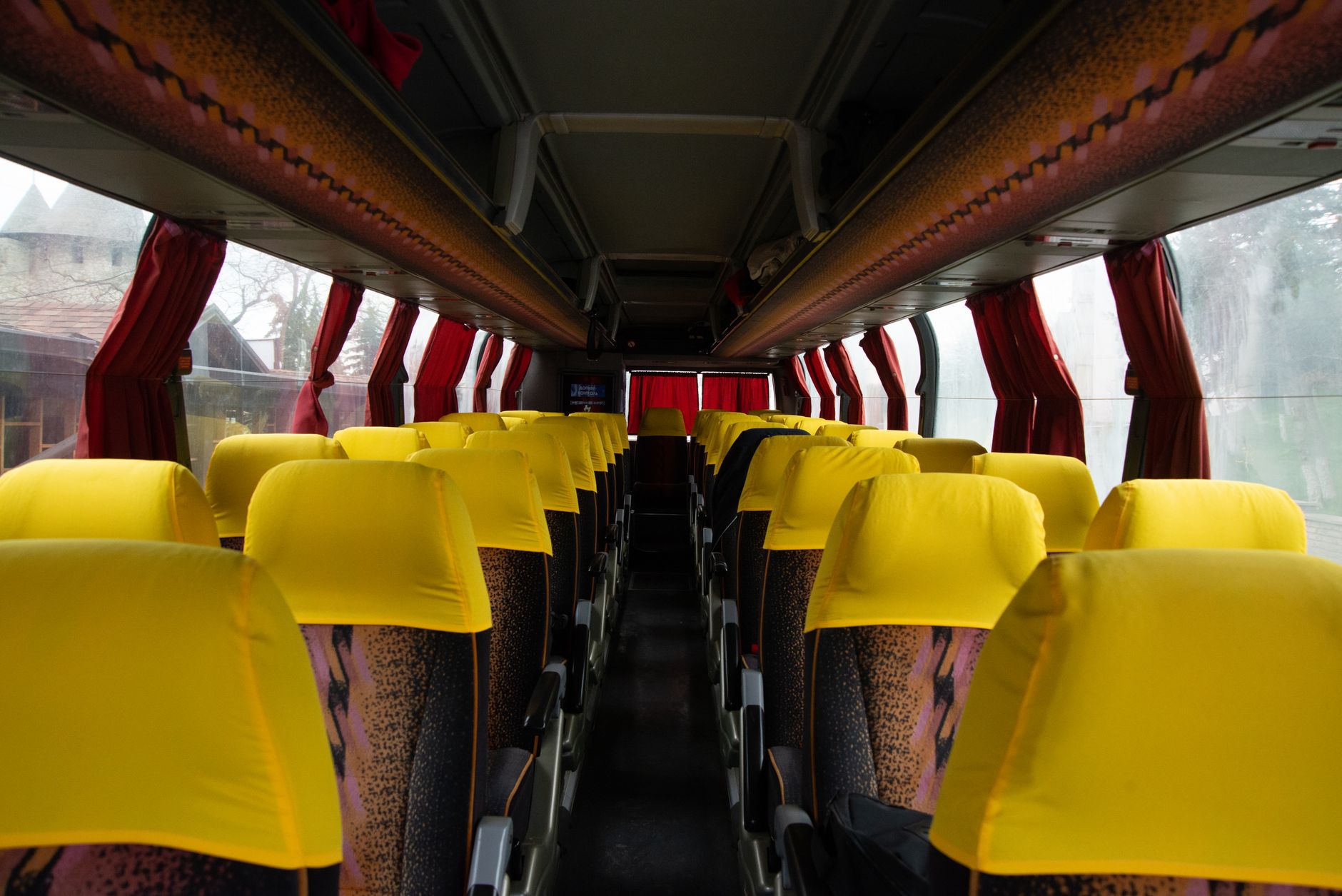
Vehicle selection starts with the confirmed headcount, baggage plan, and road network rather than the destination name alone. A 56-Passenger Motor Coach is the strongest fit for a full group that wants one vehicle, reclining seats, overhead storage, a restroom, entertainment connections, and large underfloor luggage bays. Smaller vehicles can be easier at hotels, restaurants, and tight local streets, but splitting a group creates separate loading times and more complicated driver coordination. Around Carlsbad Caverns, the main issue is not ordinary highway access; it is confirming bus parking, designated unloading, and any current oversize restrictions before arrival. Reserve space for mobility devices, coolers, and checked luggage when deciding whether a nominal seat count is realistic.
| Vehicle | Seats | Best For | Notes |
|---|---|---|---|
| 56-Passenger Motor Coach | Up to 56 passengers | Use this as the default for a full-group multi-day tour traveling together from a distant origin. | Best long-haul comfort with reclining seats, overhead storage, restroom, DVD or USB capability, and underfloor luggage bays; verify actual cargo capacity for a full load. |
| 40- to 50-Passenger Motor Coach | 40-50 passengers | Choose it when the roster is below full capacity but the group still needs one coach for long highway legs. | Provides motor coach amenities and useful luggage capacity while leaving more seat and cargo margin for mobility devices or bulky bags. |
| 24- to 35-Passenger Mini Coach | 24-35 passengers | Use it for a medium-size group or a split operation where the route includes tighter local access and less baggage. | Usually easier at smaller hotels, restaurants, and local parking areas, but cargo space and onboard amenities vary substantially by carrier. |
| Executive Sprinter Van | 8-14 passengers | Reserve it for a small group, airport transfer, advance team, or overflow movement rather than the 56-passenger party. | Useful for small leadership groups and scouting movements, but limited luggage volume and fewer onboard facilities make it a poor substitute for a full-group motor coach. |
Routing, Timing, and On-the-Road Realities
For an El Paso origin, a typical route uses US 62 or US 180 toward Carlsbad, with Guadalupe Mountains National Park as a possible first stop if the group has enough daylight and the planned walking is appropriate. Albuquerque groups commonly work south on I-25 and US 285, while Dallas-Fort Worth and North Texas groups may use I-20, US 84, or other carrier-selected corridors before connecting through West Texas and southeastern New Mexico. San Antonio and Houston departures usually require a longer first travel day and may benefit from an overnight in the Midland-Odessa, Pecos, or other corridor market rather than a rushed arrival. Pickup timing should avoid sending a full coach through urban departure traffic at the same time as a fixed cave reservation. Build scheduled fuel, meal, restroom, and inspection stops into the dispatch plan, because a 56-Passenger Motor Coach does not load, fuel, or clear a restaurant lot like a string of passenger cars. The final approach should be checked for construction, weather, road restrictions, and current park instructions before the driver leaves the staging hotel.
At the park, plan a controlled passenger unload at the designated area and confirm where the motor coach may wait during the cavern visit. Do not promise parking at every overlook, trailhead, or nearby attraction without checking current bus directions and lot restrictions. A 56-Passenger Motor Coach needs turning room, clearance, and an exit plan, especially when passenger loading overlaps with other tour groups, school buses, or peak-season traffic. The dispatcher should schedule the cave reservation with margin for highway delays, ticket processing, restrooms, and the walk from the unloading point. Driver hours remain the limiting factor on long return legs: the passenger-carrier framework generally permits 10 driving hours after 8 consecutive hours off duty, within a 15-hour on-duty window, subject to the carrier's weekly limits. If the group wants a late park finish followed by a long-distance move, plan a second driver or an additional overnight instead of relying on passenger impatience to solve a compliance problem.
What This Typically Costs
A 56-Passenger Motor Coach is usually quoted from a daily charter rate, with the final price shaped by total service days, route miles, and whether the carrier must deadhead the coach into the pickup market. A multi-day group tour commonly carries a daily minimum even on short sightseeing days, while long travel legs add mileage, driver time, tolls, and possible overnight positioning. Seasonal peaks around spring break, summer vacation, fall school calendars, and holiday periods can tighten availability and raise the rate. Driver lodging and meals are commonly listed separately or built into the operational quote, and a second driver may be required when the schedule cannot fit legal hours. Ask for line items covering fuel adjustments, parking, tolls, permits, admissions, and driver gratuity rather than assuming they are included. In most markets, a full multi-day run commonly reaches a few thousand dollars per operating day, but the actual range depends heavily on origin, deadhead miles, dates, and how many days the motor coach remains assigned.
Frequently Asked Questions
How many days should a Carlsbad Caverns group tour take?
A practical Carlsbad Caverns group tour usually takes four to six days from a major Texas, New Mexico, or regional origin. A four-day plan can work from El Paso, Albuquerque, or nearby West Texas, with one travel day each way and one full park day. Groups coming from Dallas-Fort Worth, Houston, San Antonio, Denver, or Oklahoma City generally need additional travel time or a compressed schedule. The motor coach can cover long corridors efficiently, but the itinerary still has to allow meal, fuel, loading, and driver-rest stops. A 56-Passenger Motor Coach is most comfortable when the group treats the trip as a multi-day movement rather than a same-day excursion.
What are the best months for a motor coach trip to Carlsbad Caverns?
April through May and late September through October are commonly the most manageable windows for a Carlsbad Caverns group tour because daytime conditions are generally easier to handle than peak summer heat. Summer remains popular but requires earlier starts, water planning, and realistic outdoor walking expectations. Winter can offer lighter visitation, though cold, wind, weather, and shorter daylight can affect above-ground stops and highway timing. Avoid building the entire plan around a holiday date because Carlsbad Caverns National Park closes on Thanksgiving, Christmas, and New Year's Day. Check current park operations before issuing final passenger instructions.
What does a realistic multi-day itinerary look like?
A workable four-day example starts with a morning pickup in El Paso or Albuquerque, a controlled travel leg, lunch, and a first stop such as Guadalupe Mountains National Park, Sitting Bull Falls, or the Carlsbad city area if timing permits. The group then checks into a Carlsbad hotel, with Roswell or Artesia useful only when inventory or pricing makes the extra positioning worthwhile. Day two begins early at the park visitor center for timed cave entry, followed by the Big Room Trail and a controlled return to town. A second park day can cover a ranger-guided program if available, the Bat Flight Amphitheater seasonally, or a slower repeat of the visitor center and surface area. The final day is reserved for the return corridor, with fuel and meal stops selected around the coach's highway position rather than improvised downtown parking.
Do groups need reservations for Carlsbad Caverns?
Carlsbad Caverns requires cave entry reservations, and reservations select an entry time rather than replacing admission or guaranteeing immediate group processing. The park advises advance reservations, and the timed-entry system permits reservations in advance with same-day availability closing early in the morning. A 56-Passenger Motor Coach should arrive with enough margin for unloading, restrooms, ticket handling, and passenger movement before the reserved window. The visitor center is generally open from 9:00 a.m. to 5:00 p.m., with the last cavern entrance at 2:30 p.m.; verify current hours before travel. Ranger-guided tours have separate availability and should never be promised until confirmed.
Can a 56-Passenger Motor Coach park at the park and nearby attractions?
A 56-Passenger Motor Coach fits the main visitor-center approach, but the dispatcher should verify current park instructions for vehicle size, loading, and designated bus parking before the trip. Do not assume a motor coach can use every scenic pullout, trailhead, or nearby commercial lot. Oversize routing should follow the park's posted road restrictions and the carrier's approved route, with low-clearance, tight-turn, and construction checks completed before departure. The driver should use the designated unloading area, keep the aisle clear, and move the coach only when directed by staff or the operating plan. Separate parking or staging may be needed for long dwell times, and private venue lots outside the park may impose their own bus permits or parking controls.
How do driver hours affect this group tour?
Federal passenger-carrier rules generally allow up to 10 hours of driving after at least 8 consecutive hours off duty, with a 15-hour on-duty window and a 60-hour limit in seven days or 70 hours in eight days depending on the carrier schedule. These are maximums, not a target schedule, because loading, fueling, meals, traffic, inspections, and passenger delays consume on-duty time. A late pickup followed by a long highway leg can force a later arrival, a relief driver, or an additional overnight. The driver must also account for work performed for another employer when applicable. For a multi-day group tour, build each travel day around legal duty limits and protect the driver's overnight rest rather than promising an exact arrival time without a dispatch review.
Why choose a 56-Passenger Motor Coach for this trip?
Most full-size motor coaches have reclining seats, overhead storage, a restroom, entertainment equipment such as DVD or USB capability, and underfloor luggage bays. The 56-Passenger Motor Coach is the workhorse of long-haul group travel and is well suited to schools, churches, alumni groups, senior tours, family reunions, and organized travel clubs. It keeps the full group together and reduces the need for several smaller vehicles over long distances. Luggage capacity still depends on passenger baggage size, mobility equipment, coolers, and whether the group carries camping or event supplies. Confirm the carrier's actual bay dimensions and accessibility equipment before assigning a full passenger load.
How to Book
To quote the trip, have the travel dates, pickup address, passenger count, baggage expectations, hotel plan, and every requested stop ready. Include whether the group needs wheelchair space, a second driver, a ranger-guided program, or a fixed cave-entry time. US Bus Trips can typically return a workable quote within 4 business hours when the itinerary is complete, subject to carrier availability and park confirmation. The confirmation should identify the motor coach class, service dates, pickup and drop-off points, included mileage or deadhead treatment, driver lodging responsibility, parking and toll assumptions, and cancellation terms; contact US Bus Trips with the route details before placing deposits.
Related Trips You Might Also Consider
- Choir Competition — Mid-Atlantic Region
- Robotics Competition — South Central Region
- Yosemite — 14-Passenger Sprinter
- Mammoth Cave — 36-Passenger Mini Coach
- Minneapolis, MN to Fargo, ND
- Austin, TX to Houston, TX
- Cross-Country Charter Bus Overview
- All Group Trip Types
- See the Full Fleet (Sprinters through 56-pax coaches)
- Get a Free Quote in 60 Seconds