
US Bus Trips books Yosemite group tour transportation for families, corporate retreats, wedding parties, and small escorted groups that want one vehicle from pickup through the park.
Overview
A Yosemite group tour in a 14-Passenger Sprinter usually serves a compact party that wants private transportation rather than joining a scheduled excursion. Common customers include family reunions, corporate leadership retreats, wedding guests, university alumni groups, photography clubs, and VIP visitors arriving through San Francisco, Sacramento, Fresno, Reno, or Los Angeles. The practical advantage is one vehicle for the airport, hotel, restaurant, and park movements, with fewer handoffs than a rental-car plan. A typical multi-day booking combines an origin-city pickup with gateway lodging in El Portal, Mariposa, Groveland, Oakhurst, or Fish Camp. Groups staying inside Yosemite reduce daily road time but face limited inventory and higher peak-season demand. The quote should be built around the actual hotel and trail plan, not just the phrase Yosemite group tour.
A workable itinerary gives the driver enough time to approach Yosemite before the first major sightseeing day. Day 1 might start in San Francisco or Sacramento, use Highway 120, Highway 140, or Highway 41 as appropriate, and include a meal or grocery stop before lodging near El Portal, Mariposa, Groveland, or Oakhurst. If the group comes from Los Angeles, San Diego, Las Vegas, Reno, or another distant market, day 1 may be almost entirely travel, with a second driver or an overnight staging plan needed. Day 2 can cover Yosemite Valley, including Tunnel View where vehicle access and turnout conditions permit, Yosemite Falls, Valley View, and a controlled drop at Yosemite Valley Lodge. Day 3 can focus on Mariposa Grove when road and reservation rules fit, or on Glacier Point when the seasonal road is open and the assigned vehicle is allowed. A four- or five-day multi-day schedule can add Tuolumne Meadows, Tioga Road, Bass Lake, Mono Lake, or a slower return through the Sierra foothills.
Park rules affect both permits and where a commercial vehicle may wait. Commercial passenger vehicles over 21 feet are directed to designated bus parking, while vehicles 21 feet and under generally use available auto spaces and cannot occupy bus spaces except at specified locations. Yosemite Valley Lodge has a bus drop-off area and designated bus parking, and Mariposa Grove has commercial parking and capacity-based reservation requirements. A Commercial Use Authorization may be required for the paid operation, but authorization does not guarantee a space. The operator must avoid shuttle stops, double parking, residential parking, and blocking ordinary car spaces. For a 14-Passenger Sprinter, the dispatcher should verify the actual body length and capacity, then confirm whether the route includes restricted roads such as Hetch Hetchy Road, Mariposa Grove Road, Glacier Point Road, or seasonal Tioga Road. This level of checking matters more than choosing the vehicle from a brochure description.
Fleet Options
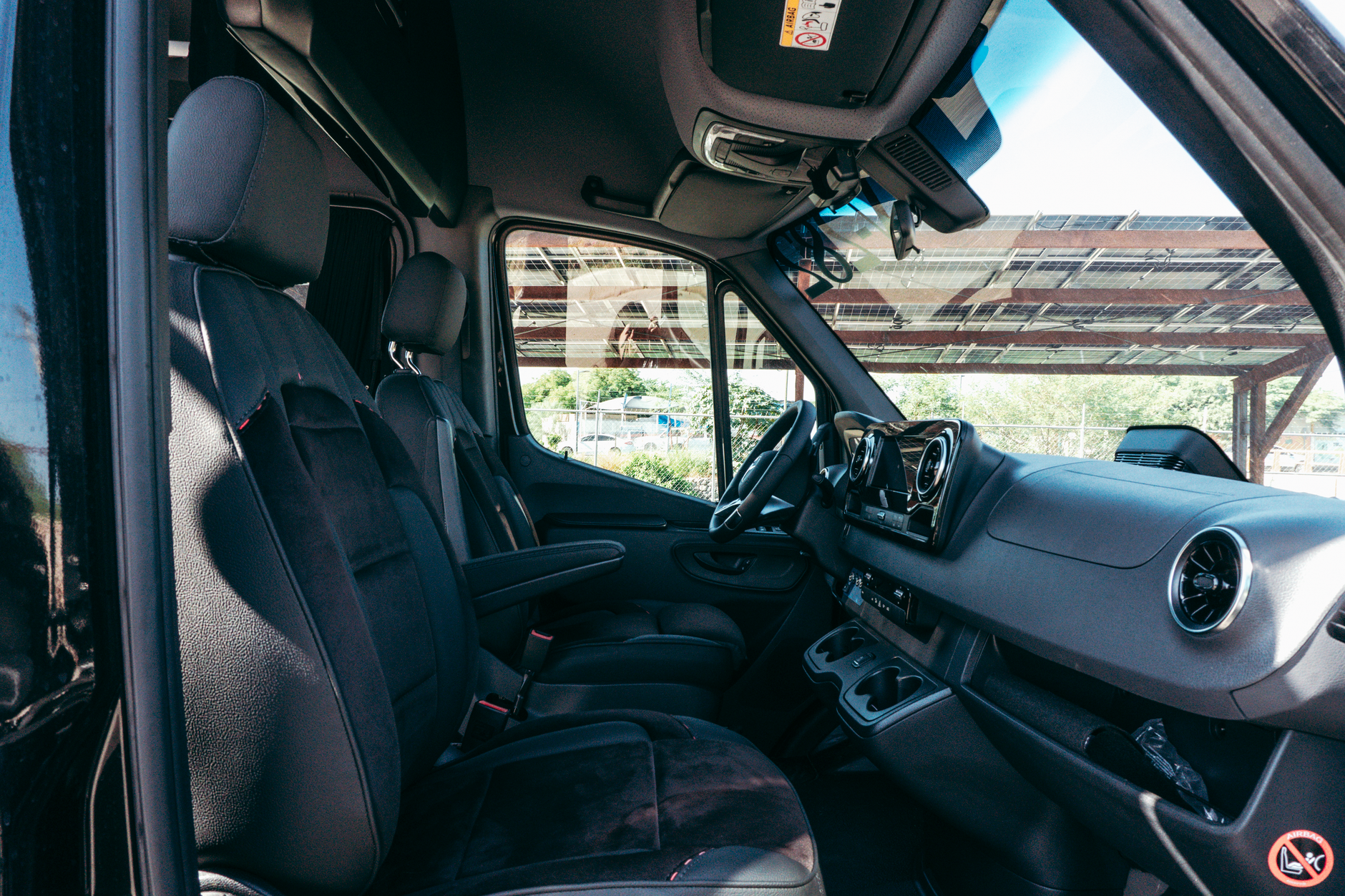
A 14-Passenger Sprinter is the natural starting point when the headcount is close to 14 and the group values direct service over maximum luggage capacity. An Executive Mercedes Sprinter or Ford Transit typically provides leather captain's chairs, WiFi, USB charging, and a more private cabin than a standard van. Its small cargo area works for soft bags and light personal items, but a full suitcase per passenger can exceed practical capacity on a multi-day trip. A motor coach offers better luggage space and onboard room but needs more deliberate Yosemite routing, loading, and parking coordination. Confirm actual vehicle length, height, luggage volume, and whether the route includes tight hotel lots, trailhead roads, or restricted park segments.
| Vehicle | Seats | Best For | Notes |
|---|---|---|---|
| Executive Mercedes Sprinter | 10-14 passengers | Use for a polished 14-Passenger Sprinter group tour with direct hotel-to-park service and limited equipment. | Best comfort match for VIP transfers and small tour groups; leather captain's chairs, WiFi, USB, and small cargo favor light luggage and controlled loading. |
| Ford Transit passenger van | 10-14 passengers | Use when the group needs a cost-conscious Yosemite shuttle with flexible pickup points and modest luggage. | A practical small-group platform with easier neighborhood access than a motor coach, but confirm seating layout and cargo space before accepting full-size luggage. |
| Mini coach | 18- thirty passengers | Use when the headcount, luggage, or comfort requirement is above Sprinter capacity but below full motor coach size. | Adds luggage capacity and a wider aisle than a Sprinter, but requires more attention to Yosemite length limits, bus parking, and hotel access. |
| Motor coach | 35-56 passengers | Use for a larger multi-day group tour or when equipment and luggage make a 14-Passenger Sprinter impractical. | Best for larger groups and substantial luggage, yet it needs designated loading and parking, oversize route checks, and careful access planning at Yosemite venues. |
Routing, Timing, and On-the-Road Realities
The approach corridor should be selected from the origin and season, not from the shortest map distance alone. Highway 140 through Merced and Mariposa can be useful for El Portal staging, while Highway 120 through Manteca, Groveland, and Big Oak Flat is a common approach from the Bay Area; Highway 41 through Fresno, Oakhurst, and Fish Camp serves southern access. San Francisco and Sacramento departures should leave early enough to clear Bay Area or Central Valley traffic before the Sierra approach, especially on Friday afternoons and summer weekends. Los Angeles and San Diego groups should generally plan an overnight gateway stop or a long travel day rather than combining a full origin run with a full Yosemite touring shift. Reno-origin groups need a current check on Tioga Road status and elevation weather before using an east-side approach. Snow, chain controls, construction, wildfire closures, and holiday congestion can change the usable corridor, so dispatch should confirm road conditions shortly before departure.
Inside Yosemite, the 14-Passenger Sprinter should unload only in designated areas and then move to an approved lot or legal staging location. A vehicle over 21 feet must use designated bus parking, and even a smaller commercial vehicle cannot assume that a bus space is available. Yosemite Valley sightseeing works best when the Sprinter drops passengers near the planned activity, parks legally, and reunites at a scheduled time instead of circulating through crowded valley roads. Glacier Point Road, Hetch Hetchy Road, Mariposa Grove Road, and high-country roads have separate length, width, height, seasonal, or authorization constraints that need a vehicle-specific review. The driver-hours plan should count pickup, loading, traffic, waiting, fueling, park circulation, and return service; federal passenger-carrier limits generally allow up to 10 hours of driving after 8 consecutive hours off duty and prohibit driving after 15 hours on duty. For a multi-day group tour, lodging the driver near the group and setting a firm service cutoff is usually safer than extending the day because the vehicle is available.
What This Typically Costs
A Yosemite 14-Passenger Sprinter quote is usually built from a daily vehicle-and-driver minimum, mileage, and any deadhead needed to reach the pickup and return the vehicle home. A multi-day run commonly carries a per-day minimum even when the Sprinter makes short in-park moves, while long approaches from the Bay Area, Southern California, Reno, or Las Vegas add mileage and positioning time. Seasonal peaks in late spring, summer, and fall color periods can tighten vehicle supply and raise the operating minimum. Budget separately for driver lodging and meals when the driver stays with the group, plus fuel adjustments, tolls, park or venue fees, and parking charges where applicable. Driver gratuity is normally a customer-paid line item rather than part of the base rate. A typical Yosemite group tour can therefore run from several thousand dollars for a compact regional multi-day movement to materially more when it includes long deadhead, premium lodging, or several operating days.
Frequently Asked Questions
What are the best months for a Yosemite group tour?','a':'May through October is the broadest operating window, but conditions vary by elevation and road opening. Late May and June usually offer strong waterfall flow, while July and August provide the most dependable access to higher-elevation roads but bring the heaviest demand and traffic. September and early October often offer a useful balance of access, lower congestion, and comfortable valley temperatures, with fall color becoming more visible later in the season. Winter can work for a focused valley, snow, or holiday group tour, but chain controls, temporary closures, shorter daylight, and limited high-country access require a flexible plan.'},{
A realistic plan is three to five days, depending on the pickup market and whether the group wants only Yosemite Valley or also Mariposa Grove, Glacier Point, Tuolumne Meadows, or nearby towns. From San Francisco or Sacramento, day one can cover pickup and the approach to the park, followed by two full in-park days. From Los Angeles, San Diego, Las Vegas, Reno, or distant out-of-state origins, add a travel day or use a driver change so the group is not spending the first park day in transit. A 14-Passenger Sprinter works best when the itinerary protects daylight for sightseeing rather than forcing a same-day return.
Can a 14-Passenger Sprinter enter Yosemite and use bus parking?','a':'A 14-Passenger Sprinter must be measured by its actual length and treated under the applicable park rules, not by passenger count alone. Commercial passenger vehicles over 21 feet are required to use designated bus parking, while vehicles 21 feet and under generally use available auto spaces and may not use bus spaces except where specifically allowed. The park does not guarantee parking simply because a commercial authorization exists. The dispatcher should confirm the vehicle dimensions, planned lots, loading zones, and any required Commercial Use Authorization before finalizing the route.'},{
Can a 14-Passenger Sprinter enter Yosemite and use bus parking?
Does the group need a Yosemite commercial permit?','a':'Commercial operations may require a Yosemite Commercial Use Authorization, particularly when the carrier is conducting paid passenger service or using commercial bus facilities. Requirements also vary by destination within the park and by vehicle capacity. Mariposa Grove has additional commercial parking rules, including reservations for commercial carriers with vehicle capacity of 16 or more; a 14-passenger vehicle may fall below that stated threshold, but the operator still needs to verify current requirements. Permit approval does not guarantee a parking space, so the booking file should include both authorization review and a parking plan.'},{
Does the group need a Yosemite commercial permit?
What routing restrictions affect a Yosemite motor coach or Sprinter?','a':'A full-size motor coach is not interchangeable with a 14-Passenger Sprinter on Yosemite roads. Park rules include maximum length and height limits, and narrower or shorter road segments can have tighter restrictions. Vehicles over 21 feet face special parking requirements, while Glacier Point access has additional limits for vehicles over 30 feet or groups of 26 passengers or more beyond Badger Pass. Hetch Hetchy, Mariposa Grove Road, Tioga Road, and seasonal mountain routes each need a current road and vehicle check before dispatch. The final routing should use the vehicle assigned, not a generic map route.'},{
What routing restrictions affect a Yosemite motor coach or Sprinter?
How do driver hours work on a multi-day Yosemite trip?','a':'For interstate passenger operations, the driver generally may drive up to 10 hours after 8 consecutive hours off duty and may not remain on duty beyond 15 hours after that rest period. Weekly on-duty limits also apply, including the 60-hour or 70-hour rolling limits depending on the carrier schedule. Those limits include required inspections, fueling, loading, waiting, traffic, and other on-duty work, not only time moving on the highway. A Bay Area pickup followed by park touring can consume more of the day than the mileage suggests, so the itinerary should include a driver hotel and a planned end-of-service time. A second qualified driver or split routing may be needed for long approaches and extended touring days.'},{
How do driver hours work on a multi-day Yosemite trip?
What does a 14-Passenger Sprinter fit well for in Yosemite?','a':'An Executive Mercedes Sprinter or Ford Transit is well suited to 14 passengers traveling as a small group, family party, corporate retreat, wedding party, or VIP tour. Typical features include leather captain's chairs, WiFi, USB charging, and small cargo capacity, which favors soft luggage and disciplined packing. It is easier to stage than a motor coach in many pickup areas and can fit more naturally at hotels, restaurants, and ordinary parking lots. The tradeoff is limited luggage volume and less passenger separation than a full-size coach. For hard-sided cases, coolers, equipment, or long overnight travel, the group may need a larger vehicle or a luggage trailer subject to park restrictions.'},{
What does a 14-Passenger Sprinter fit well for in Yosemite?
Where should the group stay when touring Yosemite?','a':'Inside-the-park lodging minimizes daily driving but is limited, expensive during peak periods, and difficult to secure for larger blocks. Yosemite Valley Lodge is a practical in-park reference point for drop-off and bus staging, but the vehicle must use designated loading and parking areas rather than stopping wherever the group prefers. El Portal is the closest common staging area outside the valley and can reduce the approach from Highway 140. Mariposa, Groveland, Oakhurst, and Fish Camp offer additional inventory, but each creates a longer daily approach and can change the driver-hours calculation. Choose lodging only after mapping the exact trailheads, entrances, and evening return plan.'},{
Where should the group stay when touring Yosemite?
How to Book
To quote the run, have the pickup address, travel dates, passenger count, luggage estimate, hotel names, and a day-by-day Yosemite itinerary ready. Include requested stops such as Yosemite Valley Lodge, Mariposa Grove, Glacier Point, Tuolumne Meadows, El Portal, or nearby gateway towns, because road access and parking differ by vehicle. US Bus Trips can normally return a realistic quote within 4 business hours when those details are complete. The confirmation should identify the vehicle class, driver service window, mileage and deadhead treatment, lodging responsibility, parking or permit assumptions, cancellation terms, and the dispatch contact; reach us by phone or the online trip request form to start planning.
Related Trips You Might Also Consider
- Boston Freedom Trail — 56-Passenger Motor Coach
- New Orleans Mardi Gras — 14-Passenger Sprinter
- Arches — 24-Passenger Mini Bus
- Big Bend — 56-Passenger Motor Coach
- Las Vegas Casinos — 14-Passenger Sprinter
- Tucson, AZ to El Paso, TX
- Cross-Country Charter Bus Overview
- All Group Trip Types
- See the Full Fleet (Sprinters through 56-pax coaches)
- Get a Free Quote in 60 Seconds