
A Boston Freedom Trail group tour works best when the walking route, bus staging, hotel location, and driver duty plan are built together.
Overview
A Boston Freedom Trail group tour is a walking-focused operation supported by a motor coach, not a sightseeing loop that can stop at every landmark. The trail runs through Boston Common, the Massachusetts State House area, downtown historic streets, Faneuil Hall, the North End, and toward the Charlestown Navy Yard and Bunker Hill. A 56-Passenger Motor Coach is a strong fit for school groups, alumni organizations, church groups, family reunions, and historical societies traveling from New York, New Jersey, Pennsylvania, Connecticut, Rhode Island, or farther away. The group rides together on the highway, then unloads at a planned point and walks between clustered sites. Individual attractions may charge admission even though the public trail itself is free. The itinerary should identify which sites are guided visits, which are exterior stops, and where the bus waits while passengers are on foot.
Travel time controls the trip length more than the trail map. A nearby Rhode Island or Connecticut group may use a three-day structure, while a group from Washington, Philadelphia, Albany, or western New York usually needs additional travel protection and possibly four or five days. Day 1 can cover pickup, highway travel, meal stops, hotel check-in, and a limited first stop such as the USS Constitution area if arrival is early enough. Day 2 is better for Boston Common, the State House exterior, Old South Meeting House, Old State House, Faneuil Hall, Paul Revere House, and the North End, with walking time built between them. A final day can cover Bunker Hill Monument and Museum, Charlestown Navy Yard, a museum reservation, or the return corridor. Major events such as the Boston Marathon, Patriots Day activities, convention weeks, Red Sox games, parades, and college move-in periods can change both hotel pricing and bus access.
Best months for a Boston Freedom Trail group tour are generally May through October, when walking conditions and daylight support a full outdoor schedule. Summer is operationally busy because school groups, vacation travel, conventions, baseball, and cruise activity compete for hotels, curb space, and motor coach availability. September and October are often useful for educational groups and fall travel, but weekends can sell out around college activity and regional events. Winter bookings can work for museums and indoor programs, but snow, ice, early darkness, and weather-related congestion require more slack and a stronger indoor backup plan. The trail is open to public walkers, yet historic buildings, burial grounds, museums, and guided programs follow their own hours and admission policies. Build the group tour around timed admissions and meal reservations instead of assuming 56 people can walk into every venue together.
Fleet Options
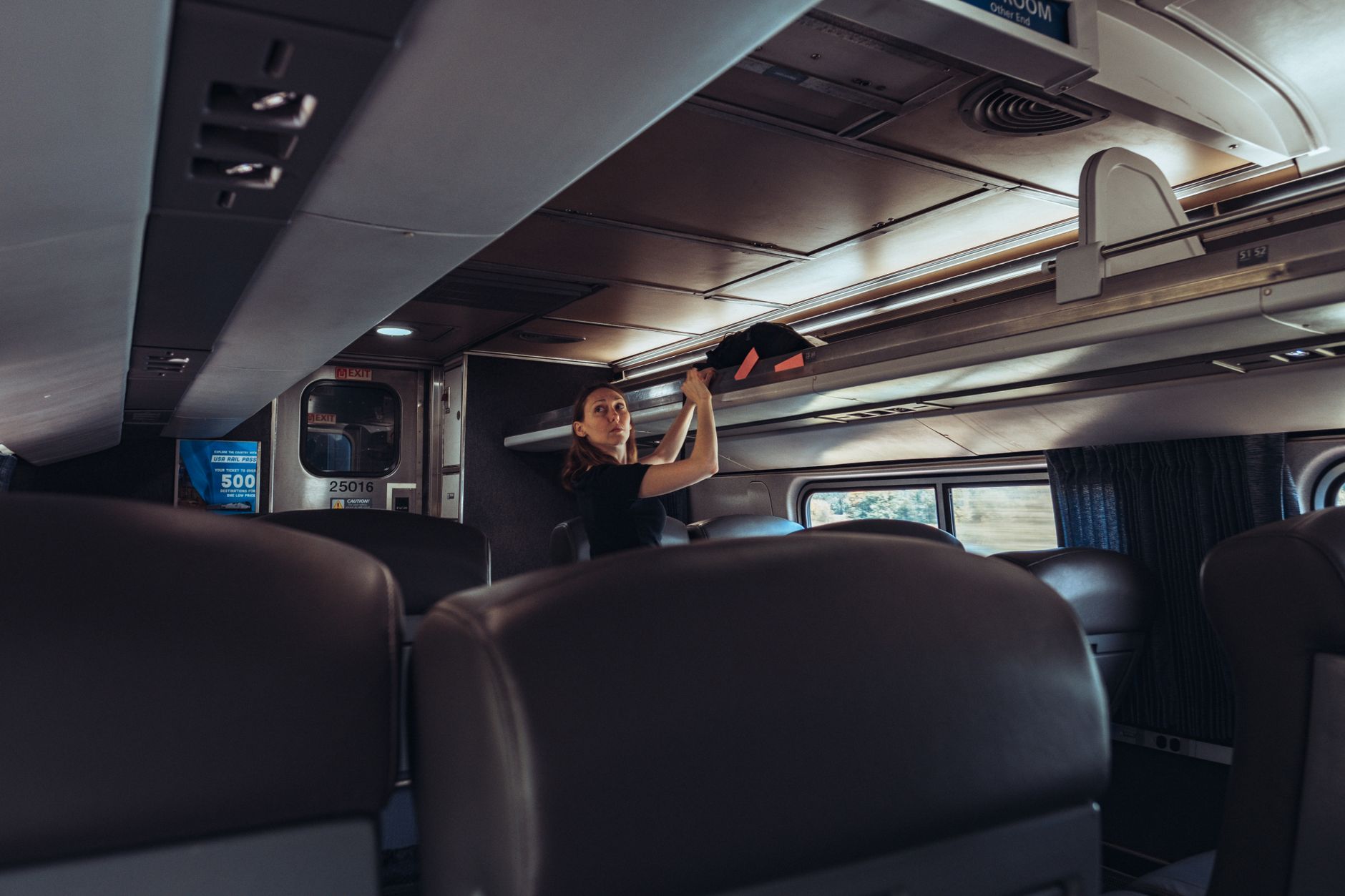
For 56 passengers with overnight bags, the 56-Passenger Motor Coach is usually the correct starting point because it combines a full seating plan with underfloor luggage capacity and onboard comfort. It is the workhorse of long-haul group travel, with reclining seats, overhead storage, a restroom, DVD or USB features depending on the assigned coach, and luggage bays underneath. The layout suits a full-group multi-day tour where everyone rides together, especially from the Northeast or Mid-Atlantic into Boston. The tradeoff is maneuverability: downtown Boston has narrow, one-way, congested streets and limited curb space, so the bus should drop passengers at a planned perimeter location while the group walks between sites.
| Vehicle | Seats | Best For | Notes |
|---|---|---|---|
| 56-Passenger Motor Coach | Up to 56 passengers | Use this for a full group tour with overnight luggage traveling together from another state or for a multi-day itinerary with substantial highway mileage. | Best long-haul comfort with reclining seats, restroom, overhead storage, onboard media or USB depending on equipment, and large underfloor luggage bays; requires deliberate routing and bus parking. |
| 40- to 50-Passenger Motor Coach | Approximately 40 to 50 passengers | Use this when the confirmed headcount is below full capacity and the group wants motor coach comfort without booking the largest available vehicle. | Provides coach amenities and luggage-bay capacity with slightly less passenger capacity, but it still needs commercial loading and parking plans around downtown Boston. |
| 24- to 35-Passenger Mini Coach | Approximately 24 to 35 passengers | Use this for a smaller group or when the itinerary includes more local transfers and tighter access points than highway luggage capacity requires. | More manageable at hotel entrances and selected city streets, with less cargo volume and usually fewer onboard amenities than a full motor coach. |
| Executive Sprinter Van | Approximately 10 to 14 passengers | Use this only for a small advance team, airport transfer, or overflow movement rather than the main Boston Freedom Trail group tour. | Useful for short transfers and small executive groups, but luggage space, restroom availability, and seat capacity make it unsuitable for a 56-person multi-day tour. |
Routing, Timing, and On-the-Road Realities
For a 56-Passenger Motor Coach arriving from New York or New Jersey, the usual approach is I-95 or the New England Thruway network, with the final Boston segment affected by weekday congestion on I-93, Route 1, Route 9, the Massachusetts Turnpike, and the Southeast Expressway depending on origin. Philadelphia and Washington groups commonly arrive through the I-95 corridor and should protect the Boston arrival window from both New York traffic and downtown restrictions. A practical pickup often starts early enough to clear the origin market before peak traffic, but the dispatcher should not promise an early Boston walking start after a long overnight run. Plan a highway meal and fuel stop that lets the driver inspect the bus and manage passenger loading without losing the schedule. The first Boston stop should be a controlled drop at a location confirmed for the vehicle, not an address copied from a tourist map. The motor coach may then reposition to an approved lot or hotel staging location while passengers walk.
Downtown Boston requires curb discipline because one-way streets, delivery activity, construction, event closures, low clearances, and limited legal standing space can turn a short transfer into a missed admission. Street parking is not a dependable plan around Faneuil Hall, Boston Common, Bunker Hill, or the Charlestown Navy Yard; groups should budget for private parking or a controlled hotel or staging arrangement. The Boston Common Parking Garage is recommended for visitors starting the trail, but a full-size coach needs separate confirmation because passenger-car parking facilities are not automatically motorcoach facilities. The Nautica Parking Garage is identified for visitors to the Charlestown Navy Yard and Bunker Hill area, while the driver should verify whether the vehicle's height and dimensions are accepted before dispatch. Boston traffic rules also restrict larger commercial vehicles on certain parkways and roads, so routing should use the permitted major streets and shortest legal approaches. Keep the driver on duty during active loading, passenger supervision, or bus repositioning; a parked bus is not automatically an off-duty break. Federal passenger-carrier rules generally allow up to 10 driving hours after 8 consecutive hours off duty and no more than 15 on-duty hours in that window, with weekly limits also applying.
What This Typically Costs
A Boston Freedom Trail group tour in a 56-Passenger Motor Coach is normally quoted from a transportation day rate, mileage or trip-distance charge, and any deadhead required to position the bus before pickup or return it after drop-off. Multi-day work commonly carries a daily minimum, even when the coach is parked during a walking tour, because the vehicle and driver remain committed to the group. Typical pricing in most markets runs from a few thousand dollars per operating day to higher totals for peak dates, long Northeast corridors, or tight schedules; exact figures depend on origin, dates, and availability. Budget separately for driver overnight lodging, tolls, parking or staging fees, fuel adjustments, and any second-driver requirement. Driver gratuity is commonly treated as a separate line item, while hotel rooms for the driver may be arranged by the operator or charged back to the group. Spring school trips, summer vacations, fall foliage weekends, convention periods, and major Boston events can reduce availability and raise the transportation rate.
Frequently Asked Questions
What does a 56-Passenger Motor Coach include for a Boston Freedom Trail group tour?
A 56-Passenger Motor Coach is the workhorse of long-haul group travel for a full 56-person group tour. It provides reclining seats, overhead storage, a restroom, DVD or USB features depending on the coach, and luggage bays underneath. That combination works well when passengers are carrying overnight bags for a multi-day itinerary from New York, Philadelphia, Washington, or another state. The bus keeps the group together instead of splitting into vans, but it is not a vehicle to thread through every narrow downtown Boston street.
How many days should a group plan for the Boston Freedom Trail?
Plan at least three days for a practical multi-day group tour from a nearby Northeast origin: day 1 is travel and a limited first stop, day 2 covers the central Boston Freedom Trail, and day 3 handles Charlestown or the return trip. Groups coming from the Mid-Atlantic or farther west often need four or more days to avoid turning the first and last days into all-day bus runs. A one-day Boston visit is possible from nearby origins, but it leaves little margin for traffic, parking, meals, and walking time. The right duration depends on the pickup city, scheduled stops, and whether the group wants museums or nearby destinations.
What are the best months for a Boston Freedom Trail group tour?
The most comfortable planning windows are generally late spring, summer, and early fall, with May through October offering the broadest operating season. Summer brings school groups, family travel, conventions, baseball crowds, and heavier demand for downtown lodging and coaches. September and October can provide good walking conditions but often overlap with academic travel, college activity, conferences, and fall weekend demand. Winter can lower lodging and coach demand, but snow, icy sidewalks, early darkness, and weather-related traffic require more schedule protection. Avoid building a rigid itinerary around a major parade, marathon, convention, or sports event without checking road closures and hotel availability.
Does a motor coach need a permit or parking reservation for the Freedom Trail?
The Freedom Trail itself is a public walking route, while individual historic sites may have their own admission rules and fees. A motor coach generally cannot park beside every stop, so the driver needs approved loading, staging, or parking arrangements rather than an assumption that curb space will be available. NPS guidance identifies private garages near downtown and the Charlestown Navy Yard, including the Nautica Parking Garage near the USS Constitution area; a full-size coach may require advance confirmation that the facility accepts its height, length, and turning radius. The operator should verify current Boston traffic regulations, event restrictions, and any required commercial loading or parking permissions before dispatch. The trail includes uneven pavement, so the walking plan should also account for passengers with mobility limitations.
Can a 56-passenger bus drive directly to every Freedom Trail stop?
A 56-passenger bus should be routed on major approaches and permitted bus corridors rather than sent through narrow historic streets based only on a passenger map. The final approach to downtown, Faneuil Hall, Boston Common, and the North End should be checked for height limits, construction, one-way restrictions, curb controls, and event closures. Charlestown access for the USS Constitution and Bunker Hill Monument is usually planned separately because the best bus position may not be at the exact attraction entrance. Boston streets can change quickly during parades, the Boston Marathon, sports events, demonstrations, and utility work. The dispatcher should provide the driver with an operational drop point, not simply a venue name.
How do driver hours affect a multi-day Boston group tour?
Federal passenger-carrier rules generally limit a driver to 10 hours of driving after 8 consecutive hours off duty and 15 hours on duty after that same rest period. Weekly limits also apply, commonly 60 hours over 7 consecutive days or 70 hours over 8 days depending on the carrier's operating schedule. Loading, fueling, inspections, traffic-related readiness, and other work can count as on-duty time, so a long transfer followed by a full downtown shuttle day may exceed the plan even if the bus is parked for part of the afternoon. A second driver or a longer overnight stop may be necessary on extended corridors. Passenger stops count as driver off-duty only when the driver is fully relieved of responsibility for the bus, passengers, and baggage.
What information is needed to quote this group tour?
The group should be ready with the pickup address, exact headcount, luggage estimate, dates, hotel plan, mobility needs, and every planned stop. Include whether the bus must remain available during sightseeing, whether the group needs a hotel shuttle, and whether any travelers require accessible boarding or extra boarding time. A quote request should identify the origin corridor, requested arrival time, return deadline, and any fixed admissions or meals that affect the schedule. US Bus Trips can normally return a realistic transportation quote within 4 business hours when those details are complete. Confirmation should identify the vehicle class, operating dates, pickup instructions, driver or carrier contact process, included mileage or hours, exclusions, payment terms, and cancellation conditions.
How to Book
Start with travel dates, pickup address, passenger count, luggage estimate, hotel locations, and the full itinerary, including desired arrival and return times. Flag mobility needs, child seating requirements, accessible boarding, overnight driver arrangements, and whether the bus must remain available during the Boston Freedom Trail visit. US Bus Trips can typically return a realistic quote within 4 business hours when the operating details are complete. The confirmation should spell out the motor coach class, pickup instructions, schedule, mileage or daily minimum, parking and toll treatment, driver lodging, payment terms, and cancellation conditions; reach the booking team through the US Bus Trips inquiry channel with those details.
Related Trips You Might Also Consider
- Grand Canyon — 56-Passenger Motor Coach
- Hershey — 36-Passenger Mini Coach
- Wisconsin Dells — 36-Passenger Mini Coach
- Charleston — 24-Passenger Mini Bus
- San Antonio, TX to Dallas, TX
- Bryce Canyon — 14-Passenger Sprinter
- Cross-Country Charter Bus Overview
- All Group Trip Types
- See the Full Fleet (Sprinters through 56-pax coaches)
- Get a Free Quote in 60 Seconds