
A Charleston group tour in a 24-Passenger Mini Bus works well for small tours, executive retreats, reunions, and first-class-only groups traveling together.
Overview
A Charleston group tour needs a transportation plan built around the city rather than a generic point-to-point quote. The Historic District includes narrow streets, limited curb space, one-way patterns, and designated bus loading and parking areas, so the driver needs the approved route and stop sequence before arrival. Charleston requires permits for motor coach parking in the Historic District and for touring for hire, and the city directs buses to designated zones. A 24-Passenger Mini Bus may be easier to maneuver than a full-size motor coach, but it is still a passenger vehicle serving a regulated downtown itinerary. The typical customer is a family reunion, alumni group, church or civic organization, culinary tour, executive retreat, or first-class-only group that wants one vehicle without booking a 50-seat coach. Build the quote around actual service hours, not only the highway mileage.
The best Charleston travel windows are generally March through May and October through November, when walking tours, gardens, and waterfront stops are more comfortable. Spring demand can spike around Charleston Wine + Food, the Credit One Charleston Open, the Cooper River Bridge Run, and Spoleto or Piccolo Spoleto, while fall demand can rise around festivals, weddings, and the Coastal Carolina Fair. Summer is workable for Folly Beach, Isle of Palms, and other coastal programs, but humidity, afternoon storms, beach traffic, and passenger heat exposure require earlier starts and extra loading time. Winter often has lighter hotel and vehicle demand, although the group should confirm attraction hours and outdoor plans. A realistic multi-day program usually spends the first day traveling and checking in, then keeps days 2 through N focused on Charleston neighborhoods, plantations, museums, beaches, and timed meals. Reserve hotels and buses before publishing dates if the itinerary touches a major event weekend.
The 24-Passenger Mini Bus is a strong match when 24 travelers need a coordinated ride and the baggage load is moderate. It provides coach-style seating for longer corridors, with luggage carried in a rear compartment or roof storage when the assigned vehicle is equipped for it. A group changing hotels every night, carrying golf bags, beach equipment, mobility devices, or event materials may need a larger motor coach or a separate luggage solution. Lodging should be staged near the first and last major activity, such as the Airport and North Charleston area for highway access, Mount Pleasant for Patriots Point and Boone Hall, or downtown for a walking-heavy program. Downtown hotels reduce local transfers but can add curb-management and bus-access complications. A Charleston group tour works best when the hotel, venue, and bus-loading plan are treated as one operating map.
Fleet Options
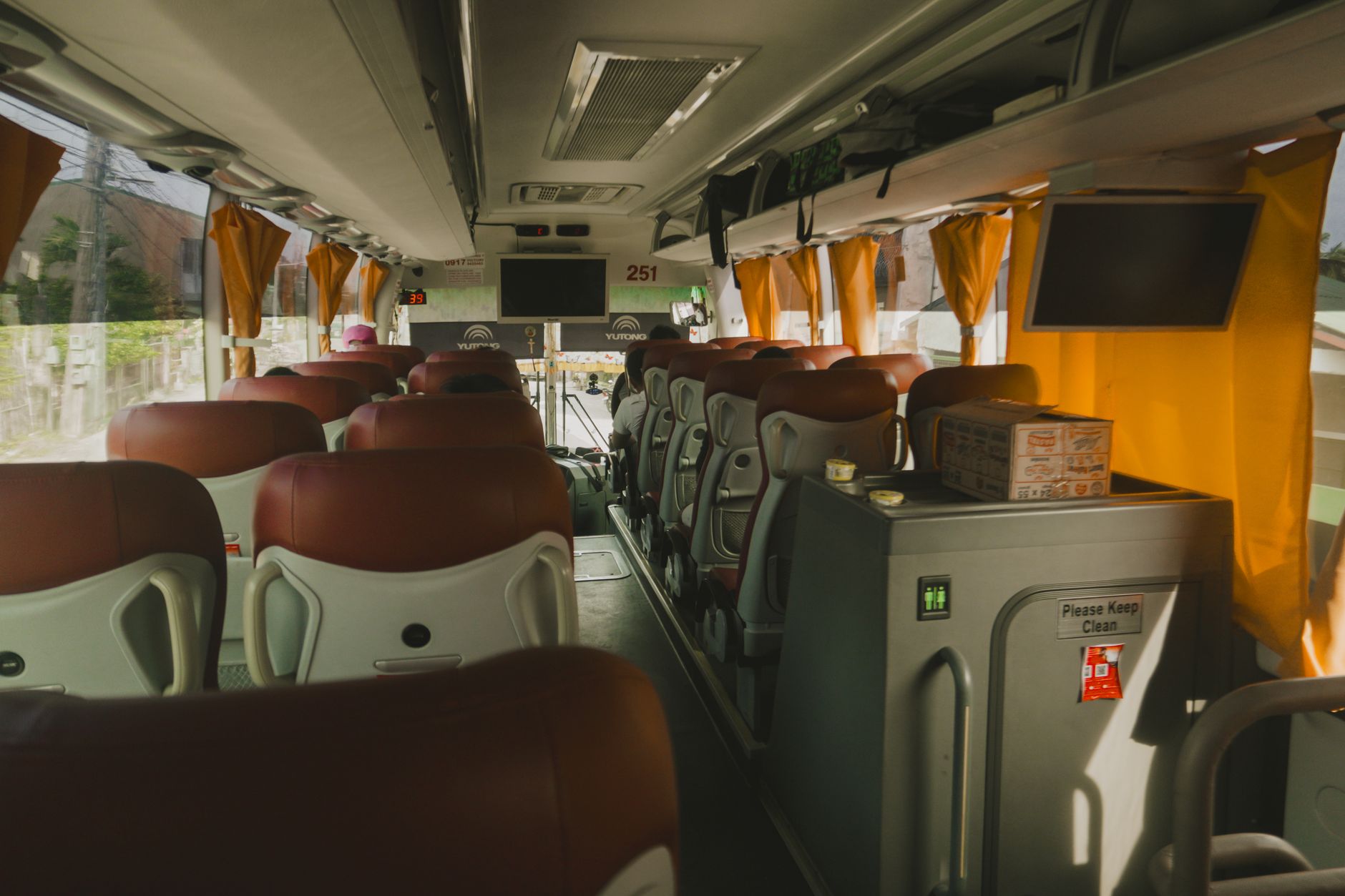
A 24-Passenger Mini Bus is a compact mini bus with coach-style seats, suited to 24 passengers when the group has moderate luggage and wants one vehicle. It fits small tours, executive retreats, and first-class-only groups better than a full-size motor coach when the itinerary includes regional roads or properties with limited parking. Rear luggage bays or roof storage are common, but capacity varies, so rolling bags should be counted rather than assumed. Charleston's historic district still requires approved bus routes and designated loading even when the vehicle is smaller than a conventional motor coach.
| Vehicle | Seats | Best For | Notes |
|---|---|---|---|
| 24-Passenger Mini Bus | Up to 24 passengers | Best for a full small tour, executive retreat, reunion, or first-class-only group traveling with moderate luggage. | Coach-style seating with rear or roof luggage depending on the model; compact footprint helps at smaller venues but does not eliminate Charleston bus-route rules. |
| 20-Passenger Mini Bus | 16-20 passengers | Fits groups below capacity that want more personal space and easier baggage handling than a fully loaded 24-passenger vehicle. | Leaves some seat and cargo flexibility for bulky bags or equipment while retaining a compact street and parking profile. |
| Executive Sprinter | 10-14 passengers | Works for an executive retreat, airport transfer, or light-luggage itinerary with fewer than 15 travelers. | More suitable for premium small groups and short transfers than for a fully occupied multi-day luggage run; cargo space is limited when every seat is used. |
| Full-Size Motor Coach | 40-56 passengers | Makes sense when the group exceeds mini-bus capacity, carries substantial luggage, or needs extra room for a long multi-day run. | Provides stronger underfloor luggage capacity and onboard comfort for long corridors, but needs more deliberate venue access, bus parking, and turning-radius planning. |
Routing, Timing, and On-the-Road Realities
For a long-distance Charleston group tour, schedule the first pickup with enough margin for city departure traffic, construction, meal stops, and a formal driver break rather than targeting a tight arrival. Common approach corridors include I-26 into North Charleston, I-95 for north-south arrivals, US 17 through Mount Pleasant, and the Ravenel Bridge connection into the peninsula. Morning arrivals should account for I-26 and bridge congestion, while beach departures can build quickly on summer weekends. A day-one stop near the Charleston Visitor Center, Waterfront Park, or a prearranged dinner is more reliable than promising a full downtown sightseeing loop after a long highway shift. For a motor coach or 24-Passenger Mini Bus entering the Historic District, confirm the approved route and legal unloading point before the driver leaves the hotel. Keep passengers together at loading zones and use a clear group leader so the bus does not wait curbside while people shop or finish meals.
Days 2 through N should be grouped geographically to reduce empty repositioning: downtown historic sites together, Mount Pleasant stops together, and plantation or beach visits on separate blocks. Boone Hall and Patriots Point use different approaches from downtown, while Folly Beach, Isle of Palms, and Sullivan's Island can require additional time for seasonal traffic and parking. Waterfront Park, City Market, the Battery, and Rainbow Row are sightseeing areas, not guaranteed bus parking spaces, so the itinerary needs a legal drop point and a walking plan. Fort Sumter adds ferry timing and mainland staging rather than a direct bus-accessible attraction. Driver hours must include deadhead, inspections, fueling, loading waits, and hotel moves; federal passenger-carrier limits generally cap driving at 10 hours after 8 hours off duty and on-duty time at 15 hours. For a multi-day run from outside the Southeast, plan an overnight or relief-driver strategy instead of forcing a same-day highway arrival followed by a late Charleston program.
What This Typically Costs
A Charleston group tour using a 24-Passenger Mini Bus is normally quoted from a daily vehicle minimum plus mileage, with the final rate shaped by trip length, operating days, and the motor coach market in the pickup region. Short local work may still carry a full-day minimum, while a multi-day run commonly prices each service day, deadhead miles to and from the group, tolls, parking, and any overnight driver lodging separately or as bundled line items. Longer routes are commonly priced with a per-mile component, and a vehicle that must travel empty between the carrier yard and Charleston can add substantial deadhead mileage. Spring festivals, bridge-run weekend, Spoleto and Piccolo Spoleto, summer beach demand, fall events, holidays, and major conventions can push availability and rates higher. Driver lodging, meals or per diem, fuel adjustments, tolls, venue parking, and driver gratuity should be identified before signing. In most markets, a multi-day 24-Passenger Mini Bus assignment commonly runs a few thousand dollars per service day before trip-specific extras, but exact pricing requires dates, pickup location, mileage, itinerary, and whether the vehicle stays with the group.
Frequently Asked Questions
Will a 24-Passenger Mini Bus hold 24 passengers and luggage?
For a 24-person group, a 24-Passenger Mini Bus is the right size only if all 24 seats are occupied and luggage is light. Compact models have coach-style seats and may offer rear storage or roof luggage, but cargo capacity varies by chassis and configuration. For rolling suitcases, golf bags, coolers, or several hotel changes, a 20-to-24-passenger vehicle or a larger motor coach with more underfloor luggage space may be safer. The carrier should confirm passenger count, luggage volume, and whether the group needs onboard equipment before assigning the bus.
What are the best months for a Charleston group tour?
Charleston is usually most manageable for outdoor sightseeing in March through May and October through November, when heat and humidity are less punishing and walking conditions are better. Spring brings Charleston Wine + Food, the Credit One Charleston Open, the Cooper River Bridge Run, and later Spoleto and Piccolo Spoleto, so hotels and buses should be reserved early. Fall has favorable touring weather but can overlap with the Coastal Carolina Fair and other regional events. June through August works for beach-focused programs but requires heat planning, earlier departures, and realistic loading times. January and February can offer lighter demand, though some outdoor or seasonal attractions operate on reduced schedules.
How many days should a multi-day Charleston group tour take?
A practical Charleston group tour from a nearby or mid-Atlantic origin is commonly three to five days, depending on the starting city and whether the group wants a beach or plantation day. Day 1 should cover the outbound drive, hotel check-in, and a low-risk first stop such as the Charleston Visitor Center area, Waterfront Park, or an early dinner with a timed motor coach loading plan. Day 2 can combine a guided historic district program with the Battery, Rainbow Row viewing, City Market, and a prearranged meal. Day 3 can use a choice of Boone Hall in Mount Pleasant, Fort Sumter access planning, the South Carolina Aquarium, or a beach excursion, subject to vehicle access and ferry or venue schedules. Day 4 can add Magnolia Plantation, Middleton Place, or a slower downtown morning before departure, with a fifth day useful for long-distance origins or an extra coastal excursion.
Does a 24-Passenger Mini Bus need a Charleston bus permit?
Charleston requires permits for motor coach parking and touring for hire in the Historic District, including vehicles operated by private organizations. The city provides designated bus loading and parking locations, and buses must follow the approved route rather than improvising around narrow historic streets. Applications should be submitted in advance, with the city advising no less than 48 hours before the event; approval is not automatic until the application and fee are reviewed. A 24-Passenger Mini Bus may be physically smaller than a full-size motor coach, but the operator should not assume that smaller dimensions remove city tour or parking requirements. The dispatcher should verify the current vehicle dimensions, route, stop plan, and permit status before sending the driver downtown.
Where can buses park for Charleston attractions?
Historic Charleston is not a free-roaming motor coach environment. Use the city's approved bus route and designated loading areas, then keep the stop brief so the driver is not blocking lanes, trolley operations, or residential access. For attractions outside the core, such as Boone Hall, Magnolia Plantation, Middleton Place, Patriots Point, or the beaches, confirm each property's bus entrance, staging area, parking charge, and maximum vehicle size. Fort Sumter is reached by ferry, so the bus only handles the mainland staging and passenger movement; timed boarding makes late arrivals costly. Daniel Island, Riverfront Park, and Ladson event sites can create separate traffic patterns during tennis, festival, fair, and race weekends.
How are driver hours handled on a multi-day Charleston trip?
Federal passenger-carrier rules generally allow up to 10 hours of driving after 8 consecutive hours off duty, with a 15-hour on-duty window and a 60-hour limit in seven days or 70 hours in eight days. Those are maximums, not a schedule target, and loading, fueling, inspections, traffic delays, venue waits, and hotel movements consume on-duty time. A long first day from the Northeast or Midwest may require a relief driver, a planned overnight stop, or a split itinerary rather than a same-day Charleston arrival followed by evening touring. The carrier also has to count qualifying work for another employer when calculating on-duty time. A responsible multi-day plan protects the driver's overnight rest and leaves recovery time for bridge congestion and passenger delays.
When should a group choose a larger motor coach instead?
The 24-Passenger Mini Bus fits small tours, executive retreats, family reunions, alumni groups, and first-class-only groups that want everyone together without paying for a full-size motor coach. Compact dimensions help on regional roads and at properties with limited parking, but Charleston's historic streets still require route discipline and legal loading locations. Coach-style seats are more comfortable than a van for multi-day travel, while rear or roof luggage storage depends on the exact vehicle. If the group carries large luggage, mobility equipment, event displays, or beach gear, a larger motor coach or support vehicle may be a better operational choice. Final vehicle selection should be based on passenger count, baggage, hotel changes, and the narrowest stop on the itinerary.
How to Book
To quote a Charleston group tour, send the travel dates, pickup address, passenger count, luggage estimate, hotel locations, and a stop-by-stop itinerary. Include whether the 24-Passenger Mini Bus must remain with the group, whether the run crosses state lines, and which Historic District or event venues are planned. US Bus Trips can typically return a quote within 4 business hours when those details are complete, subject to carrier availability and permit review. Confirmation should identify the vehicle class, service dates and hours, mileage or deadhead treatment, driver lodging, parking and toll assumptions, cancellation terms, and the dispatcher or operations contact for changes.
Related Trips You Might Also Consider
- DC Monuments — 24-Passenger Mini Bus
- Oakland, CA to Napa, CA
- Wichita, KS to Kansas City, MO
- High School Band Tour — Midwest Region
- Government Agency Shuttle — Southeast Region
- Sports Team Travel — Mid-Atlantic Region
- Cross-Country Charter Bus Overview
- All Group Trip Types
- See the Full Fleet (Sprinters through 56-pax coaches)
- Get a Free Quote in 60 Seconds