
US Bus Trips books Grand Teton group tour transportation for families, corporate retreats, wedding parties, and small escorted groups traveling across state lines.
Overview
A Grand Teton group tour in a 14-Passenger Sprinter is usually booked by families, corporate retreat planners, wedding parties, university alumni groups, and small outdoor clubs that want one vehicle instead of several rental cars. Common origins include Salt Lake City, Boise, Idaho Falls, Denver, Jackson, and regional airports, with the route often crossing multiple states before the group reaches the park. The vehicle is most useful when the travelers have soft luggage, coordinated pickup times, and a defined list of overlooks or trailheads. An Executive Mercedes Sprinter or Ford Transit gives the group a consistent driver, leather captain's chairs, WiFi, USB charging, and easier curb access than a full-size motor coach. The tradeoff is compact cargo space and less tolerance for oversized coolers, hard cases, or full luggage at every seat. Dispatch needs the actual headcount and baggage plan before confirming that fourteen seats is operationally comfortable.
A realistic multi-day plan usually starts with travel on Day 1, a controlled meal and fuel stop, and a first-night base in Jackson, Teton Village, or the Idaho Falls corridor. Days 2 and 3 can cover the Moose area, Jenny Lake, Mormon Row, Snake River viewpoints, Jackson Lake Dam, Signal Mountain, and Colter Bay, subject to road openings and parking conditions. A group tour that adds Yellowstone needs separate mileage, border-corridor timing, and a stronger driver-hours plan rather than treating it as a casual extension of Grand Teton. Summer mornings are the key operating window because trailhead lots and scenic pullouts fill quickly, especially around Jenny Lake and the US 89 corridor. The 14-Passenger Sprinter can make shorter stops than a motor coach, but it still cannot stop wherever passengers request. The driver needs legal pullouts, safe loading space, and enough time to return to the hotel without compressing required breaks.
Grand Teton access changes by season, and the itinerary should be checked against current National Park Service road and facility conditions before the vehicle is dispatched. The park is open year-round, but the most popular visitor period is May through September, while winter brings reduced facilities and seasonal road closures. Teton Park Road is generally closed to cars from November 1 through April 30 between Taggart Lake Trailhead and Signal Mountain, and Moose-Wilson Road closes for the winter on a separate schedule that can depend on conditions. A commercial road-based tour must pay the applicable commercial entrance fee, while Commercial Use Authorization requirements depend on the activity and operating arrangement. In-park pickup permission, tour parking, and any special venue access should be verified rather than assumed. This is why a 14-Passenger Sprinter group tour needs an operations review, not only a vehicle reservation.
Fleet Options
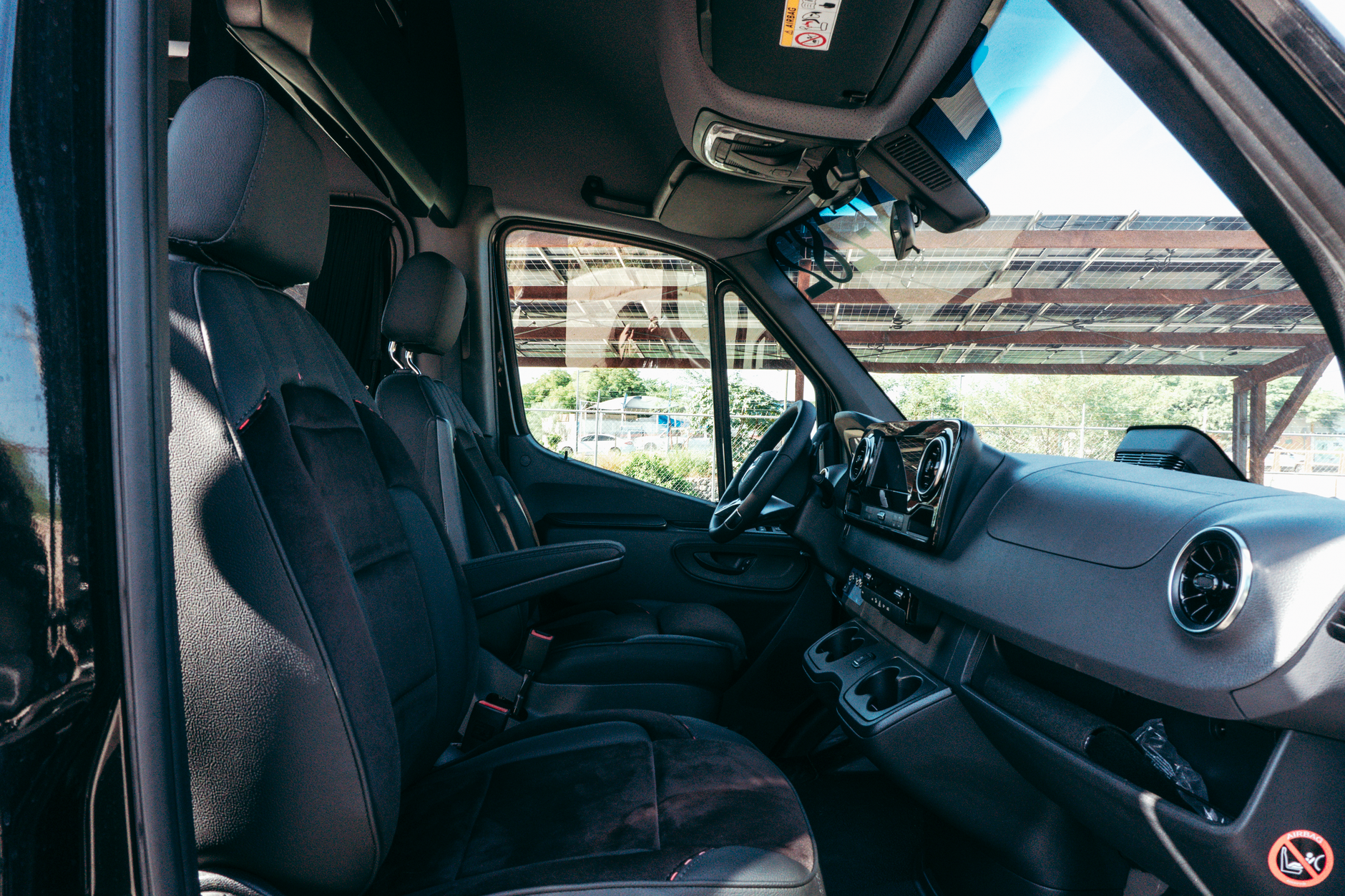
A 14-Passenger Sprinter is a strong fit when the passenger count is close to fourteen and the group values direct routing over maximum baggage capacity. An Executive Mercedes Sprinter or Ford Transit commonly provides leather captain's chairs, WiFi, USB charging, and a small cargo area for soft luggage and day bags. It works well for VIP transfers, wedding groups, family tours, and small multi-day groups that pack lightly. If everyone brings full-size checked bags, ski equipment, coolers, or technical hiking gear, reduce the passenger count or move up to a larger vehicle. Jackson-area hotel drives and scenic pullouts are easier in a Sprinter than in a full-size motor coach, but narrow or restricted park roads still require route review.
| Vehicle | Seats | Best For | Notes |
|---|---|---|---|
| Executive Mercedes Sprinter | 10-14 passengers | Best for a premium small group tour with moderate luggage and frequent scenic stops. | Leather captain's chairs, WiFi, USB power, and a compact cargo bay suit VIP transfers and light luggage, but fourteen full-size suitcases can use the available space quickly. |
| Ford Transit passenger van | 10-14 passengers | Best when the group needs an efficient 14-Passenger Sprinter alternative for point-to-point service. | Practical seating and a smaller footprint help with hotel access and trailhead approaches, while cargo capacity remains limited when every seat is occupied. |
| Mini bus | 18-28 passengers | Best when the headcount exceeds fourteen or the group carries more luggage than a Sprinter can safely hold. | More upright storage and aisle space than a Sprinter help with luggage and longer days, but the larger body needs more deliberate parking and turning checks. |
| Motor coach | 35-56 passengers | Best for large organized groups, school travel, conferences, or event movements with established bus parking. | A motor coach provides the most passenger and luggage capacity, but Jackson hotel drives, small pullouts, tight trailhead lots, and restricted roads require a detailed access plan. |
Routing, Timing, and On-the-Road Realities
For a regional departure, route planning often uses US 89, US 191, US 26, and the Idaho Falls to Jackson approach, with the exact corridor determined by the pickup city and weather. From Salt Lake City, the run commonly follows I-15 north before connecting through western Wyoming and the Snake River corridor; from Boise, dispatch typically evaluates the US 20 or eastern Idaho approach. Denver-origin service needs a realistic overnight or relief strategy because the distance can consume most of the first operating day before the Grand Teton sightseeing begins. Schedule early pickups for park days, especially when Jenny Lake, Mormon Row, or Jackson Lake are on the manifest. Keep meal and fuel stops outside the most congested trailhead windows where possible. A 14-Passenger Sprinter handles hotel streets and short curbside movements better than a motor coach, but the driver still needs confirmed loading zones and a legal place to wait.
Parking is the controlling issue on many Grand Teton days, not the road mileage. Use designated lots and existing pullouts, keep the vehicle beyond the white line when roadside parking is allowed, and avoid creating an impromptu stop on a designated route. Moose-Wilson Road deserves a separate vehicle check because its published limits are much tighter than the general park vehicle allowance. For a motor coach, confirm whether a hotel, restaurant, visitor venue, or trailhead can accept the vehicle before finalizing the passenger itinerary. Build driver breaks, fuel, meal stops, and the return to the overnight base into the schedule rather than relying on empty travel time. If the itinerary crosses into Yellowstone or includes a late wildlife drive, plan a second operating day or a relief arrangement instead of extending the same driver's workday. Seasonal closures, construction, wildlife congestion, and sudden weather can all add time on the Grand Teton corridor.
What This Typically Costs
A 14-Passenger Sprinter quote normally combines a daily vehicle and driver minimum with mileage, deadhead, and any overnight service requirements. A multi-day group tour from Salt Lake City, Denver, Boise, or another distant origin can accumulate substantial non-revenue positioning miles before the Grand Teton work begins. Summer and early fall commonly price higher because Jackson lodging, driver rooms, and vehicle demand tighten, while shoulder-season dates can be easier to cover. Typical line items include fuel adjustments, tolls where applicable, park or commercial entrance charges, driver lodging, meals or per diem, and an optional driver gratuity. In most markets, a long regional charter commonly runs a few thousand dollars per service day before unusual deadhead, premium lodging, or extended standby is added. Ask for the mileage basis, minimum hours, cancellation terms, overnight plan, and whether gratuity is included rather than comparing only the headline daily rate.
Frequently Asked Questions
How many days should a Grand Teton group tour take?
For a comfortable Grand Teton group tour, plan on three to five days from a regional origin and four to six days from a distant state. Day 1 is often mostly travel, with a first-night stop in Jackson, Teton Village, Idaho Falls, or another practical staging point. A two-day in-park visit can cover Jenny Lake, Mormon Row, Snake River overlooks, Jackson Lake, and Colter Bay without turning every stop into a rushed photo break. Add a buffer day when the itinerary includes Yellowstone, rafting, hiking, or a fixed event. Winter and early spring require more flexibility because several scenic roads and facilities operate seasonally.
What are the best months for a Grand Teton group tour?
The most dependable window for a motor coach or 14-Passenger Sprinter is generally late May through September, with July and August bringing the heaviest visitor and lodging demand. June can offer long daylight but still has weather, construction, and opening-date variables on secondary roads. September often provides cooler conditions and fewer visitors, though nights are cold and some services begin reducing hours. October can work for a shoulder-season group tour if the plan stays on major roads and accepts changing conditions. From November through April, the park remains open but many roads, campgrounds, and visitor facilities are closed or reduced, so the itinerary must be built around winter access.
Does a 14-Passenger Sprinter need a Grand Teton park permit?
A 14-Passenger Sprinter fits a guided commercial tour especially well when the booked capacity stays at or below fourteen passengers and the group travels with moderate luggage. The National Park Service commercial-use guidance identifies a guided vehicle tour as a single vehicle itinerary for up to fourteen people, and current CUA conditions list a manufactured capacity limit of fifteen passengers for guided interpretive tours. Road-based commercial tours pay the applicable commercial entrance fee, while other commercial activities may require a Commercial Use Authorization. The operator should verify the exact service type, pickup permissions, insurance, and current park conditions before departure. Do not assume a general sightseeing booking has the same requirements as an in-park concession or scheduled shuttle.
Can a Sprinter use every road and pullout in Grand Teton?
A 14-Passenger Sprinter is not automatically treated like a large motor coach, but its actual length, width, turning clearance, and luggage load still matter. Keep the route on paved, approved corridors and confirm restrictions before using narrow roads such as Moose-Wilson Road. Current park guidance allows CUA vehicles up to forty feet in some operating conditions, while Moose-Wilson Road has a much tighter vehicle limit, so vehicle-specific routing is necessary. Tour vehicles using roadside pullouts must stay beyond the white line and use existing roadside pullouts or hardened surfaces. The driver should never create an informal stop on a travel lane or block a trailhead entrance.
How do driver hours affect a multi-day Grand Teton charter?
The driver-hours plan should separate driving time from passenger sightseeing and account for the return leg, repositioning, meal breaks, fuel, and hotel parking. A long first day from Denver, Salt Lake City, Boise, or another distant origin may consume the driver's available workday before the group reaches the park. For that reason, dispatch commonly uses a staged overnight near Idaho Falls, Jackson, or another corridor location rather than forcing a same-day arrival after excessive hours. Multi-day service also requires a clear plan for driver room, parking, and whether the vehicle remains with the group overnight. The final schedule must comply with applicable federal and state hours-of-service rules and the carrier's safety policies.
Where should a group stay for a Grand Teton tour?
Lodging is usually staged in Jackson, Teton Village, or the Idaho Falls corridor, depending on budget, inventory, and the day's first stop. Jackson is operationally convenient for early park departures but has limited coach-friendly hotel parking and high summer demand. Teton Village can work for resort-oriented groups but may require tighter vehicle access and more advance coordination. Idaho Falls can reduce room cost and provide easier highway access, but the daily drive into Grand Teton becomes longer. For a motor coach, confirm bus parking, loading zones, room availability, and driver accommodations before the passenger hotel is finalized.
What does a realistic Grand Teton group tour itinerary look like?
A practical sample begins with Day 1 travel to Jackson or Idaho Falls, with a controlled meal and fuel stop and an optional first look at the Snake River corridor if arrival time allows. Day 2 can cover Moose, the Craig Thomas Discovery and Visitor Center area, Jenny Lake access, and selected overlooks, with timing built around parking and trailhead congestion. Day 3 can use US 89, Mormon Row, Antelope Flats when open, Jackson Lake Dam, Signal Mountain, and Colter Bay, subject to road conditions and vehicle suitability. Day 4 can provide a weather buffer, a guided wildlife drive, Yellowstone access if separately planned, or the first return leg. A 14-Passenger Sprinter makes short scenic stops easier than a full-size motor coach, but it still needs legal pullouts and a driver break plan.
How to Book
To quote the run, have the travel dates, pickup address, passenger count, luggage estimate, hotel plan, and every requested stop ready. Include whether the vehicle must remain with the group overnight, whether Yellowstone is included, and whether the trip starts in Jackson, Idaho Falls, Salt Lake City, Denver, Boise, or another market. US Bus Trips typically returns a workable quote within 4 business hours, subject to carrier and seasonal availability. The confirmation should identify the vehicle class, service dates, pickup schedule, mileage or deadhead basis, driver lodging plan, cancellation terms, and known park-access assumptions; contact US Bus Trips with the itinerary and dispatch can refine the routing.
Related Trips You Might Also Consider
- Redwoods — 14-Passenger Sprinter
- Las Vegas, NV to Los Angeles, CA
- Charlotte, NC to Atlanta, GA
- Church Retreat — Southeast Region
- Government Agency Shuttle — Mid-Atlantic Region
- Badlands — 24-Passenger Mini Bus
- Cross-Country Charter Bus Overview
- All Group Trip Types
- See the Full Fleet (Sprinters through 56-pax coaches)
- Get a Free Quote in 60 Seconds