
A Mount Rushmore group tour in a 24-Passenger Mini Bus suits small tour parties, executive retreats, and first-class-only groups traveling through the Black Hills.
Overview
A 24-Passenger Mini Bus is a practical match for a Mount Rushmore group tour when the traveling party has up to 24 passengers and wants one dedicated vehicle. The typical customer is a family reunion, alumni group, church tour, corporate retreat, or escorted sightseeing group starting in Rapid City, Denver, Omaha, Minneapolis, or another regional market. Mount Rushmore is near Keystone, while Rapid City is the main staging city for airport arrivals, supplies, and hotel inventory. A multi-day plan should account for Badlands National Park on the east side, Custer State Park and Crazy Horse Memorial to the south, and Deadwood or Spearfish to the north. A full-size motor coach can handle more luggage, but the compact mini bus is often easier at hotel curbs and smaller Black Hills venues. The correct vehicle depends on baggage volume as much as passenger count.
A realistic group tour usually starts with a travel day into the Black Hills rather than promising sightseeing immediately after a long interstate pickup. Groups arriving by air may stage near Rapid City Regional Airport, while overland groups often use Rapid City, Keystone, Hill City, or Custer for lodging. Day 2 can begin at Mount Rushmore before the middle-of-day traffic buildup, followed by the Avenue of Flags, visitor facilities, and a scheduled meal. Additional days can include Custer State Park, the Wildlife Loop, Crazy Horse Memorial, and a controlled visit to Deadwood, with route choices adjusted for vehicle dimensions and weather. July and August bring the heaviest visitor volumes, while May, September, and October are commonly easier to manage. Holiday weekends and the Sturgis Motorcycle Rally period can tighten hotel inventory and increase road delays across the region.
Mount Rushmore facilities remain open most of the year except December 25, but operating hours vary by season and visitor services are reduced in winter. The memorial's parking structure is concession-operated, and commercial tour buses are directed to lane 4 rather than the regular passenger-vehicle lanes. The National Park Service states that no overnight parking is allowed within the memorial, so the driver must leave after the visit and stage at the group's hotel or another lawful location. Evening lighting and special amphitheater events can restrict nearby bus access around the program window. The group should not assume a federal parks pass covers the commercial parking charge. A dispatcher should verify current conditions, commercial parking instructions, road restrictions, and venue timing before the final run sheet is released.
Fleet Options
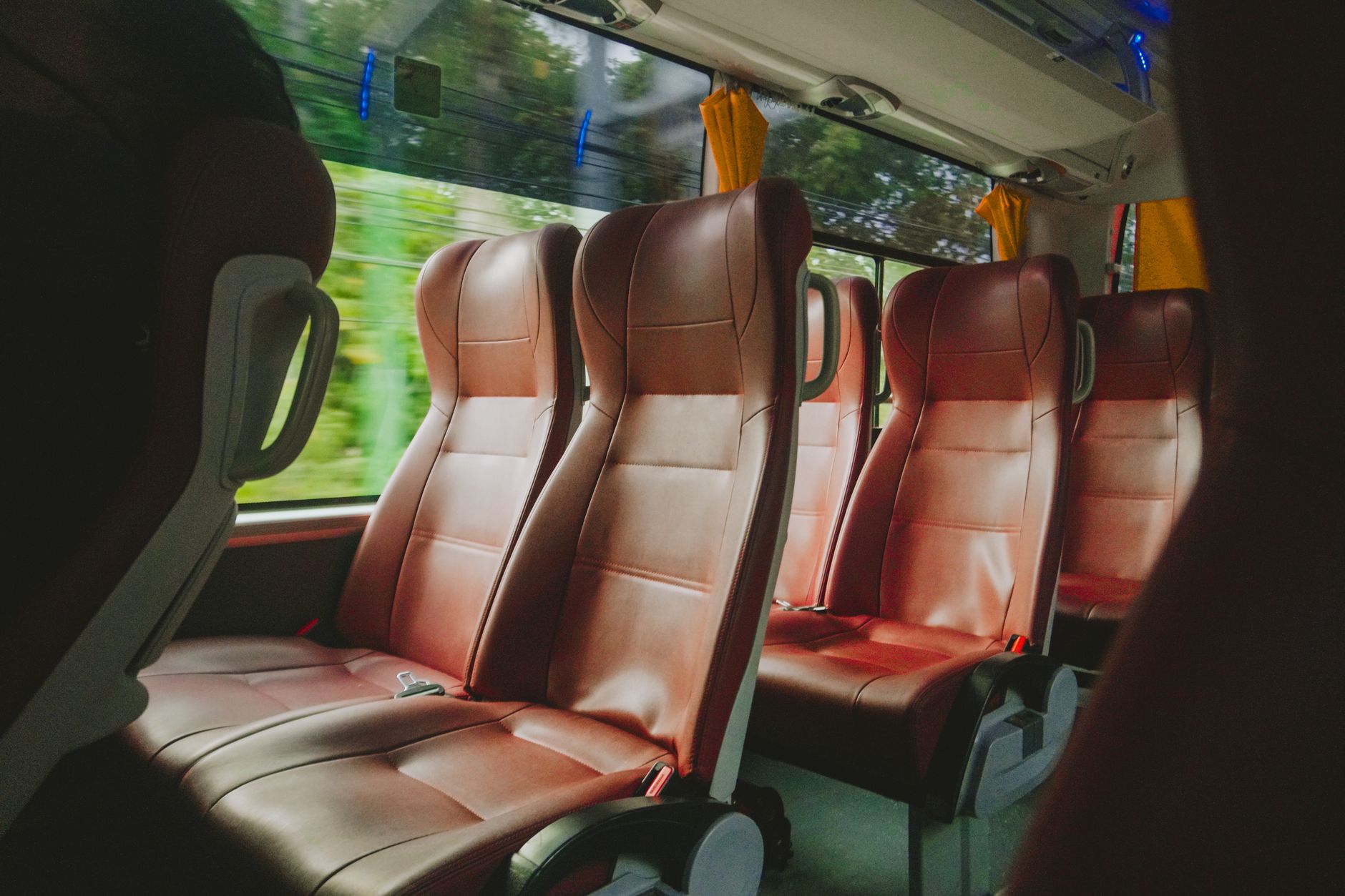
A 24-Passenger Mini Bus is usually the right starting point for a group tour with exactly 24 passengers, but the seating count is not the same as usable capacity. Confirm luggage volume, mobility equipment, cooler space, and whether the carrier places baggage in the rear or on the roof before finalizing the vehicle. The compact mini bus provides coach-style seats and works well for small tours, executive retreats, or first-class-only groups. It can also be easier to place at hotels and visitor facilities than a full-size motor coach, although the driver still needs the vehicle's dimensions for mountain roads and commercial parking lanes.
| Vehicle | Seats | Best For | Notes |
|---|---|---|---|
| 24-Passenger Mini Bus | Up to 24 passengers | Best when the headcount is 18 to 24 and the group wants a dedicated cabin without the size of a full motor coach. | Compact mini bus with coach-style seats and luggage in the rear or on the roof; ideal for small tours, executive retreats, and first-class-only groups. |
| Executive Sprinter | Up to 14 to 20 passengers | Fits an executive retreat or split group that prioritizes premium seating and frequent hotel or restaurant stops. | Premium seating and easy curb access, but luggage capacity is usually tighter and the passenger count may require more than one vehicle. |
| Mini Coach | Approximately 25 to 35 passengers | Useful when the group is near capacity with substantial luggage or when extra seat inventory is needed for staff and guides. | Offers more luggage flexibility and aisle comfort than many compact buses while remaining easier to stage than a full-size motor coach. |
| Motor Coach | Approximately 40 to 56 passengers | Makes sense when the group exceeds mini-bus capacity, carries substantial luggage, or needs a restroom and larger onboard storage. | Provides the strongest underfloor luggage capacity and onboard amenities, but requires more turning room, careful routing, and bus-friendly parking. |
Routing, Timing, and On-the-Road Realities
For an overland multi-day trip, the main approach is usually Interstate 90 through Rapid City, followed by U.S. 16 toward Keystone or South Dakota Highway 244 toward Mount Rushmore. U.S. 16A and the Black Hills scenic routes can be slower than the map suggests because of curves, pullouts, motorcycles, wildlife, and scheduled photo stops. Badlands National Park works best as an arrival or departure-side stop from the east, not as an afterthought between a full Mount Rushmore day and a fixed dinner. Pickups from Rapid City hotels should leave early in June through August; the National Park Service identifies the middle of the day as the heaviest traffic period and recommends visiting before 9:00 a.m. or after 3:30 p.m. during peak season. At the memorial, the bus enters through lane 4, follows staff direction, unloads where permitted, and parks in the commercial-bus area. Diesel idling in the commercial bus parking area is restricted to prevent noise and exhaust near visitors.
A driver-hours plan should separate the long approach from local sightseeing rather than counting on a driver to work a full travel day followed by a full Black Hills loop. Build fuel, meal, passenger loading, and hotel check-in time into the duty schedule because waiting and repositioning can still be on-duty work. A second driver or split operation may be necessary for distant origins, an overnight outbound movement, or a late return after evening lighting. The 24-Passenger Mini Bus should be checked against the planned route's height, length, turning, and parking limits before booking scenic roads such as Needles Highway. Hotels should be staged in Rapid City, Keystone, Hill City, or Custer based on the day's first and last stop, with a room for the driver when the bus remains overnight. During the busiest summer dates, reserve bus-friendly hotel loading space and allow extra time at Mount Rushmore's entrance queue and commercial parking lane.
What This Typically Costs
A Mount Rushmore group tour in a 24-Passenger Mini Bus is normally quoted as a multi-day charter, not a simple point-to-point transfer. The cost structure usually combines a daily vehicle minimum, mileage or charter-hour charges, and deadhead miles from the bus's home market to the first pickup and back after the final drop. In most markets, a multi-day run commonly reaches a few thousand dollars per operating day before lodging, parking, meals, taxes, and gratuity, with higher totals during June through August, holiday weekends, Sturgis Motorcycle Rally dates, and major Black Hills events. Ask whether the quote includes the driver's overnight lodging, because that is often a separate line item or a client-arranged room in a safe, nearby hotel. Fuel adjustments, tolls, commercial parking, and out-of-route waiting can also appear separately. Budget a driver gratuity as a customary optional line item and confirm whether mileage is calculated from the pickup point or from the carrier's dispatch yard.
Frequently Asked Questions
How many days should a Mount Rushmore group tour take?
For most groups, plan on three to five days from the first pickup to the final return. A three-day group tour can cover travel to Rapid City or the Black Hills, Mount Rushmore, and a limited number of nearby stops. Four or five days gives the driver adequate recovery time and allows Badlands National Park, Custer State Park, Crazy Horse Memorial, or Deadwood without turning every day into a long transfer. A longer origin, such as Minneapolis, Denver, Omaha, or the Pacific Northwest, may require an extra travel day or a second driver plan.
What are the best months to visit Mount Rushmore in a 24-Passenger Mini Bus?
May, September, and October are often the best balance of weather, access, and crowd levels for a Mount Rushmore group tour. June through August are the busiest months, and July 3 and 4 are especially difficult for entrance queues and parking. Early morning or after midafternoon generally reduces the worst summer congestion. Spring and fall can bring cold, wind, rain, or changing mountain conditions, so the itinerary should retain time for weather-related adjustments.
What is a realistic sample itinerary?
A practical four-day plan is day 1 travel to Rapid City or Keystone with a lunch stop and an optional Badlands overlook if arrival timing allows. Day 2 can combine an early Mount Rushmore visit with the Avenue of Flags, Lincoln Borglum Visitor Center, and an afternoon drive through Custer State Park. Day 3 can cover Crazy Horse Memorial, Needles Highway if vehicle restrictions and weather permit, and an evening in Deadwood or Hill City. Day 4 is the return movement, with a scheduled rest stop and no assumption that the group can make a late-night arrival after a full sightseeing day.
Does a 24-Passenger Mini Bus need a Mount Rushmore permit or parking reservation?
Mount Rushmore has no entrance fee, but commercial tour buses pay a concession-operated parking fee, currently listed by the National Park Service as valid for 24 hours from first entry. A commercial vehicle should use entrance lane 4, where staff direct buses and other large vehicles. The memorial's public vehicle access is limited to designated roads and the visitor parking facility, so drivers should not follow passenger-car shortcuts or service roads. Overnight parking is not permitted inside the memorial, and larger vehicles or trailers have limited parking capacity.
Are special permits required for a commercial bus at the memorial?
The National Park Service does not describe an ordinary commercial tour stop at Mount Rushmore as requiring a separate advance bus reservation, and no general visitor reservation is needed. The carrier still has to comply with the memorial's commercial-bus parking procedures, posted size and weight limits, traffic controls, and any temporary event direction. Special programs, filming, road closures, or restricted access may require separate coordination. Confirm the current commercial parking process with the memorial or concession operator before dispatch, especially for July 3 and 4, holiday weekends, or an evening lighting ceremony.
Why choose a 24-Passenger Mini Bus instead of a motor coach?
A 24-Passenger Mini Bus works well for a compact group tour because it offers coach-style seats, easier passenger communication, and less bulk than a full-size motor coach. Depending on the carrier, luggage may ride in a rear compartment or a roof-mounted system, so the booking team needs to know whether every passenger carries a full-size suitcase. It is a strong fit for small tours, executive retreats, and first-class-only groups that value direct loading and a quieter cabin. It is not automatically suitable for every scenic road: verify the vehicle's actual length, height, turning radius, and any carrier restrictions before scheduling Needles Highway or similar mountain routes.
How do driver-hours rules affect this multi-day trip?
Drivers must plan the trip under applicable U.S. commercial-driver hours-of-service rules, including limits on driving time, on-duty time, and required off-duty rest. A sightseeing day does not stop the clock when the driver is waiting in a parking lot, loading passengers, or repositioning between venues. For a long origin, the carrier may use a second driver, split the run, or require a hotel night before the first sightseeing movement. The dispatcher should build a written duty schedule rather than promising a same-day cross-state transfer followed by a full tour day. Passenger pickup times, fuel stops, meal breaks, mountain-weather delays, and the return leg all need to fit the legal and practical duty plan.
How to Book
To book, send the travel dates, pickup address, passenger count, luggage estimate, accessibility needs, and the complete itinerary, including Mount Rushmore, Custer State Park, Badlands National Park, or other stops. Include preferred hotel areas and whether the group needs an early arrival, evening lighting visit, or fixed event schedule. US Bus Trips can commonly return a preliminary quote within 4 business hours when the routing and headcount are complete. The confirmation should identify the vehicle class, driver contact process, pickup details, operating dates, included mileage or hours, parking and lodging assumptions, cancellation terms, and any fuel or deadhead provisions; reach us through the US Bus Trips booking channel with those trip details ready.
Related Trips You Might Also Consider
- Philadelphia, PA to Baltimore, MD
- Corporate Roadshow — Pacific Region
- Colorado Springs, CO to Pueblo, CO
- Wichita, KS to Tulsa, OK
- Death Valley — 24-Passenger Mini Bus
- Robotics Competition — Midwest Region
- Cross-Country Charter Bus Overview
- All Group Trip Types
- See the Full Fleet (Sprinters through 56-pax coaches)
- Get a Free Quote in 60 Seconds