
A Shenandoah group tour works well for families, alumni groups, executive retreats, and small specialty tours that want one dedicated vehicle.
Overview
A Shenandoah group tour is usually built around a three- to five-day schedule rather than a single long sightseeing day. Groups commonly arrive from Washington, D.C., Northern Virginia, Baltimore, Richmond, Charlottesville, Harrisonburg, or farther away from New York and the Ohio Valley. Day 1 is often a travel day with a meal or orientation stop in Front Royal, Luray, Winchester, or at the Museum of the Shenandoah Valley. The park can be entered from Front Royal, Thornton Gap, Swift Run Gap, or Rockfish Gap, so the best entrance depends on the overnight location and the direction of travel. A 24-Passenger Mini Bus keeps the party together while fitting more naturally than a full motor coach at hotels, restaurants, and smaller attractions. Confirm the group profile early because a hiking club with packs has different space needs from an executive retreat with carry-on luggage.
The core in-park day should not be written as a fast point-to-point transfer. Skyline Drive is a winding mountain road with a mostly 35 mph speed limit, and overlooks, trailheads, waysides, and visitor centers can require more time to enter, unload, regroup, and park than the mileage suggests. Typical stops may include Dickey Ridge Visitor Center in the north, Big Meadows and Byrd Visitor Center in the central district, and southern overlooks reached from Swift Run Gap or Rockfish Gap. Marys Rock Tunnel has a measured clearance of 12 feet 8 inches, so dispatch needs the loaded vehicle height before sending a motor coach or a roof-equipped 24-Passenger Mini Bus through the northern and central sections. Weather can close Skyline Drive, while fog, wildlife, cyclists, leaf traffic, and trail congestion can disrupt a tight schedule. Build a southern or northern fallback plan and identify the nearest practical exit instead of promising every overlook.
Lodging should be staged outside the park unless the group is specifically using an available park campground and has the right arrangements. Front Royal and Winchester work for northern entries, Luray and the Shenandoah Valley work well around Thornton Gap and central stops, and Harrisonburg, Elkton, Charlottesville, and Waynesboro can support southern access through Swift Run Gap or Rockfish Gap. Hotels in these markets may have bus parking, but the request must be confirmed directly because ordinary parking lots can be tight or shared with event traffic. Leaf season creates demand from weddings, school groups, fall festivals, and weekend leisure travelers, so rooms and vehicles should be held early. For a multi-day group tour, place the driver in a nearby hotel with bus access and avoid changing hotels every night unless the mileage savings are substantial. The best staging plan reduces empty repositioning and gives the driver a legal off-duty period.
Fleet Options
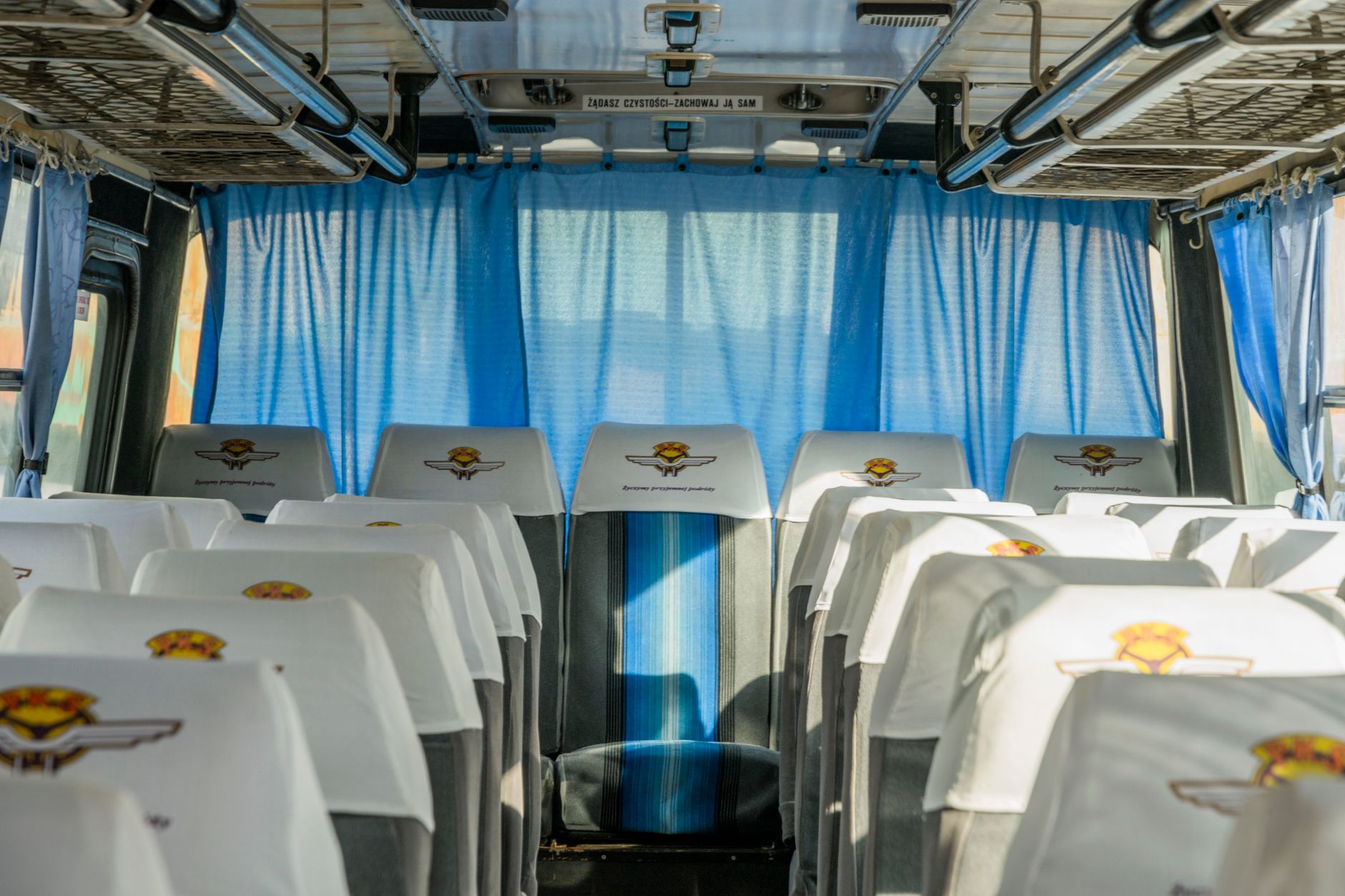
The 24-Passenger Mini Bus is the natural starting point for a 24-person Shenandoah group tour when the group values one vehicle, coach-style seating, and a smaller footprint. Compact mini bus models may carry luggage in a rear compartment or on the roof, so the quote should identify the actual unit rather than only the seat count. The format works well for executive retreats, compact tours, and first-class-only groups, but heavy hiking gear can change the recommendation. Smaller dimensions help at hotel lots, Luray-area attractions, and ordinary roadside stops, although Skyline Drive clearance, turning room, and parking availability still need review. A motor coach may be more comfortable for long approaches when luggage volume and legroom matter more than compact parking.
| Vehicle | Seats | Best For | Notes |
|---|---|---|---|
| 24-Passenger Mini Bus | Up to 24 passengers | Use it for a private Shenandoah group tour, executive retreat, family reunion, or first-class-only group that wants one dedicated vehicle. | Compact body, coach-style seats, and rear or roof luggage depending on the unit; a strong fit for a 24-person group with moderate baggage and mountain-road stops. |
| 25- to 35-Passenger Mini Coach | 25-35 passengers | Choose it when the confirmed headcount is near 24 but luggage, comfort, or future additions make the smallest vehicle tight. | Adds cargo and interior room without the footprint of a full motor coach, making it useful when the group has bulky hiking equipment or wants spare seats. |
| 40- to 56-Passenger Motor Coach | 40-56 passengers | Use a motor coach for a larger multi-day tour, multiple pickup markets, or a long approach where restroom access and baggage capacity justify the larger body. | Best long-haul comfort and baggage capacity, but the driver must verify clearance, turning space, and lot access at every park-adjacent stop. |
| Executive Sprinter | 8-14 passengers | Use it for a leadership subgroup, VIP transfer, or two-vehicle operation when the main group needs a separate executive itinerary. | Premium seating and easy access at hotels and restaurants, but limited baggage space and a lower passenger count make it unsuitable for a full 24-person group unless split into vehicles. |
Routing, Timing, and On-the-Road Realities
For a northern approach from Washington, D.C., the usual corridor is I-66 toward Front Royal and U.S. 340, while Baltimore and Philadelphia groups may use I-70, I-81, or connecting Virginia routes depending on the pickup sequence. Richmond and Tidewater groups commonly approach through I-64 toward Rockfish Gap or use I-81 for Valley staging. Charlottesville is a practical southern base, while Harrisonburg supports central and southern park access through nearby routes. Schedule pickups outside the Washington beltway and Northern Virginia peak periods whenever possible; an early departure may protect the park arrival but must still leave the driver within the legal duty window. On arrival, use a designated bus-safe unloading point and avoid making the driver circle crowded overlooks. Keep a written route plan with fuel, meal, restroom, weather, and alternate-exit stops because cell service can be inconsistent in mountain sections.
A 24-Passenger Mini Bus usually handles Skyline Drive more comfortably than a full motor coach, but the operator should still check overall height, width, wheelbase, roof equipment, and turning radius. The park allows large vehicles, but Marys Rock Tunnel clearance is 12 feet 8 inches and the vehicle must be able to manage steep grades and low-gear descents. Parking is only in designated areas, and the bus must not block Skyline Drive, fire roads, overlooks, or emergency access. Engine shutdown is required when a passenger-carrying bus is parked for more than five minutes under the park's superintendent rules. Federal passenger-carrier rules generally limit driving to 10 hours after 8 hours off duty and limit the work window to 15 hours, with weekly on-duty caps also applying. A day that combines a long interstate approach, park touring, dinner, and a hotel transfer can exceed the driver's legal window even if the group believes the route is manageable, so use a relief driver, shorten the service day, or stage overnight.
What This Typically Costs
A Shenandoah group tour in a 24-Passenger Mini Bus is usually priced from a daily vehicle-and-driver minimum, then adjusted for mileage, route complexity, and the number of service days. A multi-day motor coach-style booking commonly runs a few thousand dollars per day in many markets, with the final range changing by season, vehicle supply, pickup market, and whether the bus returns empty between service days. Deadhead miles from the operator yard to pickup and from the final drop-off back to that yard can be billed even when passengers do not ride those segments. Budget for driver lodging, meals or per diem, tolls, parking, park entrance charges, fuel adjustments, and a driver gratuity when applicable. Peak leaf season, weekends, graduation groups, weddings, and fall festival dates can raise rates or reduce availability. Ask for an itemized quote showing the daily minimum, included mileage, overtime treatment, deadhead, lodging responsibility, parking, and cancellation terms.
Frequently Asked Questions
How many days should a Shenandoah group tour take?
For most groups, plan three to five days. A three-day group tour can use day 1 for the approach and Front Royal or Luray, day 2 for the northern Skyline Drive, and day 3 for the central or southern park before returning home. Four or five days allow slower trail stops, weather flexibility, a second park section, and nearby attractions such as Luray Caverns or the Museum of the Shenandoah Valley. A 24-Passenger Mini Bus is especially practical when the itinerary has several stops but the group does not need a full motor coach.
What are the best months for a Shenandoah group tour?
April through May usually brings spring greenery and generally easier lodging availability than autumn. June through August offers long daylight and dependable hiking conditions, but weekends can be busy and heat can affect exposed overlooks. Mid-October through early November is the high-demand leaf season, so lodging and a 24-Passenger Mini Bus should be reserved well ahead. Winter can provide quiet roads but brings shorter daylight and possible Skyline Drive closures during snow, ice, or high winds. Build a weather decision point into any multi-day plan rather than promising every overlook in advance.
What does a realistic multi-day itinerary look like?
A practical four-day plan starts with pickup and travel on day 1, followed by a stop in Front Royal, Luray, or at the Museum of the Shenandoah Valley if the approach corridor supports it. Day 2 can enter at Front Royal, travel south on Skyline Drive, and use Dickey Ridge Visitor Center, selected overlooks, and short northern trails before lodging near Luray or Shenandoah. Day 3 can cover central stops such as Big Meadows, Byrd Visitor Center, Dark Hollow Falls, or an organized picnic, subject to parking and trail conditions. Day 4 can use Swift Run Gap or Rockfish Gap for the southern section, then exit toward Charlottesville, Harrisonburg, Washington, D.C., or the group's home market. The driver should receive a stop-by-stop run sheet with dwell times, walking distances, meal plans, and alternate exits.
Can a 24-Passenger Mini Bus travel Skyline Drive?
Skyline Drive has four public entrance stations, including Front Royal, Thornton Gap near U.S. 211, Swift Run Gap near Route 33, and Rockfish Gap near I-64. The road has a posted speed limit of 35 mph in most places, so a scenic loop takes longer than the map mileage suggests. Marys Rock Tunnel at mile 32.2 has a measured maximum clearance of 12 feet 8 inches, which must be checked against the loaded vehicle and any roof equipment. A 24-Passenger Mini Bus often fits the route better than a full-size motor coach, but the operator still needs the vehicle height, width, length, and turning characteristics before dispatch. Heavy rain, snow, ice, wildlife, cyclists, and leaf-season traffic can all slow the run.
Do buses need permits or special parking arrangements in Shenandoah?
The park does not operate an authorized shuttle service, so a private group tour must arrange its own transportation. Shenandoah parking is available at designated lots, visitor centers, waysides, picnic areas, overlooks, and trailheads when space permits, but a bus cannot block Skyline Drive, fire roads, overlooks, or access lanes. Commercial activity in the park may require a Commercial Use Authorization, while special events such as weddings and commercial filming can require separate permits. Standard sightseeing is not automatically treated as a special event, so the carrier or broker should confirm the current commercial-use position with park staff before arrival. The driver should shut down the engine when parked for more than five minutes and should never stage a bus in a crowded overlook while passengers wander.
How are driver hours handled on a multi-day Shenandoah trip?
Passenger-carrier federal hours rules generally allow up to 10 hours of driving after at least 8 consecutive hours off duty, with a 15-hour on-duty window. Weekly limits also apply, commonly 60 hours in seven days or 70 hours in eight days depending on the carrier's operating schedule. Those limits include on-duty work from another job, not only time spent moving the group. A scenic Shenandoah day can consume the available window through loading, fueling, inspection, traffic, parking, passenger assistance, and waiting even when actual driving is modest. For a long approach from New York, Ohio, North Carolina, or the Washington region, dispatch may require a relief driver, a split itinerary, or a pre-trip overnight.
What does a 24-Passenger Mini Bus fit best?
A 24-Passenger Mini Bus fits small tours, executive retreats, alumni groups, family reunions, and first-class-only groups that want everyone traveling together without paying for unused full-size capacity. Compact mini bus bodies generally provide coach-style seats and either rear luggage space or roof storage, depending on the specific unit. Confirm the usable cargo volume because hiking packs, coolers, folding chairs, and several nights of luggage can fill a compact compartment quickly. The bus is easier to place in ordinary hotel lots and smaller attraction parking areas than a full motor coach, but it still needs clearance checks and adequate turning space. If the group has 24 passengers plus substantial luggage, consider a larger coach, a luggage trailer only where permitted, or a baggage transfer plan.
How to Book
To quote this trip, have the dates, pickup address, passenger count, luggage estimate, hotel plan, preferred park entrances, and every planned stop ready. Include whether the group is traveling from Washington, D.C., Richmond, Charlottesville, Harrisonburg, Pittsburgh, New York, or another origin because deadhead and driver staging can change the rate. US Bus Trips can typically return a workable quote within 4 business hours when the itinerary is complete. The confirmation should identify the vehicle class, daily service window, mileage basis, driver lodging plan, parking and toll treatment, cancellation terms, and dispatch contact. Reach US Bus Trips through the booking team with the dates and itinerary so operations can check equipment, driver availability, and park-access assumptions before payment.
Related Trips You Might Also Consider
- Stockton, CA to Yosemite, CA
- Nashville, TN to Louisville, KY
- Church Retreat — Mountain West Region
- Indianapolis, IN to Louisville, KY
- Alumni Tour — Pacific Northwest Region
- Arches — 56-Passenger Motor Coach
- Cross-Country Charter Bus Overview
- All Group Trip Types
- See the Full Fleet (Sprinters through 56-pax coaches)
- Get a Free Quote in 60 Seconds