
Colleges, prep schools, alumni chapters, and reunion committees book an Alumni Tour when one itinerary must connect airports, hotels, campuses, athletic venues, and evening events.
Overview
A Mid-Atlantic Alumni Tour usually combines a campus visit, homecoming game, reunion meal, class meeting, athletic event, and hotel shuttle schedule rather than one simple transfer. Prep-school and college groups commonly move between BWI, DCA, IAD, Baltimore, Washington, Alexandria, Bethesda, Arlington, Richmond, Charlottesville, Newark, Wilmington, or Morgantown. A reunion committee may need airport arrivals on Thursday, campus circulation on Friday, a stadium or gala movement on Saturday, and departures on Sunday. The main charter bus may be committed for several days while a mini coach handles a recurring hotel loop. That structure is common for alumni chapters, class officers, school advancement offices, athletic departments, parents associations, and event planners. It also means the quote must show whether the vehicle waits, returns to a hotel, or is released between movements.
Group size ranges from an executive group of fewer than 15 to a full class or alumni chapter requiring several 40 to 56 passenger motor coaches. A 24 to 35 passenger mini coach often fits regional cohorts, prep-school delegations, and airport rotations, while a full-size charter bus is more efficient for long highway legs and checked luggage. Music programs, marching bands, athletic teams, and school groups may bring instruments, uniforms, banners, medical supplies, coolers, or equipment cases that consume storage. Request the number and dimensions of cases, not only the passenger count. Wheelchairs and walkers require a lift-equipped vehicle or an accessible plan, and not every standard coach can accept them without advance confirmation. The vehicle mix should therefore be based on passengers, cargo, boarding needs, and how many separate locations must be served at the same time.
Typical routing follows the I-95 corridor through Baltimore, Washington, Wilmington, Philadelphia, and Richmond, with I-295 used around Washington and Richmond when the itinerary allows. Maryland and Delaware groups may cross the Chesapeake Bay Bridge on US 50 toward Annapolis, the Eastern Shore, or coastal venues, while western routes use I-70 toward Frederick and I-81 through Winchester, Harrisonburg, Staunton, and the Shenandoah Valley. Virginia Alumni Tour programs often connect Northern Virginia, Charlottesville, Richmond, Williamsburg, Norfolk, or Virginia Tech and West Virginia University through I-81 and I-64. Relevant venues may include campus stadiums, university alumni houses, Baltimore's Inner Harbor hotels, the Walter E. Washington Convention Center, Nationals Park, FedExField, Capital One Arena, and regional prep-school athletic facilities. Scenic runs can include Shenandoah National Park gateways, Skyline Drive access points, Harper's Ferry, or the Blue Ridge Parkway, but coaches need a practical turnaround and loading plan. The itinerary should identify whether the group wants sightseeing time or simply dependable arrival at the next event door.
Fleet Options
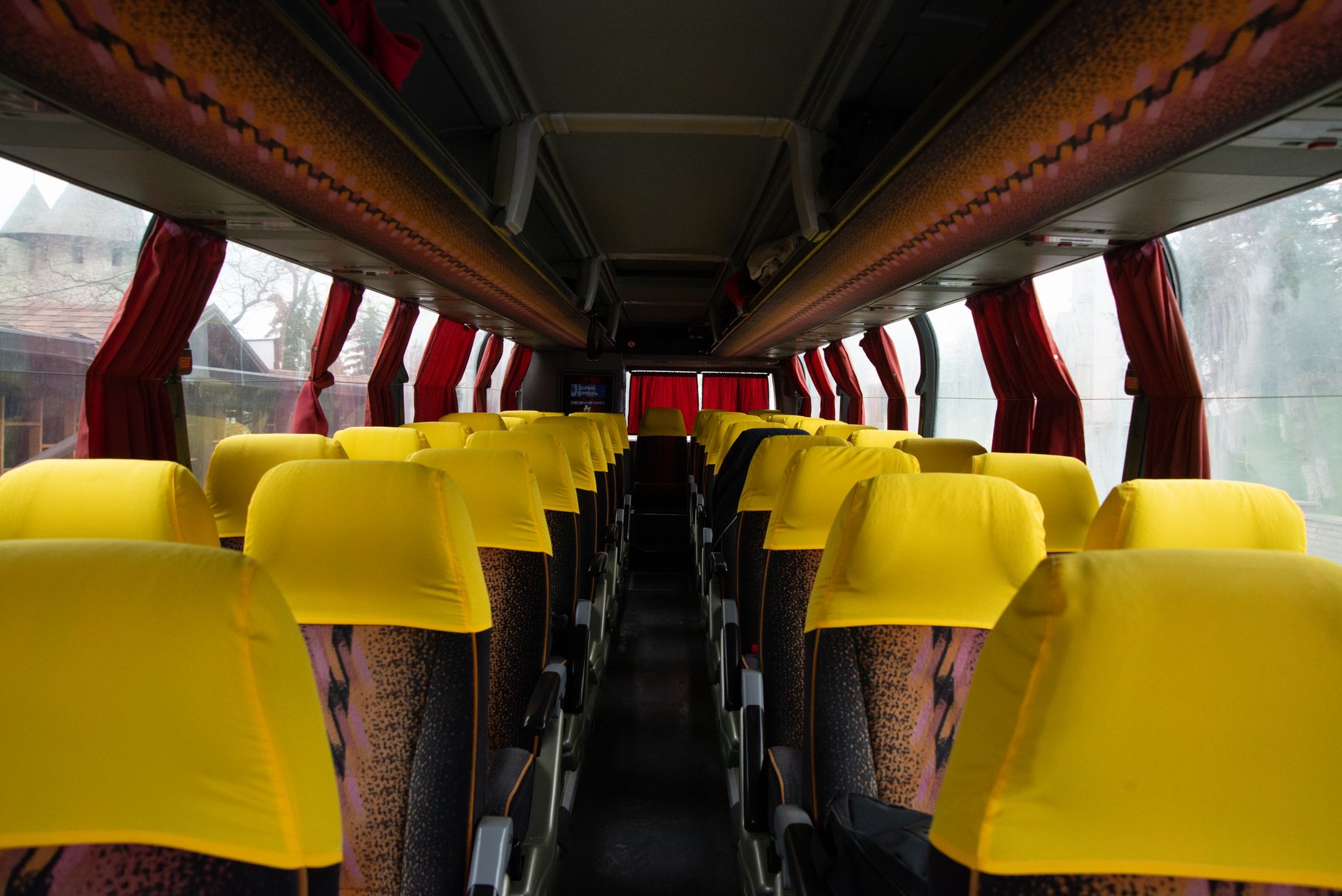
Choose the vehicle around both passenger count and the equipment that must travel with the group. A charter bus is often the best fit for highway legs between campuses, airports, and hotels because it combines seating, luggage storage, and driver coverage. A mini coach or executive Sprinter can be better for smaller hotel loops, tight campus streets, and short transfers where a full-size motor coach would be difficult to stage. Confirm wheelchair access, restroom needs, instrument cases, uniforms, and late-night service before finalizing the seat count. Parking and curb access at DC hotels, historic districts, campus gates, and scenic Shenandoah stops can matter as much as capacity.
| Vehicle | Seats | Best For | Notes |
|---|---|---|---|
| Full-size motor coach | 40-56 passengers | Use for a full reunion class, alumni chapter, athletic delegation, or multi-city Alumni Tour with luggage and long I-95, I-70, I-81, or US 50 legs. | Best highway comfort with underfloor luggage and commonly available restroom-equipped configurations, but it needs wide turning space and a planned bus staging location. |
| Mini coach | 24-35 passengers | Use for a smaller homecoming group, airport shuttle rotation, campus transfer, or Blue Ridge and Shenandoah route with limited venue parking. | A practical compromise for hotel loops and medium groups, with better access than a full-size coach but less storage and fewer configuration choices for wheelchairs or bulky gear. |
| Executive Sprinter | 8-14 passengers | Use for a board, class officers, VIP airport party, or short hotel loop that does not require full-size coach storage. | Comfortable for small leadership or donor groups and tight downtown streets, but luggage space is limited and a wheelchair-accessible version must be requested specifically. |
| Accessible shuttle bus | 18-28 passengers | Use as a dedicated accessibility vehicle, overflow unit, or repeated reunion-weekend hotel loop when passengers need level boarding or shorter local runs. | Useful for frequent hotel-to-campus circulation and guests with mobility needs, but confirm lift clearance, tie-down positions, aisle space, and the number of bags before assigning it. |
Routing, Timing, and On-the-Road Realities
The primary Mid-Atlantic timing problem is not mileage alone; it is the combination of I-95 congestion, campus traffic, airport arrival banks, and fixed event doors. For BWI, DCA, and IAD pickups, collect flight numbers and terminal details, then set a meeting procedure that allows for baggage delays without leaving the driver circling a restricted curb. Washington hotel loops need designated loading areas because curb access around the National Mall, Georgetown, Capitol Hill, and downtown hotels can change by street and event. DC motorcoaches must follow posted loading, parking, permitting, and anti-idling requirements, and a bus cannot assume it may wait outside the hotel while passengers finish breakfast. Baltimore, Alexandria, Annapolis, Charlottesville, and Richmond also have narrow historic streets, event closures, and campus gates that may require an off-site staging point. Build walking time from the staging area into the passenger plan. For a large group, use staggered loading windows and assign one coordinator to each vehicle rather than sending every passenger to one curb at once.
Crossing the Chesapeake Bay Bridge requires a current traffic and weather check, especially for Thursday and Friday westbound travel, construction lane shifts, and strong-wind restrictions affecting commercial traffic. If the route runs from the Eastern Shore or Delaware toward Baltimore or Washington, an early departure can protect a fixed homecoming check-in or rehearsal time, but the buffer must be realistic rather than an arbitrary extra hour. On I-95, I-495, I-64, I-81, and I-70, dispatch should account for rush-hour peaks, sports traffic, incidents, and rest breaks. Driver-hours planning must include pre-trip inspection, fueling, passenger loading, deadhead movement, waiting time, and the return leg, not just the scheduled passenger miles. Blue Ridge and Shenandoah runs can add slow grades, limited shoulders, seasonal congestion, and fewer safe locations for a large coach to turn around. If the group wants a scenic stop, confirm coach access and restroom availability before promising a precise dwell time. Multi-vehicle operations need a lead bus, common check-in times, independent driver navigation, and a contingency meeting point if traffic separates the convoy.
What This Typically Costs
Pricing for an Alumni Tour is built from vehicle type, service days, mileage, and the time the equipment and driver must remain committed. In most Mid-Atlantic markets, a charter bus has a daily minimum, even when the group travels only short local legs, while a longer I-95 or Blue Ridge itinerary adds mileage and additional service hours. Seasonal peaks around September and October homecoming weekends, spring reunions, graduation, and major campus events can reduce availability and raise rates. Quotes may include deadhead miles from the bus base, driver overnight lodging and meals, tolls, parking, permits, and fuel adjustments. Driver gratuity is normally a separate line item or customary percentage rather than an assumed operating cost. A multi-day motor coach assignment may be priced as consecutive service days, while split hotel loops can require separate vehicles or repositioning time.
Frequently Asked Questions
How many passengers fit on an Alumni Tour charter bus?
A 40 to 56 passenger motor coach usually fits a full alumni chapter, reunion class, or school delegation, but the usable count falls when luggage, instruments, uniforms, mobility equipment, or event supplies are carried. A 24 to 35 passenger mini coach works well for smaller cohorts and hotel shuttles. For airport transfers, confirm whether each passenger has checked luggage because underfloor storage fills faster than the seat count suggests. A final manifest is useful when the group is moving between BWI, DCA, IAD, campus, and multiple hotels.
Which Mid-Atlantic cities are common on alumni and homecoming routes?
The most common patterns connect Baltimore, Washington, Richmond, Philadelphia, Wilmington, Charlottesville, Harrisonburg, and Morgantown with a campus or reunion venue. Maryland groups may use the I-95 corridor, US 50 across the Chesapeake Bay Bridge, or I-70 toward Frederick and the Blue Ridge. Virginia itineraries commonly combine Northern Virginia, Charlottesville, Richmond, Hampton Roads, and Shenandoah Valley stops. Delaware and eastern Maryland groups often use I-95, I-295, US 13, or US 50 depending on the campus and hotel plan. The correct route depends on the actual pickup sequence, not only the distance between campuses.
Can a charter bus serve hotels and reunion venues in Washington, DC?
Yes, but Washington, DC requires advance curb planning rather than an informal stop in front of a venue. Motorcoaches must use authorized loading locations, comply with posted restrictions and anti-idling rules, and carry required registration or trip-permit documentation when applicable. National Mall locations, Georgetown, Capitol Hill, and downtown hotels can have limited or changing bus access. Union Station, RFK Stadium-area parking, and other designated locations may be used for staging, but availability and reservations must be checked for the specific date. The itinerary should separate passenger unloading from long-term bus parking.
How should we plan an Alumni Tour over the Chesapeake Bay Bridge?
The Bay Bridge is a schedule risk for any group crossing between western and eastern Maryland, Delaware, or the Eastern Shore. Commercial buses can face lane restrictions, traffic holds, construction-related two-way operations, or weather-related limitations. Thursday and Friday afternoon periods deserve particular attention when westbound commercial traffic may be restricted during lane changes. Dispatch should monitor MDTA advisories, build a practical buffer, and keep an alternate routing conversation open before departure. A bus should never be sent onto the bridge without checking current conditions and the driver's legal hours.
What equipment should we request for musicians, athletes, or guests using wheelchairs?
Reserve a full-size motor coach when the group needs underfloor luggage, onboard restroom access, longer highway comfort, or several hours between campuses and hotels. A mini coach is usually more efficient for a 20 to 35 passenger class, a short hotel loop, or a venue with restricted access. An executive Sprinter can handle a small board, donor group, or airport party, but its luggage capacity varies substantially by configuration. For instruments, uniforms, banners, wheelchairs, or athletic gear, the equipment count matters as much as the passenger count. Ask for a vehicle diagram or storage confirmation before treating every seat as sellable.
How do you manage multiple buses for a large reunion weekend?
A large homecoming weekend often uses one or more highway coaches for the main transfer plus smaller vehicles for hotel loops, airport arrivals, faculty, donors, or late-night returns. Each vehicle needs its own driver, dispatch contact, pickup instructions, and passenger accountability plan. Staggered departures prevent all buses from reaching a narrow campus entrance or hotel porte cochere at once. The operating plan should identify a lead vehicle, radio or phone protocol, overflow staging, and what happens if one coach is delayed. Multiple vehicles also require separate parking reservations or curb assignments where local rules require them.
When should we book a Mid-Atlantic homecoming coach?
Early fall homecoming weekends and October alumni events are usually the strongest demand period, followed by spring reunions, graduation, admitted-student programs, and athletic championships. Airport demand increases around BWI, DCA, and IAD arrival banks, especially when a class is flying in from several regions. Hotels near Baltimore-Washington, Northern Virginia, Richmond, Philadelphia, and campus towns may sell out during major weekends. Booking several months ahead gives dispatch more choices for coach size, driver coverage, and hotel staging. Late requests can still be workable, but the plan may require split equipment, adjusted departure times, or a less direct hotel loop.
How to Book
To request an Alumni Tour, have the dates, pickup address, campus or venue names, headcount, luggage and equipment needs, wheelchair requirements, airport details, and complete itinerary ready. Include every hotel loop, evening return, scenic stop, and planned crossing of the Chesapeake Bay Bridge so dispatch can evaluate service hours and staging. US Bus Trips can commonly return an initial quote within 4 business hours, subject to coach availability and complete routing details. Confirmation should identify the vehicle class, passenger capacity, pickup instructions, driver contact process, inclusions, exclusions, parking or permit responsibilities, and payment schedule. Call or submit the trip request to US Bus Trips and flag any fixed event doors, flight banks, or accessibility requirements at the start.
Related Trips You Might Also Consider
- Academic Decathlon — Mountain West Region
- Sequoia — 36-Passenger Mini Coach
- Louisville, KY to Nashville, TN
- Boston Freedom Trail — 14-Passenger Sprinter
- Academic Decathlon — Midwest Region
- Fresno, CA to Los Angeles, CA
- Cross-Country Charter Bus Overview
- All Group Tour Destinations
- See the Full Fleet (Sprinters through 56-pax coaches)
- Get a Free Quote in 60 Seconds