
US Bus Trips coordinates Association Conference shuttles, board offsites, and hosted city tours across Washington, Oregon, and Alaska.
Overview
An Association Conference in the Pacific Northwest may be a downtown Seattle annual meeting, a Portland trade gathering, a Spokane leadership program, or a multi-city event tied to a regional membership organization. Seattle Convention Center's Arch and Summit buildings support simultaneous programs, while Bell Harbor at Pier 66 serves waterfront meetings and cruise-adjacent events. Portland groups commonly work from Oregon Convention Center, the Portland Expo Center, the World Trade Center Portland, or hotels near the central city. Typical customers include association staff, destination managers, exhibitors, board officers, sponsors, and local host committees that need reliable movement without asking attendees to navigate unfamiliar transit connections. The charter bus plan should separate attendee loops, VIP movements, exhibitor freight, and evening functions when their timing or loading needs differ. For a large Association Conference, the transportation desk also needs a manifest, dispatch phone, hotel contacts, venue curb instructions, and a contingency procedure.
Pacific Northwest group travel often follows the I-5 spine between Seattle, Tacoma, Olympia, Portland, Salem, and Eugene, with extensions to Vancouver, Washington, the Columbia River Gorge, the Oregon Coast, or mountain venues. Washington programs may use Bellevue, Renton, Everett, Lynnwood, Bellingham, Bremerton, or Tulalip alongside Seattle, while Oregon programs may add Hillsboro, Beaverton, Bend, Medford, or the coast. Alaska work is a different operating profile, with Anchorage and Fairbanks conference programs and Juneau, Ketchikan, and Skagway shore excursions tied to cruise-ship port windows. A charter bus moving a board group to Bainbridge or Bremerton must account for the vehicle queue, sailing reservation, passenger handling, and a missed-ferry recovery plan. Scenic routes through the Olympic Peninsula, Mount Hood, the Columbia River Gorge, or coastal US 101 require additional time for weather, road restrictions, restroom stops, and coach parking. The same itinerary can require different equipment on different days, so a motor coach for the main conference may be paired with Sprinters or mini coaches for dinners and narrow destination roads.
Attendance ranges from a dozen directors at a board offsite to several thousand delegates at a national meeting, with the most common shuttle work split across hotel blocks and time windows. Seattle has substantial downtown hotel and convention inventory, and the Seattle Convention Center is within walking distance of many hotels, but walking distance does not eliminate the need for airport, accessibility, offsite, and evening transportation. Portland's Oregon Convention Center is a major association venue, and nearby hotel loops can be efficient when curb assignments and departure spacing are set in advance. Equipment may include instruments, uniforms, exhibit cases, banners, product samples, outdoor gear, wheelchairs, and scooters, all of which affect luggage-bay capacity and loading time. Seasonal demand commonly rises during spring and fall conference calendars, summer coastal and mountain travel, and Alaska's cruise season, with tighter availability around major citywide events and university or stadium schedules. For multi-day group travel, keep the coach, driver, and dispatch plan consistent where possible, but verify each day's parking, service window, and route restrictions separately.
Fleet Options
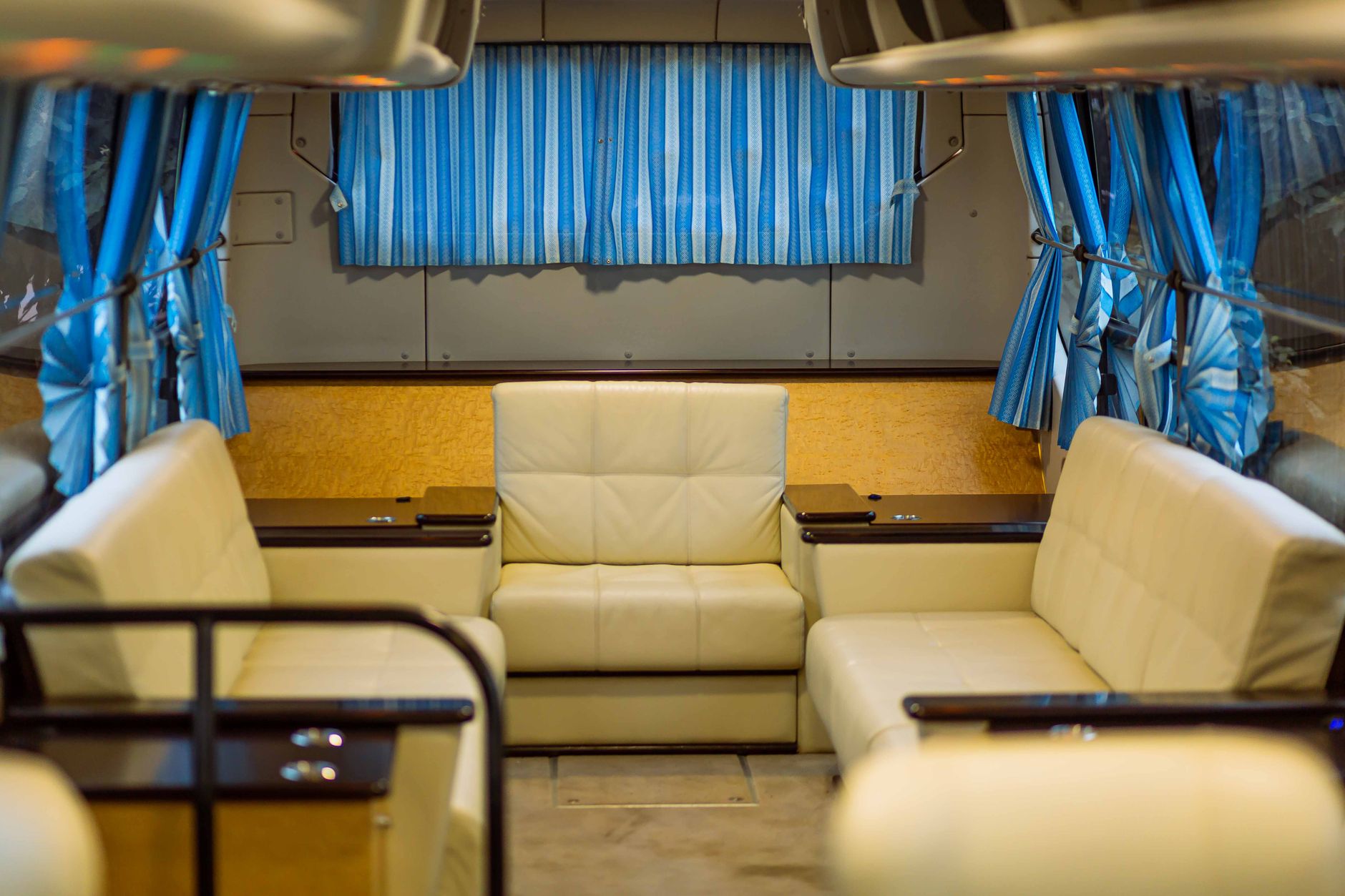
Choose the vehicle around the passenger count, luggage profile, route geometry, and number of daily movements rather than seats alone. A charter bus or motor coach is efficient for a full hotel block, but downtown Seattle, Portland loading zones, ferry terminals, and scenic overlooks may favor smaller units. Conference gear, wheelchairs, garment bags, and checked luggage can reduce usable capacity even when the passenger count fits on paper. For large Association Conference programs, a planned mix of vehicles usually moves people faster than one oversized departure schedule.
| Vehicle | Seats | Best For | Notes |
|---|---|---|---|
| Executive Sprinter | 8-14 passengers | Use for a board offsite, airport transfer, site inspection, or dinner shuttle where the group needs a compact vehicle and flexible curb access. | Best for board members, VIP transfers, and small teams with light luggage; limited cargo space makes it a poor fit for bulky equipment or extensive conference cases. |
| Mini bus | 18- thirty passengers | Use for small committees, split hotel blocks, or city-tour groups moving between downtown Seattle, Portland, Tacoma, or Bellevue venues. | Works well on hotel loops and short city tours, with easier access to tight streets and loading areas than a full-size coach but less luggage capacity. |
| Mini coach | thirty-one to forty-five passengers | Use for a regional Association Conference shuttle, board retreat, or scenic day route when the group is too large for a mini bus but does not need a full motor coach. | Provides a useful middle ground for regional group travel, with more comfort and storage than a mini bus while remaining easier to stage at smaller venues and coastal stops. |
| Full-size motor coach | forty-six to fifty-six passengers | Use for large annual meetings, airport transfers, Alaska shore excursions, and multi-day Pacific Northwest routes where comfort, storage, and driver support matter. | Best for long I-5 runs and large hotel-to-convention movements, with reclining seats and substantial luggage-bay capacity; confirm venue curb access, ferry dimensions, and accessible lift requirements before dispatch. |
Routing, Timing, and On-the-Road Realities
The core Pacific Northwest Association Conference route is the I-5 corridor from Seattle through Tacoma and Olympia to Portland, with Salem and Eugene often added for regional meetings or campus programs. Seattle pickup timing should allow for airport traffic, downtown construction, stadium events, and congestion around the convention center, waterfront, and SR 99 approaches. Portland schedules should consider I-5 and I-84 congestion, the Oregon Convention Center loading area, bridge crossings, and event activity at the Moda Center or nearby venues. For a same-day Seattle to Portland movement, dispatch should schedule a meaningful buffer rather than using the shortest map estimate, with legal driver breaks and a second driver or overnight plan evaluated for long service days. Hotel loops work best when each property has a named curb, a fixed departure window, and a marshal who can keep passengers out of the travel lane. Parking for a charter bus is not guaranteed at every downtown hotel, restaurant, museum, or scenic overlook, so the itinerary should identify staging locations before attendees are promised a departure time.
Puget Sound and Alaska routes need additional coordination beyond ordinary city shuttles. Ferry crossings to Bainbridge Island or Bremerton can determine the entire day, and the motor coach should be booked against the intended sailing with early terminal arrival, vehicle dimensions, passenger count, and an alternate sailing plan. Seattle waterfront work near Pier 66 and Bell Harbor may involve cruise traffic, restricted curb space, and separate loading instructions from a convention hotel. Alaska shore excursions should be timed backward from the ship's all-aboard deadline, with pier access, restroom stops, weather, road conditions, and limited coach inventory included in the run sheet. Juneau, Ketchikan, and Skagway may require shorter local loops or staged departures, while Anchorage and Fairbanks can involve airport, hotel, rail, and longer regional movements. Drivers need a legal-hours plan for every operating day, including breaks, split shifts, overnight lodging, ferry waiting time, and any repositioning after the last passenger drop.
What This Typically Costs
Association Conference transportation in the Pacific Northwest is usually priced from a daily vehicle minimum, then adjusted for route length, service hours, and the number of operating days. A local Seattle, Portland, Spokane, Tacoma, Eugene, Anchorage, or Fairbanks assignment commonly runs on a daily minimum, while an I-5 move or coastal and mountain itinerary adds mileage and repositioning. Seasonal peaks commonly include spring and fall conference calendars, summer Alaska cruise activity, and summer coastal travel, when availability tightens and rates rise. Deadhead miles matter when a charter bus or motor coach must come from another market, especially for Alaska work or smaller cities outside Seattle and Portland. Overnight driver lodging, parking, ferry charges, tolls, and any required staging are normally separate line items. Fuel adjustments and driver gratuity may also appear, so the quote should identify whether they are included rather than assuming the base rate covers every operating cost.
Frequently Asked Questions
What transportation is typical for an Association Conference in Seattle or Portland?
Most Association Conference groups use a charter bus or motor coach for scheduled hotel-to-venue loops, airport transfers, dinners, and offsite programs. Seattle Convention Center, Oregon Convention Center, Bell Harbor International Conference Center, Meydenbauer Center, and waterfront hotels create different loading conditions, so the pickup plan should use the venue's designated bus curb rather than a general hotel entrance. For smaller board offsites, an executive Sprinter or mini bus can keep the group together without sending a full-size vehicle into tight downtown streets. A dispatch-ready manifest should show each hotel, pickup window, passenger count, accessibility need, and return time.
How many passengers can a Pacific Northwest conference shuttle plan handle?
A practical planning range is about 15 to 35 passengers for an executive board offsite, 30 to 56 for a regional committee or hosted tour, and 100 to several thousand attendees for an annual meeting using multiple vehicles and timed waves. Large conferences rarely move everyone at once; planners normally divide attendees by hotel, session, dinner departure, or tour slot. Seattle and Portland can support a mix of motor coaches, mini coaches, and Sprinters, while Anchorage and Fairbanks may require earlier fleet confirmation because the local pool is smaller. Final vehicle count should be based on actual passengers, luggage, mobility equipment, and the required turnaround time.
Can a charter bus take our group on a Puget Sound ferry?
Yes, but ferry work needs a separate operating plan. For Bainbridge Island, Bremerton, or other Puget Sound crossings, the carrier needs the exact sailing, vehicle dimensions, passenger count, and loading instructions, and the group should arrive early enough for the vehicle queue. Ferry reservations and sailing availability can change the schedule, and a missed sailing can disrupt an entire board retreat. For a Pacific Northwest group travel itinerary that includes a charter bus on the ferry, the quote should identify ferry fees, staging time, alternate sailing options, and whether passengers remain with the vehicle or board separately.
What changes when an Association Conference includes Alaska cruise shore excursions?
Alaska cruise-ship shore-excursion coach work is usually built around the vessel's published port window, with strict timing for loading, sightseeing, meals, and return to the pier. In Juneau, Ketchikan, and Skagway, roads, port congestion, weather, and limited motor coach inventory can affect the feasible route. Anchorage programs often connect airport, hotels, rail terminals, convention venues, and day tours, while Fairbanks work may require longer mileage and driver staging. A group should provide ship name, pier, all-aboard time, excursion duration, passenger mobility details, and whether luggage moves with the group.
Can the bus carry conference equipment, uniforms, instruments, or wheelchairs?
Yes, equipment changes the vehicle recommendation and loading time. Trade groups may carry instruments, uniforms, product samples, banners, presentation cases, medical equipment, or outdoor gear, while board groups may need only small carry-ons. Wheelchairs and mobility scooters require advance confirmation because accessible buses have lift or ramp positions and reduced underfloor cargo capacity. A motor coach with a large luggage bay is usually better for multi-day group travel than a passenger van, but oversized cases may require a dedicated support vehicle. The manifest should list dimensions, quantity, weight concerns, and whether gear must remain accessible during the route.
What routes are common for Pacific Northwest association group travel?
For an I-5 Association Conference, the usual operating spine is Vancouver, Washington, Portland, Salem, Eugene, Olympia, Tacoma, and Seattle, with airport or hotel transfers at both ends. Seattle traffic can slow movement around downtown, South Lake Union, the airport corridor, and stadium events, while Portland congestion commonly affects I-5, I-84, and the Oregon Convention Center area. Mountain and coastal programs add SR 20, US 2, US 101, the Columbia River Gorge, Mount Hood, Olympic Peninsula, or Oregon Coast roads, where weather and limited coach parking require more slack. Drivers must plan legal breaks, daily service limits, and overnight positioning instead of treating a scenic day as a simple mileage calculation. A detailed dispatch sheet should include venue loading instructions, ferry or toll requirements, meal stops, relief timing, and a backup plan for road closures.
How far ahead should we book Pacific Northwest conference transportation?
Conference shuttle pricing is normally based on vehicle type, service hours, days, mileage, and operating market. A 56-passenger motor coach usually costs more than a mini coach or Sprinter because of capacity, equipment, insurance, and driver requirements, while a multi-vehicle plan adds separate dispatch and staging needs. Cities such as Seattle, Portland, Tacoma, Spokane, Eugene, and Anchorage generally offer more fleet depth than remote coastal or interior Alaska locations, where deadhead and lodging can materially affect the quote. In most markets, a local half-day request may still be subject to a minimum, and multi-day work can include driver lodging, parking, ferry fees, tolls, fuel adjustments, and gratuity. Ask for a written breakdown showing included hours, mileage, cancellation terms, accessibility equipment, and whether the quoted vehicle remains dedicated between scheduled movements.
How to Book
To request a Pacific Northwest group travel plan, have the dates, pickup addresses, headcount, luggage or equipment details, accessibility requirements, venue schedule, and complete itinerary ready. Include ferry sailings, cruise-ship pier and all-aboard times, hotel names, airport terminals, and any planned scenic stops. US Bus Trips can normally return an initial quote within 4 business hours, subject to route complexity and vehicle availability. Confirmation should identify the vehicle class, operating times, pickup instructions, inclusions, cancellation terms, driver contact process, and any parking, ferry, lodging, or fuel adjustments; reach us through the US Bus Trips booking team by phone or online request.
Related Trips You Might Also Consider
- Military Reunion — Mid-Atlantic Region
- Everglades — 56-Passenger Motor Coach
- College Band Tour — Pacific Northwest Region
- Honolulu, HI to Waikiki, HI
- New Orleans Mardi Gras — 24-Passenger Mini Bus
- Military Reunion — South Central Region
- Cross-Country Charter Bus Overview
- All Group Tour Destinations
- See the Full Fleet (Sprinters through 56-pax coaches)
- Get a Free Quote in 60 Seconds