
US Bus Trips arranges charter bus service for college marching bands, choral groups, pep bands, and festival ensembles traveling across the Midwest.
Overview
A Midwest College Band Tour commonly combines an away football game, halftime performance, invitational, festival, clinic, or concert residency with one or more overnight stops. College programs may travel from Chicago to Ann Arbor, East Lansing, Columbus, Bloomington, West Lafayette, Champaign, Madison, Iowa City, Minneapolis, or St. Louis, while choral groups often add university concert halls and regional adjudication sites. Big Ten traffic creates recurring demand around Michigan Stadium, Ohio Stadium, Spartan Stadium, Memorial Stadium in Bloomington and Champaign, Ross-Ade Stadium, Kinnick Stadium, Camp Randall Stadium, and Huntington Bank Stadium. Those venues differ in bus staging, credential checks, pedestrian control, and distance from the usable loading entrance. A charter bus itinerary must therefore identify the performance entrance, not just the stadium name. Directors, athletic departments, music schools, alumni groups, and tour contractors are the usual customers.
The passenger profile is mixed: students may travel with section leaders, directors, chaperones, athletic staff, clinicians, and sometimes families or university administrators. A typical coach carries about 40 to 56 passengers, but a practical band load can be lower once sousaphones, percussion, flags, uniforms, garment bags, coolers, and personal luggage are counted. Smaller choirs may fit a mini coach, while a combined ensemble or full marching band often needs two motor coaches or a separate equipment vehicle. Wheelchairs and other mobility devices require advance confirmation because lift-equipped inventory is limited and loading adds time. The group should maintain a manifest by vehicle, section, and emergency contact rather than relying on informal headcounts. That level of detail matters when two coaches leave a school, hotel, stadium, or festival site at different curb locations.
Chicago functions as a frequent Midwest group travel hub, but the work is not limited to downtown. Routes may use O'Hare or Midway for fly-in participants, suburban school districts for staging, and campus hotels near Evanston, Milwaukee, Madison, or northwest Indiana. Long legs commonly follow I-80 toward Iowa City and the Quad Cities, I-90 across northern Illinois and Wisconsin, and I-94 between Chicago, Milwaukee, Madison-area connections, Grand Rapids, Detroit, Ann Arbor, and Minneapolis through the broader corridor. Ohio assignments often involve Columbus, Cleveland, Toledo, or Cincinnati; Indiana work includes Indianapolis, Bloomington, and West Lafayette; Missouri trips commonly reach St. Louis, Columbia, or Kansas City. Spring choral festivals and concert tours create different schedules from fall football, with more fixed rehearsal blocks and evening performances. A dependable charter bus plan builds in venue parking, equipment unloading, meal stops, driver rest, weather, and post-performance departure time.
Fleet Options
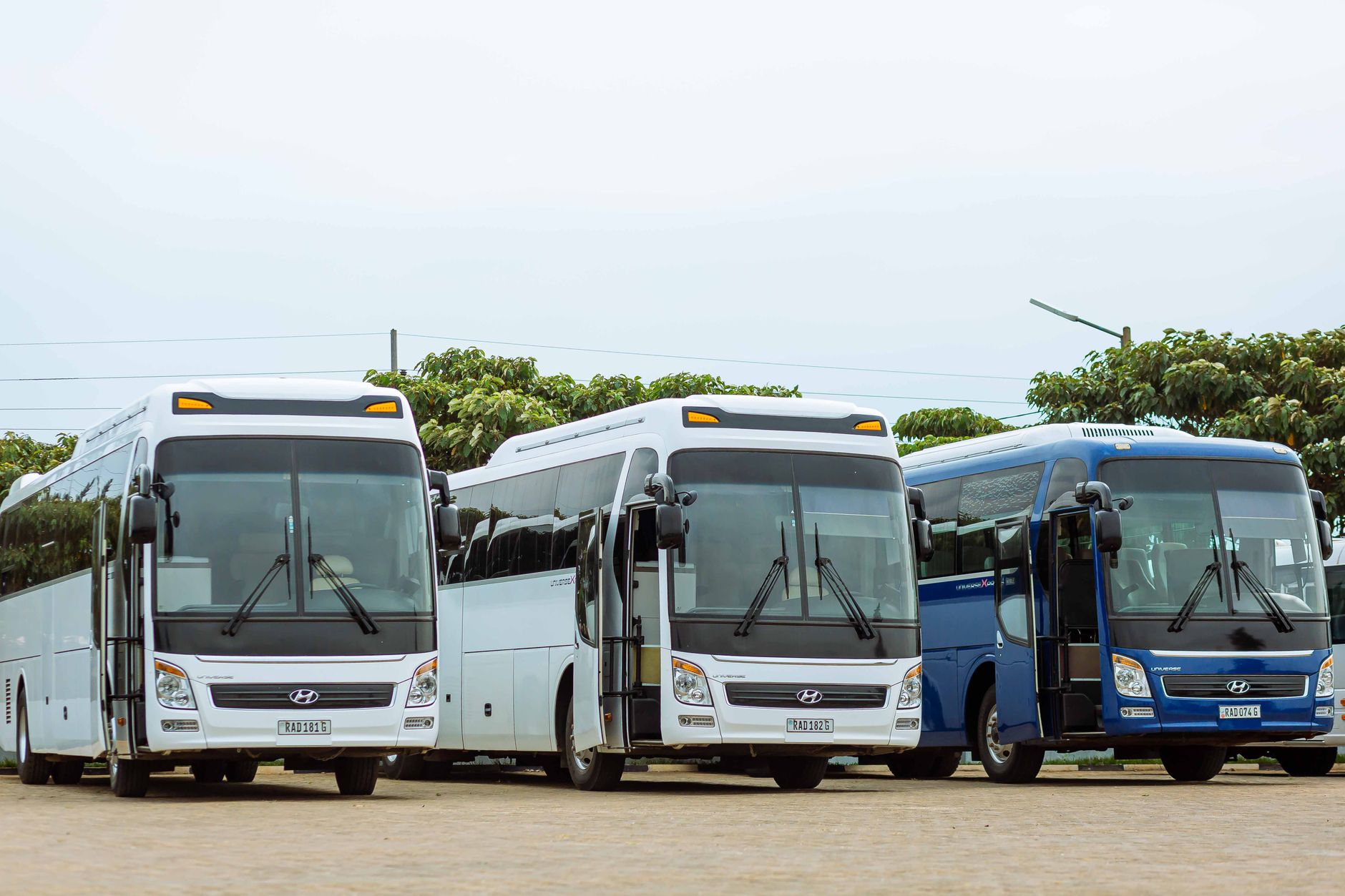
Vehicle selection for Midwest group travel starts with the combined passenger and cargo count, then accounts for route length, overnight duration, and venue access. A full-size motor coach is usually the most comfortable choice for long I-80, I-90, and I-94 legs, but filling every seat can leave little room for instruments and luggage. Smaller groups may use a mini coach or executive Sprinter when hotel drives and campus streets are tight. Stadium service roads, downtown Chicago loading zones, older campus lots, and festival venues may require a specific turning radius, curb plan, or separate equipment vehicle.
| Vehicle | Seats | Best For | Notes |
|---|---|---|---|
| Full-size motor coach | 40-56 passengers | Use for a full band, choir, staff, and luggage on multi-day Midwest routes or away-game weekends. | Best long-haul comfort with reclining seats, overhead bins, underfloor bays, restroom on many models, and capacity for substantial luggage, though oversized props may still need separate handling. |
| Mini coach | 24-35 passengers | Use for a chamber choir, pep band, section trip, or compact group traveling between nearby Midwest metros. | A useful middle option for smaller ensembles, with easier campus access than a full-size coach but less underfloor cargo and usually no onboard restroom. |
| Executive Sprinter | 10-14 passengers | Use for directors, clinicians, officers, soloists, or a small ensemble needing flexible point-to-point service. | Fits narrow hotel approaches and urban pickup points, but luggage and instrument capacity are limited, so it works best when cases are compact and the passenger load is modest. |
| Two-coach team with equipment support | 80-112 passengers across two coaches | Use when a large marching band, combined choir, or festival delegation exceeds one coach's practical seating or cargo capacity. | Separating passengers from percussion, props, uniforms, or bulky cases improves aisle safety and loading speed, while coordinated dispatch keeps the convoy on one schedule. |
Routing, Timing, and On-the-Road Realities
The longest Midwest group travel days usually run on I-80, I-90, or I-94 and should be planned from the actual school or hotel address rather than a city-center estimate. Chicago departures need extra margin for Kennedy, Eisenhower, Dan Ryan, and suburban interchange congestion, especially when a Friday game or festival overlaps with commuter traffic. I-94 can tighten around Milwaukee, the Illinois-Wisconsin line, Benton Harbor, Kalamazoo, Ann Arbor, Detroit, and major event windows. I-90 timing is affected by Chicago approaches, Rockford, Madison, and winter conditions, while I-80 can slow through Joliet, the Quad Cities, Iowa City, and construction zones. For Columbus, Cleveland, Indianapolis, and St. Louis, the final campus approach may be slower than the interstate because buses encounter event traffic, pedestrian controls, and restricted turns. A pickup before the morning commute is often more useful than trying to recover time near the venue.
Venue access needs its own operating plan. Ohio Stadium in Columbus, Michigan Stadium in Ann Arbor, Spartan Stadium in East Lansing, Camp Randall in Madison, Kinnick Stadium in Iowa City, Memorial Stadium in Bloomington or Champaign, Ross-Ade Stadium in West Lafayette, and Huntington Bank Stadium in Minneapolis may use separate team, band, media, and general spectator approaches. Confirm where the coach can stage, how long it may remain, whether a credential is required, and whether equipment must be hand-carried from a remote lot. Stadium departures should not be scheduled immediately after the final note because postgame pedestrian release and police-controlled traffic can hold buses. Drivers also need a lawful hours plan for multi-day service, including meal breaks, required rest, hotel parking, and a relief-driver decision for very long days. In snow, ice, heavy rain, or a late game, the dispatcher should protect the next morning's rehearsal or departure instead of promising an aggressive recovery schedule.
What This Typically Costs
Midwest College Band Tour pricing is usually built from vehicle days, route mileage, and the time the coach is committed, not just passenger count. Most markets apply a daily minimum, with longer I-80, I-90, and I-94 runs priced by distance, operating hours, and whether the bus must deadhead into the pickup city. Fall football weekends, spring festival dates, graduation periods, and major Chicago events can tighten availability and raise seasonal rates. Multi-day group travel also includes driver lodging, parking, tolls, and any required overnight positioning. Typical line items may include fuel adjustments, parking or venue access fees, and driver gratuity, which is commonly handled separately. A practical quote should show the vehicle type, service days, included mileage or hours, deadhead assumptions, lodging responsibility, and cancellation terms rather than presenting an unexplained lump sum.
Frequently Asked Questions
What information is needed to quote a Midwest College Band Tour?
Most groups need the headcount, instrument inventory, uniform and suitcase volume, accessibility requirements, pickup address, performance schedule, and final destination list. A marching band may need space for sousaphones, percussion cases, flags, props, garment bags, and coolers in addition to passenger luggage. A choir often has less oversized equipment but may carry riser accessories, folders, robes, keyboards, or sound equipment. Send the school or organization contact, preferred departure windows, hotel locations, and venue loading instructions so the operations team can match the vehicle and build realistic timing.
How many students fit on a charter bus for band or choir travel?
A charter bus or motor coach commonly carries about 40 to 56 passengers, depending on the model and interior layout. A smaller college ensemble may fit a 24 to 35 passenger mini coach, while a compact group with limited gear may use an executive Sprinter. Large bands frequently need multiple coaches because instruments, uniforms, personal luggage, and staff consume usable space before every seat is assigned. Final capacity should be based on both seats and cargo, not the advertised maximum passenger count.
Can a motor coach carry marching band instruments and uniforms?
Oversized instruments should be listed individually before dispatch, especially tubas, sousaphones, concert percussion, timpani, marimbas, drumline equipment, music stands, flags, and theatrical props. Standard underfloor bays handle many cases, but unusually long, tall, fragile, or wheeled items may require a dedicated equipment vehicle or a second coach with open cargo capacity. Instruments should not block aisles, emergency exits, or driver sight lines. The band director or equipment manager should coordinate a loading plan with the driver before departure.
When does a college band need multiple vehicles?
For a group of roughly 80 to 110 travelers, two coaches often provide better cargo separation and easier roll calls than one overloaded vehicle. Dispatch can assign students, staff, instruments, or accessibility needs by vehicle and use a lead coach for itinerary communication. Larger programs may add a mini bus, cargo van, box truck, or equipment trailer when props and percussion exceed underfloor storage. Each vehicle needs its own driver, manifest, emergency contact process, and coordinated departure plan.
Can you provide accessible transportation for a choral or band group?
Wheelchair users should be identified during the quote stage because accessible motor coach availability is more limited than standard coach availability. A lift-equipped vehicle needs a securement position and may require additional loading time at the school, hotel, stadium, or festival venue. Confirm whether the passenger remains in the chair during travel or transfers to a seat, and provide chair dimensions when possible. Do not assume a standard charter bus can accept a mobility device simply because it has a large luggage bay.
Why does Chicago affect Midwest group travel planning?
Chicago is often used as a Midwest transfer or overnight hub, with routes extending toward Milwaukee, Madison, Minneapolis, Detroit, Ann Arbor, Columbus, Indianapolis, Champaign, Iowa City, and St. Louis. A Chicago-area pickup needs a specific curb or lot plan because downtown loading, hotel access, campus streets, and stadium traffic can change the practical schedule. For O'Hare or Midway connections, build in airport circulation and terminal restrictions rather than treating the airport as a simple curbside stop. The itinerary should separate passenger loading from equipment loading whenever the venue has a designated band entrance.
What are the busiest seasons for Midwest band and choir trips?
College and high-school band travel peaks from late August through November for football, invitational competitions, homecoming, and postseason events. Spring brings choral festivals, concert tours, adjudication trips, indoor percussion, and campus music events, while summer is active for camps and multi-city performance tours. Big Ten weekends can compress hotel, parking, and charter bus availability around Columbus, Ann Arbor, East Lansing, Madison, Iowa City, Bloomington, West Lafayette, Champaign, and Minneapolis. Booking several weeks to several months ahead is more reliable than waiting for the game or festival schedule to settle.
How to Book
To start a quote, provide the travel dates, pickup address, estimated headcount, instrument and luggage needs, accessibility requirements, destinations, performance times, hotel locations, and preferred departure windows. US Bus Trips can typically return a realistic quote within 4 business hours when the itinerary and equipment list are complete. Confirmation should identify the vehicle class, service dates, pickup instructions, routing assumptions, driver and lodging plan, included mileage or hours, and known parking or toll items. Call or submit the trip request through US Bus Trips with the school, department, or tour contact available for schedule questions.
Related Trips You Might Also Consider
- Great Smoky Mountains — 24-Passenger Mini Bus
- Mesa Verde — 56-Passenger Motor Coach
- Mount Rushmore — 36-Passenger Mini Coach
- Lexington, KY to Nashville, TN
- Denver, CO to Salt Lake City, UT
- Aurora, CO to Colorado Springs, CO
- Cross-Country Charter Bus Overview
- All Group Tour Destinations
- See the Full Fleet (Sprinters through 56-pax coaches)
- Get a Free Quote in 60 Seconds