
US Bus Trips arranges group travel for youth studios attending regionals, nationals, and showcases across the Midwest.
Overview
Midwest Dance Competition travel is usually a weekend operation built around a Friday departure, Saturday rehearsals and performances, and Sunday awards or return movement. A studio may book one charter bus for dancers and instructors, while parents drive separately or fill remaining seats. Larger programs combine several age divisions and can produce 40 to 100 or more travelers, especially for nationals or a showcase with multiple studios. Chicago is the practical hub because routes converge from Milwaukee, Madison, Indianapolis, Detroit, Cleveland, Columbus, and Iowa. Common Chicago-area destinations include the Midwest Conference Center in Northlake, convention hotels in Schaumburg, Rosemont-area facilities, and suburban venues where bus access is easier than downtown loading. The booking party is often a studio owner or team parent who needs one accountable transportation plan rather than a collection of individual carpools.
Event geography is spread across convention centers, hotels, performing-arts facilities, high schools, and resort properties. Illinois demand clusters around Chicago, Northlake, Schaumburg, Itasca, Aurora, Oak Brook, and the St. Louis corridor near Collinsville and the Gateway Convention Center. Indiana movements commonly involve Indianapolis, Fort Wayne, and other school or civic venues, while Ohio trips may run to Columbus, Dayton, Cleveland, or smaller communities such as Wapakoneta. Michigan schedules can include Detroit-area suburbs, Pontiac, and western Michigan stops, and Wisconsin programs frequently use Milwaukee, Madison, Appleton, Wisconsin Dells, and Fox Cities facilities. Iowa routing often touches Davenport, Dubuque, Cedar Rapids, Des Moines, Ames, and Sioux City; Minnesota trips can involve Minneapolis, St. Paul, Shakopee, Monticello, or nearby suburban schools. These locations create different parking and staging requirements, so the exact venue address matters more than the metro name.
The Midwest calendar typically builds from winter conventions and early regionals into heavier spring competition weekends, followed by summer nationals and showcase travel. Dance competition operators may schedule several stops on one tour, so a team can travel from Chicago to Indianapolis or Ohio one weekend and then north toward Wisconsin or Minnesota the next. Summer nationals may require a four- to six-night hotel stay, repeated venue shuttles, and a bus that remains available for rehearsals, meals, and awards. Cargo planning should cover costumes, garment bags, dance shoes, makeup cases, portable speakers, props, team signage, uniforms, and personal luggage. Wheelchairs or mobility devices need advance confirmation because lift-equipped vehicles and accessible loading locations are not automatic. Midwest group travel also overlaps with Big Ten sports weekends and high-school marching-band volume, which can tighten coach supply and raise hotel and parking pressure around major campuses and convention centers.
Fleet Options
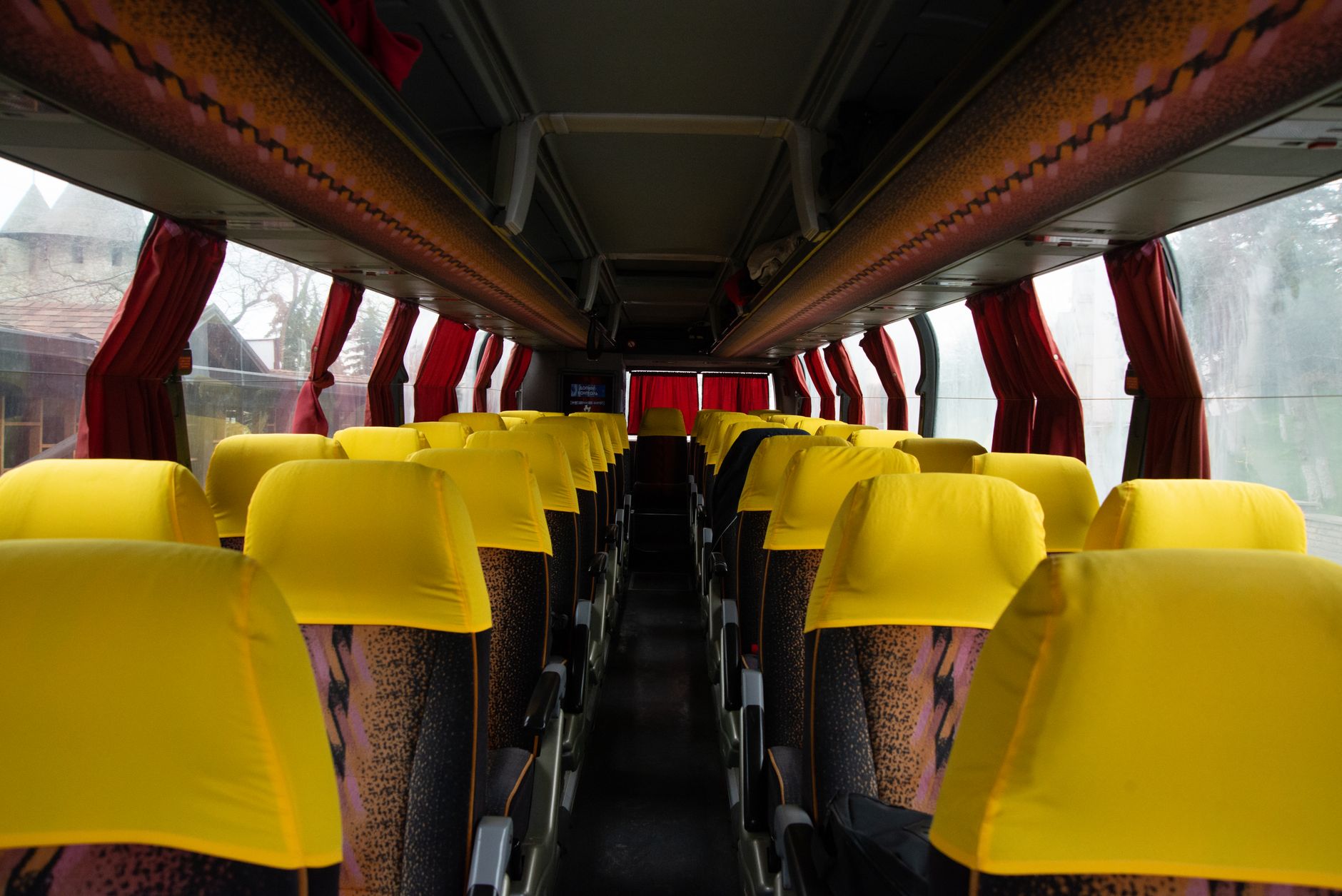
Choose the vehicle after matching passenger count with luggage, costume racks, props, and the number of daily moves. A full-size motor coach is usually the best fit for longer I-80, I-90, and I-94 legs because it combines reclining seats, restroom access, climate control, and underfloor storage. Smaller vehicles work better for studio groups, staff shuttles, hotel loops, or venues with restricted bus circulation. Confirm venue parking and curb access before selecting a large charter bus, especially in dense Chicago, downtown Detroit, central Indianapolis, or older theater districts.
| Vehicle | Seats | Best For | Notes |
|---|---|---|---|
| Full-size motor coach | 40-56 passengers | Use for a full studio delegation, multi-state regional, or national itinerary where passengers will spend several hours on I-80, I-90, I-94, or I-65. | Best long-haul comfort with underfloor bays for luggage, garment bags, rolling cases, and moderate props; confirm bus parking and loading access at suburban convention venues. |
| Mini coach | 24-35 passengers | Use for a medium team traveling to a nearby Midwest city or for a second vehicle carrying dancers, instructors, and equipment. | Provides more maneuverability than a full-size coach with useful luggage capacity, but cargo space varies by model and may not support large props or extensive costume racks. |
| Mini bus | 18-28 passengers | Use for a smaller studio, staff movement, rehearsal shuttle, or short transfer between hotels, airports, and a competition venue. | Fits suburban hotel shuttles and venue loops well, although storage is limited and passengers may need to keep garment bags inside the cabin. |
| Executive Sprinter | 8-14 passengers | Use for instructors, studio owners, judges, or a small support party rather than a complete youth Dance Competition team. | Useful for compact staff groups and tight streets, with limited luggage capacity and less separation between passengers and costume or equipment bags. |
Routing, Timing, and On-the-Road Realities
Chicago-centered routing commonly uses I-90 toward Rockford, Madison, Milwaukee, and the Fox Cities; I-94 toward Milwaukee, Detroit, and the Twin Cities connection; I-80 across northern Illinois and Iowa; and I-65 toward Indianapolis and Louisville. Ohio movements often use I-80 or I-90 through northern Indiana, then I-75 or I-71 toward Toledo, Detroit, Columbus, Dayton, or Cleveland. Iowa trips may follow I-80 from Chicago through Davenport and Des Moines, while southern Illinois and Missouri movements can use I-55 toward St. Louis or I-70 toward Kansas City and Columbia. Schedule pickup before the main morning traffic window when the team has an early call, particularly around Chicago, Indianapolis, Detroit, Columbus, and Minneapolis. For a weekend departure, a Friday afternoon pickup can be slower than the mileage suggests because of commuter traffic, tollway congestion, and sports events. Build a real buffer for winter weather, construction, and a late rehearsal or awards program rather than treating the interstate drive time as the entire schedule.
Venue access changes considerably by location. Suburban convention properties such as Northlake, Schaumburg, Wisconsin Dells, Cedar Rapids, and Des Moines often have more practical coach staging than downtown theaters, but the operator still needs the designated bus entrance and loading rules. Downtown Chicago, St. Louis, Minneapolis, Detroit, and Indianapolis may require a specific curb window, remote parking, or a short unload followed by off-site storage. Large groups should load by assigned coach, with costume and prop inventory checked before departure so a second vehicle is not held for missing bags. Driver-hours planning must include deadhead to the first pickup, repositioning between hotel and venue, meal stops, post-performance waits, and the return after awards. If the group stays several nights, the bus may need a paid standby period or separate daily shuttle blocks instead of continuous service. For multi-vehicle group travel, stagger departure times only when venue access supports it and keep one dispatcher or lead chaperone responsible for every coach.
What This Typically Costs
Dance Competition charter bus pricing in the Midwest is usually built from vehicle type, service days, mileage, and the time the coach must remain available. A local or regional run commonly carries a daily minimum, while a multi-state motor coach itinerary adds long-distance mileage, deadhead miles, tolls, and any required repositioning. Spring regional weekends and summer nationals are seasonal peaks, so availability can tighten around major convention-center calendars, Big Ten weekends, graduations, and high-school marching-band travel. Driver overnight lodging is normally added when the schedule exceeds a practical same-day duty cycle, with room requirements planned near the venue or hotel block. Common line items include fuel adjustments, parking or facility access fees, tolls, driver gratuity, and extra staging or shuttle hours. In most markets, a multi-day group travel quote commonly runs a few thousand dollars per day rather than a single flat trip price, with the final range driven by coach count, route length, and idle time.
Frequently Asked Questions
How many passengers usually travel for a Midwest dance competition?
A typical Midwest Dance Competition group is a studio team traveling with dancers, instructors, parents, and sometimes siblings. A small team may need 15 to 30 seats, while a studio delegation commonly reaches 40 to 80 passengers. Large regional or national trips can exceed 100 travelers and require multiple motor coaches or a coach plus smaller support vehicles. Headcount should include chaperones, teachers, observers, and any passengers joining only for selected legs.
Can a charter bus handle a Chicago Dance Competition weekend?
For Chicago-area events, pickup planning often centers on suburban studios, hotel blocks, and venues such as the Midwest Conference Center in Northlake, convention hotels in Schaumburg, and facilities around Rosemont or Oak Brook. A charter bus can stage more easily at a hotel or designated bus area than on a narrow residential street. The itinerary should identify a legal loading point, not just a venue name. Chicago-area traffic makes a 30 to 60 minute schedule cushion useful for show call times.
Where does dance team equipment go on the bus?
Yes, but the vehicle should be selected around both passenger count and costume or equipment volume. Dancers generally bring garment bags, rolling cases, makeup kits, props, and personal luggage, while instructors may carry speakers, signage, or registration materials. A full-size motor coach usually offers underfloor bays, but the usable space depends on passenger luggage and any bulky props. Send an inventory before booking if the team carries portable flooring, large set pieces, wheelchairs, or multiple rolling racks.
Which Midwest cities are common Dance Competition destinations?
The main Midwest corridors are I-80 and I-90 between Chicago, Iowa, and Ohio, I-94 through Milwaukee, Chicago, Detroit, and Minneapolis connections, and I-65 between Indianapolis and Chicago. Common city pairs include Chicago to Indianapolis, Columbus, Detroit, Cleveland, Milwaukee, Madison, Minneapolis, Cedar Rapids, Des Moines, St. Louis, and Kansas City. Event stops can be less central, such as Northlake, Wisconsin Dells, Davenport, Dubuque, Cedar Rapids, Monticello, or suburban convention facilities. Routing should use the actual hotel and venue addresses because a city label can hide substantial suburban mileage.
When should a Midwest dance studio reserve group travel?
Regional competition travel is busiest from late winter through spring, when tours schedule weekend events across Illinois, Indiana, Ohio, Michigan, Wisconsin, Iowa, and Minnesota. Summer brings nationals and longer hotel-based programs, including convention-center and resort venues in Wisconsin, Iowa, and other Midwest markets. Fall showcases and conventions create shorter local or overnight movements, especially around Chicago, Detroit, Minneapolis, and Kansas City. Holiday weekends, college sports dates, graduations, and band trips can reduce coach availability, so early reservation is advisable.
How are multiple buses managed for a large dance team?
A single charter bus is often enough for a small studio or one age division, but larger delegations need a coordinated fleet plan. Two or more coaches should use the same pickup sequence, radio or phone contact tree, and written departure windows. Keep dancers, instructors, costumes, and props assigned by vehicle so one late loading group does not delay the entire fleet. For very large group travel, a mini bus or executive Sprinter can handle staff, judges, or airport transfers while full-size coaches move the main team.
What information does the bus company need before quoting?
A Midwest charter bus itinerary should account for driver duty limits, required breaks, overnight rest, venue access, and the possibility of winter weather. A same-day Chicago to Detroit or Indianapolis movement may be workable, but a performance schedule can make the return leg impractical after a late awards ceremony. For Iowa, Minnesota, Missouri, or northern Wisconsin routes, build rest and meal stops into the plan rather than relying on an unplanned highway stop. The final schedule should show pickup time, hotel check-in, rehearsal or warm-up windows, performance call, awards, and the exact return departure.
How to Book
Have the event dates, pickup address, passenger count, venue and hotel addresses, performance schedule, and equipment list ready when requesting a quote. Include wheelchair needs, parent passengers, rehearsal stops, airport movements, and whether the bus must remain on standby between sessions. US Bus Trips can typically return a realistic quote within 4 business hours when the itinerary is complete. Confirmation should identify the vehicle class, pickup and drop-off points, service hours, major inclusions, driver plan, cancellation terms, and the operations contact; reach us through the booking request or phone channel listed by US Bus Trips.
Related Trips You Might Also Consider
- Cleveland, OH to Pittsburgh, PA
- Senior Tour Group — Northeast Region
- Olympic — 14-Passenger Sprinter
- Mesa, AZ to Las Vegas, NV
- Jacksonville, FL to Savannah, GA
- Senior Tour Group — Pacific Northwest Region
- Cross-Country Charter Bus Overview
- All Group Tour Destinations
- See the Full Fleet (Sprinters through 56-pax coaches)
- Get a Free Quote in 60 Seconds