
US Bus Trips arranges Government Agency Shuttle service for federal and state employees, interagency meetings, training sessions, and conference programs across the Midwest.
Overview
A Midwest Government Agency Shuttle usually supports employees traveling to a training center, interagency conference, inspection site, airport, or temporary field office. Chicago is the region's most common hub, with movements between O'Hare, Midway, McCormick Place, Navy Pier, Rosemont, and downtown hotels before buses continue toward Milwaukee, Madison, Indianapolis, Detroit, Columbus, Cleveland, Minneapolis, Des Moines, St. Louis, or Kansas City. Federal agencies often need a clean separation between transportation charges and reimbursable lodging and meals. State departments may add procurement rules, purchase orders, accessibility requirements, or approved carrier language. The customer is often a travel coordinator, contracting officer, HR unit, university-affiliated agency office, or event planner managing several arrival waves. A reliable charter bus plan gives that coordinator one operating schedule instead of separate taxi, rental-car, and driver assignments.
The Midwest group travel pattern is not limited to office commuters. Big Ten football and basketball programs, ROTC units, public safety academies, and high-school marching bands generate heavy charter demand around stadiums, arenas, and campus events. Common destinations include Soldier Field and United Center in Chicago, Camp Randall Stadium in Madison, Kinnick Stadium in Iowa City, Memorial Stadium in Champaign and Bloomington, Ross-Ade Stadium in West Lafayette, Lucas Oil Stadium in Indianapolis, Ohio Stadium in Columbus, Michigan Stadium in Ann Arbor, Ford Field and Little Caesars Arena in Detroit, Huntington Bank Field in Cleveland, U.S. Bank Stadium in Minneapolis, and Busch Stadium in St. Louis. Bands and teams need more than seats: instruments, uniforms, trunks, medical kits, coolers, and coaches' equipment compete for bay space. The quote should distinguish passenger baggage from oversized cargo and determine whether a second bus, equipment truck, or trailer is required. That planning is especially important when a Government Agency Shuttle shares the same weekend as a major campus event.
Conference and training movements commonly use repeated hotel-to-venue loops in Chicago, Rosemont, Detroit, Columbus, Indianapolis, Milwaukee, Minneapolis, St. Louis, Kansas City, Cleveland, Cincinnati, Des Moines, and Omaha-area connections. A charter bus may make several controlled departures in the morning, remain staged during the program, and return riders in waves after the final session. Agencies should identify the exact hotel entrance, loading curb, security checkpoint, and venue dock because a bus cannot always use the same entrance as passenger cars. McCormick Place, convention hotels near the Chicago riverfront, airport hotels, and college campuses can have separate bus staging instructions and limited curb dwell time. Accessibility must be planned before dispatch, not added after the fleet is assigned. For multi-day group travel, a written manifest or rider count at each stop prevents an apparently full motor coach from leaving equipment or personnel behind.
Fleet Options
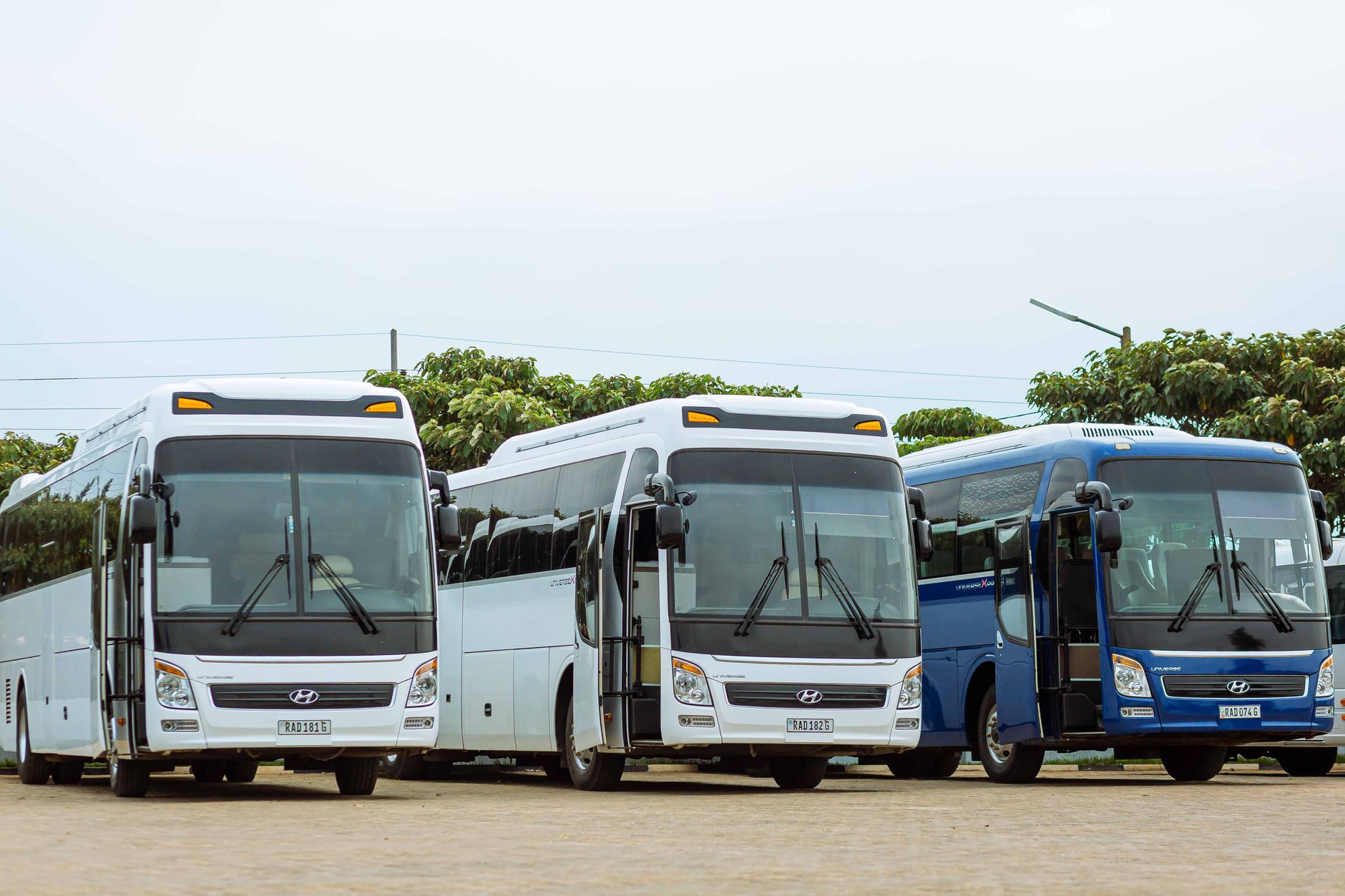
Vehicle selection starts with headcount, then accounts for luggage, instruments, uniforms, mobility devices, and the number of stops. A full-size motor coach is normally the practical choice for long Midwest group travel because its underfloor bays and highway seating reduce handling on routes between Chicago, Detroit, Columbus, Indianapolis, Minneapolis, St. Louis, and Kansas City. Smaller vehicles fit airport loops, office transfers, and hotel streets where curb space or garage clearance limits a large charter bus. For a multi-day assignment, confirm whether passengers need a restroom, power, Wi-Fi, climate control, accessible boarding, or room for equipment before choosing the fleet mix.
| Vehicle | Seats | Best For | Notes |
|---|---|---|---|
| Full-size motor coach | Typically 40-56 passengers | Use for long-haul agency travel, regional conferences, Big Ten teams, or large employee groups moving between Midwest metros. | Best highway comfort and underfloor capacity for luggage, uniforms, band cases, coolers, and multi-day baggage; verify venue loading zones and parking clearance. |
| Mini coach | Typically 24-38 passengers | Use for medium departments, airport transfers, training groups, or secondary shuttle waves where a full-size motor coach is unnecessary. | Provides coach-style seating with less underfloor capacity than a full-size bus and generally handles campus streets and hotel approaches more easily. |
| Mini bus | Typically 18- thirty passengers | Use for smaller agency teams, office-to-venue circulation, or downtown routes with constrained loading and parking. | Useful for short local loops and tighter curbs, but cargo space is limited and a separate equipment plan may be needed for instruments or trade-show materials. |
| Executive Sprinter | Typically 8-14 passengers | Use for compact inspection teams, executive transfers, airport pickups, or a support vehicle alongside larger charter buses. | Comfortable for small leadership groups and point-to-point service, but luggage and equipment capacity can disappear quickly when every seat is occupied. |
Routing, Timing, and On-the-Road Realities
Chicago is the practical starting point for many Midwest group travel programs, but the schedule must allow for congestion on the Kennedy, Eisenhower, Dan Ryan, and local airport approaches. I-90 and I-94 movements toward Milwaukee, Madison, Green Bay, Detroit, and Ann Arbor can be affected by construction, weather, and event traffic, while I-80 carries long east-west runs through Iowa and northern Illinois. I-65 connects Chicago and Indianapolis, and I-70 supports routes from Indianapolis toward Columbus, St. Louis, and Kansas City. I-75 is the main north-south option for Detroit, Toledo, and Columbus, while I-71 supports Cleveland, Columbus, and Cincinnati connections. For conference arrivals, pickup windows should be spread rather than placing every employee at the curb at the same time. Early airport pickups and hotel departures are usually easier than afternoon downtown exits, but the operating plan should retain a buffer for security, baggage, and bus loading.
Venue access changes the route after the highway portion is complete. Chicago hotels may require a designated bus curb or remote staging, and McCormick Place movements should use the event's published motor-coach instructions instead of assuming passenger-car access. Campus venues in Ann Arbor, Columbus, Madison, Iowa City, Bloomington, West Lafayette, and Minneapolis often impose event-day traffic controls, credential checks, or restricted lots. Indianapolis convention and sports traffic can concentrate around the Indiana Convention Center, Lucas Oil Stadium, and downtown hotels, while St. Louis movements may need separate plans for the America's Center district and Busch Stadium events. Dispatch builds driver-hours around passenger-carrier limits, including the general 10-hour driving limit after 8 hours off duty and the 15-hour on-duty window. A long charter bus day may therefore require a relief driver, an overnight stop, or a split itinerary rather than a same-day return. Winter conditions on I-80, I-90, I-94, and northern Great Lakes routes should be treated as a schedule risk, not as free extra time.
What This Typically Costs
Government and agency charter pricing is built from vehicle days, route miles, service hours, and the operating plan rather than a single mileage rate. Most multi-day Midwest work carries a daily minimum, with longer I-80, I-90, and I-94 movements adding distance, tolls, parking, and deadhead miles from the carrier yard. Commonly, a local conference shuttle runs on an hourly or daily minimum, while a multi-state motor coach assignment runs a few thousand dollars per day depending on bus size, dates, and market conditions. Seasonal peaks include spring and fall conference calendars, summer training cycles, and the Big Ten football and basketball seasons, when equipment availability tightens. Multi-day quotes normally account for driver overnight lodging, meals or per diem, fuel adjustments, tolls, venue parking, and a driver gratuity line if the agency authorizes one. GSA per diem rates govern federal employee reimbursement for lodging and meals and incidentals, but they do not create a universal charter-bus price; the transportation quote still depends on the actual itinerary and carrier operating costs.
Frequently Asked Questions
What does a Government Agency Shuttle cover in the Midwest?
A Government Agency Shuttle usually means planned employee movement between an agency office, airport, hotel, training site, or conference venue. In the Midwest, common assignments connect Chicago O'Hare or Midway with McCormick Place, Rosemont, downtown hotels, or regional offices. Other examples include airport and hotel loops for meetings in Detroit, Columbus, Indianapolis, Minneapolis, St. Louis, Kansas City, Milwaukee, Des Moines, and Cleveland. The dispatch plan should identify authorized riders, pickup windows, manifests if required, accessible transportation needs, and a direct contact for changes.
Can a charter bus be booked using GSA per-diem rates?
Yes, US Bus Trips can plan a charter bus or motor coach around a federal travel authorization and the agency's approved reimbursement process. GSA publishes CONUS lodging and meals and incidental expense rates, including standard and non-standard locality rates, but those rates reimburse travelers rather than set a carrier's bus price. The quote should separate transportation, lodging, parking, tolls, and other pass-through costs so procurement can review each line. State agencies may use their own travel schedules, contract terms, or bid requirements, so the funding source and purchasing rules should be identified before dispatch.
How many employees can a Midwest agency shuttle carry?
A typical group is 20 to 55 passengers for a department, training cohort, or interagency meeting. A regional conference can require 60 to 150 passengers, while a Big Ten team, marching band, or statewide program may need several vehicles and support staff. Headcount should include supervisors, coaches, equipment personnel, interpreters, and riders using mobility devices. Passenger counts that change after quoting can affect both vehicle assignment and the number of drivers needed.
Which vehicle is best for an interagency conference shuttle?
The best vehicle depends on passenger count, baggage, equipment, and whether the bus must circulate through tight hotel or campus streets. A full-size motor coach generally fits longer I-80, I-90, and I-94 legs because it offers a restroom, high-back seating, overhead storage, and underfloor bays. A mini coach or mini bus can work for airport transfers, downtown hotel loops, and smaller groups where a full-size bus would be difficult to park. Executive Sprinters are useful for small leadership teams but provide limited cargo space, so they are rarely the right choice for bands or teams with substantial gear.
Can the bus accommodate wheelchairs and agency equipment?
An accessible charter bus should be requested when a passenger uses a wheelchair or other mobility device that cannot be folded and stored. Lift-equipped inventory is limited in some Midwest markets, especially during university events and conference peaks, so the request should be made with the initial quote. Provide the number and dimensions of mobility devices, whether riders remain seated during travel, and any boarding assistance requirements. Equipment such as instruments, uniforms, coolers, medical supplies, and exhibit materials should also be listed because it can reduce available passenger seating.
How are multi-vehicle Midwest groups coordinated?
Large group travel is usually divided by passenger count, equipment, schedule, or destination rather than filled with the largest available bus alone. A 100-person conference movement may use two motor coaches, while a marching band may need passenger coaches plus a separate vehicle or trailer plan for instruments and uniforms. Dispatch assigns a lead vehicle, common radio or phone procedures, staggered loading positions, and a single field contact. Every vehicle needs its own driver-hours review, pickup instructions, emergency contact sheet, and venue access plan.
How far in advance should a Midwest government charter be booked?
Passenger-carrier federal hours-of-service rules generally limit a driver to 10 hours of driving after 8 consecutive hours off duty and 15 hours on duty after that rest period. A multi-state charter bus plan must therefore include realistic meal stops, traffic allowances, driver changes when needed, and overnight lodging rather than treating the route as nonstop mileage. Chicago congestion, winter weather around the Great Lakes, construction, football traffic, and downtown loading restrictions can consume the schedule quickly. The itinerary should show service hours and layovers clearly so dispatch can confirm that the run is legal and practical.
How to Book
To request a quote, provide the travel dates, pickup address, destination or venue, estimated headcount, equipment list, and a stop-by-stop itinerary if available. Include whether the trip is federal or state funded, whether GSA or another per-diem schedule applies, and whether wheelchair access, manifests, staging, or multiple buses are required. US Bus Trips typically returns an initial quote within 4 business hours, subject to complete routing details and vehicle availability. Confirmation documents should identify the assigned vehicle type, pickup times, driver contact process, inclusions, exclusions, cancellation terms, and payment requirements.
Related Trips You Might Also Consider
- Atlanta, GA to Charleston, SC
- New Orleans Mardi Gras — 14-Passenger Sprinter
- Scout Troop — Mountain West Region
- San Francisco, CA to Sacramento, CA
- Jacksonville, FL to Savannah, GA
- Rocky Mountain National Park — 36-Passenger Mini Coach
- Cross-Country Charter Bus Overview
- All Group Tour Destinations
- See the Full Fleet (Sprinters through 56-pax coaches)
- Get a Free Quote in 60 Seconds