
US Bus Trips coordinates charter bus and motor coach service for FIRST Robotics teams traveling to Pacific Northwest regionals, district events, and championships.
Overview
FIRST Robotics teams in the Pacific Northwest often travel in compact school groups rather than conventional tour groups. A typical load includes students, adult mentors, coaches, volunteer chaperones, and sometimes parents or alliance partners, with totals ranging from roughly 15 people to more than 100 for combined programs. The Robotics Competition calendar creates concentrated demand in March and April, when district events can occur on overlapping weekends. Pacific Northwest event listings have included venues and communities such as Bonney Lake, Snohomish, Bellevue, Auburn, Salem, Wilsonville, Oregon City, and Cheney. A team may leave from Seattle or Portland before dawn, return after awards, or stay several nights for a regional or championship.
The core group travel pattern follows I-5 between Seattle, Tacoma, Olympia, Portland, Salem, and Eugene, with branches toward event halls, fairgrounds, school campuses, and university facilities. Washington teams may travel east toward Spokane, Cheney, or the Tri-Cities, while Oregon teams may cross the Cascades or move north into southwest Washington. Scenic coastal and mountain routes can be part of the itinerary, but they require more conservative timing because two-lane roads, weather, and limited coach parking reduce recovery options. Puget Sound trips may involve Bainbridge, Bremerton, Port Townsend, Coupeville, or the San Juan Islands, where ferry loading becomes a scheduled operation rather than a simple road leg. Alaska teams generally use local transportation after flying to Anchorage, Fairbanks, Juneau, Ketchikan, Sitka, or Skagway.
Equipment planning should begin with the robot crate and pit inventory, not with the seat count. Teams may carry tools, batteries, spare parts, laptops, banners, uniforms, instruments, personal bags, wheelchairs, and rolling carts, and each item can affect the luggage-bay plan. A charter bus with underfloor storage is often suitable for normal team gear, but oversized crates may require a separate cargo van, box truck, trailer, or second coach. Wheelchair users should be identified at quote stage because accessible equipment and lift-equipped vehicles are not present in every fleet. Large programs should use a vehicle manifest, loading sequence, adult check-in plan, and designated equipment lead so the motor coach is not delayed at the venue.
Fleet Options
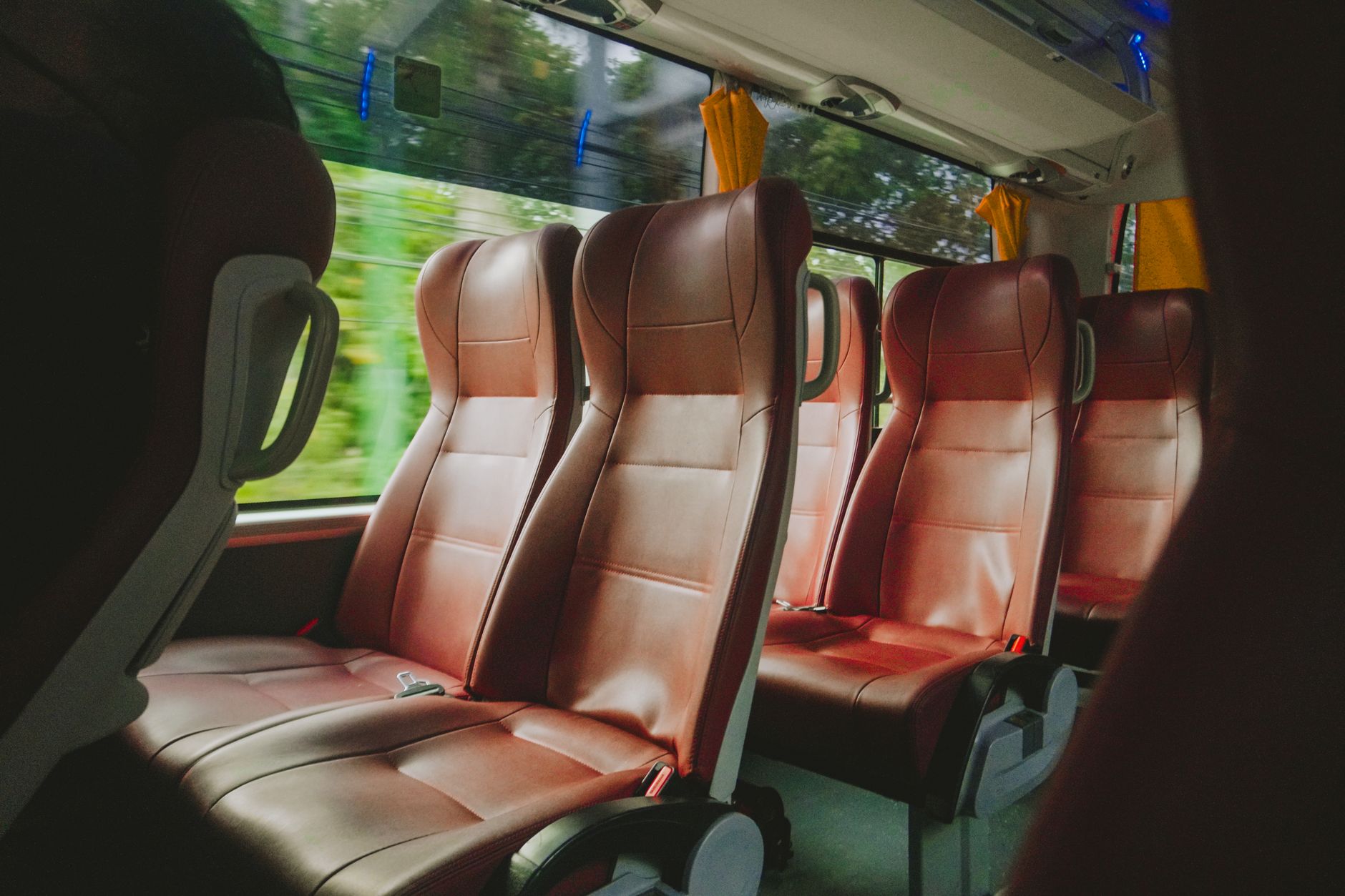
Vehicle selection starts with the passenger count, equipment dimensions, number of stops, and whether the group must use tight urban streets or ferry terminals. A motor coach gives the best comfort for long I-5 runs, with reclining seats, restroom availability on many models, and underfloor storage for ordinary luggage. A mini coach or mini bus can work better for a small team visiting school campuses, event halls, or downtown venues with restricted parking. Executive Sprinters are useful for mentors, judges, airport transfers, or small Alaska shore groups, but their cargo capacity varies sharply by configuration. For large teams, use multiple vehicles or a passenger coach plus dedicated cargo vehicle instead of filling every aisle and seat with gear.
| Vehicle | Seats | Best For | Notes |
|---|---|---|---|
| Full-size charter bus | 40-56 passengers | Use for a full team, school delegation, or alliance traveling from Seattle, Portland, Eugene, Spokane, or Tacoma to a regional or championship. | Best for long Pacific Northwest runs with underfloor storage, but confirm robot-crate dimensions and venue loading access before assigning it to equipment duty. |
| Mini coach | 24-35 passengers | Use when the group is too large for a Sprinter but small enough to avoid a full-size motor coach. | Provides coach-style seating with a smaller footprint for hotel shuttles, campus pickups, and venues where a full-size bus has limited turning or parking space. |
| Mini bus | 18-28 passengers | Use for local event transfers, airport movements, or a second passenger unit supporting a larger team fleet. | Useful for short urban movements and split-load operations, although luggage and robot equipment space is usually more limited than on a motor coach. |
| Executive Sprinter | 8-14 passengers | Use for judges, coaches, airport transfers, or compact groups traveling between hotels, venues, and Alaska cruise terminals. | Comfortable for small adult groups and mentor movements, but passenger seating can consume most cargo capacity and should not be assumed to fit a robot case. |
Routing, Timing, and On-the-Road Realities
For Seattle-to-Portland group travel, schedule around the Tacoma bottleneck, Olympia approaches, Seattle-area bridges, and the Columbia River crossing rather than relying on consumer map drive times. A morning pickup can work, but teams with an opening inspection or pit setup should leave substantial margin and avoid a same-day arrival immediately before check-in. Portland-area event traffic may affect I-5, I-205, Wilsonville, Salem, and Oregon City, while Seattle pickups can require separate collection points for schools, hotels, and airports. Venue parking must be confirmed for bus length, staging, unloading, and overnight parking; a coach may need to unload at a curb and relocate. Driver-hours planning should include deadhead movement, meal breaks, venue standby, and the return leg, not just the distance between competition sites.
Ferry and mountain routing need their own operating plan. Washington State Ferries reservations are limited to certain routes, including Port Townsend to Coupeville and Anacortes to the San Juan Islands, and reserved vehicles still need separate ticket planning and early terminal arrival. Other Puget Sound sailings may load vehicles first-come, first-served, so a missed sailing can move the entire day and disrupt pit setup. For Snoqualmie, Stevens, or other Cascades crossings, dispatch should check weather, chain requirements, road restrictions, and alternate timing before departure. Alaska shore-excursion coaches face ship schedules, all-aboard deadlines, narrow downtown streets, limited parking, and seasonal road conditions, so cruise-port work should be routed with the local operator and port timetable rather than treated as an ordinary transfer. Multi-vehicle teams need synchronized pickup windows, radio or mobile contacts, numbered equipment assignments, and a clear plan for which bus carries people and which unit carries cargo.
What This Typically Costs
Pricing for a Robotics Competition trip is usually built around a daily minimum, loaded miles, and the number of service days rather than mileage alone. A local regional may use a one-day minimum, while a Pacific Northwest championship run commonly requires several days because teams travel from Seattle, Tacoma, Portland, Eugene, Spokane, Boise, or Alaska. The quote can include deadhead miles to position the charter bus, driver overnight lodging, parking, tolls, ferry charges, and any required second driver for a long run. Spring competition weekends are the peak season, so availability tightens around March and April and around major championship dates. Fuel adjustments may appear when the itinerary covers substantial distance or when fuel prices change between quote and service. Driver gratuity is commonly listed separately, and teams should budget for it along with loading labor, extra equipment handling, and any requested standby time.
Frequently Asked Questions
How many people usually travel with a FIRST Robotics team?
A Pacific Northwest Robotics Competition group commonly travels with 15 to 40 people, including students, mentors, coaches, and adult chaperones. A single team may fit in a mini coach or motor coach, but alliances, school programs, and combined teams can require 50 to 100 or more seats. Counts should include drivers, pit crew, scouting students, and adults who join for only part of the itinerary. A final headcount is useful, but equipment volume can determine the vehicle before passenger count does.
Which Pacific Northwest cities and venues are common for these trips?
The I-5 spine is the most common corridor, linking Seattle, Tacoma, Olympia, Portland, Salem, Eugene, and nearby event sites. Pacific Northwest district events have been listed in communities such as Bonney Lake, Snohomish, Bellevue, Auburn, Salem, Wilsonville, Oregon City, and Cheney, so the correct pickup plan depends on the published schedule. Teams may also run east across Washington to Spokane, Cheney, or the Tri-Cities, or south from Portland to Oregon venues. Alaska teams normally require air travel followed by local coach service in Anchorage or another host city rather than a continuous road movement to the Lower 48.
Can a charter bus carry robots, tools, and team equipment?
A standard Robotics Competition load may include robot cases, tools, batteries, spare parts, pit materials, uniforms, backpacks, instruments, and personal luggage. Passenger luggage bays are not automatically suitable for tall crates, rolling carts, sharp tools, or battery containers, so the equipment list should be sent with dimensions and weights. A motor coach can handle normal team luggage and moderate pit gear, but a separate cargo van, box truck, trailer, or second vehicle may be safer for bulky equipment. Batteries and regulated materials should be disclosed before dispatch so the carrier can confirm its handling rules.
What vehicle is best when the team has a large robot crate?
For one team with substantial equipment, a charter bus or motor coach with an underfloor luggage bay is usually the starting point. If the robot crate, pit cart, or instruments cannot pass through the luggage-bay opening, a cargo van or box truck may be needed even when passengers fit comfortably. A split fleet can place students and chaperones in a motor coach while a cargo vehicle carries the robot and pit inventory. The carrier should confirm loading access, tie-down expectations, battery policies, and whether venue docks or freight entrances are available.
How do ferries affect a Seattle-area team charter?
Puget Sound ferry planning requires the exact bus dimensions, route, sailing, and terminal plan. Washington State Ferries vehicle reservations are available only on certain routes, including Port Townsend to Coupeville and Anacortes to the San Juan Islands, and a reservation is not the same as a passenger or vehicle ticket. Reserved vehicles should arrive roughly 30 to 45 minutes early on Port Townsend routes and 45 to 60 minutes early for Anacortes routes, while other sailings may load first-come, first-served. Oversize coaches may need advance review and should not be treated like ordinary cars.
When should a team reserve buses for regional and championship travel?
March and April are the primary district-event season for many Pacific Northwest teams, followed by championship travel in April or May depending on qualification and the official schedule. Friday departures from Seattle, Tacoma, Portland, and Eugene can face I-5 congestion, especially near Tacoma, Olympia, Seattle, and the Columbia River crossing. Mountain routes through the Cascades or passes toward Spokane require winter weather checks and additional schedule margin. Alaska service has a separate peak pattern, with summer cruise-ship shore excursions and visitor demand affecting coach availability in Anchorage, Juneau, Fairbanks, and Southeast Alaska ports.
Can US Bus Trips handle Alaska cruise-ship shore excursions too?
A motor coach is normally used for a cruise-ship shore excursion when passengers need a scheduled loop from a port such as Juneau, Skagway, Ketchikan, or Sitka to viewpoints, museums, wildlife sites, or transfer points. The itinerary must account for ship arrival and all-aboard time, local road capacity, tour-guide coordination, narrow streets, steep grades, and limited coach parking near downtown docks. Shore-excursion work is operationally different from a Robotics Competition because the vehicle may need repeated timed departures and rapid passenger loading. In Alaska, weather, road closures, seasonal access, and the limited local fleet can require earlier confirmation and backup planning.
How to Book
To request a quote, send the competition dates, pickup address, final or estimated headcount, equipment dimensions, wheelchair needs, hotel locations, venue schedule, and every planned stop. Include whether the group needs one vehicle, a passenger coach plus cargo vehicle, or multiple coaches with coordinated staging. US Bus Trips can commonly return a realistic quote within 4 business hours when the itinerary and cargo details are complete. Confirmation should identify the vehicle plan, pickup windows, routing assumptions, driver schedule, included services, exclusions, and contact procedure for day-of changes.
Related Trips You Might Also Consider
- DC Monuments — 14-Passenger Sprinter
- Washington DC, DC to Philadelphia, PA
- Bryce Canyon — 36-Passenger Mini Coach
- Shenandoah — 36-Passenger Mini Coach
- Agriculture FFA/4-H — Midwest Region
- Church Retreat — South Central Region
- Cross-Country Charter Bus Overview
- All Group Tour Destinations
- See the Full Fleet (Sprinters through 56-pax coaches)
- Get a Free Quote in 60 Seconds