
US Bus Trips books this group tour for families, corporate hosts, alumni groups, and small organizations that want a private vehicle without hiring a full motor coach.
Overview
A DC Monuments group tour is usually built around the National Mall, but the Mall is not one continuous curbside attraction. A first-time group may want the Lincoln Memorial, Vietnam Veterans Memorial, Korean War Veterans Memorial, World War II Memorial, Washington Monument grounds, Martin Luther King Jr. Memorial, Franklin Delano Roosevelt Memorial, and Jefferson Memorial in one visit. Those sites are connected by long walking segments, restricted curbs, security activity, and limited tour-bus parking. A 14-Passenger Sprinter can deliver the group closer to practical drop points than a full motor coach in some situations, but it still must use signed loading areas and legal routes. This customer is often a family or corporate host traveling from Baltimore, Philadelphia, Richmond, Raleigh, Pittsburgh, or New York rather than a local sightseeing party. The quote should therefore account for interstate travel, hotel staging, driver rest, and the difference between vehicle movement and passenger walking time.
A realistic multi-day plan separates arrival travel from the main park days. Day 1 might be the inbound drive, hotel check-in, and an evening stop at the U.S. Capitol exterior, Union Station area, or a prebooked dinner, subject to security and curb access. Day 2 can cover the western National Mall, including the Lincoln, Vietnam, Korean, and World War II memorials, with timed walking blocks rather than repeated curb approaches. Day 3 can cover the Washington Monument area, Smithsonian museums, the MLK and FDR memorials, and the Jefferson Memorial, while Day 4 adds Arlington National Cemetery, the Pentagon area, Georgetown, or a museum weather backup. A group arriving from farther away may need a travel day on both ends, making a four- to six-day multi-day booking more realistic than a compressed weekend. The Sprinter should be treated as a moving base and controlled transfer resource, not as a vehicle that can wait at every monument.
Spring demand is driven by cherry blossom travel, school calendars, university groups, and weekend leisure traffic, while summer brings family trips, humidity, thunderstorms, and convention-related hotel pressure. September through early November is often a dependable window for walking the DC Monuments, although fall school groups, federal events, and football weekends can tighten inventory. Major demonstrations, presidential events, inaugurations, international summits, marathons, Independence Day activity, and large conventions can change street access with little resemblance to a normal weekday. Venues outside the Mall also need their own checks: Arlington National Cemetery has controlled access and timing, Smithsonian facilities may use timed-entry systems, and the Capitol requires advance arrangements for interior visits. The best booking file includes alternate stops, a weather plan, and realistic walking distances for older adults or children. US Bus Trips should receive the actual date pattern before promising a route, because a Saturday in blossom season is not operationally equivalent to a Tuesday in November.
Fleet Options
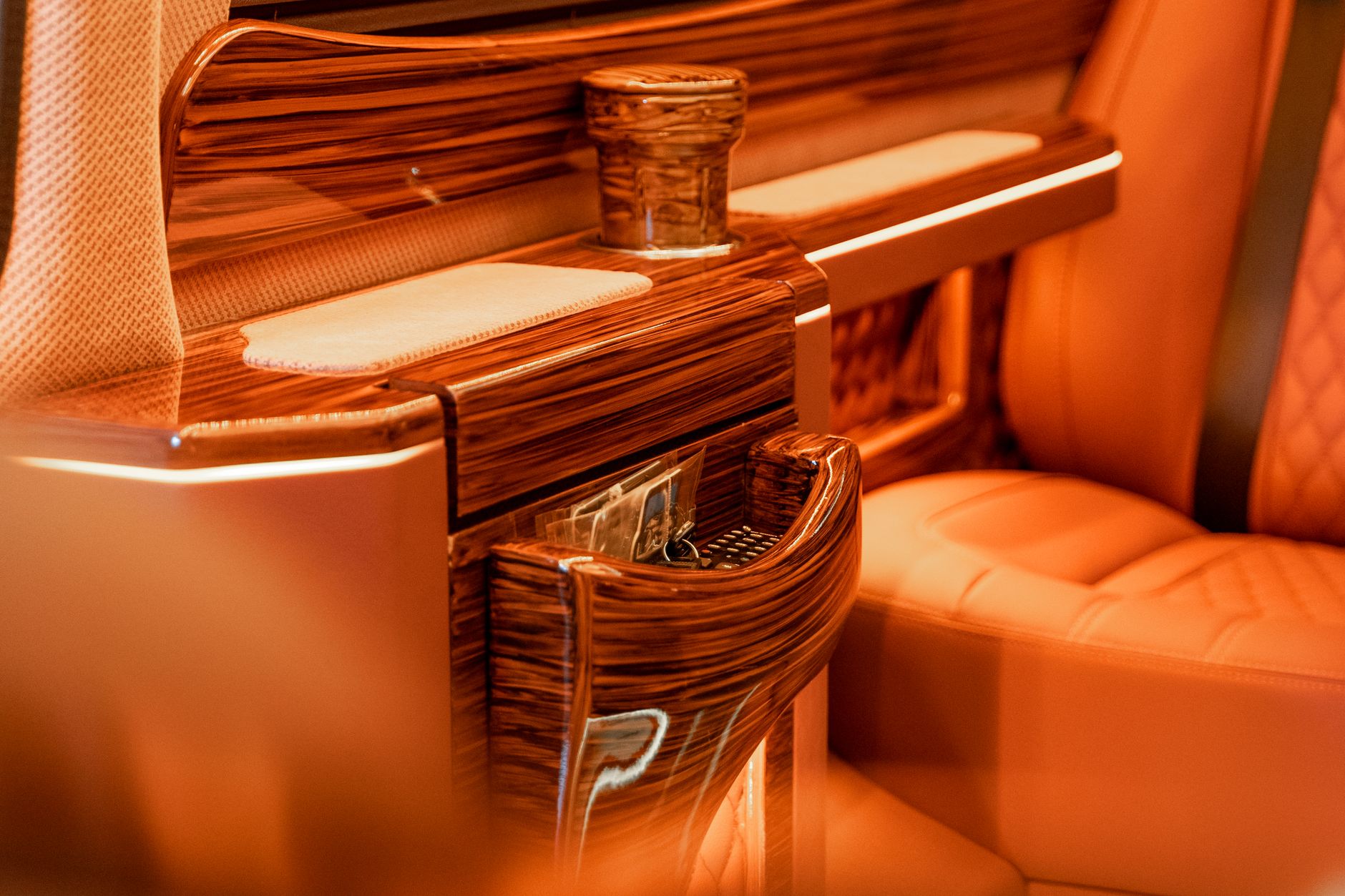
A 14-Passenger Sprinter is a good match when the headcount is genuinely 14 or fewer and the group wants a private, quiet cabin instead of a full motor coach. Executive Mercedes Sprinter or Ford Transit layouts typically provide leather captain's chairs, WiFi, USB charging, and a small cargo area suited to day bags and restrained luggage. For a multi-day trip, count suitcases before selecting the vehicle because every passenger seat does not equal a full luggage compartment. The shorter body can simplify hotel approaches and some urban turns, but it does not eliminate National Mall bus loading rules, curb restrictions, or limited parking. If the group carries large luggage, equipment, or needs onboard restroom capacity, step up to a larger motor coach or reduce the passenger load.
| Vehicle | Seats | Best For | Notes |
|---|---|---|---|
| Executive Mercedes Sprinter | Up to 14 passengers | Use it for a private group tour with light luggage, frequent hotel transfers, and a preference for a premium cabin. | Best comfort and presentation for VIP transfers, with leather captain's chairs, WiFi, USB charging, and small cargo capacity; confirm luggage volume before a multi-day departure. |
| Ford Transit passenger van | Up to 14 passengers | Use it when the group needs a compact vehicle for monument days, airport transfers, or a smaller regional itinerary. | Practical for short urban movements and smaller budgets, but cargo space is limited when all seats are occupied and the group should not assume full-size suitcase capacity. |
| Mini coach | Approximately 18- thirty-five passengers | Use it when the group may grow beyond 14, carries substantial luggage, or needs more space for a longer multi-day run. | Adds more usable luggage room and a higher seating position than a Sprinter, while still remaining easier to stage than a full motor coach in some markets; street and parking rules still require confirmation. |
| Full-size motor coach | Approximately forty-five to fifty-six passengers | Use it for larger school, church, association, or corporate groups that need one vehicle and substantial luggage capacity. | Provides the most passenger and luggage capacity, but requires the strictest oversize routing, designated loading, bus parking, and driver-rest planning around the National Mall. |
Routing, Timing, and On-the-Road Realities
Approach the District by corridor rather than by straight-line map distance. I-95 traffic affects groups coming from Baltimore, Philadelphia, Richmond, and the Carolinas, while I-270, I-66, I-295, and the Beltway can add substantial time before the vehicle reaches a legal drop zone. A morning pickup at the hotel should normally avoid the worst inbound rush, but the exact window depends on whether the group is staging in Arlington, downtown DC, Alexandria, Maryland, or Northern Virginia. For Mall touring, use a planned sequence of legal unloads and walking segments instead of circling Constitution Avenue or Independence Avenue looking for an open curb. NPS guidance identifies limited tour-bus parking at Hains Point and designated sections of Independence Avenue, and the park uses signed loading and pickup zones. Metered tour-bus parking is limited and can carry time limits, while loading spaces are not general waiting areas.
The driver-hours plan should be set before attraction reservations are purchased. Federal passenger-carrier rules generally allow up to 10 hours of driving after 8 consecutive hours off duty and limit the on-duty window to 15 hours, with separate rolling weekly limits. A long interstate inbound leg, hotel check-in, evening transfer, and early monument departure can consume the schedule even when the vehicle drives only a few miles around the Mall. Build in a fixed hotel staging point, a fueling window, restroom breaks, and a dispatch check before each park day. Do not use East Basin Drive as a waiting area, do not assume Lincoln Memorial Circle is available to buses, and do not idle beyond posted limits. During cherry blossom season, federal events, demonstrations, and holiday weekends, use earlier arrivals, wider pickup windows, and a walking-first plan with a confirmed fallback location.
What This Typically Costs
A DC Monuments group tour in a 14-Passenger Sprinter is usually quoted against a daily minimum, then adjusted for trip mileage, scheduled service hours, deadhead miles to and from the vehicle's home market, and any overnight driver requirements. A multi-day itinerary commonly runs a few thousand dollars per day in most markets, with the final range moving higher for spring demand, cherry blossom weeks, summer weekends, holiday periods, major demonstrations, inaugurations, sports, and convention dates. Distance is typically priced by mileage band or as an all-inclusive package, while long repositioning legs can add deadhead charges even when the vehicle is empty. Driver lodging, parking, tolls, and meals may appear as separate line items or be built into the quote, depending on the carrier. Fuel adjustments can apply when diesel or gasoline changes materially between quote and operation. Budget separately for driver gratuity, attraction admissions, hotel parking, and venue permits because these are not always included in transportation pricing.
Frequently Asked Questions
How many days should a DC Monuments group tour take?
A 14-Passenger Sprinter works best for a compact private group that values direct hotel-to-venue service over maximum luggage capacity. Executive Mercedes Sprinter and Ford Transit layouts commonly use leather captain's chairs, WiFi, USB charging, and a small rear cargo area. It fits family tours, alumni groups, corporate guests, wedding-related sightseeing, and VIP transfers. It is less suitable when all 14 passengers bring large checked bags for a long multi-day trip, because luggage can consume the available cargo space. A passenger count below the legal seat maximum may be advisable when the group has bulky cases, mobility equipment, coolers, or event materials.
What months are best for a DC Monuments group tour?
A practical first visit usually needs three to five days in Washington, DC, not counting a long inbound drive from another state. Day 1 is normally travel and a limited first stop, while Days 2 through 4 cover the National Mall, memorials, museums, Arlington, and selected neighborhoods. Groups traveling from New England, the Carolinas, Ohio Valley, or the Southeast often need an overnight outbound and inbound plan rather than treating the ride as a same-day transfer. A multi-day schedule also allows the 14-Passenger Sprinter driver to remain within legal duty limits without turning every sightseeing day into a repositioning day. A two-day visit is possible, but it requires fewer venues and more walking.
Does a 14-Passenger Sprinter need permits at the National Mall?
Late March through May offers strong sightseeing conditions, but cherry blossom season brings high hotel demand, crowded sidewalks, road closures, and limited bus access. September through early November is often operationally easier, with comfortable walking weather and fewer blossom-related crowds, although fall weekends and school trips can still fill hotels. June through August supports school and family travel but brings heat, thunderstorms, convention traffic, and heavier demand around weekends. Winter can offer better lodging availability, but shorter daylight, cold rain, holiday closures, and occasional federal security restrictions affect the plan. Build alternate indoor stops and flexible pickup windows into any spring, summer, or event-week itinerary.
Can the Sprinter drive directly to every DC monument?
The National Mall and Memorial Parks restrict tour-bus loading, unloading, standing, and parking to designated areas, so the vehicle cannot simply wait beside every memorial. The National Park Service identifies limited tour-bus parking at Hains Point and designated sections of Independence Avenue, with additional permitted areas shown on current park maps. Loading and unloading zones are controlled by signage, and parking availability is limited. The park's guidance states that buses may not park or stand on East Basin Drive SW and that bus idling is restricted, with a three-minute limit under normal temperatures and a five-minute limit below 32 degrees Fahrenheit. Confirm the vehicle's classification, dimensions, planned stops, and event-date restrictions with the carrier and current NPS and District guidance before dispatch.
What driver-hours rules affect a multi-day DC trip?
No. A 14-Passenger Sprinter may be smaller than a full motor coach, but it is still subject to signed loading zones, restricted approaches, closures, curb rules, and security controls. Lincoln Memorial Circle and certain park roads or facilities can be closed to buses or tour vehicles under National Mall rules, and East Basin Drive is not a general waiting area. The operating plan should use legal drop points, then have the group walk between nearby sites such as the Lincoln, Vietnam Veterans, Korean War, and World War II memorials. For the Jefferson Memorial, Franklin Delano Roosevelt Memorial, and Martin Luther King Jr. Memorial, confirm the approach and parking plan separately rather than relying on ordinary automobile navigation. A dispatcher should also check Independence Avenue, Ohio Drive, Constitution Avenue, and downtown closures before the run.
Where should a group stay for a DC Monuments itinerary?
For passenger-carrying operations subject to federal hours-of-service rules, a driver generally may drive up to 10 hours after at least 8 consecutive hours off duty and may not remain on duty beyond 15 hours after that rest period. Weekly limits are generally 60 hours in seven consecutive days for carriers that do not operate every day, or 70 hours in eight days for carriers that do. Driving time includes the long approach to Washington, not just the monument loop, and on-duty time can include vehicle inspections, fueling, parking, and passenger service. A late arrival followed by an early National Mall departure can therefore create a real scheduling problem even when the itinerary looks short on a map. For long origins, plan a relief driver, a split driving day, or a true overnight rest rather than assuming the same driver can extend the shift.
What information is needed to quote this group tour?
Downtown hotels near Penn Quarter, Capitol Hill, the Convention Center, and the National Mall reduce transfer time but may have tight curb access, valet constraints, and higher group rates. Crystal City and Pentagon City in Arlington often provide practical hotel inventory, Metro access, and easier vehicle staging, although the group must cross the Potomac and account for rush-hour traffic. Alexandria can work for groups combining Old Town with federal sites, but narrow historic streets and hotel loading arrangements require advance confirmation. Tysons or suburban Maryland properties may offer better parking and room blocks, but they add morning travel to the Mall. Choose the hotel only after confirming bus or Sprinter access, overnight parking, loading times, breakfast hours, and whether the driver has a separate lodging arrangement.
How to Book
To request a quote, have the travel dates, pickup address, passenger count, luggage estimate, hotel information, and preferred DC Monuments itinerary ready. Include whether the group needs airport service, accessible seating, museum reservations, Arlington service, evening touring, or an interstate overnight leg. US Bus Trips can typically return a quote within 4 business hours when the routing and dates are complete, subject to carrier availability and venue restrictions. The confirmation should identify the vehicle class, passenger capacity, service dates, pickup and drop-off windows, included mileage or hours, driver lodging treatment, parking and toll assumptions, cancellation terms, and the dispatch contact.
Related Trips You Might Also Consider
- Niagara Falls — 36-Passenger Mini Coach
- Nashville Music — 56-Passenger Motor Coach
- Philadelphia, PA to Baltimore, MD
- Charleston — 24-Passenger Mini Bus
- Saint Paul, MN to Minneapolis, MN
- Philadelphia, PA to Washington DC, DC
- Cross-Country Charter Bus Overview
- All Group Trip Types
- See the Full Fleet (Sprinters through 56-pax coaches)
- Get a Free Quote in 60 Seconds