
US Bus Trips arranges charter bus, motor coach, mini coach, mini bus, and executive Sprinter service for Scout Troop trips, camporee shuttles, and jamboree movements across the Southeast.
Overview
Southeast Scout Troop travel usually combines a home-city departure with a camp, high-adventure base, council event, or regional jamboree several hours away. North Carolina groups may travel toward Raven Knob Scout Reservation near Low Gap, the Nantahala and Bryson City area, the Uwharrie region, or venues around Charlotte, Greensboro, Raleigh, Durham, and Asheville. South Carolina and Georgia troops commonly move through Greenville-Spartanburg, Columbia, Charleston, Savannah, Augusta, Atlanta, and Macon before continuing toward a camp or coastal activity. Florida groups may need long north-south positioning between Jacksonville, Orlando, Tampa, Fort Myers, Miami, and out-of-state events. A charter bus keeps the troop together, but the dispatcher still needs a realistic loading plan for adults, youth, coolers, uniforms, tents, and personal bags.
The Southeast has long gaps between major metros, making group travel different from a short hotel shuttle. I-85 links Atlanta, Greenville-Spartanburg, Charlotte, Greensboro, and the Triangle, while I-75 connects Kentucky and Tennessee through Lexington, Knoxville, and Chattanooga to Atlanta, Macon, and Florida. I-95 supports coastal runs through Fayetteville, Wilmington, Myrtle Beach, Charleston, Savannah, Jacksonville, and the Florida corridor; I-20 and I-26 often connect inland and coastal segments. Common cross-region patterns include Atlanta-Charlotte, Nashville-Atlanta, Birmingham-Atlanta, Charlotte-Orlando, and Raleigh-Myrtle Beach or Charleston. College-football weekends around Athens, Clemson, Tuscaloosa, Auburn, Knoxville, Nashville, Gainesville, Tallahassee, and Columbia can consume coach supply and complicate hotel parking even when the Scout Troop is not attending the game.
A typical booking may involve 15 to 30 scouts and leaders, a 30 to 50 passenger troop, or several buses carrying a council delegation. Camporee and jamboree operations add repeated transfers between camp entrances, activity fields, dining areas, hotels, parking fields, and airports. Vehicles may carry instruments for ceremonies, uniforms, patrol flags, camp boxes, first-aid supplies, mobility devices, and bulky personal gear. Wheelchair users need an ADA-equipped vehicle reserved in advance, and folding chairs or equipment still need secure storage. A full-size motor coach is usually the operational baseline for an interstate leg, while mini coaches, mini buses, and Sprinters handle leader movements and tight-site shuttles. US Bus Trips plans the vehicle mix around the roster, cargo, road geometry, and whether buses can remain at the venue between movements.
Fleet Options
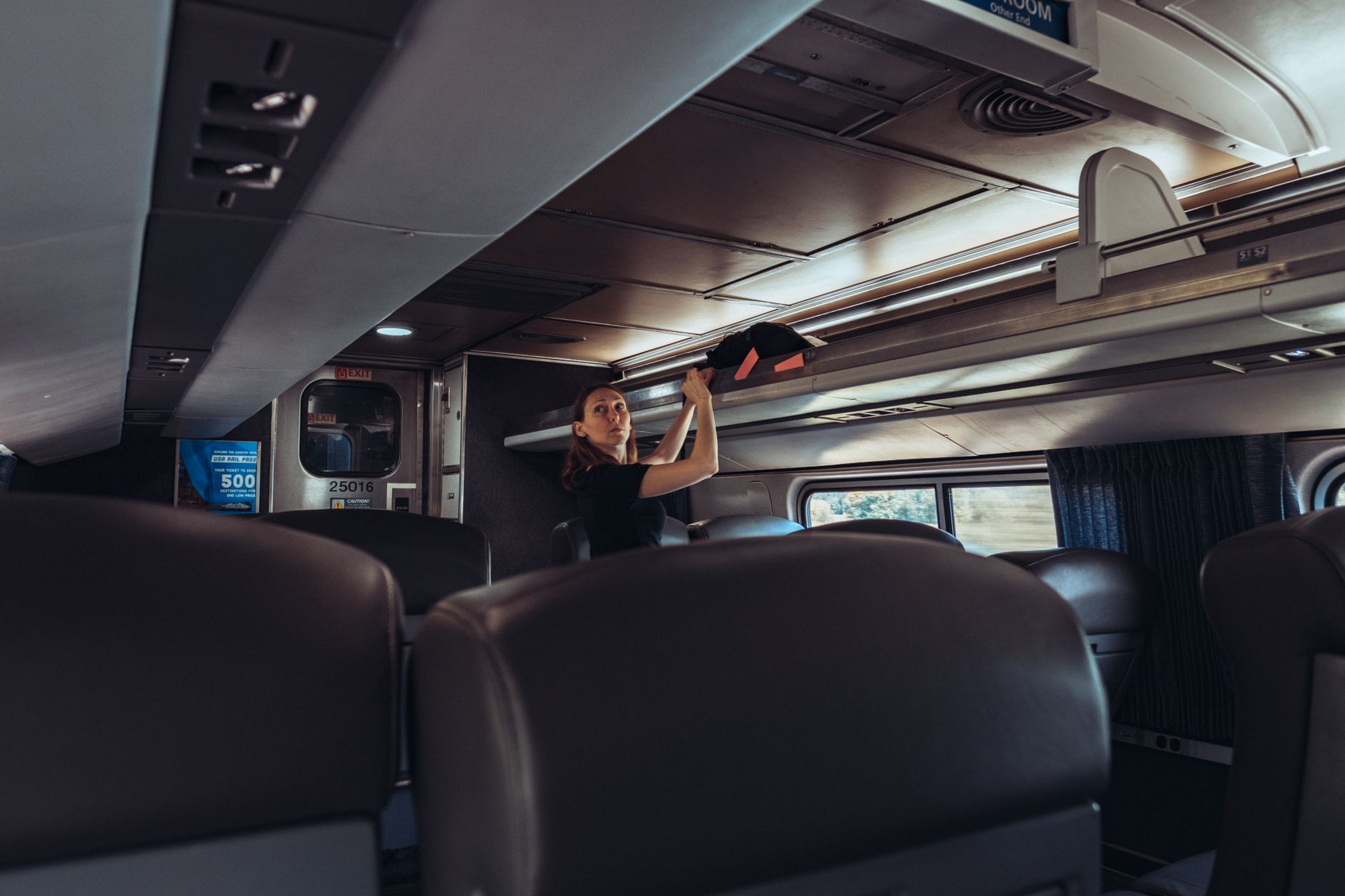
Choose the vehicle around both passenger count and the gear that must travel with the group. A charter bus offers the best fit for long Southeast legs because riders get reclining seats, climate control, restrooms on many coaches, and large luggage bays. A mini coach works for smaller patrols or tight camp roads, but its underfloor storage is limited and some models lack restrooms. Executive Sprinters and mini buses are useful for leaders, airport transfers, scout staff, or short shuttle loops where full-size parking is difficult. Confirm luggage, wheelchair, trailer, and overnight parking requirements before the carrier assigns equipment.
| Vehicle | Seats | Best For | Notes |
|---|---|---|---|
| Full-size motor coach | 40-56 passengers | Use for a full Scout Troop, regional jamboree, or multi-state run on I-95, I-75, or I-85. | Best long-distance comfort and luggage capacity, with underfloor bays and many models offering restrooms; verify turning space and camp-road clearance. |
| Mini coach | 24-38 passengers | Use for a patrol-sized group, compact troop, or shuttle route between hotels, fields, and a camporee site. | A practical middle option with easier access to camp entrances and smaller parking areas, though luggage volume and restroom availability vary by model. |
| Mini bus | 18-28 passengers | Use for local venue transfers, leader movements, or overflow service when the main coaches cannot reach a tight loading area. | Useful for short transfers and repeated loops, but generally has limited luggage space and is less suitable for an all-day interstate trip with camping gear. |
| Executive Sprinter | 8-14 passengers | Use for scout leaders, staff, airport transfers, scouting equipment runs, or small-group movement between nearby venues. | Fits narrow streets and hotel driveways well and offers fast loading for staff or small groups, but cargo space becomes tight with full passenger occupancy. |
Routing, Timing, and On-the-Road Realities
Start with the actual pickup window, not just the departure date. Atlanta traffic on the I-75 and I-85 Downtown Connector can affect every downstream arrival, while Charlotte, Raleigh-Durham, Nashville, Knoxville, Orlando, Tampa, and Miami also need peak-period buffers. For I-95 beach trips, Friday afternoon departures and Sunday returns can be slow near Charleston, Myrtle Beach, Savannah, Jacksonville, and the Space Coast. A coach leaving Charlotte for Atlanta, or Raleigh for a coastal camp, should have a planned meal and restroom stop rather than an informal roadside break. For remote properties, confirm the final approach, bus turnaround, gate hours, gravel conditions, and whether a smaller shuttle is required from a staging lot. Provide venue parking instructions early because many camps and stadium-adjacent sites do not allow a motor coach to wait at the passenger entrance.
Driver-hours planning controls the schedule on long Southeast group travel. An itinerary that appears to be a single-day Atlanta-to-Orlando or Charlotte-to-Nashville move may need a late departure, a planned driver break, or an overnight if the group adds activities and return service. Multi-day camp trips require driver lodging, secure overnight bus parking, and a clear decision about whether the vehicle stays with the troop or deadheads to another assignment. For college-football and jamboree weekends, buses may be held in remote lots and dispatched in waves after road closures or pedestrian surges. Beach destinations add narrow hotel approaches, limited curb space, and seasonal congestion on roads serving Hilton Head, Charleston, Myrtle Beach, the Outer Banks, Jacksonville Beach, and central Florida. A dispatcher should have a primary pickup point, an alternate meeting point, a group leader contact, and a loading sequence for every vehicle.
What This Typically Costs
Scout transportation pricing is usually built from vehicle type, service days, mileage, and the amount of time the coach remains committed to the group. Operators commonly apply a daily minimum, with longer Southeast runs priced by combined driving and service mileage rather than by passenger count alone. Summer camp, spring break, holiday weekends, college-football weekends, and beach-season demand can tighten availability and raise rates. Deadhead miles may apply when a coach must travel empty from Atlanta, Charlotte, Nashville, Orlando, Raleigh, or another operating base to reach the pickup. Multi-day itineraries also require driver lodging, parking, tolls, and sometimes a second driver when the schedule exceeds safe service limits. Fuel adjustments, driver gratuity, cleaning, special-access fees, and changes to the return date should be shown as separate line items in the quote.
Frequently Asked Questions
What vehicle does a Scout Troop usually need for a Southeast trip?
A Scout Troop should plan for a charter bus or motor coach when the group is traveling beyond the local camp area, carrying personal gear, or making several stops. A full-size coach commonly carries roughly 40 to 56 passengers, while a mini coach may fit smaller groups. The right choice depends on headcount, luggage volume, wheelchair needs, road access, and whether leaders need space to separate equipment from riders. Confirm the final roster before selecting the vehicle because a bus filled to every seat leaves little flexibility for bags or late additions.
Can a motor coach carry camping gear and uniforms?
A charter bus can usually carry duffels, tents, coolers, camp boxes, uniforms, folding tables, and other troop gear in underfloor luggage bays, but capacity depends on the vehicle and passenger load. Instruments, awkward camping items, and medical equipment should be identified before dispatch. Oversized or loose items may require a support vehicle or trailer, subject to the carrier's insurance and equipment policy. Keep aisles, emergency exits, and driver sightlines clear at all times.
How are camporee and jamboree shuttles organized?
For camporee and jamboree movement, provide the exact entrance, parking lot, gate, and unloading instructions rather than only the camp name. Large venues may place buses in a remote staging area and use timed unloading windows. Examples include camp properties near the Blue Ridge and Nantahala region, Raven Knob Scout Reservation in North Carolina, and large fairground or stadium sites used for regional gatherings. A dispatcher should confirm whether buses may remain onsite, whether drivers need credentials, and whether a shuttle loop is required.
What Southeast routes are common for Scout group travel?
A Southeast route commonly follows I-85 between Atlanta, Greenville-Spartanburg, Charlotte, Greensboro, and the North Carolina Triangle. I-75 handles movement through Chattanooga, Knoxville, Atlanta, Macon, Valdosta, and North Florida, while I-95 serves the coastal corridor through Savannah, Charleston, Myrtle Beach, Wilmington, Fayetteville, Jacksonville, and onward toward Florida. Groups may also connect Nashville, Birmingham, Montgomery, Orlando, Tampa, or Miami through I-24, I-20, I-16, I-4, and I-10. The itinerary should include planned meal, fuel, restroom, and driver-rest stops rather than assuming the bus can stop wherever the group sees an exit.
Can US Bus Trips arrange accessible Scout transportation?
A wheelchair can be accommodated when the carrier supplies an ADA-equipped coach and receives the chair type, dimensions, combined passenger weight, and boarding preference in advance. Some standard motor coaches have luggage lifts but are not configured for occupied wheelchair travel. Equipment that folds may fit in a luggage bay, but it must be secured and cannot block emergency access. Request the accessibility requirement during quoting, not after the vehicle is assigned.
How do you manage transportation for a large jamboree?
Large jamborees often need multiple vehicles operating on a staggered schedule instead of one convoy moving at once. Dispatch should assign each charter bus a numbered load group, pickup window, radio or phone contact, and destination point. A lead vehicle can move staff or equipment while passenger coaches run repeated loops between hotels, camp entrances, parking fields, and dining areas. For several buses, build in relief time, a spare contact plan, and a written loading procedure so one delayed vehicle does not stop the entire group travel operation.
When should a Scout Troop reserve a charter bus?
The strongest booking window is often several weeks to several months before travel, especially for June through August camp sessions, spring break, fall football weekends, and coastal Florida or South Carolina trips. Have the dates, pickup address, headcount, camping equipment list, wheelchair information, destination gates, hotel locations, and return timing ready. Include whether the bus waits between activities or returns empty, because that changes the operating plan and cost. US Bus Trips can generally return an initial quote within 4 business hours when the itinerary is complete, followed by confirmation documents listing the vehicle class, schedule, pickup instructions, cancellation terms, and payment requirements.
How to Book
To request a quote, provide travel dates, pickup address, passenger count, itinerary, destination entrances, overnight locations, and the gear or accessibility requirements. Note whether the vehicle waits onsite, runs repeated shuttles, or returns between service days, and identify any fixed arrival or meal times. With complete information, US Bus Trips can generally return an initial quote within 4 business hours. The confirmation should identify the vehicle class, service schedule, pickup instructions, operating assumptions, payment terms, and the contact method for day-of dispatch.
Related Trips You Might Also Consider
- Fresno, CA to Sequoia, CA
- Government Agency Shuttle — Midwest Region
- Baltimore, MD to Philadelphia, PA
- Oklahoma City, OK to Wichita, KS
- Non-Profit Fundraiser — Mid-Atlantic Region
- San Jose, CA to Monterey, CA
- Cross-Country Charter Bus Overview
- All Group Tour Destinations
- See the Full Fleet (Sprinters through 56-pax coaches)
- Get a Free Quote in 60 Seconds