
US Bus Trips books Sports Team Travel for JV and varsity programs, college teams, club organizations, showcase groups, and bowl-game delegations across California and Hawaii.
Overview
Pacific Sports Team Travel is driven by California volume, with frequent movement between Los Angeles, Orange County, San Diego, the Bay Area, Sacramento, and Las Vegas. Youth programs may travel from Inland Empire, Fresno, Bakersfield, or San Diego to Anaheim tournaments, Pasadena events, or Bay Area showcases. College and club programs often combine practices, hotel transfers, games, and meal stops across several days. Venues can include SoFi Stadium in Inglewood, the Rose Bowl in Pasadena, Dodger Stadium, Crypto.com Arena, BMO Stadium, Honda Center, Petco Park, and Snapdragon Stadium. Bay Area itineraries may use Chase Center, Oracle Park, SAP Center, Stanford, Santa Clara, or Berkeley facilities. The customer is usually an athletic director, coach, team administrator, tournament organizer, school district, or parent-led club coordinator.
Team size changes the operating plan more than the team name. A small club or staff group may need an executive Sprinter or mini bus, while a varsity roster with coaches and trainers often fits a mini coach or full-size motor coach. Football, baseball, softball, volleyball, hockey, wrestling, and marching or pep programs can consume substantial cargo space with uniforms, cases, trunks, bats, balls, coolers, and medical supplies. Wheelchairs and mobility devices require advance confirmation of lift access, securement, and usable storage. College bowl trips and showcase weekends may add families, alumni, recruiting staff, or multiple teams, making two-vehicle staging more efficient than overloading one coach. Every passenger and every major item should be counted before dispatch.
The Pacific market also includes specialized group travel beyond arenas and stadiums. Winter programs may shuttle athletes to Mammoth Mountain or Lake Tahoe, where weather, chain controls, mountain grades, and limited bus parking affect the schedule. Wine-country coach tours in Napa, Sonoma, and Temecula can be added to alumni or team itineraries, but tasting-room access and driver waiting time must be scheduled. Hawaii runs commonly center on Honolulu and Waikiki, with transfers toward North Shore, Kailua, Pearl Harbor, and competition sites on Oahu. Interisland travel requires separate local ground arrangements because a mainland coach does not simply move between islands. For every Pacific charter bus movement, the dispatch plan should identify loading points, venue contacts, hotel access, equipment handling, and a realistic recovery window.
Fleet Options
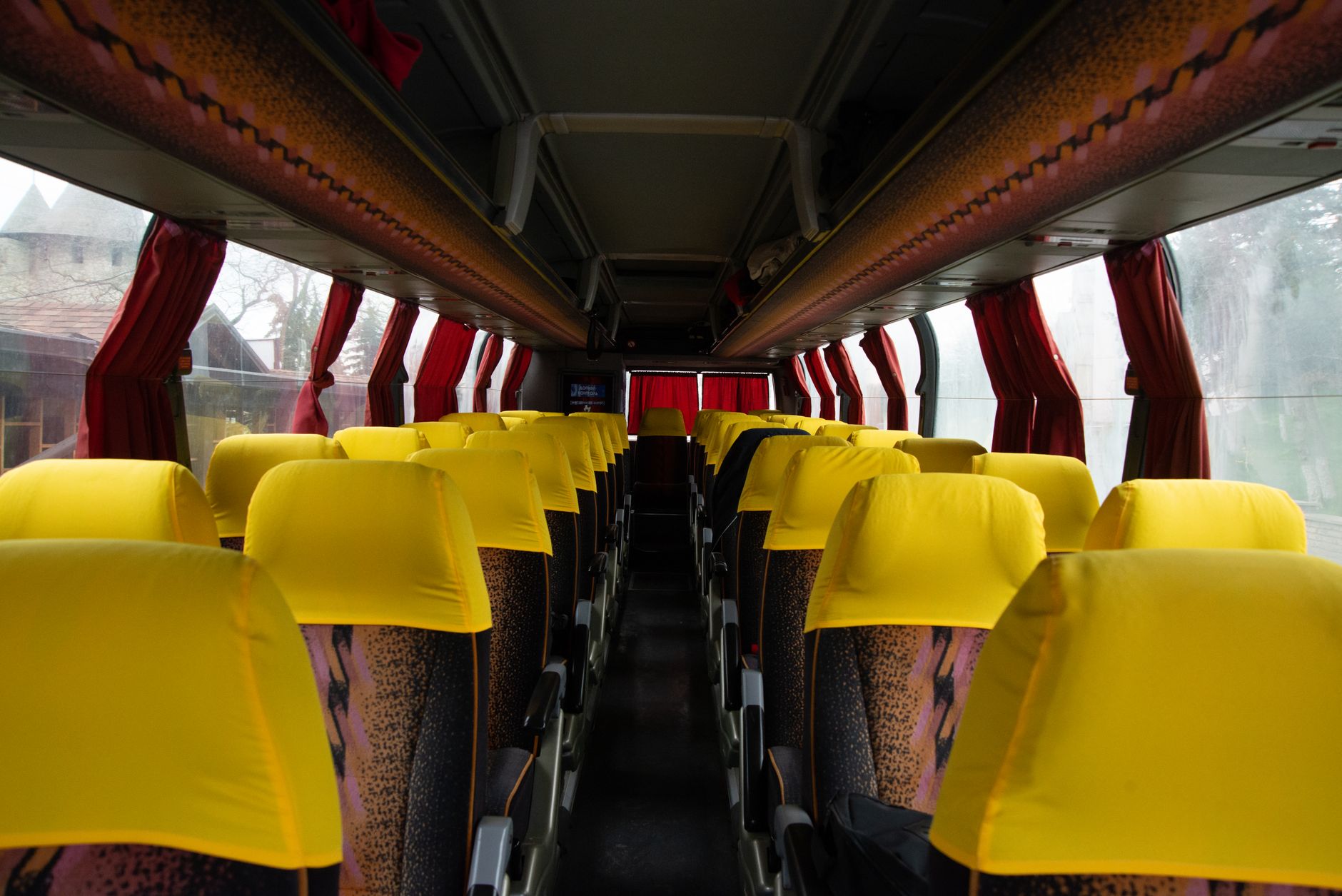
Vehicle choice starts with passenger count, roster shape, luggage volume, and whether the bus must wait at venues or shuttle between hotels and fields. A charter bus is usually the most efficient option for a full roster and underfloor equipment, while a mini coach or mini bus can handle smaller club teams and tighter pickups. Executive Sprinters suit staff, coaches, recruiting groups, and airport movements but can become cramped with uniforms and gear. Pacific venues range from stadium campuses with bus staging to narrow hotel streets, mountain roads, and constrained Hawaii parking, so street fit and loading access matter as much as seat count.
| Vehicle | Seats | Best For | Notes |
|---|---|---|---|
| Full-size motor coach | 40-56 passengers | Use for varsity football, large club rosters, bowl travel, long California corridors, and multi-day runs where the team remains together. | Best comfort and cargo capacity, with reclining seats, climate control, restroom availability on some units, and underfloor bays for team gear; confirm venue staging and mountain-road suitability. |
| Mini coach | 24-38 passengers | Use for JV teams, smaller college programs, showcase groups, staff-heavy travel, or routes where a full-size bus is unnecessary. | A practical middle option with coach-style seating and moderate luggage space, but bulky bats, hockey bags, instruments, or wheelchairs may require a capacity check. |
| Mini bus | 18-28 passengers | Use for club teams, practice transfers, airport runs, and short Hawaii or Southern California movements with limited equipment. | Useful for short transfers and smaller loads, with easier hotel and venue access but less underfloor storage and fewer onboard amenities than a motor coach. |
| Executive Sprinter | 8-14 passengers | Use for staff movement, overflow, airport transfers, or small college recruiting and showcase groups on tight urban streets. | Comfortable for coaches, recruiters, athletic staff, or small groups, but luggage competes with seating and the vehicle is not a substitute for a team coach when gear is substantial. |
Routing, Timing, and On-the-Road Realities
The LA-San Diego corridor is a common weekend pattern, but the distance is not the only planning factor. A departure from Los Angeles, Orange County, or the Inland Empire should allow substantial buffer for weekday congestion through the I-5 and I-405 corridors, especially near Anaheim, Irvine, downtown Los Angeles, and Mission Valley. For Petco Park or Snapdragon Stadium, confirm whether the venue directs buses to a remote lot or a specific curb rather than assuming passenger drop-off at the main entrance. The LA-San Francisco run usually follows I-5 or US-101, with timing affected by Los Angeles departure traffic, Grapevine conditions, Bay Area congestion, and the final approach to Santa Clara, San Jose, Oakland, or San Francisco. LA-Las Vegas service commonly uses I-15 and should account for weekend return traffic, event surges, desert heat, and hotel loading restrictions. Drivers need a schedule that includes breaks, meal stops, venue unloading, and legal hours rather than a point-to-point map estimate.
Venue parking should be treated as a separate movement, not an assumption included in the game ticket. Stadium and arena lots may require a bus pass, prepaid staging, security screening, or a timed arrival, while downtown locations near Chase Center, Oracle Park, Crypto.com Arena, and Petco Park can have limited curb space. Pickup timing should normally place the team at the venue well before equipment check-in, warmups, credentialing, or tournament arrival windows. For Mammoth and Tahoe, weather forecasts, road restrictions, tire or chain requirements, and a backup arrival plan belong in the operating notes. Hawaii routing needs extra time for hotel driveways, airport traffic, narrow local roads, tour-bus restrictions, and the possibility that the group returns to Waikiki after a full-day North Shore or Kailua run. Multi-vehicle group travel works best with staggered loading, shared manifests, one team contact, synchronized break plans, and a defined location where vehicles reunite.
What This Typically Costs
Sports Team Travel pricing is built around vehicle type, service days, mileage, and where the coach starts and finishes. A charter bus or motor coach commonly carries a daily minimum, with longer California corridors priced by mileage, service hours, or a blended trip rate. LA-San Francisco, LA-San Diego, LA-Las Vegas, Mammoth, and Tahoe runs can add deadhead miles when the assigned vehicle is not based near the pickup. Winter ski trips and bowl-season travel often tighten availability and raise seasonal pricing, especially when drivers need overnight lodging. Confirmed estimates may list fuel adjustments, parking, tolls, driver hotel and meals, permits, and driver gratuity as separate line items. In most markets, a multi-day team run commonly reaches a few thousand dollars per day depending on vehicle size, season, routing, and service requirements, but exact pricing requires the itinerary.
Frequently Asked Questions
How many players fit on a Pacific sports team bus?
Most youth and college teams travel in groups of 18 to 56 passengers, depending on roster size, coaches, athletic trainers, parents, and staff. A JV or varsity roster may fit a mini coach, while football, volleyball, basketball, baseball, and club teams often need a full-size motor coach. Showcase tournaments can add multiple teams, families, or equipment staff. A final headcount should include everyone riding and should separate passengers from cargo needs.
Which California sports corridors do teams book most often?
A charter bus can usually serve a Southern California weekend between Los Angeles, Orange County, San Diego, Anaheim, and nearby tournament sites. Common destinations include SoFi Stadium and Inglewood, the Rose Bowl in Pasadena, Dodger Stadium, Crypto.com Arena, BMO Stadium, Honda Center in Anaheim, Petco Park, and Snapdragon Stadium. The LA-San Francisco corridor may include Bay Area stops at Chase Center, Oracle Park, SAP Center, Stanford, Santa Clara, or Berkeley. Ask for venue access instructions before dispatch because team buses may need a designated bus lane, staging lot, or timed unloading location.
Can you arrange Sports Team Travel in Hawaii?
Yes, if the aircraft, hotel, and ground schedule are coordinated in advance. Hawaii group travel commonly centers on Honolulu and Waikiki, with runs to North Shore, Kailua, Pearl Harbor, Aloha Stadium-area sites, and competition venues on Oahu. Interisland teams may require separate ground plans in Maui, Kauai, or Hawaii Island rather than moving one mainland vehicle between islands. A motor coach or mini coach must be matched to local road access, parking, ferry or flight timing, and the amount of sports gear.
When are Pacific team buses hardest to book?
Teams should reserve early for fall football, winter basketball and wrestling, spring baseball, softball, soccer, volleyball, and summer showcase tournaments. Bowl games and holiday events in Los Angeles, Pasadena, and San Diego create concentrated demand around late December and early January. Mammoth and Lake Tahoe ski shuttles are busiest during school breaks and winter weekends. Hawaii group travel is commonly constrained during holidays, spring break, and major tournament periods, so early dates and hotel locations improve vehicle availability.
How much equipment can a sports charter bus carry?
Tell the planner whether the group carries uniforms, hockey bags, bats, balls, coolers, athletic trunks, medical equipment, instruments, or wheelchairs. Full-size motor coaches generally offer underfloor luggage bays, but capacity depends on passenger count and bulky gear. A charter bus may need an equipment trailer, second vehicle, or separate cargo plan when every seat is occupied. Wheelchair lifts and securement positions should be requested before assignment, and instruments should not be placed where they can shift during travel.
How do you manage multiple buses for a large tournament?
A single motor coach is usually simplest for groups up to roughly 50 passengers with normal team luggage. Larger delegations may use two or more coaches, with one vehicle assigned to players and another to staff, families, or equipment. Dispatch should keep vehicles together through staging instructions, radio or phone contacts, shared manifests, and synchronized driver breaks. At venues such as SoFi Stadium, the Rose Bowl, Chase Center, or downtown San Diego sites, separate arrival windows may be necessary because bus parking and curb access are limited.
What information is needed to quote team group travel?
Provide the pickup address, dates, passenger count, vehicle preference, equipment list, hotel locations, venue names, and the full movement schedule. Include whether the team needs airport transfers, practice runs, game-day shuttles, sightseeing, ski access, or late-night returns. For a reliable quote, identify exact California or Hawaii cities and whether the bus waits between events or returns to the hotel. US Bus Trips can generally return a realistic quote within 4 business hours once those details are complete, followed by confirmation documents listing the vehicle, service window, itinerary, inclusions, and operating contacts.
How to Book
Start with travel dates, pickup address, headcount, roster and staff count, equipment list, hotel locations, venues, and every required movement. Include whether the group needs airport transfers, practice shuttles, game-day standby, ski transportation, or intercity service between California metros. US Bus Trips can typically return a realistic quote within 4 business hours when the itinerary is complete. Confirmation includes the assigned vehicle category, service dates and times, routing, operating contacts, included services, and identified extra line items.
Related Trips You Might Also Consider
- Mammoth Cave — 56-Passenger Motor Coach
- College Band Tour — Mountain West Region
- Chicago, IL to Indianapolis, IN
- Wichita, KS to Kansas City, MO
- Honolulu, HI to Waikiki, HI
- Denver, CO to Aspen, CO
- Cross-Country Charter Bus Overview
- All Group Tour Destinations
- See the Full Fleet (Sprinters through 56-pax coaches)
- Get a Free Quote in 60 Seconds