
US Bus Trips arranges charter bus and motor coach transportation for college marching bands, choral groups, directors, and chaperones traveling to away games, invitational competitions, clinics, festivals, and bowl events.
Overview
A Mountain West College Band Tour is usually a multi-day assignment rather than a single stadium transfer. University marching bands travel for conference away games, bowl games, invitational competitions, parades, and halftime performances, while choral groups travel for ACDA-style festivals, clinics, adjudicated events, and campus exchanges. Typical customers are university music departments, athletic departments, alumni organizations, directors, student travel offices, and parent or booster groups. Group sizes commonly range from 35 to 120 passengers, with larger programs splitting across two or more motor coaches. The itinerary may include an early campus rehearsal, a long interstate leg, a hotel load-in, a performance, and a late return that must be planned around driver hours.
Colorado and Utah generate frequent group travel between Denver, Colorado Springs, Fort Collins, Boulder, Provo, Salt Lake City, Ogden, Logan, and St. George. Common venues include Folsom Field, Canvas Stadium, Empower Field at Mile High, Ball Arena, Rice-Eccles Stadium, Maverik Stadium, and the Maverik Center, with school-specific access rules for buses and equipment. Wyoming routing often uses I-25 between Denver, Fort Collins, Cheyenne, Laramie, and Casper, or I-80 toward Rock Springs and Salt Lake City. Montana trips can run between Billings, Bozeman, Missoula, and Great Falls on I-90 or US-191, while Idaho movements commonly connect Boise, Pocatello, Idaho Falls, and Rexburg. These distances make a charter bus useful because the group can keep instruments, uniforms, schedules, and supervision together without asking students to drive.
New Mexico, Arizona, Nevada, and southern Idaho add different event patterns and road conditions to the Mountain West mix. A group may travel from Albuquerque or Santa Fe to Denver, from Phoenix or Tucson to Las Vegas, from Reno to Boise, or from Flagstaff to a festival or campus performance. Fall is the largest peak for marching-band away games, invitational competitions, and homecoming appearances, with additional demand around bowl season and holiday parades. Spring brings choral festivals, clinics, commencement performances, and indoor competitions, while winter trips require more planning for ski-area corridors, high passes, and short daylight. Equipment planning should account for brass and woodwind cases, percussion hardware, uniforms, robes, music folders, risers, keyboards, luggage, wheelchairs, and medical gear, not just the passenger manifest.
Fleet Options
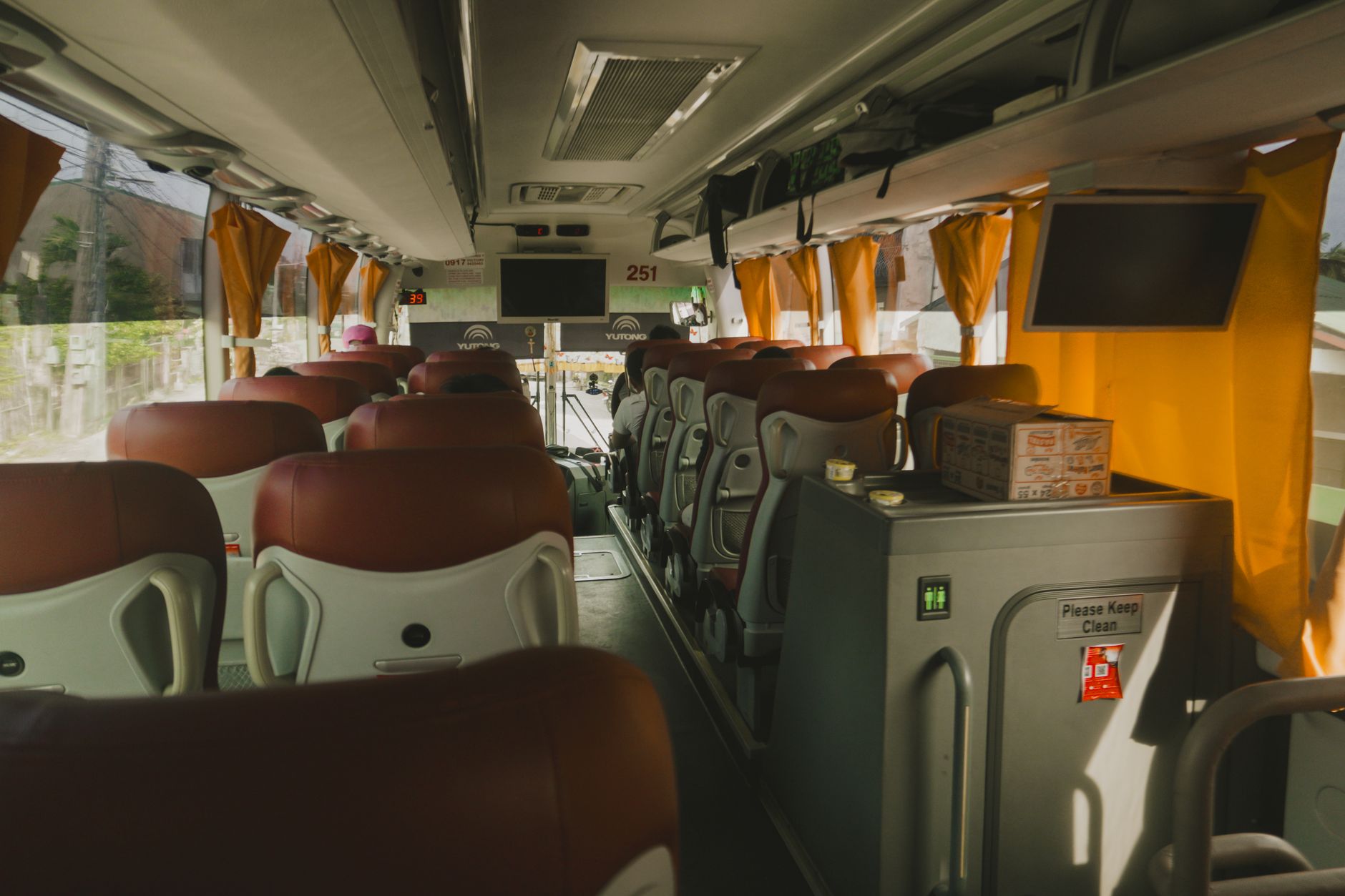
Vehicle selection for Mountain West group travel starts with headcount, equipment volume, and the number of days the group remains on the road. A charter bus with a full luggage bay is usually the practical baseline for 35 or more travelers, while a mini coach works for smaller choirs or staff movements. Marching bands often need more cargo capacity than seats suggest, particularly for percussion, uniforms, stands, robes, keyboards, and accessibility equipment. Downtown hotels, older campus streets, arena docks, and national-park approaches may favor a smaller vehicle for transfers even when a full-size motor coach handles the main corridor.
| Vehicle | Seats | Best For | Notes |
|---|---|---|---|
| Full-size motor coach | 40-56 passengers | Use for a primary College Band Tour vehicle carrying a full student section, choir, directors, and overnight luggage between major metros. | Best comfort and underfloor storage for long runs, with onboard restroom on many units; confirm bay dimensions for percussion cases and wheelchair equipment. |
| Executive mini coach | 24-38 passengers | Use for a smaller choir, staff group, overflow section, or venue shuttle where maneuverability matters more than maximum cargo volume. | Easier at campus loops, hotel drives, arena docks, and tighter streets, but luggage capacity is limited and may require a support vehicle. |
| Mini bus | 18-28 passengers | Use for airport, hotel, rehearsal, or festival movements involving a compact group with light luggage. | Useful for short transfers and smaller parties, but it generally has less storage and fewer comfort features than a motor coach. |
| Executive Sprinter | 10-14 passengers | Use for directors, clinicians, chaperones, accessibility support, or a small advance team rather than the full performing group. | Fits tight urban approaches and quick crew movements, while instrument cases and personal bags can consume the available cabin space quickly. |
Routing, Timing, and On-the-Road Realities
Mountain West routing should be built around realistic movement, not straight-line mileage. Denver departures may encounter I-25 congestion, I-70 mountain traffic, and event queues around downtown venues; Salt Lake City routes need time for I-15 traffic, canyon weather, and stadium access; Phoenix, Las Vegas, Albuquerque, Boise, and Reno each have peak-period congestion that can affect a same-day performance. For a long College Band Tour, dispatchers commonly schedule an early campus pickup, a controlled fuel and meal stop, and a hotel arrival with enough time to unload uniforms and instruments before rehearsal. Stadium and arena parking must be confirmed in advance because a bus may need a designated coach lane, a remote lot, or a timed curbside load rather than general parking. The driver also needs a post-event meeting point that students can reach without crossing traffic or wandering through a large venue complex.
Elevation changes the usable schedule on I-70 through Colorado, I-80 across Wyoming, I-90 through Montana, I-15 across Utah and Idaho, US-191 in Wyoming and Montana, and routes over northern Arizona passes. Colorado requires commercial vehicles transporting at least 16 passengers to carry chains or approved traction devices during the applicable season, and designated mountain corridors can impose additional restrictions. Conditions and enforcement can change across state lines, so the motor coach operator should check Colorado, Utah, Wyoming, Montana, Idaho, Arizona, Nevada, and New Mexico road authorities before departure. Yellowstone travel requires commercial authorization or permitting based on the type of commercial activity, while Rocky Mountain National Park and Zion require advance review of commercial access, road, staging, and seasonal limitations. Drivers must also plan regulated service hours, meal breaks, hotel parking, and a relief or second-driver strategy when the group wants to cover a long distance and perform on the same day.
What This Typically Costs
Mountain West College Band Tour pricing is usually built from vehicle days, route mileage, and the time the motor coach remains assigned to the group. Most operators apply daily minimums, with longer Colorado, Utah, Wyoming, Montana, New Mexico, Arizona, Nevada, and Idaho runs commonly requiring several service days rather than a simple point-to-point charge. Seasonal peaks include August and September away games, October marching competitions, bowl-season travel, spring choral festivals, and winter ski or indoor performance events. The quote may include deadhead miles to reach the first pickup, driver overnight lodging, parking, tolls, fuel adjustments, and extra hours for late performances. Driver gratuity is normally a separate line item or a recommended percentage, and national-park entry or commercial permits may be added when the itinerary enters Yellowstone, Zion, or Rocky Mountain National Park. In most markets, a multi-day charter bus assignment commonly runs a few thousand dollars per day, but the final range depends on vehicle count, dates, route length, lodging, and whether equipment requires a second vehicle.
Frequently Asked Questions
What does a typical Mountain West college band or choir trip look like?
A College Band Tour commonly includes an away-game weekend, invitational, bowl appearance, parade, adjudicated festival, or choral clinic. A typical group may include 35 to 120 students plus directors, staff, chaperones, and equipment personnel. Larger university programs can exceed 150 travelers and require multiple motor coaches or a mixed fleet. Mountain West routes often add overnight stops because campuses and venues are separated by long mountain corridors.
How many charter buses does a college music group need?
For 40 to 55 travelers with moderate luggage, one full-size charter bus or motor coach usually works. A marching band may need a second coach, mini coach, cargo van, or equipment truck because uniforms, cases, music stands, percussion hardware, and personal bags can fill the luggage bays. Choral groups often fit more efficiently, but risers, robes, keyboards, and choir folders still need a loading plan. The final vehicle count should be based on usable cargo space, not seats alone.
Which cities and corridors are common for Mountain West group travel?
Common Colorado corridors include Denver to Colorado Springs, Fort Collins, Boulder, Grand Junction, and venues near Empower Field at Mile High, Canvas Stadium, Folsom Field, and Ball Arena. Utah movements often connect Salt Lake City, Provo, Ogden, Logan, and Las Vegas through I-15, with indoor events at venues such as Rice-Eccles Stadium and the Maverik Center. Wyoming and Montana trips frequently use I-25, I-80, I-90, and US-191 between Cheyenne, Laramie, Casper, Billings, Bozeman, Missoula, and Jackson. New Mexico, Arizona, Nevada, and Idaho routings commonly connect Albuquerque, Santa Fe, Tucson, Phoenix, Las Vegas, Reno, Boise, Pocatello, and Idaho Falls.
How do elevation and winter weather change the itinerary?
Yes, altitude affects both schedule and driver planning, especially on routes through Denver, Colorado Springs, Park City, Laramie, Flagstaff, Jackson, Bozeman, and mountain passes on I-70, I-80, I-90, I-15, and I-25. A dispatcher builds additional time for grades, weather, fuel stops, student loading, and slower movement through construction or pass restrictions. Colorado requires commercial vehicles carrying at least 16 passengers to carry chains or approved traction devices during the applicable season, including buses on designated corridors. Wyoming, Utah, Montana, and Idaho can activate traction requirements through posted conditions or state restrictions, so the driver checks official road reports before departure.
Can a charter bus take a college group into Yellowstone, Zion, or Rocky Mountain National Park?
National-park access is not treated like ordinary sightseeing parking. Commercial operations in Yellowstone may require a commercial travel permit or a commercial use authorization depending on whether the bus merely crosses the park or serves destinations inside it. Rocky Mountain National Park has commercial permitting requirements for certain business travel, and large buses must be checked against current entrance, road, and seasonal restrictions. Zion traffic, shuttle operations, narrow approaches, and staging limitations can make a charter bus drop-off and return-pickup plan more practical than an all-day vehicle wait.
What pickup and venue details should the group provide?
The best pickup window depends on the city, venue, and class schedule, but groups should avoid combining a campus departure with the peak commute whenever possible. Denver metro departures need extra time for I-25, I-70, and downtown event traffic; Salt Lake City movements should account for I-15 congestion and canyon weather; Phoenix, Las Vegas, and Albuquerque departures can face major event and heat-related delays. For stadiums and arenas, the itinerary should name a bus entrance, loading zone, parking address, and post-event meeting point. Drivers should not assume that a public parking lot allows overnight motor coach staging.
How should equipment and multiple vehicles be managed?
A College Band Tour should use a written loading sequence before the first departure. Uniform bags, instruments, percussion cases, wheelchairs, medical equipment, and personal luggage should be separated and labeled so the driver is not repeatedly opening bays at every stop. Large groups often use one lead coach for students and staff, a second coach for overflow and chaperones, and a dedicated cargo vehicle or trailer for bulky equipment when permitted by the operator. A radio or group-text plan, headcount captain, and fixed loading zones keep multiple vehicles together at campuses, hotels, stadiums, and festival sites.
How to Book
To book a College Band Tour, provide the travel dates, pickup address, destination or venue, headcount, equipment list, accessibility needs, hotel details, and the full stop-by-stop itinerary if available. Include whether the group needs rehearsals, airport transfers, campus shuttles, overnight service, or separate cargo capacity. US Bus Trips can typically return a quote within 4 business hours when dates, passenger count, and routing are clear. Confirmation should identify the vehicle type, passenger capacity, pickup instructions, itinerary, driver contact process, included services, payment schedule, cancellation terms, and any permits or parking items still requiring venue coordination.
Related Trips You Might Also Consider
- Military Reunion — Northeast Region
- Wedding Guest Block — Midwest Region
- Government Agency Shuttle — Pacific Region
- Sequoia — 14-Passenger Sprinter
- Association Conference — Mountain West Region
- Mammoth Cave — 24-Passenger Mini Bus
- Cross-Country Charter Bus Overview
- All Group Tour Destinations
- See the Full Fleet (Sprinters through 56-pax coaches)
- Get a Free Quote in 60 Seconds