
US Bus Trips books Wedding Guest Block transportation for destination weddings, multi-hotel pickups, and venue rides across the Midwest.
Overview
A Midwest Wedding Guest Block often starts with a hotel room block and expands into a coordinated transportation schedule. Chicago is the most common hub, with guests staying downtown, near O'Hare, in Rosemont, or in western suburbs before traveling to a venue in the city, northwest Indiana, southern Wisconsin, or northern Illinois. Other frequent origin and destination metros include Columbus and Cleveland in Ohio, Detroit and Grand Rapids in Michigan, Indianapolis and South Bend in Indiana, Milwaukee and Madison in Wisconsin, Minneapolis and St. Paul in Minnesota, Des Moines and Davenport in Iowa, and St. Louis and Kansas City in Missouri. The customer is usually a couple, planner, hotel, family host, or corporate travel coordinator arranging several movements around a fixed ceremony and reception schedule. A charter bus keeps guests together, limits designated-driver concerns, and gives the planner one dispatch point instead of relying on individual cars or rideshare availability.
The typical group ranges from 20 to more than 200 guests, with the largest Wedding Guest Block operations using several buses across two or more hotels. A 40- to 56-seat motor coach fits a consolidated room block, while a 20- to 35-seat minibus can cover a suburban hotel, overflow list, or venue with restricted access. Midwest group travel frequently overlaps with Big Ten football, graduation weekends, conventions, and high-school marching-band movement, so availability can tighten in Ann Arbor, Columbus, Madison, Minneapolis, Chicago, and surrounding cities. Wedding dates in May through October create the strongest demand, with June, September, and October weekends requiring earlier vehicle holds. December holiday events and summer lake, vineyard, farm, and resort weddings create different traffic, parking, and weather considerations.
Equipment planning is not limited to suitcases. Guests may bring garment bags, carry-ons, strollers, walkers, wheelchairs, coolers, reception supplies, or décor, while a combined wedding and school or sports itinerary may involve instruments, uniforms, props, and team gear. Ask for a count and approximate dimensions before assigning a vehicle, because a full cabin can still have limited underfloor storage once bulky items are loaded. Relevant venue patterns include downtown hotels serving event spaces around Chicago, Columbus, Detroit, Indianapolis, Milwaukee, Minneapolis, Kansas City, and St. Louis, plus rural properties such as farms, barns, estates, golf clubs, and lakeside resorts reached by two-lane roads. The route plan should name every hotel, loading entrance, venue bus entrance, legal staging lot, and return pickup point. That detail is what turns a general group travel request into a workable motor coach operation.
Fleet Options
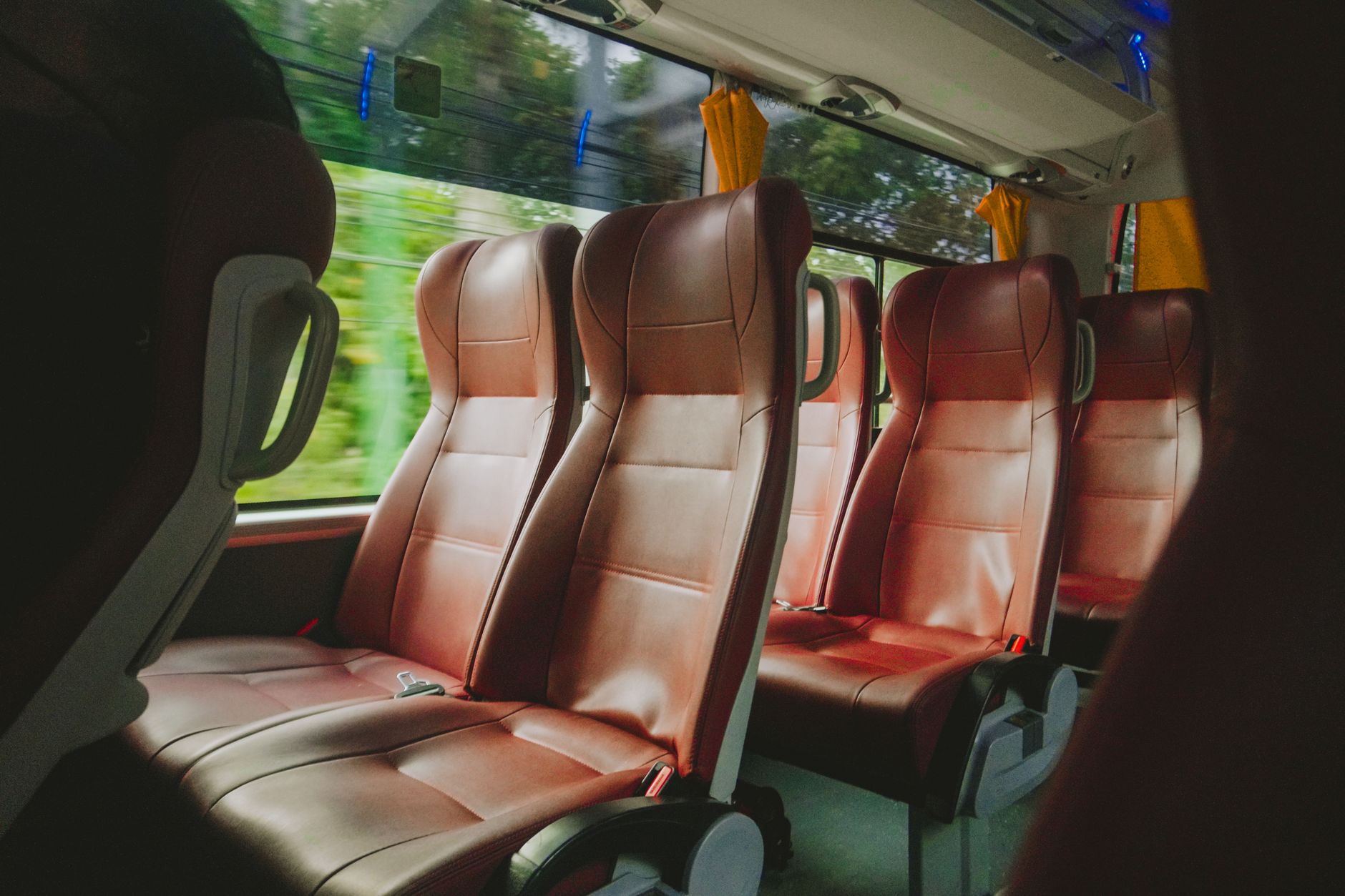
Vehicle selection for a Midwest Wedding Guest Block starts with the headcount, but luggage, mobility equipment, hotel spacing, and venue access can change the answer. A full-size motor coach is efficient for a consolidated hotel group, while minibuses or executive Sprinters work better for scattered properties and tight urban or rural approaches. Leave practical capacity for garment bags, carry-ons, wheelchairs, walkers, and late-confirming guests rather than filling every seat. A charter bus also needs a legal loading zone and adequate turning or parking space, especially at downtown hotels, historic venues, farms, and lakeside properties.
| Vehicle | Seats | Best For | Notes |
|---|---|---|---|
| Full-size charter bus | 40-56 passengers | Use for the main Wedding Guest Block when most guests stay at one or two hotels and the venue can accept a full-size coach. | Best comfort and underfloor storage for a consolidated group, but verify downtown loading zones, bridge clearances, rural turning space, and venue parking before dispatch. |
| Motor coach with restroom | 44-56 passengers | Use for multi-hour venue rides between Midwest metros or for guests traveling from Chicago toward Iowa, Ohio, Michigan, Wisconsin, or Minnesota. | Adds a useful onboard restroom and substantial luggage capacity for long I-80, I-90, or I-94 legs, though it needs the most road and staging space. |
| Minibus or mini coach | 20-35 passengers | Use for split hotel loops, overflow service, accessibility support, or routes where a full-size charter bus cannot maneuver or park. | Handles suburban hotels, historic districts, farm venues, and smaller parking areas more easily, with less luggage capacity and comfort than a full-size coach. |
| Executive Sprinter | 8-14 passengers | Use for the couple, immediate family, airport transfers, rehearsal dinner movements, or a small group traveling between nearby hotels and venues. | Works for a small VIP group or wedding party with light luggage, but it is not a substitute for a full Wedding Guest Block vehicle when guests carry formalwear or equipment. |
Routing, Timing, and On-the-Road Realities
Chicago is the main Midwest transfer point, but it is also where a nominally short route can lose time. Hotel loops through the Loop, River North, O'Hare, Rosemont, Schaumburg, or Oak Brook may involve curb restrictions, taxi lanes, loading reservations, and congestion on I-90, I-94, I-290, I-294, and I-80. The I-80/I-94 Borman corridor between Illinois and northwest Indiana is a critical bottleneck for routes toward South Bend, Indianapolis, Detroit, and Ohio, while I-90 connects Chicago with Rockford, Madison, Milwaukee-area routes, Cleveland, and other points east. For a Saturday ceremony, schedule hotel loading early enough to absorb guest delays and build a separate arrival window for venue unloading, rather than timing the bus to the exact ceremony start. A dispatcher should check current construction, toll routes, weather, truck congestion, and venue access several days before departure. A charter bus that arrives early can stage legally; one arriving late may have nowhere to unload.
Common Midwest Wedding Guest Block routes include Chicago to Milwaukee or Madison, Chicago to South Bend or Indianapolis, Chicago to Detroit or Grand Rapids, Columbus to Cleveland or rural Ohio venues, Minneapolis to Wisconsin lake areas, Des Moines to Iowa resort or barn venues, and Kansas City or St. Louis to Missouri and eastern Kansas properties. I-94 carries traffic through Minnesota, Wisconsin, Illinois, Indiana, and Michigan, while I-90 provides a major east-west option through Minnesota, Wisconsin, Illinois, Indiana, and Ohio. Long-distance group travel needs a realistic driver-hours plan, meal or restroom stops, and lodging when the driver cannot legally or safely return after the reception. Venue parking should be confirmed for arrival, layover, and late-night release, since some farms and historic properties allow only one coach at a time or have soft ground after rain. For a reception ending after midnight, the bus should be staged before guests exit and dispatched in waves when necessary, with a clear final departure time and emergency contact.
What This Typically Costs
Wedding Guest Block pricing is usually built from vehicle time, mileage, and the number of service days rather than a simple per-person rate. In most Midwest markets, operators apply a daily minimum, with longer I-80, I-90, and I-94 runs priced around actual driving time, repositioning, and deadhead miles. A destination wedding requiring an overnight driver commonly adds lodging, meals, and vehicle parking or staging costs, while peak May through October weekends can tighten availability and raise rates. Common line items include fuel adjustments, tolls, parking, driver gratuity, and extra wait or service hours. A local hotel loop may commonly run a few thousand dollars per day for a motor coach, while multi-day or multi-vehicle itineraries can move into a substantially higher total range. US Bus Trips should quote the complete operating plan so the Wedding Guest Block is not surprised by separate transfer, layover, or return-trip charges.
Frequently Asked Questions
How many guests fit on a Midwest wedding shuttle bus?
A Wedding Guest Block commonly uses a motor coach for roughly 40 to 56 passengers, a charter bus for a similar full-size load, or multiple smaller vehicles when hotels are scattered. A practical planning target is about 45 to 55 seated guests per full-size bus, leaving room for mobility devices, personal bags, and late additions. Groups of 15 to 35 may fit a minibus, while an executive Sprinter is better for a small VIP or family group than for the entire wedding party. Final capacity depends on luggage, wheelchair positions, driver requirements, and whether guests are riding between multiple hotels and the venue.
What hotel pickup pattern works best for a Chicago wedding shuttle?
For a Chicago Wedding Guest Block, common patterns include hotel pickups in the Loop, River North, Rosemont, Oak Brook, or Schaumburg with service to venues in the city, western suburbs, Lake County, or northwest Indiana. A route may also connect Chicago hotels to venues near Milwaukee, South Bend, Grand Rapids, or Madison when the wedding is part of a broader Midwest group travel plan. Full-size buses need a legal curb or loading area, not just a hotel driveway, and downtown traffic can make a short transfer take much longer than its mileage suggests. The dispatch plan should identify each hotel entrance, loading window, venue bus entrance, and return staging point before the quote is finalized.
Can US Bus Trips handle a wedding venue several hours from the hotels?
Long-distance venue rides are workable, but they should be planned as transportation runs rather than ordinary local shuttles. Typical corridors include I-80 between Chicago, Joliet, Davenport, and Des Moines; I-90 between Chicago, Rockford, Madison, and Cleveland; and I-94 between Chicago, Milwaukee, Grand Rapids, Detroit, and Port Huron. The Borman Expressway around northwest Indiana funnels traffic between Chicago and points east, so the pickup buffer must account for congestion and construction. A motor coach traveling several hours to the venue may require an overnight stay, a relief plan, or a schedule that keeps the driver within applicable hours-of-service limits.
What luggage and accessibility details should a wedding group report?
Yes, if the equipment plan is supplied before dispatch. A charter bus can usually handle carry-on bags and garment bags, but large instrument cases, marching-band equipment, coolers, décor, or mobility devices can consume underfloor space quickly. Wedding groups should identify wheelchairs, walkers, strollers, medical equipment, and any need for a lift-equipped vehicle rather than assuming every motor coach has the same configuration. For combined wedding and family travel, separate soft luggage from equipment and provide an item count, dimensions, and loading sequence. Oversized cargo may require a second vehicle or a dedicated cargo solution.
When should a Midwest wedding group reserve its buses?
For a Midwest wedding, June through October is usually the busiest operating period, with strong demand around Friday and Saturday ceremonies, holiday weekends, college football weekends, and major city events. May and early June can also be active, particularly around graduation and prom season, while December brings holiday parties and indoor venue transfers. Chicago, Columbus, Ann Arbor, Madison, Minneapolis, and Kansas City can experience overlapping demand from weddings, Big Ten sports, conventions, and high-school marching-band travel. Booking several months ahead is prudent for peak weekends, and more lead time is useful when the itinerary needs multiple buses or an accessible vehicle.
How are multi-vehicle wedding shuttles coordinated?
Large Wedding Guest Block service is normally managed as a small fleet rather than one oversized vehicle. Dispatch may assign full-size buses to the main hotel, smaller minibuses to suburban properties, and an executive Sprinter to the couple, family, or wedding party. Each vehicle needs a numbered route, driver contact process, pickup manifest, radio or phone escalation plan, and designated venue staging location. At hotels with tight drives, buses may load in waves while a second vehicle waits off-site or at a nearby legal staging area. This approach reduces curb congestion and keeps the group travel schedule moving when guests arrive unevenly.
What venue access issues affect the choice of wedding shuttle vehicle?
A charter bus or motor coach usually provides the most reliable option for a wedding group, but the right vehicle depends on passenger count, luggage, and streets. In downtown Chicago, older neighborhoods, historic districts, and rural venues may have tight turns, low clearances, limited bus parking, or narrow gravel approaches. Confirm the venue's bus access, turning radius, unloading point, and overnight parking policy before assigning a full-size coach. If the final approach is restrictive, a minibus shuttle can move guests from a larger staging lot. The itinerary should also allow time for venue photos, ceremony delays, reception release waves, and post-event loading.
How to Book
To book a Wedding Guest Block, have the dates, pickup addresses, hotel names, guest count, luggage and accessibility needs, venue address, ceremony and reception times, and complete itinerary ready. Include whether service covers airport transfers, rehearsal dinner, ceremony, reception, late-night returns, or a long-distance ride between Midwest cities. US Bus Trips can typically return an initial quote within 4 business hours, subject to vehicle availability and route review. Confirmation should identify the vehicle type, passenger capacity, pickup sequence, operating hours, driver contact process, cancellation terms, and known parking or staging requirements; reach us through the booking team with the itinerary and a reachable contact.
Related Trips You Might Also Consider
- Columbus, OH to Cleveland, OH
- San Diego, CA to Los Angeles, CA
- Dance Competition — Mountain West Region
- Nashville, TN to Memphis, TN
- Scout Troop — Midwest Region
- Senior Tour Group — Midwest Region
- Cross-Country Charter Bus Overview
- All Group Tour Destinations
- See the Full Fleet (Sprinters through 56-pax coaches)
- Get a Free Quote in 60 Seconds