
US Bus Trips books Sports Team Travel for JV and varsity programs, club teams, showcase groups, and college squads moving between games, practices, hotels, and bowl events.
Overview
Sports Team Travel in the Southeast often means more than one game-day transfer. A JV or varsity program may leave from Raleigh, Charlotte, Columbia, or Greenville for a tournament in Atlanta, Orlando, Myrtle Beach, or Nashville. Club soccer, lacrosse, baseball, softball, volleyball, and basketball teams commonly combine a weekend competition with scheduled practices, team meals, and hotel shuttles. College teams and bowl participants may travel with athletic trainers, equipment staff, managers, and administrators in addition to the roster. A charter bus keeps the group together on the interstate and reduces the need for parents or staff to drive separate vehicles. The operating plan still needs exact arrival times because warmups, credential pickup, weigh-ins, and field assignments rarely tolerate late arrivals.
The main Southeast corridors are I-85, I-75, and I-95, with I-26, I-20, I-40, and I-4 filling in regional legs. I-85 links Montgomery, Atlanta, Greenville, Charlotte, Greensboro, Durham, and the Virginia connection, while I-75 connects Kentucky and Tennessee through Knoxville and Chattanooga to Atlanta, Tampa, and South Florida. I-95 supports north-south runs through Fayetteville, Florence, Charleston-area connections, Savannah, Jacksonville, and Florida. Common venues include Bank of America Stadium in Charlotte, Mercedes-Benz Stadium in Atlanta, Truist Park in Cobb County, Camping World Stadium and the UCF area in Orlando, Raymond James Stadium in Tampa, Brooks Stadium in Conway near Myrtle Beach, and college facilities in Nashville, Knoxville, Lexington, Tuscaloosa, Auburn, Athens, Clemson, Columbia, Raleigh, and Chapel Hill. The exact venue matters because a coach may use a different entrance for team buses, equipment unloading, and spectator parking.
The customer profile ranges from a school athletic director or booster group to a club director, tournament organizer, college operations staffer, or parent-led travel coordinator. Group sizes commonly start around a dozen travelers for a small club or recruiting party and rise to 50 or more for football, larger college delegations, or combined teams. Equipment can include uniforms, helmets, shoulder pads, bats, ball bags, nets, coolers, folding tables, medical kits, instruments, and personal luggage. Wheelchairs and other mobility equipment need to be disclosed before vehicle assignment because accessible coaches are not interchangeable with standard coaches. For college football and bowl travel, the itinerary may also include media obligations, pep-band instruments, alumni events, and controlled stadium access. A Southeast group travel plan should therefore reserve time for loading and security checks rather than treating the bus like a simple point-to-point taxi.
Fleet Options
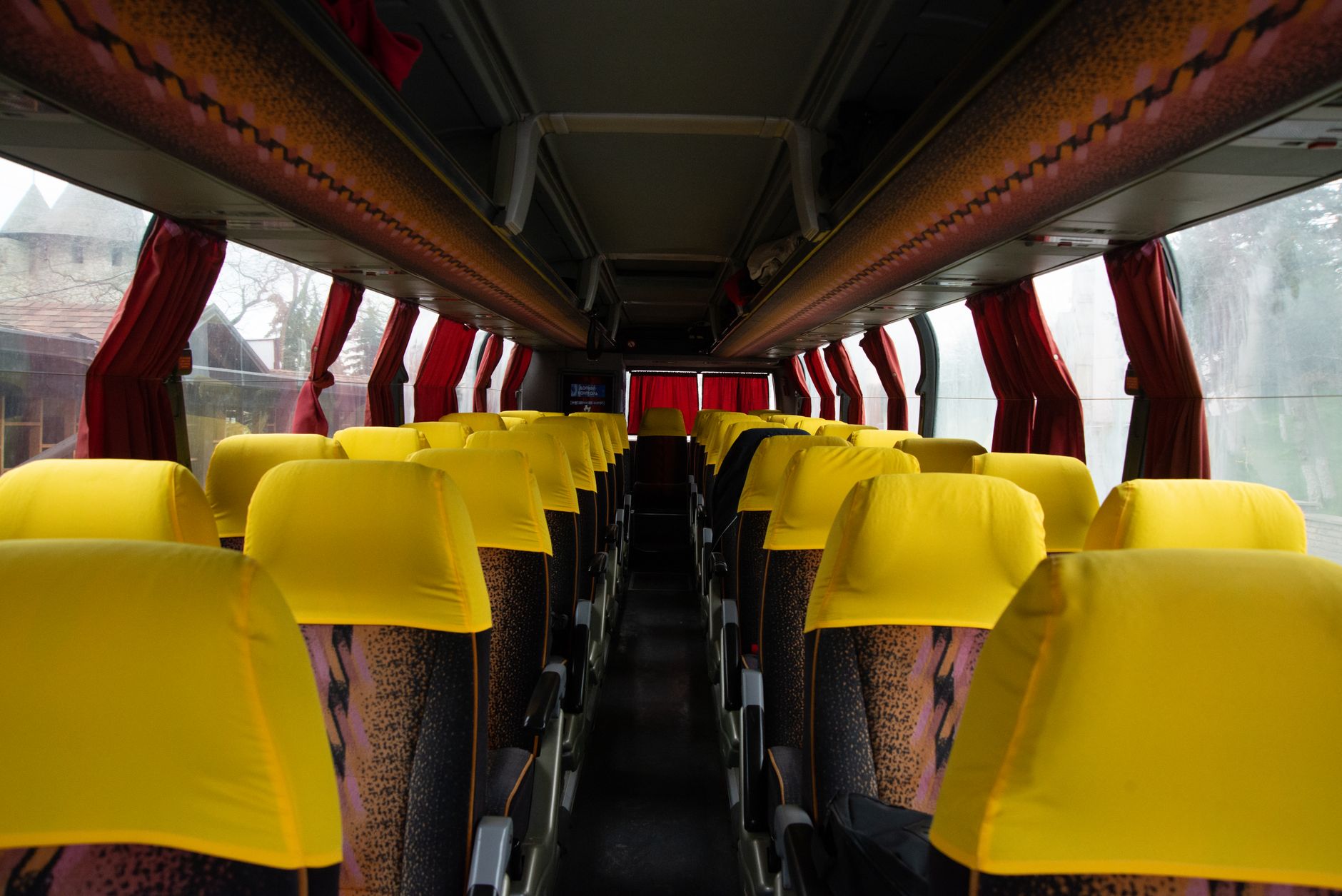
Choose the vehicle around the complete traveling party, not only the active roster. A full-size charter bus or motor coach is usually the practical choice for interstate group travel when luggage, uniforms, coolers, medical supplies, and team gear must ride together. Smaller vehicles work better for compact groups, split hotel movements, or venues with tight streets and limited bus parking. Leave seats open for comfort and reserve usable cargo space rather than planning to stack bags in the aisle.
| Vehicle | Seats | Best For | Notes |
|---|---|---|---|
| Executive Sprinter van | 8-14 passengers | Use for a small club, recruiting group, coaching staff, or airport and hotel transfers where the equipment load is modest. | Best for compact groups with light luggage and limited equipment; easier at hotel entrances and tight urban venues, but cargo space falls quickly when every seat is occupied. |
| Mini bus | 18- thirty passengers | Use for a smaller roster or split movement between nearby hotels, practice sites, and tournament fields. | A useful middle option for short regional runs, but confirm under-seat and rear cargo capacity because large ball bags, coolers, and medical cases can consume the available space. |
| Mini coach | thirty- forty passengers | Use for a mid-size team, club delegation, or group traveling between Southeast metros with moderate equipment. | Provides more comfortable seating and storage than a van while remaining easier to position than a full-size coach at some complexes and older downtown venues. |
| Full-size charter bus or motor coach | forty-five- fifty-six passengers | Use for large varsity, college, bowl, or showcase groups traveling between cities such as Atlanta, Charlotte, Nashville, Orlando, Tampa, or Myrtle Beach. | The strongest choice for long interstate legs and heavy gear, with reclining seats, climate control, large luggage bays, and often an onboard restroom; confirm clearance and venue staging in advance. |
Routing, Timing, and On-the-Road Realities
Build the route backward from the required team arrival, not forward from the pickup time. Atlanta's I-75 and I-85 Downtown Connector can add substantial variability, particularly during weekday commute periods, major concerts, and college football weekends. Charlotte congestion affects I-85, I-77, and venue approaches around Uptown, while Orlando trips often involve I-4, airport traffic, and tournament complexes spread across the metro. On I-95, plan additional margin for coastal holiday traffic and bridge or incident delays near Jacksonville, Savannah, Charleston, and the Myrtle Beach area. A practical pickup window often starts several hours before the first hard arrival requirement, with meal, fuel, and inspection stops placed outside the venue approach. For a long run from Kentucky or Tennessee to Florida, schedule an overnight stop or relief-driver arrangement instead of relying on an aggressive same-day schedule.
Venue parking must be confirmed separately from hotel parking. Some stadiums and tournament complexes have designated bus lots, timed unloading zones, height restrictions, or security checkpoints that prevent a coach from waiting curbside. Mercedes-Benz Stadium, Bank of America Stadium, Raymond James Stadium, Camping World Stadium, and downtown college venues may require advance event instructions or a remote staging plan. Beach tournaments near Myrtle Beach and coastal Florida can have multiple fields with different bus approaches, so list the exact complex and field cluster. Drivers also need hotel loading instructions, because a narrow porte cochere or an occupied fire lane can delay a whole group. For multi-vehicle Sports Team Travel, assign a dispatch lead, stagger loading, use a roster check before departure, and keep enough separation for buses to enter or exit safely.
What This Typically Costs
Southeast Sports Team Travel pricing is built around vehicle type, service days, mileage, and the time the equipment stays with the group. A charter bus or motor coach commonly carries a daily minimum, with longer runs priced by mileage, operating days, or a combination of both. Peak demand around spring showcase tournaments, summer club schedules, fall football, Thanksgiving events, and December bowl games can tighten availability and raise rates. Deadhead miles may apply when the assigned coach travels empty to the first pickup or returns empty after the final drop. Multi-day quotes usually account for driver lodging, parking, tolls, permitted staging, and any required relief-driver plan. Fuel adjustments may appear when the itinerary changes materially, and driver gratuity is normally a separate line item rather than hidden in the base rate.
Frequently Asked Questions
What vehicle is best for a Southeast sports team trip?
A charter bus is usually the best fit when the roster, coaches, and equipment can travel together and the itinerary includes several venue transfers. A motor coach generally provides the most useful combination of reclining seats, underfloor luggage bays, climate control, and onboard restroom access for interstate legs. For short local transfers, a smaller vehicle can be more practical if the venue has tight bus circulation or limited staging. The final recommendation should account for passenger count, baggage volume, wheelchair needs, and whether gear must remain loaded between games.
How many people can one sports team charter bus carry?
A typical youth or high school roster may range from roughly 15 to 35 travelers, while varsity football, larger club programs, and college teams often require 40 to 70 or more seats. Showcase events may add coaches, athletic trainers, managers, parents, scouts, and support staff. One full-size charter bus can work for a compact group with moderate gear, but a second vehicle is often cleaner than filling every seat with luggage in the aisle. Send the playing roster and the full traveling party, not just the number of athletes, when requesting a quote.
What Southeast routes are common for sports teams?
Common Southeast patterns include I-85 between Charlotte, Greensboro, Durham, Greenville, Atlanta, and Montgomery; I-75 between Lexington, Knoxville, Chattanooga, Atlanta, Tampa, and Orlando; and I-95 between the Carolinas, Savannah, Jacksonville, and Florida destinations. Teams also use I-26 toward Charleston, I-20 across Columbia and Augusta, I-40 through Raleigh, Greensboro, Asheville, Knoxville, and Nashville, and I-4 between Tampa and Orlando. A tournament itinerary may combine a long interstate transfer with repeated local moves between hotels, practice fields, and game complexes. The booking request should identify every overnight city and venue rather than listing only the tournament city.
Can a charter bus accommodate athletes who use wheelchairs?
Yes, but wheelchair capacity must be confirmed before the vehicle is assigned. Accessible motor coaches are limited in some markets and may require advance scheduling, especially during tournament weekends. Provide the number of wheelchair users, whether each chair will remain occupied during travel, and the chair dimensions and weight if available. If the group also carries bulky equipment, a lift-equipped coach may have less usable storage, so a second vehicle or cargo plan may be needed.
How are large teams handled with multiple buses?
For one or two vehicles, the operator normally plans a lead vehicle, a designated loading sequence, and a single dispatch contact for the group. Larger groups may use several motor coaches, staggered pickup times, numbered luggage zones, and separate equipment vehicles. Keeping coaches together is not always efficient in downtown Atlanta, Charlotte, Orlando, or Nashville, where bus access and parking can be constrained. A written movement plan should identify vehicle assignments, driver contacts, hotel loading windows, venue entrances, and the procedure for late players or equipment delays.
When should a Southeast sports team book transportation?
The Southeast calendar is busiest in spring for baseball, softball, lacrosse, soccer, and basketball showcases, in summer for club tournaments and recruiting events, and in fall for football and school competition. Winter demand increases around indoor volleyball, basketball, wrestling, and college bowl travel. Beach destinations such as Myrtle Beach, Charleston, Savannah, Jacksonville, and the Florida coast add seasonal volume, while Orlando remains a year-round tournament market. Reserve early when travel overlaps spring break, holiday weekends, major college football weekends, or December bowl events at venues such as Mercedes-Benz Stadium, Bank of America Stadium, Camping World Stadium, Raymond James Stadium, or Brooks Stadium.
Can one bus stay with the team for an entire tournament?
Yes, a charter bus can usually support a multi-day itinerary, but the schedule must allow for driver hours, required rest, hotel parking, and any relief-driver needs. A long first-day move from Kentucky or Tennessee to Florida may require an overnight stop rather than a same-day arrival followed by a game. The motor coach may remain with the team for practices, meals, and venue transfers, or the operator may release it between service blocks if the itinerary permits. Provide game times, mandatory arrival times, practice windows, and hotel addresses so the operations team can test the schedule before quoting it.
How to Book
To start a quote, have the travel dates, pickup address, headcount, roster support needs, equipment volume, hotel addresses, game and practice schedule, and every planned venue available. Include whether the group needs a charter bus, motor coach, wheelchair access, multiple vehicles, or an equipment trailer. US Bus Trips can typically return a quote within 4 business hours when the itinerary is complete, although complex multi-state schedules may require operator confirmation. The confirmation should identify the assigned vehicle class, pickup instructions, service dates, routing assumptions, included mileage or hours, driver plan, parking responsibilities, and cancellation terms; contact US Bus Trips by phone or its online inquiry channel to finalize the run.
Related Trips You Might Also Consider
- Wisconsin Dells — 24-Passenger Mini Bus
- Choir Competition — Pacific Region
- Oakland, CA to Napa, CA
- Sequoia — 36-Passenger Mini Coach
- Albuquerque, NM to Santa Fe, NM
- Phoenix, AZ to Tucson, AZ
- Cross-Country Charter Bus Overview
- All Group Tour Destinations
- See the Full Fleet (Sprinters through 56-pax coaches)
- Get a Free Quote in 60 Seconds