
US Bus Trips books Big Bend group tour transportation for families, clubs, executive groups, and private parties traveling across Texas and neighboring states.
Overview
A Big Bend group tour is a remote-area operation, not a normal city charter. Most customers are families, alumni groups, photography clubs, corporate retreats, university organizations, and private VIP parties leaving from Austin, San Antonio, Dallas-Fort Worth, Houston, El Paso, or another Texas hub. The 14-Passenger Sprinter is sized for a compact group that wants to travel together without paying for empty motor coach seats. Day 1 commonly follows a long highway corridor toward Alpine, Marathon, Study Butte, or Terlingua, with fuel and meal planning required because services thin out well before the park. Groups should reserve lodging before confirming the final driving schedule, especially during spring break, holiday weekends, and the November-through-April peak.
A workable multi-day plan usually uses day 1 for travel and an initial stop in Alpine, Marathon, or the Gage Hotel area rather than trying to begin a full park day after a long pickup run. Days 2 through N can cover paved park roads, Panther Junction, the Chisos Basin area when access and parking are suitable, Santa Elena Canyon access conditions, Rio Grande Village, and selected scenic waysides. The National Park Service limits group size on trails and may require permits for commercial or organized activities, so a large walking program should be split or approved in advance. A private 14-Passenger Sprinter does not create unlimited access to narrow roads, restricted areas, or oversized parking zones. The dispatcher should identify which stops are sightseeing pullouts, which are passenger drop-offs, and which require the vehicle to wait elsewhere.
Big Bend lodging is commonly staged in Terlingua or Study Butte for west-side access, or in Marathon and Alpine for more services and a cleaner highway connection. Chisos Mountain Lodge and park campgrounds can be convenient but have limited inventory and require early reservations; they should never be treated as guaranteed overflow lodging. Ask each property about Sprinter parking, late check-in, breakfast hours, luggage storage, and a safe place for the driver to park overnight. Commercial entry and organized activities may involve National Park Service permits or authorizations, and Big Bend publishes separate rules for motor coaches and buses. Even a small group tour should carry a written operating plan covering entrance, parking, loading, engine shutdown, weather contingencies, and the vehicle's actual dimensions.
Fleet Options
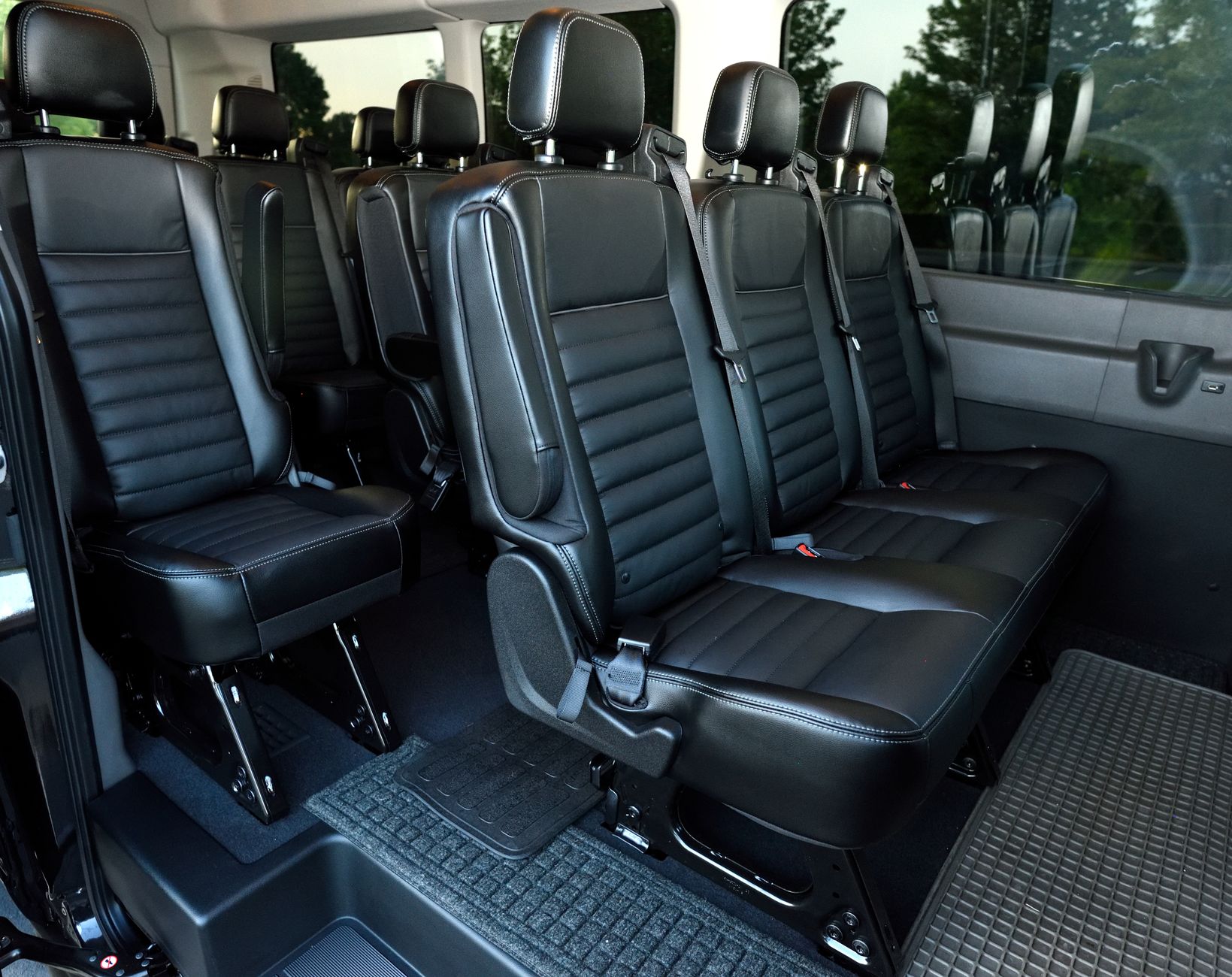
For 14 passengers, the 14-Passenger Sprinter is usually the most comfortable small-group choice when luggage is controlled and the itinerary stays on paved routes. An Executive Mercedes Sprinter or Ford Transit can provide leather captain's chairs, WiFi, USB ports, and a more appropriate cabin for VIP transfers than a standard passenger van. Confirm the actual seat count, aisle layout, and cargo capacity because fourteen passengers with rolling luggage can exceed the usable storage quickly. Big Bend has long distances between services, narrow approaches, limited parking, and no tolerance for improvised roadside loading, so a larger motor coach is not automatically better.
| Vehicle | Seats | Best For | Notes |
|---|---|---|---|
| 14-Passenger Executive Sprinter | Up to 14 passengers | Choose this for a private group tour, executive transfer, family trip, or small VIP itinerary using paved Big Bend roads and controlled baggage. | Best for up to 14 passengers with compact soft luggage, leather captain's chairs, WiFi, USB charging, and limited cargo; confirm whether a trailer or luggage solution is needed. |
| 18- to 24-Passenger Mini Coach | 18-24 passengers | Use it when the headcount exceeds Sprinter capacity or the group needs more room for day bags without moving to a full motor coach. | Adds seating and luggage margin but may need more deliberate checks at park pullouts, hotel entrances, and tight local streets than a Sprinter. |
| 28- to 35-Passenger Mini Coach | 28-35 passengers | This fits a school, club, or tour group that needs one vehicle but remains below a conventional motor coach's capacity. | Useful for larger organized groups, but parking, turning space, and designated loading areas around Big Bend facilities must be confirmed before dispatch. |
| Motor Coach | 36-56 passengers | Select a motor coach for a larger group traveling together on approved paved routes, with a written plan for limited parking and one-bus access points. | Provides the greatest passenger and luggage capacity, yet Big Bend imposes specific paved-road, drop-off, parking, idling, and access rules that can limit where a large bus goes. |
Routing, Timing, and On-the-Road Realities
From Austin or San Antonio, the normal approach uses westbound I-10 before turning toward Alpine and Marathon, with the exact final corridor depending on lodging and park access. Dallas-Fort Worth and Houston departures add enough highway time that an overnight near Alpine or Marathon is usually more responsible than a same-day park arrival. El Paso groups may have a shorter approach through Van Horn and Alpine, but pickup timing still matters because fuel and food options become limited near the park. Schedule the Sprinter's first fuel stop before the final remote segment and do not assume every park facility has reliable supplies. Depart major Texas metros early enough to clear urban traffic, yet avoid promising a late-night arrival on roads where wildlife, fatigue, and limited services complicate the final miles.
Inside the park, plan a route that returns the vehicle to legal, designated parking rather than relying on roadside waiting. The National Park Service rules for motorcoaches and buses prohibit idling while passengers load, unload, or wait to reboard, and vehicles may not occupy multiple parking spaces. Large buses have special limits at locations such as Fossil Discovery Exhibit, Chisos Basin, and Boquillas Canyon Road; the latter has a restriction beyond the overlook, while some facilities permit only drop-off and pickup or one bus by request. A 14-Passenger Sprinter has more flexibility than a full motor coach but still needs a realistic turning and parking check. Keep trail groups within applicable limits, confirm commercial or special-use requirements at least 60 days ahead when a CUA application applies, and preserve driver rest rather than scheduling sunrise-to-stargazing duty on one shift.
What This Typically Costs
A Big Bend group tour in a 14-Passenger Sprinter is normally quoted as a charter package rather than a simple point-to-point fare. The price usually combines a daily vehicle minimum, the scheduled mileage rate, and any deadhead miles required to bring the vehicle and driver to the pickup city and return them after the trip. A multi-day run also includes driver overnight lodging, parking, tolls where applicable, and a fuel adjustment if fuel prices or routing change materially. In most markets, a 14-Passenger Sprinter commonly runs a few thousand dollars per day before optional trip expenses, while a longer Texas departure or remote pickup can push the total higher through distance and deadhead. Peak demand from November through April, spring break, holiday weekends, and major West Texas events can reduce vehicle availability and raise the operating rate. Budget separately for driver gratuity, passenger lodging, meals, park or venue fees, and any guide or special-use requirements.
Frequently Asked Questions
How many days should a Big Bend group tour take?
For a private 14-passenger group tour, plan on at least three full days from a major Texas pickup point and four to five days for a more comfortable park schedule. Day 1 is largely highway travel to the Big Bend region, while days 2 and 3 cover the park and nearby communities. Groups starting in Dallas-Fort Worth, Houston, Austin, San Antonio, or El Paso should expect different mileage and deadhead costs. A fourth or fifth day allows time for Terlingua, Marathon, Alpine, Fort Davis, or a slower return instead of forcing a late arrival.
What are the best months to visit Big Bend?
Late fall through early spring is generally the most workable window for a Big Bend group tour. November through April is the park's busy season, with spring break, holiday periods, Thanksgiving week, Christmas, and mid-January through mid-April creating especially strong demand for lodging and vehicles. May through August brings dangerous desert heat, with many low-elevation areas exceeding 100 degrees Fahrenheit by late morning. July through September can add thunderstorms, flash-flood risk, and changing road conditions, so the itinerary needs more weather flexibility.
What does a 14-Passenger Sprinter fit well?
A 14-Passenger Sprinter is appropriate for a small group of up to 14 passengers plus the driver, subject to the vehicle's actual configuration and luggage limits. An Executive Mercedes Sprinter or Ford Transit may provide leather captain's chairs, WiFi, USB charging, and a quieter cabin than a basic shuttle van. It works well for VIP transfers, photographers, family groups, university trips, and a compact multi-day group tour with soft luggage. Cargo space is still limited, so large hard cases, coolers, camping equipment, and extensive hiking gear may require a luggage trailer, a second vehicle, or a larger motor coach.
Does a 14-Passenger Sprinter need a Big Bend permit?
Big Bend does not function like an urban tour stop where a bus can pull over anywhere. The National Park Service publishes specific rules for motorcoaches and buses, including designated drop-off practices, limited parking, engine shutoff requirements, and restrictions on occupying multiple spaces. A 14-Passenger Sprinter is below the park's 15-passenger threshold referenced for certain commercial services, but the operator must still verify the applicable commercial permit or authorization before entry. Commercial operators should carry the correct insurance and permit documentation, and organized activities may require additional special-use approval.
What does a realistic Big Bend itinerary look like?
The standard operating pattern is pickup on day 1, a highway travel day with planned meal and fuel stops, then park touring on days 2 through N. A practical route may use US 90 or US 67 and US 385 through Marathon, then TX 118 and TX 385 toward the park, depending on the pickup city and lodging plan. Within Big Bend, plan paved-road stops such as Panther Junction, Rio Grande Village, the Chisos Basin area when vehicle access and parking conditions permit, and selected scenic pullouts. Do not promise every backcountry road, trailhead, or canyon access point without checking the vehicle's clearance, road condition, group size, and current park restrictions.
How do driver hours affect a Big Bend tour?
A driver can be on duty for a long day without being able to safely tour the park from dawn through night. The dispatcher should separate driving time, passenger loading, waiting, fueling, meal stops, and the driver's required rest rather than treating the entire itinerary as flexible standby. For a multi-day charter, a driver change or relief plan may be needed when the schedule approaches applicable federal hours-of-service limits. A 14-Passenger Sprinter still requires commercial driver planning even though it is smaller than a motor coach. Build the itinerary around legal rest, daylight, road conditions, and a firm return time instead of adding remote stops after the driver has reached the planned limit.
Where should a group stay near Big Bend?
The best lodging base depends on whether the group values park access, restaurants, or easier highway positioning. Terlingua and Study Butte are practical for west-side park access and evening dining, while lodging near Marathon or Alpine can simplify services, fuel, and the first or last travel leg. Chisos Mountain Lodge is inside the park but has limited inventory and should not be assumed available for a 14-passenger group. Park camping and lodging require advance reservations and can fill during busy periods and three-day holiday weekends. Confirm Sprinter parking, luggage storage, late arrival procedures, and breakfast timing directly with the property before finalizing the route.
How to Book
To quote the run, have the travel dates, pickup address, passenger count, luggage description, preferred lodging area, and a day-by-day itinerary ready. Include planned park entrances, trail or venue stops, meal breaks, return timing, and whether the group needs an Executive Mercedes Sprinter or Ford Transit configuration. US Bus Trips can typically return a preliminary quote within 4 business hours, subject to vehicle availability and route review. Confirmation should identify the vehicle class, passenger capacity, pickup instructions, operating dates, estimated mileage, driver plan, included and excluded charges, and any permit or parking responsibilities; reach us through the booking form or phone team to review the details.
Related Trips You Might Also Consider
- Boston Freedom Trail — 36-Passenger Mini Coach
- Scout Troop — Pacific Northwest Region
- Choir Competition — Mountain West Region
- Aurora, CO to Vail, CO
- Government Agency Shuttle — Mountain West Region
- Washington DC, DC to Richmond, VA
- Cross-Country Charter Bus Overview
- All Group Trip Types
- See the Full Fleet (Sprinters through 56-pax coaches)
- Get a Free Quote in 60 Seconds