
A Charleston group tour using a 56-Passenger Motor Coach suits alumni groups, church groups, reunions, associations, and escorted tours traveling together over several states.
Overview
A Charleston group tour is often booked by alumni associations, church ministries, senior travel clubs, military reunions, school groups, and corporate or nonprofit teams that want one controlled movement plan. A 56-Passenger Motor Coach is well suited to groups arriving from Atlanta, Raleigh, Charlotte, Richmond, Washington, or points farther north because the vehicle carries passengers and luggage without splitting the party. Common approach corridors include I-26 into the Charleston area, I-95 for north-south runs, I-20 from the west, and US 17 for local movement through Mount Pleasant and the coast. Day 1 should be treated as a travel and arrival day, not a full sightseeing day after a long interstate run. A planned lunch, restroom, and meal stop is more dependable than promising an exact downtown arrival time. The group lead should also identify mobility needs, rooming arrangements, and any formal event that cannot move if traffic changes.
The core Charleston itinerary can combine the Historic District with venues that are easier to stage from Mount Pleasant or North Charleston. A typical day may begin at Waterfront Park or a permitted downtown loading point, followed by a walking program near the Battery, Rainbow Row area, City Market, or a prearranged carriage-tour meeting point. Patriots Point Naval and Maritime Museum in Mount Pleasant, Boone Hall Plantation, Magnolia Plantation and Gardens, and Middleton Place can fill separate half or full days, but each venue should confirm coach parking and group arrival procedures. The USS Yorktown and other large attractions may draw heavy traffic during school breaks, holiday weekends, and special events. A harbor cruise, Charleston Museum visit, or organized meal can give the driver a scheduled break while keeping the group together. Avoid stacking a plantation, beach, and downtown walking program into one day unless the group accepts a short visit at each stop and extra traffic exposure.
Best months for a Charleston group tour are generally March through May and October through November, when walking conditions are more manageable than the hottest summer weeks. Spring demand can rise around Charleston Wine + Food, the Cooper River Bridge Run, Festival of Houses and Gardens, and Spoleto and Piccolo Spoleto, so hotel and motor coach inventory should be checked early. Fall can be operationally comfortable, but festivals, weddings, football weekends, and convention activity still affect room blocks and downtown access. June through August is workable for groups prioritizing Isle of Palms, Folly Beach, or other coastal stops, but heat, humidity, afternoon storms, and air-conditioning load need schedule and hydration planning. January and February can offer lower demand, though winter events and holiday-light programs still create localized surges. A 56-Passenger Motor Coach gives the group a controlled base, but it does not eliminate the need to reserve timed entries, restaurant space, permits, and coach parking.
Fleet Options
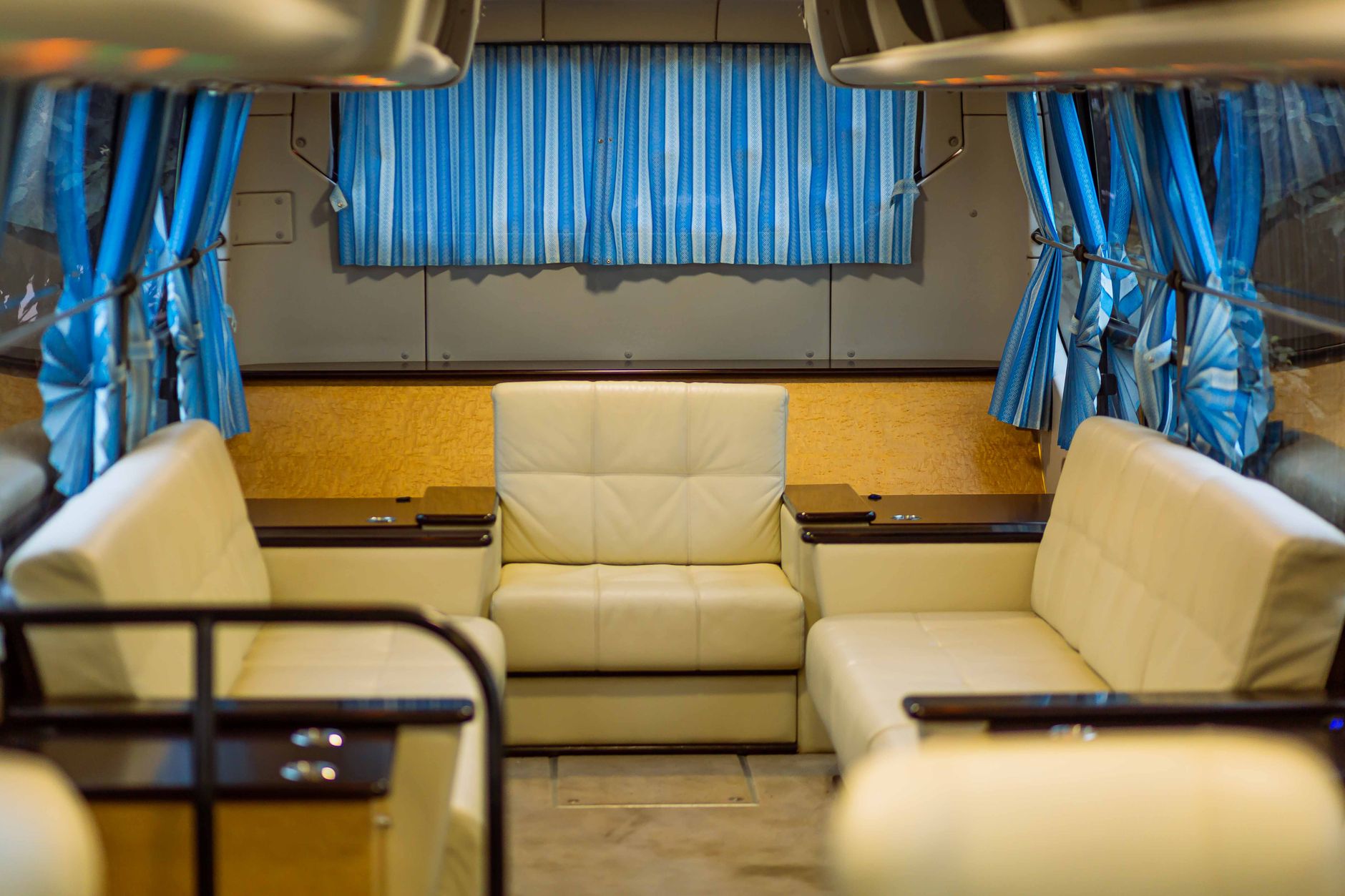
A 56-Passenger Motor Coach is usually the right starting point for a 56-passenger group tour because it keeps the full party together, carries luggage in underfloor bays, and provides better comfort than smaller vehicles on a multi-day run. Reclining seats, overhead storage, a restroom, and possible DVD or USB features support long highway days, although the assigned coach amenities must be confirmed. Count passengers, checked bags, coolers, mobility equipment, and tour materials before assuming every seat is available. Downtown Charleston parking and historic-district access can be restrictive, so a full-size motor coach may need designated bus zones or a smaller local shuttle for tight approaches.
| Vehicle | Seats | Best For | Notes |
|---|---|---|---|
| 56-Passenger Motor Coach | Up to 56 passengers | Use this when the full group is traveling together for a multi-day Charleston group tour and the itinerary includes substantial highway mileage. | Best long-haul comfort and luggage capacity, with reclining seats, overhead storage, restroom, and underfloor bays; confirm DVD and USB equipment on the assigned unit. |
| 40- to fifty-passenger Motor Coach | 40 to 50 passengers | Use this when the headcount is below full capacity but the group still needs large luggage bays and highway comfort. | Provides coach amenities and underfloor luggage space with more seating margin around passenger count, while remaining subject to the same Charleston bus-route and parking controls. |
| 24- to thirty-five-passenger Mini Coach | 24 to 35 passengers | Use this for a smaller group or as a local connector when a full-size motor coach cannot use a tight street, lot, or loading zone. | Easier to place at smaller venues and some hotel approaches, but luggage capacity, restroom availability, and seat spacing are usually less than on a full motor coach. |
| Executive Sprinter Van | 8 to 14 passengers | Use this for staff, VIPs, airport transfers, or overflow movements rather than as the primary vehicle for the full group tour. | Works for small leadership groups and short transfers, with better maneuverability but limited luggage volume and no practical fit for a 56-person party. |
Routing, Timing, and On-the-Road Realities
For an out-of-state group, the dispatch plan should separate the interstate approach from the Charleston sightseeing plan. I-26 is the primary western approach and can slow near the I-95 interchange, Summerville, North Charleston, and the peninsula; I-526 is useful for cross-town movements but should not be treated as a guarantee during peak periods or incidents. US 17 through Mount Pleasant is practical for Patriots Point and Boone Hall but can become congested around the Ravenel Bridge, Coleman Boulevard, and event traffic. Pickup windows should favor early morning departures, while downtown venue arrivals should be scheduled with a buffer for bridge, construction, school, and convention traffic. A full coach should arrive only within a confirmed loading window because standing curbside in the Historic District is not a substitute for permitted parking. For airport, hotel, or restaurant pickups, obtain the exact bus entrance and coach staging instructions rather than using the passenger-car entrance by assumption.
Driver-hours planning starts before the coach reaches South Carolina. Federal passenger-carrier rules generally allow up to 10 hours of driving after 8 consecutive hours off duty, with a 15-hour on-duty window and weekly limits that also constrain multi-day programs. Loading, inspections, fueling, traffic delays, venue waiting, and passenger assistance consume the on-duty window even when the coach is parked. A long approach from the Northeast or Midwest may require a driver overnight, a relief driver, or a staged start so the same operator is not expected to drive a full sightseeing day after an overnight arrival. Build the Charleston days with a clear end time, a legal hotel return, and a driver break that does not depend on passengers being ready early. If the group schedules a late dinner, evening performance, or airport transfer, price the additional service hours and confirm whether a second driver or split shift is needed.
What This Typically Costs
A Charleston group tour in a 56-Passenger Motor Coach is normally quoted from several cost components rather than one flat fare. The base usually reflects a per-day minimum, with additional pricing tied to route miles, vehicle use, and any required deadhead from the motor coach garage to the pickup and back. Spring and fall weekends, Spoleto and Piccolo Spoleto, the Cooper River Bridge Run, Charleston Wine + Food, holiday periods, and major conventions can tighten supply and raise typical rates. Multi-day trips also require driver lodging, parking, meals or per diem, tolls, and possible split-driver coverage when the schedule exceeds legal driving limits. Common line items include fuel adjustments, venue parking, driver gratuity, cleaning, and overtime or extra service hours. In most markets, a full motor coach for a multi-day group tour commonly runs a few thousand dollars per day before itinerary-specific additions, while long approaches from outside the Southeast increase the mileage and deadhead portion.
Frequently Asked Questions
What does a 56-Passenger Motor Coach include for a Charleston group tour?
A 56-Passenger Motor Coach is the workhorse of long-haul group travel. It has reclining seats, overhead storage, a restroom, DVD or USB features depending on the assigned unit, and luggage bays under the cabin. It works best when the full group travels together for several days and everyone has checked bags or tour equipment. Confirm the exact onboard features before contracting because amenities vary by coach.
How many days should a multi-day Charleston group tour take?
Plan on at least three nights for a practical Charleston group tour from a distant origin, with four or five nights better when the group wants substantial sightseeing. Day 1 is commonly the travel day, with a planned meal or orientation stop before an early evening arrival. Days 2 and 3 can cover downtown Charleston, a harbor or museum visit, and a plantation or beach-side excursion. Add another day for slower pacing, shopping, a formal event, or a day trip toward Savannah.
What are the best months for a Charleston group tour?
March through May and October through November are generally the strongest months for walking tours, gardens, historic sites, and outdoor meals. Spring includes high-demand periods around Charleston Wine + Food, the Cooper River Bridge Run, and house and garden programming. Fall is often easier for walking and can have lighter crowd pressure, but event calendars still affect hotels and coach availability. June through August can work for beach-focused groups, but heat, humidity, thunderstorms, and heavier air-conditioning demand require more schedule margin.
Does a 56-Passenger Motor Coach need a Charleston bus permit?
Yes. Charleston requires permits for motor coaches used for touring for hire and for motor coach parking in the Historic District. The city designates bus loading and parking locations, and coaches must follow the approved bus route. Applications should be submitted in advance, with the city advising at least 48 hours before the event. A dispatcher should confirm the permit, route, loading window, and parking instructions before the motor coach enters the historic core.
How do driver hours affect a multi-day motor coach itinerary?
The federal passenger-carrier framework generally limits one driver to 10 hours of driving after 8 consecutive hours off duty and 15 hours on duty after that rest period. Weekly on-duty limits also apply, and time worked for another employer can count. A Charleston group tour that starts far away may need a planned overnight, a second qualified driver, or a staged vehicle rather than a same-day push. The itinerary should show realistic loading, meal, traffic, venue, and hotel time instead of treating the full duty window as highway time.
Can a full-size motor coach reach every Charleston attraction?
A 56-Passenger Motor Coach fits large groups, but it does not handle every downtown stop like a shuttle van. Charleston's historic streets include tight turns, one-way sections, pedestrian activity, delivery vehicles, and limited curb space. The bus should use approved loading zones and designated parking rather than circling the district while passengers finish a tour. For private houses, restaurants, beaches, or venues with constrained approaches, verify clearance, turning space, reservation windows, and whether a smaller shuttle is needed for the final leg.
Where should a group stay when using a 56-Passenger Motor Coach in Charleston?
The most reliable hotel staging is usually outside the tightest historic streets, such as Mount Pleasant, North Charleston, West Ashley, or selected airport and interstate corridors. Mount Pleasant can work well for Patriots Point, Boone Hall, and downtown access via the Ravenel Bridge, while North Charleston offers practical highway access and larger hotel parking in many areas. Downtown hotels reduce local transfer time but may have restricted coach access, limited loading space, and higher parking costs. The hotel should confirm coach parking, overnight security, driver rooms, breakfast timing, and the exact entrance before the trip is finalized.
How to Book
To quote a Charleston group tour, have the travel dates, pickup address, passenger count, luggage estimate, hotel area, and each planned stop ready. Include whether the trip starts outside the Southeast, because approach mileage, deadhead, driver lodging, and legal rest planning can materially change the proposal. US Bus Trips can typically return a workable quote within 4 business hours when the itinerary is complete. The confirmation should identify the vehicle class, service dates, pickup and drop-off windows, routing assumptions, driver accommodations, permits or parking responsibilities, inclusions, and cancellation terms; reach us with the itinerary and contact details for the group lead.
Related Trips You Might Also Consider
- Olympic — 14-Passenger Sprinter
- Great Smoky Mountains — 56-Passenger Motor Coach
- Senior Tour Group — Northeast Region
- Riverside, CA to San Diego, CA
- Jacksonville, FL to Savannah, GA
- Sports Team Travel — Midwest Region
- Cross-Country Charter Bus Overview
- All Group Trip Types
- See the Full Fleet (Sprinters through 56-pax coaches)
- Get a Free Quote in 60 Seconds