
A Great Smoky Mountains group tour works best when the transportation plan is built around park roads, hotel staging, and legal driver time rather than a map estimate.
Overview
A Great Smoky Mountains group tour from outside the region is usually a three- to five-day movement, not a simple day trip. Common origins include Atlanta, Charlotte, Nashville, Louisville, Cincinnati, Birmingham, Washington, DC, and points across the Midwest or Mid-Atlantic, with the motor coach using I-40, I-75, I-81, I-26, or US 441 depending on the pickup. The first day is typically dedicated to travel, a meal stop, hotel check-in, and a low-risk arrival activity such as the Gatlinburg Parkway, Anakeesta area, Pigeon Forge dinner theater, or a scheduled group meal. A 56-Passenger Motor Coach is suited to this work because everyone boards one vehicle, luggage stays in the lower bays, and the driver can manage a fixed manifest rather than a convoy. Groups should not schedule a long interstate arrival, a full park loop, and a ticketed evening show on the same clock without recovery time. The most reliable plans protect the first evening from delays and use the park days for daylight-sensitive roads and overlooks.
The usual customer is a church, alumni association, family reunion, school group, senior tour, corporate retreat, or escorted vacation group that wants one vehicle for the entire multi-day schedule. In Gatlinburg and Pigeon Forge, hotel loading zones, Parkway traffic, dinner theater arrival windows, and attraction parking can control the day more than the distance between stops. Dollywood, the Titanic Museum Attraction, the Great Smoky Mountain Wheel, Ripley's Aquarium, Ober Mountain, and local dinner theaters are common itinerary anchors, but each venue needs its own coach drop-off and parking confirmation. Townsend is a practical west-side staging point for the Townsend entrance, Little River Road, Cades Cove planning, and quieter lodging. Cherokee and Oconaluftee are better positioned for the North Carolina side, Newfound Gap, and cultural stops such as the Museum of the Cherokee People. A dispatcher should collect venue arrival windows and bus instructions before promising a sequence of attractions.
Great Smoky Mountains National Park is free to enter, but vehicles parked longer than 15 minutes need a valid parking tag, and commercial operators must follow applicable park authorization and parking conditions. A full-size motor coach cannot be treated like a passenger car at every overlook or trailhead: the park restricts vehicles longer than 25 feet on multiple secondary roads and requires oversized vehicles to use established or designated parking areas. Cades Cove is especially schedule-sensitive because the loop has heavy seasonal and weekend traffic, and vehicle-free periods can affect motor access. Newfound Gap Road, US 441, Little River Road, and the primary entrances are more appropriate planning corridors, subject to weather and temporary closures. The driver should carry the final route sheet, know the intended turnaround points, and avoid sending a 56-Passenger Motor Coach into Roaring Fork, Rich Mountain, Parson Branch, or other restricted roads. A strong group tour plan uses the coach for primary transfers and walking, trolley, shuttle, or smaller vehicles where the park geometry requires them.
Fleet Options
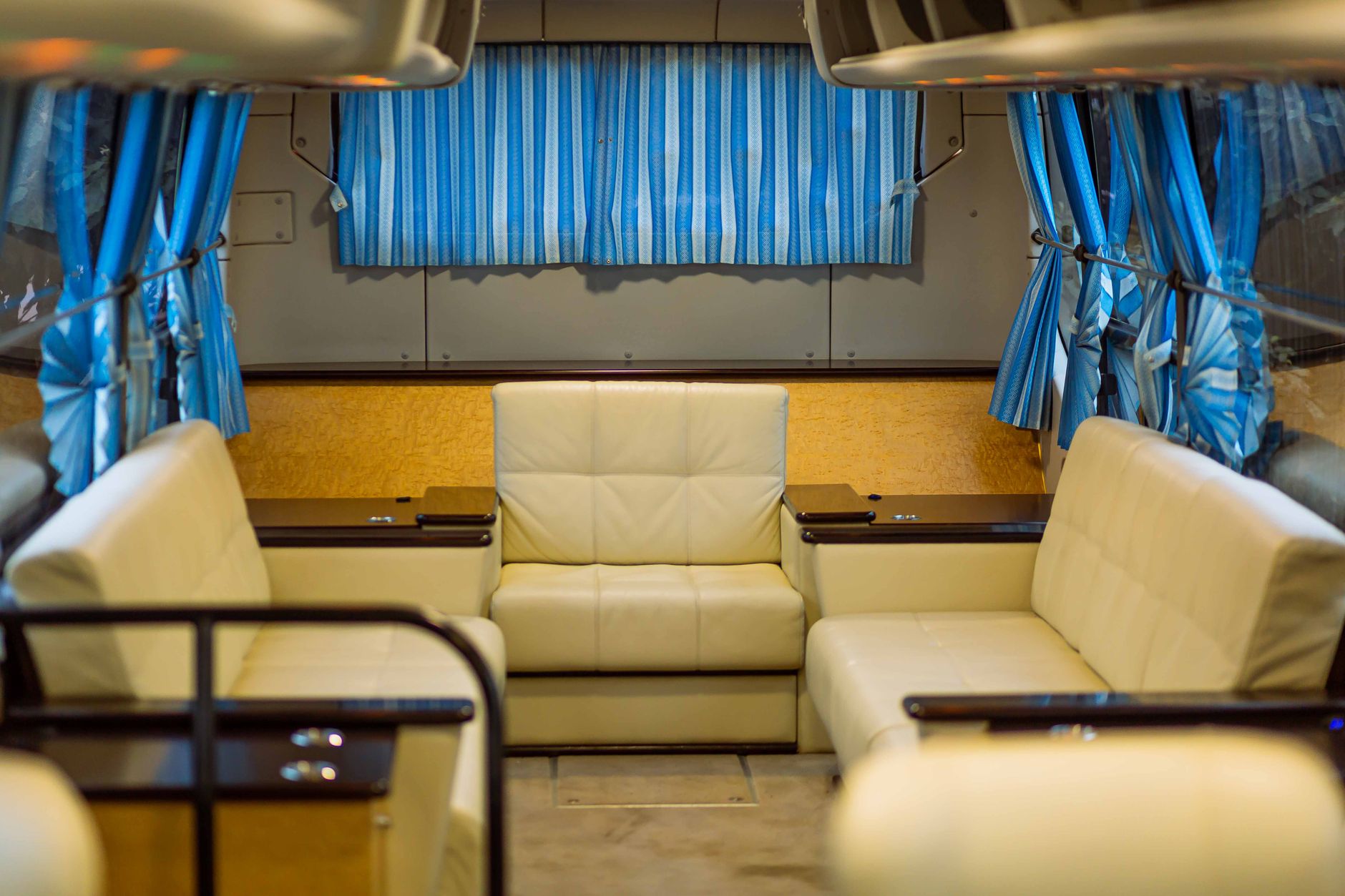
For a full 56-person group, the 56-Passenger Motor Coach is usually the correct starting point because it keeps everyone together and provides reclining seats, overhead storage, a restroom, USB or DVD features, and underfloor luggage bays. Confirm the actual passenger count, luggage volume, mobility equipment, coolers, and guide seats before selecting the vehicle, because a sold-out 56-seat load leaves little flexibility for extra staff or bulky equipment. A motor coach is comfortable on interstate corridors and primary park approaches, but it is not a substitute for a smaller vehicle on narrow scenic roads, tight hotel entrances, or limited parking lots. If the itinerary splits between a large group transfer and small trailhead movements, use the coach for the main legs and arrange separate local transportation rather than forcing the coach onto restricted roads.
| Vehicle | Seats | Best For | Notes |
|---|---|---|---|
| 56-Passenger Motor Coach | Up to 56 passengers | Use it when the entire group travels together between distant pickup cities, hotels, park entrances, dinner venues, and major attractions. | Best long-haul comfort and cargo capacity, with reclining seats, overhead storage, restroom, onboard media or USB features, and underfloor luggage bays; needs established loading areas and approved oversized parking. |
| 40- to 47-Passenger Motor Coach | 40 to 47 passengers | Choose it when headcount is below the high forties or when hotel access and venue parking make a full 56-passenger unit inconvenient. | Provides coach amenities with more scheduling and parking flexibility than a full-size unit, while still carrying substantial luggage for a multi-day itinerary. |
| 24- to 35-Passenger Mini Coach | 24 to 35 passengers | Use it for smaller reunions, church groups, student groups, or a split itinerary that avoids overloading a full-size motor coach. | A useful compromise for mid-sized groups, with easier maneuvering and lower capacity than a full motor coach; verify restroom and luggage-bay availability before booking. |
| Executive Sprinter Van | Up to about 14 passengers | Use it for staff, airport transfers, overflow, or small side excursions on roads where a large bus cannot safely or legally operate. | Fits compact transfers and narrow local approaches, but cargo space and passenger comfort decrease quickly with luggage, and it is not a replacement for a full-group long-haul motor coach. |
Routing, Timing, and On-the-Road Realities
For arrivals from the west, Knoxville and I-40 are common gateways, with Sevierville, Pigeon Forge, and Gatlinburg reached through the Parkway corridor or US 441 approaches. From Atlanta or Birmingham, I-75 and regional highways often feed into Knoxville before the final mountain approach; from Charlotte or the Mid-Atlantic, I-40, I-26, and US 441 may be used depending on weather and the lodging side. Schedule pickup early enough to clear the origin metro before commuter traffic, but do not assume an early departure eliminates the final congestion around Sevierville, Pigeon Forge, Gatlinburg, or Cherokee. On peak fall weekends, add substantial margin for Parkway traffic, parking searches, leaf-season demand, and slow traffic entering Cades Cove. Use a planned meal or rest stop outside the park when possible because there are no gas stations in the park and large-coach parking is limited. Confirm every hotel loading zone, attraction bus entrance, and dinner venue staging instruction before the driver receives the final dispatch.
A realistic sample is day 1 travel from the origin to Sevierville or Pigeon Forge, with a meal stop and hotel check-in; day 2 uses the coach for the Gatlinburg entrance, Sugarlands Visitor Center, Newfound Gap Road, and a timed return before dinner. Day 3 can use the west side for Townsend, Little River Road, and a carefully checked Cades Cove plan, or can remain in Gatlinburg and Pigeon Forge if traffic or road restrictions make the loop impractical. Day 4 can cover Oconaluftee and Cherokee from an eastern or North Carolina base, followed by the return corridor or another hotel night. Cades Cove Loop Road is generally open sunrise to sunset when weather and operations allow, but seasonal vehicle-free periods and congestion must be checked for the exact date. Buses and other vehicles over 25 feet are restricted on roads such as Roaring Fork Motor Nature Trail, and park rules prohibit shoulder parking, blocking traffic, off-road parking, and idling while parked. The driver-hours plan should set a hard departure time, meal break, legal rest period, and return limit before the group enters the park.
What This Typically Costs
A 56-Passenger Motor Coach quote usually combines a daily charter rate, a mileage component, and any deadhead mileage needed to bring the motor coach to the pickup city and return it after the group tour. Multi-day work commonly carries a daily minimum, with longer repositioning runs priced by total route miles, operating days, and driver hours rather than passenger count alone. Peak pricing is common during October foliage weekends, summer school breaks, holiday periods, major Gatlinburg events, and University of Tennessee football weekends, while January through early March can be easier to price. Plan for driver overnight lodging, parking, tolls, permits or commercial-use paperwork when applicable, and possible fuel adjustments as separate line items. Driver gratuity is normally not included unless the quote states otherwise and is often calculated as a percentage of the transportation charge or a per-day amount. A practical quote should also identify cancellation terms, extra-hour charges, cleaning fees, and whether the operator is using one driver or a legally required relief-driver arrangement.
Frequently Asked Questions
What does a 56-Passenger Motor Coach include for a Great Smoky Mountains group tour?
A 56-Passenger Motor Coach fits a full group with reclining seats, overhead storage, a restroom, DVD or USB features, and luggage bays underneath. It is the workhorse of long-haul group travel and keeps a multi-day group tour together instead of splitting people among cars or vans. The underfloor bays handle rolling luggage for hotel changes, while the restroom helps on long approaches from Atlanta, Charlotte, Nashville, Knoxville, or the Mid-Atlantic. It is best for organized loading at hotels, attractions, and wide roadside stops rather than narrow trailhead roads.
How many days should a multi-day group tour to the Great Smoky Mountains take?
A practical Great Smoky Mountains group tour usually needs three to five days, depending on the origin. A three-day plan can use day 1 for travel and Gatlinburg or Pigeon Forge arrival, day 2 for the park, and day 3 for a second park visit before returning. Four or five days give the group time for Cades Cove, Newfound Gap, Oconaluftee, a Townsend or Cherokee stop, and a weather buffer. Add another day when the pickup is outside the Southeast or when the itinerary includes Dollywood, a dinner theater, or a scheduled event.
What are the best months for a Great Smoky Mountains group tour?
April through May and mid-November can offer a useful balance of mild conditions and less pressure than peak summer or fall weekends. June through October are popular, but the motor coach should expect heavier traffic, especially around Gatlinburg, Pigeon Forge, Cades Cove, and entrance corridors on weekends. October foliage dates often sell first and require earlier lodging and vehicle planning. Winter trips can be quieter, but ice, snow, shortened daylight, and temporary secondary-road closures require a flexible itinerary and daily road checks.
Can a 56-Passenger Motor Coach use every road in Great Smoky Mountains National Park?
A 56-passenger motor coach should stay on roads approved for its length and should not be routed casually onto every scenic road shown on a map. Park guidance restricts vehicles longer than 25 feet on several roads, including Roaring Fork Motor Nature Trail, Rich Mountain Road, Parson Branch Road, Balsam Mountain Road, Greenbrier Road beyond the ranger station, and other narrow or seasonal routes. Cades Cove Loop Road is open sunrise to sunset when conditions allow, but seasonal vehicle-free periods and heavy congestion can affect bus timing. The dispatcher should confirm current restrictions, construction, and turning space before finalizing the route.
Do buses need permits and parking tags in the Great Smoky Mountains?
The National Park Service requires a valid parking tag for vehicles parked more than 15 minutes in park areas, and the tag must match the vehicle license plate. Commercial operators may also need a Commercial Use Authorization when the service involves more than simple passenger transportation, so the carrier should verify its status before the trip. Oversize vehicles must use established lots or designated oversized spaces and cannot occupy shoulders, fields, or blocked-off spaces. The motor coach must shut down rather than idle while parked or waiting outside active loading and unloading.
Where should a group stay for a Great Smoky Mountains motor coach trip?
Gatlinburg is convenient for restaurants, attractions, and central park access, but hotel approaches and drop zones can be tight during peak weekends. Pigeon Forge works well for larger hotel inventory, dinner theaters, Dollywood groups, and coaches that need more room to stage, although Parkway congestion can consume schedule margin. Sevierville is useful for groups entering from I-40 and for easier highway access, while Townsend supports a quieter west-side approach through Wears Valley or the Townsend entrance. Cherokee is the logical base for Oconaluftee, Newfound Gap, and the North Carolina side, but it may be less efficient for a group focused on Gatlinburg attractions.
How are driver hours handled on a multi-day Great Smoky Mountains trip?
The driver-hours plan must account for the full duty day, not just the time passengers are sightseeing. Federal hours-of-service rules generally limit property-carrying or passenger operations through combinations of driving limits, on-duty windows, required breaks, and weekly limits, with the carrier responsible for applying the correct passenger-carrier rules. A driver who brings the group from a distant origin may need a legal overnight rest before park touring, and a long return can require a second driver or a split itinerary. Build realistic loading, meal, traffic, and parking time into the schedule rather than promising a late-night arrival after a full day in the park.
How to Book
To quote a Great Smoky Mountains group tour, have the travel dates, pickup address, passenger count, luggage estimate, hotel details, and a draft itinerary ready, including park areas, meal stops, attractions, and return timing. Tell US Bus Trips whether the group needs a 56-Passenger Motor Coach for the entire multi-day trip, a second vehicle for overflow, or local transportation on restricted roads. A complete quote should identify the vehicle class, operating days, mileage or deadhead assumptions, driver lodging, parking, tolls, permits, fuel adjustments, cancellation terms, and any additional-hour charges. With complete trip details, a realistic quote turnaround is within 4 business hours; contact US Bus Trips by phone or the online request channel to start the dispatch review.
Related Trips You Might Also Consider
- Philadelphia, PA to Baltimore, MD
- Big Bend — 14-Passenger Sprinter
- Glacier National Park — 24-Passenger Mini Bus
- Arches — 56-Passenger Motor Coach
- Association Conference — South Central Region
- Family Reunion — Southeast Region
- Cross-Country Charter Bus Overview
- All Group Trip Types
- See the Full Fleet (Sprinters through 56-pax coaches)
- Get a Free Quote in 60 Seconds