
US Bus Trips books charter bus and motor coach transportation for JV and varsity teams, college clubs, showcase rosters, bowl-game groups, and marching bands traveling across the Midwest.
Overview
Midwest Sports Team Travel covers everything from a 20-player JV roster to a college program moving several squads, coaches, trainers, and equipment between states. Youth clubs often book weekend showcase transportation to indoor facilities, municipal complexes, and high-school fields, while varsity teams travel for conference games, state tournaments, and playoff rounds. College clubs and NCAA programs may need airport transfers, daily hotel shuttles, practice-site runs, and late returns after games. Bowl-game groups and marching bands add longer staging windows, larger equipment inventories, and stricter stadium access plans. A charter bus or motor coach is usually more reliable than coordinating separate cars when the group must arrive together and keep gear controlled.
Chicago is the Midwest hub for many itineraries, but the actual route may begin in suburban Illinois, northwest Indiana, southeast Michigan, Wisconsin, Iowa, or Missouri. Teams commonly move along I-80 and I-90 toward South Bend, Toledo, Cleveland, and Columbus, or use I-94 through Milwaukee, Madison, the Twin Cities, and Michigan. Big Ten travel creates recurring demand around Ohio Stadium in Columbus, Michigan Stadium in Ann Arbor, Spartan Stadium in East Lansing, Memorial Stadium in Bloomington and Champaign, Kinnick Stadium in Iowa City, Camp Randall Stadium in Madison, and Huntington Bank Stadium in Minneapolis. Basketball and volleyball groups frequently use campus arenas, convention centers, and tournament facilities such as Grand Park in Westfield and the Baird Center area in Milwaukee. Baseball, softball, soccer, and lacrosse schedules often require repeated movement between satellite fields, hotels, and meal stops rather than one stadium transfer.
Group size and cargo determine the operating plan as much as the destination does. A 40 to 56 passenger motor coach can carry a typical large roster and staff, but bulky hockey bags, drum cases, tubas, wrestling mats, golf bags, or baseball trunks can consume luggage-bay space quickly. Marching bands may need separate vehicles for instruments, uniforms, props, and personal bags, while teams may need accessible boarding space for wheelchairs or mobility equipment. Large school programs often use multiple buses with assigned sections, separate manifests, and a lead dispatcher or trip captain. In most Midwest markets, the strongest demand arrives during fall football and marching-band season, winter basketball and indoor tournaments, spring volleyball, soccer, and track, and summer baseball, softball, and showcase events.
Fleet Options
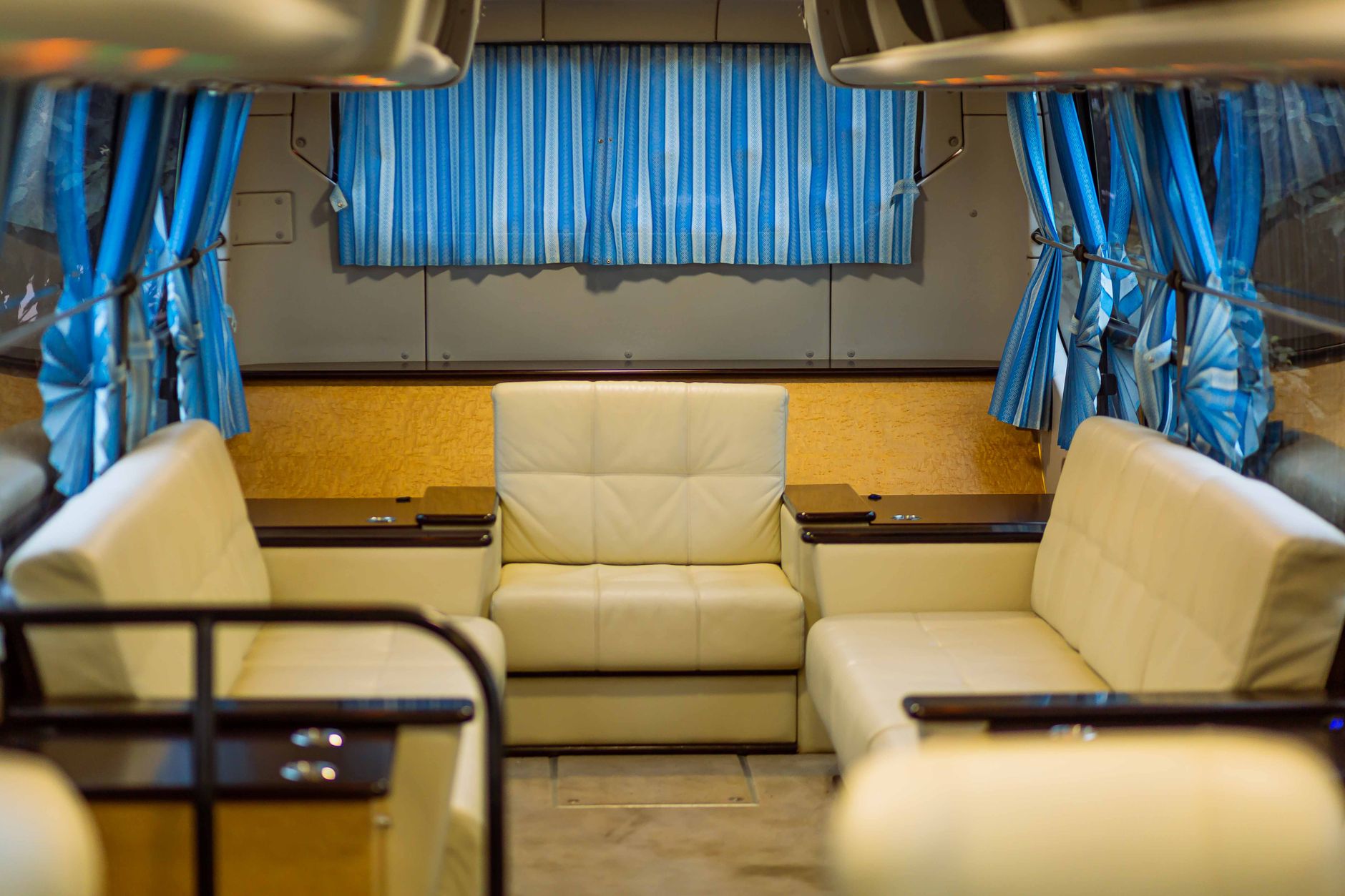
Vehicle selection for Midwest group travel starts with both passenger count and cargo volume, not seats alone. A full-size charter bus provides the best fit for long I-80, I-90, and I-94 legs because it offers luggage bays, highway comfort, and onboard facilities on many models. Smaller mini coaches and executive Sprinters work well for staff, scouts, officials, or smaller club rosters, especially where campus streets or downtown loading zones are tight. For large teams, bands, or mixed equipment loads, several vehicles may be more practical than one crowded coach, with dispatch assigning each bus a manifest and loading responsibility.
| Vehicle | Seats | Best For | Notes |
|---|---|---|---|
| Full-size charter bus | 40-56 passengers | Use for varsity teams, college programs, large club rosters, marching bands, and multi-state tournament legs. | Best highway comfort with underfloor bays for duffels, uniforms, coolers, and moderate equipment loads; confirm capacity for oversized cases. |
| Mid-size motor coach | 32-40 passengers | Use for medium rosters with staff and equipment when a full-size coach would be excessive. | Balances coach comfort and cargo space while fitting some campus and municipal lots more easily than a full-size bus. |
| Mini coach or mini bus | 20-35 passengers | Use for smaller clubs, staff transfers, officials, overflow passengers, or local tournament shuttles. | More maneuverable for school campuses, hotel shuttles, and secondary venue loops, but luggage storage is limited and may not suit bulky gear. |
| Executive Sprinter | 8-14 passengers | Use for coaches, recruiters, medical staff, scouts, or small college groups traveling between airports, hotels, and venues. | Fits tight streets and short transfers well, with comfortable seating for a small group but limited room for full team equipment. |
Routing, Timing, and On-the-Road Realities
Midwest routing often revolves around Chicago, where I-80, I-90, I-94, I-65, and nearby suburban arterials converge before the group continues toward a venue. The Borman Expressway between Illinois and Indiana can affect any run toward South Bend, Indianapolis, Ohio, or Michigan, so departure windows should avoid weekday peaks whenever the event allows. I-94 adds recurring congestion through Chicago, Milwaukee, Madison, and the Twin Cities, while lake-effect weather can affect northern Michigan, Wisconsin, Minnesota, and Ohio late in the season. For Columbus, Cleveland, Toledo, Ann Arbor, East Lansing, or Detroit, dispatch should allow additional time for construction, campus traffic, and event-day police controls. A team leaving from Iowa City, Des Moines, Minneapolis, St. Louis, or Kansas City may need an overnight hotel or a second driver when the itinerary combines a long approach with local shuttles.
Pickup timing should account for roster check-in, equipment loading, meal stops, credential collection, warmups, and bus parking rather than only the scheduled start time. Many college campuses and stadium districts place coach unloading away from the public entrance, and the driver may need to drop the group and reposition to a remote lot. Downtown Chicago, Milwaukee, Columbus, Indianapolis, and St. Louis can impose curb restrictions or event-specific bus zones, while suburban tournament complexes may have narrow access roads and separate overflow parking. For multiple vehicles, dispatch assigns a lead bus, a loading order, radio or phone contacts, and a reunification point in case the group is split between gates. Driver-hours planning must include deadhead travel, post-game waiting, hotel moves, and the next morning's pickup, with a second driver or overnight stop added when one operator cannot legally cover the full schedule.
What This Typically Costs
Midwest Sports Team Travel pricing usually starts with a daily charter bus or motor coach minimum, then adjusts for mileage, total service hours, deadhead miles, and the number of operating days. A local tournament shuttle may price differently from a multi-state run because the carrier still has to cover the vehicle's availability, driver work limits, and return positioning. Long I-80, I-90, and I-94 trips commonly add driver overnight lodging, meal allowances, and a second driver when the schedule requires more legal driving time than one operator can provide. Peak periods such as August through November football, fall marching-band travel, winter basketball, spring volleyball, and summer baseball or softball can tighten availability and increase rates. Common line items include fuel adjustments, tolls, parking, venue access fees, driver gratuity, and extra staging or waiting time. In most markets, a multi-day team run commonly reaches a few thousand dollars per day, while the final range depends on vehicle count, deadhead distance, hotel positioning, and itinerary density.
Frequently Asked Questions
A 40 to 56 passenger motor coach is the usual starting point for a varsity, college club, or showcase roster traveling with staff and equipment. The correct size depends on whether players carry full-size hockey bags, goalkeeper bags, ball carts, medical supplies, or instruments for a combined band and team movement. A 24 to 35 passenger mini coach can work for a smaller club roster or staff shuttle when luggage volume is limited. US Bus Trips can split the group into multiple vehicles when one coach would be overloaded or when separate arrival times are needed.
What size charter bus is usually best for a Midwest sports team?
Most full-size motor coaches have underfloor luggage bays suitable for duffels, uniform trunks, ball bags, coolers, and equipment cases, but capacity is not unlimited. Oversized items such as hockey bags, wrestling mats, drum cases, tubas, golf bags, or baseball equipment may require a second coach, trailer approval, or a separate equipment vehicle. High-school marching bands need a load plan that separates instruments, uniforms, props, and personal bags before departure. Send an inventory with approximate case counts so the carrier can confirm bay space instead of relying only on passenger capacity.
Can a charter bus handle sports gear, uniforms, and instruments?
Frequent routes include Chicago to Indianapolis and Columbus, Detroit to Chicago and Cleveland, Milwaukee to Madison and Minneapolis, and Iowa City or Des Moines to Chicago, Madison, or Minneapolis. The I-80 and I-90 corridor links Chicago with South Bend, Toledo, Cleveland, and other Ohio destinations, while I-94 serves Milwaukee, Madison, the Twin Cities, and Michigan through the Chicago and Indiana corridor. Common venue cities include Columbus, Ann Arbor, East Lansing, West Lafayette, Bloomington, Champaign, Madison, Minneapolis, Iowa City, St. Louis, Kansas City, and Indianapolis. Tournament routing may also use Grand Park in Westfield, Berliner Sports Park in Columbus, Uihlein Soccer Park in Milwaukee, or large school and municipal complexes outside downtowns.
Which Midwest routes are common for sports team travel?
Build departure time backward from parking, credential pickup, warmups, meals, and the required arrival window rather than from kickoff alone. Chicago, the Borman Expressway near Gary, I-94 through Milwaukee, and I-80 or I-90 near major interchanges can create substantial delays during weekday peaks and event weekends. For a morning game, teams often need a pre-dawn departure or an overnight hotel near the venue, especially when traveling from Michigan, Minnesota, Iowa, or Missouri. The operations team should also confirm whether the venue permits early bus staging, since many complexes have separate coach parking or timed unloading.
How early should a team leave for a Midwest tournament or game?
Large groups are usually divided by roster, instrument section, equipment load, or hotel assignment rather than filled randomly. A lead motor coach can carry coaches and captains, while additional charter buses carry athletes, reserves, band members, or support staff. Each vehicle needs its own manifest, driver contact, pickup sequence, emergency contact list, and equipment responsibility. For a stadium arrival, dispatch coordinates staggered unloading so buses do not block venue lanes, and one vehicle may remain on standby while others reposition to remote parking.
How are large teams or marching bands moved with multiple vehicles?
Yes, but the pickup and unloading plan may need to use a nearby hotel, transit lot, school frontage, or designated bus zone instead of the main entrance. Downtown facilities such as Chicago stadiums, Milwaukee venues, and university campuses can restrict curb access during games, concerts, or construction. Michigan Stadium in Ann Arbor, Ohio Stadium in Columbus, Kinnick Stadium in Iowa City, Camp Randall Stadium in Madison, and Huntington Bank Stadium in Minneapolis each require venue-specific bus instructions and event-day timing. Provide the exact gate, credential location, and equipment drop point so dispatch can verify turning space and parking before the trip.
Can a charter bus serve venues with tight streets or limited parking?
Provide the travel dates, pickup address, final destination, passenger count, team or band roster, luggage and equipment description, hotel locations, and every planned stop. Include game or tournament start times, warmup requirements, return timing, and whether the vehicle must stay with the group between sessions. For multi-state travel, identify any overnight cities and whether drivers need to move the coach after drop-off. With complete information, US Bus Trips can generally return a realistic quote within 4 business hours, subject to carrier availability and venue restrictions.
What information is needed for a fast Midwest group travel quote?
How to Book
To start a quote, send the dates, pickup address, passenger count, destination venues, hotel locations, and a complete itinerary with game, warmup, practice, and return times. Include equipment details such as hockey bags, instrument cases, trunks, ball carts, wheelchairs, coolers, and medical supplies, plus any need for the coach to remain on site. A complete request allows US Bus Trips to return a realistic quote within 4 business hours, subject to carrier and vehicle availability. The confirmation identifies the vehicle plan, pickup schedule, driver and dispatch contacts, included service hours, lodging or parking assumptions, and approved itinerary; reach us through the US Bus Trips booking team to coordinate changes.
Related Trips You Might Also Consider
- Santa Ana, CA to San Diego, CA
- Arches — 56-Passenger Motor Coach
- Academic Decathlon — Mountain West Region
- Grand Canyon — 24-Passenger Mini Bus
- Washington DC, DC to Philadelphia, PA
- Charlotte, NC to Raleigh, NC
- Cross-Country Charter Bus Overview
- All Group Tour Destinations
- See the Full Fleet (Sprinters through 56-pax coaches)
- Get a Free Quote in 60 Seconds