
A Glacier National Park group tour works best when the 56-Passenger Motor Coach handles the long-haul travel, luggage, and gateway-town staging.
Overview
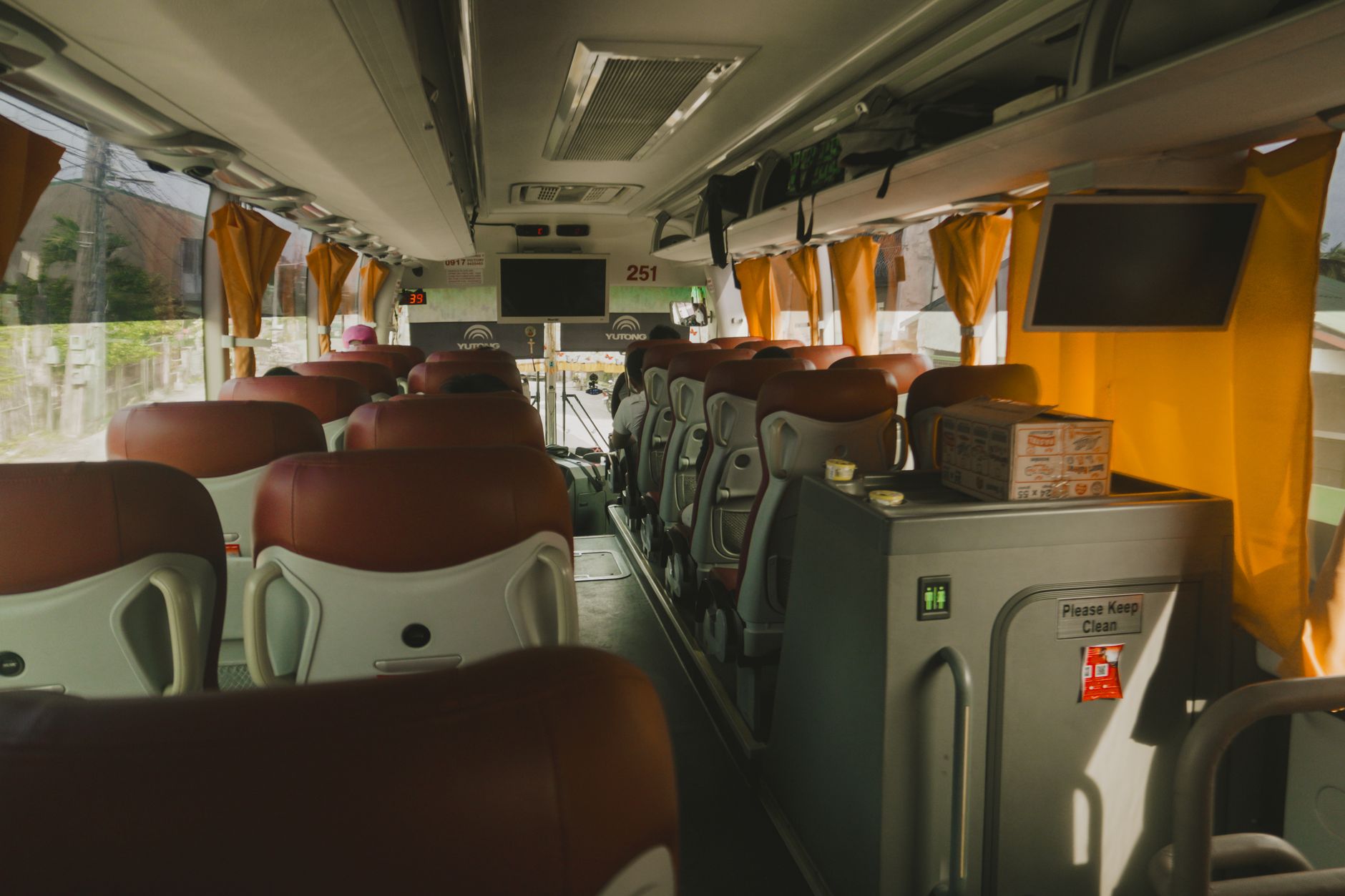
A 56-Passenger Motor Coach is a strong fit for groups traveling to Glacier National Park from Seattle, Spokane, Boise, Salt Lake City, Denver, Minneapolis, or western Canadian gateway routes. The coach keeps a reunion, school group, church tour, or alumni organization together through long highway stretches on I-90, U.S. 93, U.S. 2, and U.S. 89. Common gateway combinations include Kalispell and Whitefish on the west side, Columbia Falls near the northern approach, and St. Mary or Browning on the east side. The bus carries suitcases in underfloor bays while passengers use reclining seats, overhead storage, a restroom, and onboard USB or entertainment features. This is a multi-day operation, not a simple airport transfer, so the quote must account for the coach being assigned to the group between sightseeing days. Groups should also expect a separate plan for the central mountain road because a full-size motor coach is not suitable for the restricted section of Going-to-the-Sun Road.
The first operational decision is whether the itinerary is a west-side base, an east-side base, or a split-stay route. West-side programs often combine Lake McDonald, Apgar, Whitefish, and Kalispell services, while east-side programs may stage around St. Mary, Browning, Many Glacier, or the Blackfeet reservation corridor. A split itinerary can reduce backtracking but creates a luggage move, a second hotel loading operation, and another day where coach parking must be confirmed. Groups commonly add Glacier gateway activities such as the Going-to-the-Sun Road shuttle connection, a Red Bus or Sun Tours reservation, a boat activity, or a meal stop in Whitefish or Kalispell. Operators should not promise that a 56-Passenger Motor Coach will park at every trailhead or scenic overlook; many lots are designed for private vehicles and fill early. The practical plan is to use the motor coach for scheduled transfers, stage at approved locations, and reserve authorized sightseeing transportation where the road geometry or park rules require it.
Booking timing matters because late June through August combines the best access window with the heaviest demand for hotels, motor coaches, concessionaire tours, and restaurant capacity. Summer weekends also create congestion on U.S. 2 near West Glacier, U.S. 89 near St. Mary, and the approaches to popular visitor areas. A group tour that starts in a distant state needs realistic travel days rather than a promise of an evening arrival followed by a full park morning. Driver lodging should be near the operating base, with a bus-accessible property and a confirmed overnight parking arrangement. Hotels that accept groups may still lack turning room for a 56-Passenger Motor Coach, so dispatch should obtain the exact entrance, loading zone, and parking instructions. When road openings, wildfire smoke, construction, or weather changes the plan, the itinerary needs alternate stops outside the park rather than relying on one scenic road.
Fleet Options
Choose the vehicle around the confirmed headcount, luggage volume, road restrictions, and where the group must unload. A 56-Passenger Motor Coach is the workhorse for a full 56-passenger multi-day group tour, with reclining seats, overhead storage, a restroom, DVD or USB features, and luggage bays underneath. If the group has fewer travelers, a smaller coach can lower the operating footprint and make hotel approaches or restaurant lots easier. Glacier National Park adds a critical constraint because a full-size coach cannot be treated as the vehicle for every scenic road segment, especially the restricted portion of Going-to-the-Sun Road. Confirm bus parking and loading locations rather than assuming a standard automobile lot can accept a motor coach.
| Vehicle | Seats | Best For | Notes |
|---|---|---|---|
| 56-Passenger Motor Coach | 45-56 passengers | Use when the full group travels together across multiple states with substantial luggage and long highway legs. | Best long-haul comfort and underfloor luggage capacity, but it needs confirmed coach parking and cannot be planned for the restricted central Going-to-the-Sun Road segment. |
| 40- to 50-Passenger Motor Coach | 35-50 passengers | Use when headcount is below full capacity or when hotel, restaurant, and staging access is tighter. | Provides coach amenities with a slightly smaller footprint, though luggage capacity and seat count should be checked against the final manifest. |
| 24- to 35-Passenger Mini Coach | 20-35 passengers | Use for a smaller group, feeder movement, or a split operation between hotels and authorized park transportation. | Easier at smaller venue lots and gateway-town streets, but it has less underfloor cargo and may not include the same restroom or onboard amenities as a full motor coach. |
| Executive Sprinter or Mini Bus | 10-24 passengers | Use for airport transfers, overflow, private family segments, or local movements where a large motor coach cannot stage. | Handles short transfers and tight pickup points well, but luggage space, passenger comfort, and long-haul driver planning make it a poor substitute for a full group coach. |
Routing, Timing, and On-the-Road Realities
For a western approach, common corridors include I-90 to Missoula followed by U.S. 93 north through Kalispell and Whitefish, or U.S. 2 from Spokane through the Flathead region toward West Glacier. From the east, groups may use I-94 or I-90 connections toward Billings, then U.S. 89 north through Great Falls, Browning, and St. Mary, depending on origin. A 56-Passenger Motor Coach should normally arrive in the gateway area before the first major park day, allowing fuel, driver rest, passenger orientation, and a check of road conditions. Pickups in large cities should be early enough to clear commuter traffic, but not so early that the driver loses the required overnight rest before a long mountain transfer. Schedule meal, restroom, and fuel stops at locations that can physically accept a full coach rather than relying on small downtown lots. Confirm whether each hotel, restaurant, visitor center, and staging point permits bus loading, because park guidance prohibits parking at certain drop-off and pickup locations under commercial-use conditions.
Do not route the full motor coach over the restricted portion of Going-to-the-Sun Road between Avalanche Campground and the Rising Sun area. Glacier National Park lists a 21-foot length and 8-foot width limit for that section, including mirrors, and vehicles over 10 feet high may have difficulty near rock overhangs. The operating plan should instead use the 56-Passenger Motor Coach to reach an approved gateway or transfer point, then reserve the park shuttle, Red Bus Tours, or Sun Tours as appropriate for the central corridor. Commercial motor-vehicle tour permissions are specific: park information identifies authorized operators for the central route and limits where infrequent commercial tours may travel. Parking at Logan Pass, Apgar, St. Mary, Many Glacier, and other popular areas can be limited or managed by current seasonal rules, so do not promise an open bus space. Build a morning departure buffer, verify the current road and shuttle status, and keep a low-elevation backup such as Whitefish, Flathead Lake, a gateway-town program, or a flexible rest day.
What This Typically Costs
A Glacier National Park group tour in a 56-Passenger Motor Coach is usually quoted from a daily charter rate, mileage, and any deadhead required to position the coach before pickup and return it after drop-off. In most markets, a multi-day motor coach trip commonly runs a few thousand dollars per operating day, with the final range driven by season, origin, total miles, and coach availability rather than passenger count alone. Ask about daily minimums because a short local movement can still price as a full service day, while a long-haul run may be calculated with mileage bands or an hourly component. Budget separately for driver overnight lodging, meals or per diem, parking, tolls, park entrance charges, and fuel or energy adjustments where applicable. Peak demand commonly occurs from late June through August, especially around summer weekends, weddings, reunions, and national-park itineraries, so shoulder-season departures may have better coach availability. Driver gratuity is normally a separate line item, and a quote should identify whether taxes, cleaning, permits, hotel parking, and extra wait time are included.
Frequently Asked Questions
Can a 56-Passenger Motor Coach drive the entire Going-to-the-Sun Road? A standard 56-Passenger Motor Coach should not be planned for the restricted section between Avalanche Campground and Rising Sun. Glacier National Park prohibits vehicles longer than 21 feet or wider than 8 feet, including mirrors, in that section, and vehicles over 10 feet high can encounter difficulty near rock overhangs. Plan the large motor coach for transfer and staging, then use authorized Red Bus Tours, Sun Tours, or the park shuttle for the mountain crossing. Confirm current restrictions with park officials before finalizing the group tour.
Is a 56-Passenger Motor Coach allowed on Going-to-the-Sun Road?
A practical multi-day group tour from a distant state usually needs five to eight days, including travel to Montana and the return leg. Groups based in the Pacific Northwest, Alberta corridor, or western Montana may operate a three- to five-day schedule. A Midwest or Southwest departure generally needs additional travel days because driver hours, rest periods, and mountain-road timing limit how much sightseeing fits into one day. A common plan uses one travel day to reach the gateway area, two or three park days, and one or more return days. Add a weather and road-condition buffer when the itinerary has fixed lodging or flight connections.
How many days should a Glacier National Park group tour take?
Late June through early September is the main operating window for a Glacier National Park group tour, subject to snow removal, road opening, wildfire conditions, and temporary restrictions. July and August provide the strongest chance that major roads, visitor services, and trails are operating, but they also bring the highest demand, parking pressure, and lodging rates. Late June and early September can offer a better balance, although the full Going-to-the-Sun Road may not be open or may have limited services. May and October can work for lower-elevation sightseeing, scenic drives, and gateway activities, but they are less reliable for a full in-park program. Verify road status, shuttle operations, and lodging availability before selling a fixed itinerary.
What are the best months for this Glacier National Park group tour?
West-side staging commonly uses Kalispell, Whitefish, Columbia Falls, or hotels near West Glacier, depending on room inventory and the planned entrance. East-side staging commonly uses Browning, St. Mary, or other communities along U.S. 89, while Many Glacier lodging is more limited and should be reserved early. Kalispell and Whitefish provide broader hotel, restaurant, fuel, and coach-service support, but they add transfer time to park entrances. Splitting nights between west and east sides can reduce backtracking during a multi-day itinerary, though it requires a hotel move with passenger luggage. Confirm coach access, bus parking, breakfast timing, and a safe overnight location before contracting rooms.
Where should a 56-passenger group stay near Glacier?
A commercial operator using park roads or resources for compensation may need a Commercial Use Authorization, concession agreement, or another written authorization. Glacier National Park states that only authorized operators may conduct commercial visitor services, and it specifically limits commercial motor-vehicle tours on the central Going-to-the-Sun Road corridor. Non-scheduled, infrequent commercial tours may enter from the west to Lake McDonald Lodge or from the east to Rising Sun, but they are not permitted to use that route to cross between those points as a commercial tour. A packaged or guided activity may also require a Special Park Uses permit, insurance documentation, and applicable fees. The charter broker should confirm the exact service model with the park and any concessionaire before promising in-park transportation.
What permits does a commercial group tour need in Glacier National Park?
Commercial passenger carriers generally plan around federal hours-of-service limits, including limits on driving time and required off-duty periods, while state rules and the carrier's safety policy can add constraints. A driver cannot simply drive overnight from a distant origin, conduct a full park day, and return without a properly scheduled rest period. Multi-day plans often use a hotel near the operating area, a second qualified driver for long repositioning legs, or separate local transportation for the sightseeing portion. Mountain roads, construction, weather, fueling, passenger loading, and restroom stops all consume schedule time even when the map distance looks manageable. The dispatch plan should show pickup, driving, breaks, meal stops, hotel check-in, parking, and the driver's release time for every day.
How do driver hours affect a long-haul Glacier tour?
The 56-Passenger Motor Coach is the workhorse of long-haul group travel when the full group needs to ride together. It typically offers reclining seats, overhead storage, a restroom, DVD or USB features, and luggage bays underneath, making it well suited to a multi-day group tour with checked bags and day packs. It fits reunions, school and alumni groups, church tours, senior travel programs, convention extensions, and escorted national-park itineraries. The tradeoff is physical size: a full-size motor coach needs turning room, designated loading space, and a confirmed parking plan at hotels, restaurants, trailheads, and venues. For the restricted mountain segment, keep the coach as the base vehicle and use an authorized smaller or concession-operated option.
What does a 56-Passenger Motor Coach fit best?
How to Book
To book, have the travel dates, pickup address, passenger count, luggage estimate, hotel locations, and a day-by-day itinerary ready. Include whether the group wants west-side, east-side, or split lodging, plus any airport, restaurant, trailhead, or concessionaire transportation. US Bus Trips can commonly return an initial quote within 4 business hours when the routing and dates are complete, subject to carrier availability and park-season constraints. Confirmation should identify the motor coach type, operating dates, pickup and drop-off points, driver plan, included mileage or hours, exclusions, parking and permit responsibilities, and the contact method for dispatch changes.
Related Trips You Might Also Consider
- Church Retreat — Pacific Northwest Region
- Niagara Falls — 36-Passenger Mini Coach
- High School Band Tour — Mid-Atlantic Region
- Mesa, AZ to Phoenix, AZ
- Oakland, CA to San Jose, CA
- Chicago, IL to Indianapolis, IN
- Cross-Country Charter Bus Overview
- All Group Trip Types
- See the Full Fleet (Sprinters through 56-pax coaches)
- Get a Free Quote in 60 Seconds