
A Grand Teton group tour in a 24-Passenger Mini Bus suits small escorted tours, executive retreats, and first-class-only groups that want one vehicle and a controlled schedule.
Overview
A Grand Teton group tour is usually built around Jackson, the park's south and west approaches, and a controlled loop rather than a series of improvised roadside stops. The most common customers are family reunion organizers, alumni groups, outdoor clubs, executive retreats, wedding parties, and escorted tour operators moving between Jackson and Yellowstone. A 24-Passenger Mini Bus works when the roster stays at or below 24 and passengers travel with moderate luggage. The vehicle can stage in Jackson for day trips to Moose, Jenny Lake, Jackson Lake, and the Moran area, but hotel loading conditions must be checked in advance. Groups arriving from Salt Lake City commonly use I-80 and US 89, while Denver-originating runs may use I-25, I-80, and US 89 or route through northern Colorado and Wyoming depending on weather and driver scheduling. A multi-day plan should separate the interstate approach from the sightseeing days so a delayed arrival does not force a driver into an unsafe late-night park loop.
A realistic sample itinerary starts with Day 1 travel to Jackson, hotel check-in, and a short downtown orientation or National Elk Refuge drive if the group arrives before dark. Day 2 can use US 89 and the Moose entrance for Menors Ferry, the Craig Thomas Discovery and Visitor Center, Jenny Lake, and selected paved turnouts, with the driver controlling dwell time around parking capacity. Day 3 can run north through Moran Junction to Jackson Lake Dam, Oxbow Bend, Signal Mountain Lodge, and viewpoints along US 89 and US 191, subject to wildlife congestion and seasonal restrictions. Day 4 can allow a slower breakfast, a final park stop, or a Yellowstone extension toward Flagg Ranch if the group has enough days and the driver-hours plan supports it. Day 5 is useful for the return travel day or for a second full park day when the group wants hiking, rafting, ranch activities, or a scheduled event in Jackson. This structure keeps the group moving through actual corridors instead of promising every overlook in a single overloaded day.
Park rules affect both the itinerary and the vehicle selection. Commercial group tours with vehicles manufactured for more than 15 passengers generally pay the commercial group tour entrance fee, while park guidance limits commercial tour activity to approved roads, paved turnouts, visitor centers, concession facilities, and parking areas. A 24-Passenger Mini Bus must not stop on a roadway or shoulder, block traffic, or pull onto undisturbed vegetation, and the driver must use a legal loading area. Moose-Wilson Road has tighter dimensional limits than the general park road network, so the bus's actual width and length must be confirmed before routing that corridor. Full motor coach access can be practical on major highways but awkward at smaller lots, hotel drives, and scenic pullouts. The dispatcher should carry a current road-status check, a parking fallback, and a passenger meeting point for every high-demand stop.
Fleet Options
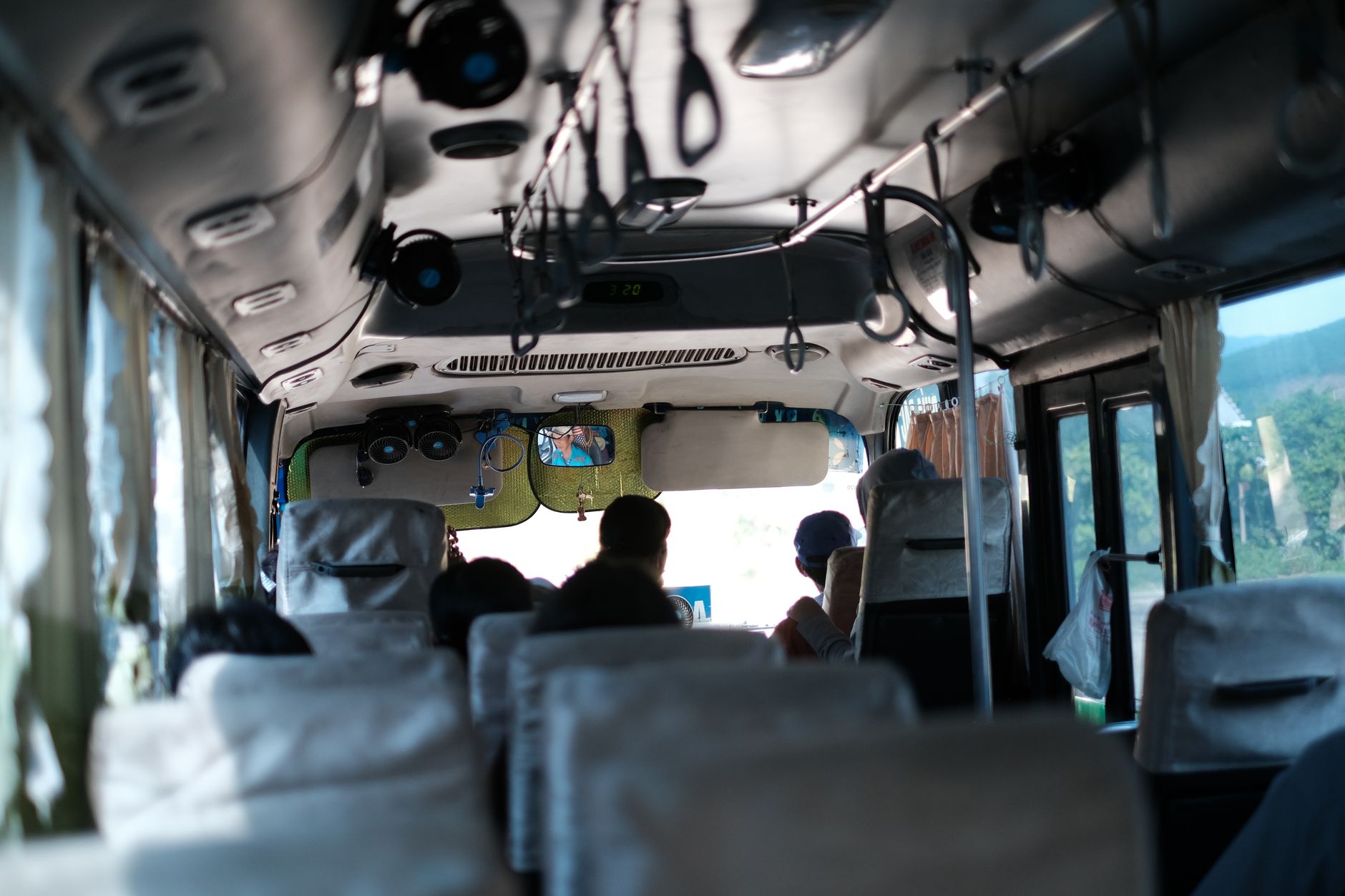
A 24-Passenger Mini Bus is the natural starting point for a 24-passenger Grand Teton group tour when the headcount is firm and luggage is moderate. It provides coach-style seats and may carry bags in a rear compartment or roof-mounted luggage area, but available cargo volume varies by model and seating layout. Confirm whether passengers bring large suitcases, coolers, mobility devices, or outdoor equipment before final vehicle assignment. The compact footprint helps with Jackson hotel approaches and some constrained park parking areas, while a full motor coach offers more underfloor luggage and aisle space. If the group may grow beyond the limit or wants extensive luggage, compare a larger motor coach before accepting deposits.
| Vehicle | Seats | Best For | Notes |
|---|---|---|---|
| 24-Passenger Mini Bus | Up to 24 passengers | Best for a fixed-size group tour, executive retreat, or first-class-only group traveling with moderate luggage. | Coach-style seating with rear or roof luggage capacity; compact dimensions suit small tours but baggage volume must be confirmed. |
| 28- to 35-Passenger Mini Coach | 28 to 35 passengers | Use when the roster may increase or the group needs more room for luggage and personal space. | Adds seating and usually more storage than a 24-passenger unit while remaining easier to place than a full-size motor coach. |
| 40- to 56-Passenger Motor Coach | 40 to 56 passengers | Fits larger groups, long interstate approaches, extensive luggage, or tours combining Grand Teton with Yellowstone. | Provides a high-capacity cabin and substantial luggage storage, but requires more room at hotel drives, turnarounds, and park lots. |
| Executive Sprinter Van | 8 to 14 passengers | Fits a small executive retreat or scouting vehicle, not a 24-passenger group tour. | Comfortable for a very small executive party, with limited luggage capacity and less room for a full 24-person roster. |
Routing, Timing, and On-the-Road Realities
Most Jackson-area park days begin on US 89 and US 191, with the route selected according to the hotel, entrance, and first scheduled stop. For a south-side itinerary, an early departure toward Moose helps the group reach Jenny Lake before the busiest parking period, although no departure time guarantees a space. For Moran, Jackson Lake, and northern touring, the bus normally uses the US 89 and US 191 corridor through the park rather than forcing a full coach onto constrained side roads. Moose-Wilson Road should be treated as a dimension-controlled option, not an automatic shortcut, because the park restricts vehicles above stated width and length limits. Hotel pickups in downtown Jackson need a marked loading point and enough curb time for 24 passengers to board without blocking local traffic. A 24-Passenger Mini Bus generally handles tight turns and smaller staging areas better than a full motor coach, but it still needs a legal turnaround and room for luggage handling.
The driver-hours plan should be built before the customer is promised a departure time. A bus arriving from Salt Lake City, Denver, Boise, or another distant gateway may require an overnight staging stop, a relief driver, or a dedicated deadhead day before the first park tour. Once in Jackson, the schedule must count passenger loading, visitor-center stops, wildlife delays, road construction, meal breaks, hotel returns, and any evening event shuttle. Do not combine an interstate travel day, a full Grand Teton loop, and a late restaurant or wedding transfer unless the carrier confirms a compliant duty and rest plan. Summer traffic concentrates around Jackson entrances, Jenny Lake, Signal Mountain, and popular pullouts, so a 30- to 60-minute operational buffer is more realistic than a tightly timed sightseeing script. Park road openings, construction controls, and seasonal closures can change the route, particularly on Moose-Wilson Road and secondary roads, so the final dispatch sheet should include a current-status check and alternate stops.
What This Typically Costs
A Grand Teton group tour in a 24-Passenger Mini Bus is usually quoted from a daily vehicle minimum, then adjusted for mileage, service days, and the bus location before pickup. A multi-day run commonly carries a daily minimum in most markets, with longer deadhead miles priced separately rather than hidden in the passenger fare. Summer weekends, holiday periods, Jackson events, and Yellowstone combination tours create seasonal peaks and tighter vehicle availability. The quote may also include driver overnight lodging, parking, tolls, fuel adjustments, and meals or per diem where applicable. Driver gratuity is normally a separate customer line item, and park commercial entrance fees or venue permits may be collected outside the transportation rate. Exact pricing depends on dates, pickup market, route length, hotel access, required standby time, and whether a motor coach must reposition empty between service days.
Frequently Asked Questions
What does a 24-Passenger Mini Bus fit best for in Grand Teton?
A 24-Passenger Mini Bus fits a compact tour profile: coach-style seats, a smaller turning radius than a full motor coach, and rear or roof luggage capacity depending on the vehicle. It works well for small tour groups, executive retreats, family reunions, and first-class-only groups that want everyone together without booking a 40- to 56-seat coach. The bus is not a substitute for a full luggage coach when every passenger brings large checked bags, ski equipment, or multiple cases. US Bus Trips should confirm passenger count, baggage dimensions, and whether luggage remains aboard during park stops before assigning the vehicle.
How many days should a Grand Teton group tour take?
For a practical multi-day group tour, plan at least three nights and four days from a regional gateway, with four to six nights more comfortable when the group is traveling from a distant state. Day 1 should be primarily travel, hotel check-in, and a short Jackson or National Elk Refuge stop if arrival timing allows. Days 2 and 3 can cover Jenny Lake, String Lake, Jackson Lake Dam, Signal Mountain, Oxbow Bend, and paved wildlife-viewing pullouts, subject to road conditions and parking capacity. A fifth day allows a slower schedule, a Jackson free morning, or a Yellowstone extension through the northbound US 89 and US 191 corridor. Winter access is a different product because several scenic roads and facilities close or operate with reduced hours.
What are the best months for a Grand Teton group tour?
June through September is the most reliable window for a full Grand Teton itinerary, with July and August offering the broadest road, facility, and activity access but also the heaviest demand. Late May and early June can work for lower-season pricing, but snow, construction, wildlife closures, and delayed secondary-road openings require flexibility. Mid-September through early October often provides cooler conditions and fewer visitors, although daylight shortens and some services reduce hours. From November through April, the main US 89, US 191, and US 26 corridors remain important winter routes, while Teton Park Road and Moose-Wilson Road have seasonal vehicle closures. Always verify current road status before dispatch because opening and closing dates can change with weather and construction.
Does a 24-Passenger Mini Bus need a permit to enter Grand Teton?
A commercial group tour using a vehicle manufactured for more than 15 passengers generally pays the park's commercial group tour entrance fee rather than using the smaller guided-vehicle CUA pathway. The park permits commercial group tour stops at visitor centers, concession facilities, paved turnouts, and parking areas, but tour narration and loading cannot block normal traffic. The driver must use designated paved areas or existing hardened pullouts and cannot stop on the roadway shoulder or undisturbed vegetation. Parking availability varies by lot, so the itinerary should identify oversized spaces before promising stops at Jenny Lake, Signal Mountain, or popular trailheads. A 24-Passenger Mini Bus may be below some full-coach dimensions, but the dispatcher should still confirm current park restrictions and lot conditions before the trip.
Can a 24-Passenger Mini Bus use Moose-Wilson Road?
Grand Teton's primary commercial corridors are US 89 and US 191 through Jackson, Moose, Moran, and north toward Yellowstone, plus US 26 and US 287 near the northern park boundary. Moose-Wilson Road requires special caution because vehicles over 100 inches wide or 280 inches long are prohibited there, while the park's commercial guidance allows larger buses elsewhere up to stated length limits. A compact 24-Passenger Mini Bus can be a better fit than a full motor coach for narrow or constrained access, but dimensions must be checked against the actual chassis and body configuration. Do not assume the vehicle can use every scenic road, trailhead entrance, or hotel driveway. The final dispatch sheet should list approved corridors, turnaround points, legal loading areas, and a fallback stop if a lot is full.
Where should a group stay for a Grand Teton tour?
A typical lodging plan stages the group in Jackson for the first and last nights, with Teton Village, Moran, or northern Jackson options considered when the itinerary emphasizes early park access. Jackson offers the broadest hotel, restaurant, meeting, and bus-loading choices, but downtown streets and hotel driveways can be tight during summer. Teton Village reduces some south-side park travel but may involve restricted access, resort loading rules, and higher seasonal demand. Lodging near Moran or Jackson Lake can shorten early starts for northern touring, although inventory and motor-coach-scale parking are more limited. Hotel contracts should confirm passenger unloading, overnight bus parking, driver rooms, luggage handling, and a weather backup for outdoor loading.
How are driver hours planned for a multi-day Grand Teton trip?
The driver-hours plan must account for the entire duty day, not only time the bus is moving with passengers. A long approach from Denver, Salt Lake City, Boise, or another distant market may require a relief driver, a pre-positioned vehicle, or a rest stop and overnight before the park portion begins. The itinerary should leave margin for wildlife traffic, construction delays, scenic pullouts, passenger loading, meal stops, and the return to the hotel. A driver cannot safely be scheduled to complete a full travel day, conduct a long park loop, and perform late-night event transfers without a compliant rest plan. US Bus Trips should build the run around the applicable federal hours-of-service requirements and the carrier's logging and dispatch policies.
How to Book
To quote a Grand Teton group tour, have the travel dates, pickup address, passenger count, luggage estimate, hotel names, park stops, meal plans, and any Yellowstone extension ready. Include whether the bus must deadhead from another market, remain on standby, or provide airport, wedding, conference, or Jackson event transfers. US Bus Trips targets a quote turnaround within 4 business hours when the itinerary and pickup details are complete. Confirmation should identify the vehicle class, service dates, pickup and drop-off points, driver lodging plan, included mileage or daily minimums, exclusions, cancellation terms, and known park access notes. Reach US Bus Trips through the booking team with the route summary and a dispatcher can turn it into an operational run plan.
Related Trips You Might Also Consider
- Poconos — 36-Passenger Mini Coach
- Sequoia — 14-Passenger Sprinter
- Columbus, OH to Cleveland, OH
- Agriculture FFA/4-H — Mountain West Region
- Washington DC, DC to Richmond, VA
- Sequoia — 56-Passenger Motor Coach
- Cross-Country Charter Bus Overview
- All Group Trip Types
- See the Full Fleet (Sprinters through 56-pax coaches)
- Get a Free Quote in 60 Seconds