
US Bus Trips books Mount Rushmore group tours for families, alumni groups, corporate teams, churches, and private travel parties that want one vehicle and one operating plan.
Overview
A Mount Rushmore group tour is usually built around a Black Hills loop rather than a single monument stop. Groups commonly fly or drive into Rapid City, then stage in Rapid City, Keystone, or Custer before visiting the memorial. A 14-Passenger Sprinter works particularly well for family reunions, alumni groups, corporate retreats, church groups, and private VIP parties that want a dedicated vehicle without filling a motor coach. The usual sightseeing package combines Mount Rushmore with Crazy Horse Memorial, Custer State Park, the Needles Highway, Sylvan Lake, Wind Cave National Park, or Deadwood. Sturgis Motorcycle Rally dates can change hotel availability and traffic patterns across the region. Large holiday weekends and summer evening programs also make early arrival and firm hotel holds more important.
Late May through September is the most workable season for a full Mount Rushmore itinerary because Black Hills attractions and scenic roads generally have their broadest operating schedules. June through August is the busiest period, especially around Mount Rushmore, Custer State Park, Keystone, and the Needles Highway. September often gives a better balance of usable weather and lower crowd pressure, but dispatch should still verify road conditions and attraction hours. Mount Rushmore operates year-round except December 25, with seasonal changes to grounds and facility hours. Winter trips can be successful for a focused memorial visit, but snow, reduced services, and seasonal closures make a compact itinerary more realistic. A multi-day group tour should be priced around the actual season rather than assuming every scenic stop operates the same way all year.
The memorial is free to enter, but commercial vehicle parking is separately assessed at the concession-operated parking facility. The National Park Service directs buses and large vehicles to a dedicated entrance lane and identifies commercial bus parking near visitor services. A 14-Passenger Sprinter may have an easier physical fit than a full motor coach, but the driver must still use the signed commercial approach and comply with South Dakota size and weight rules. Overnight parking is not allowed inside Mount Rushmore National Memorial. Special activities, filming, ceremonies, and other organized uses may require a permit even when an ordinary sightseeing stop does not. The operations team should confirm current park instructions, parking treatment, and event restrictions before dispatching the group.
Fleet Options
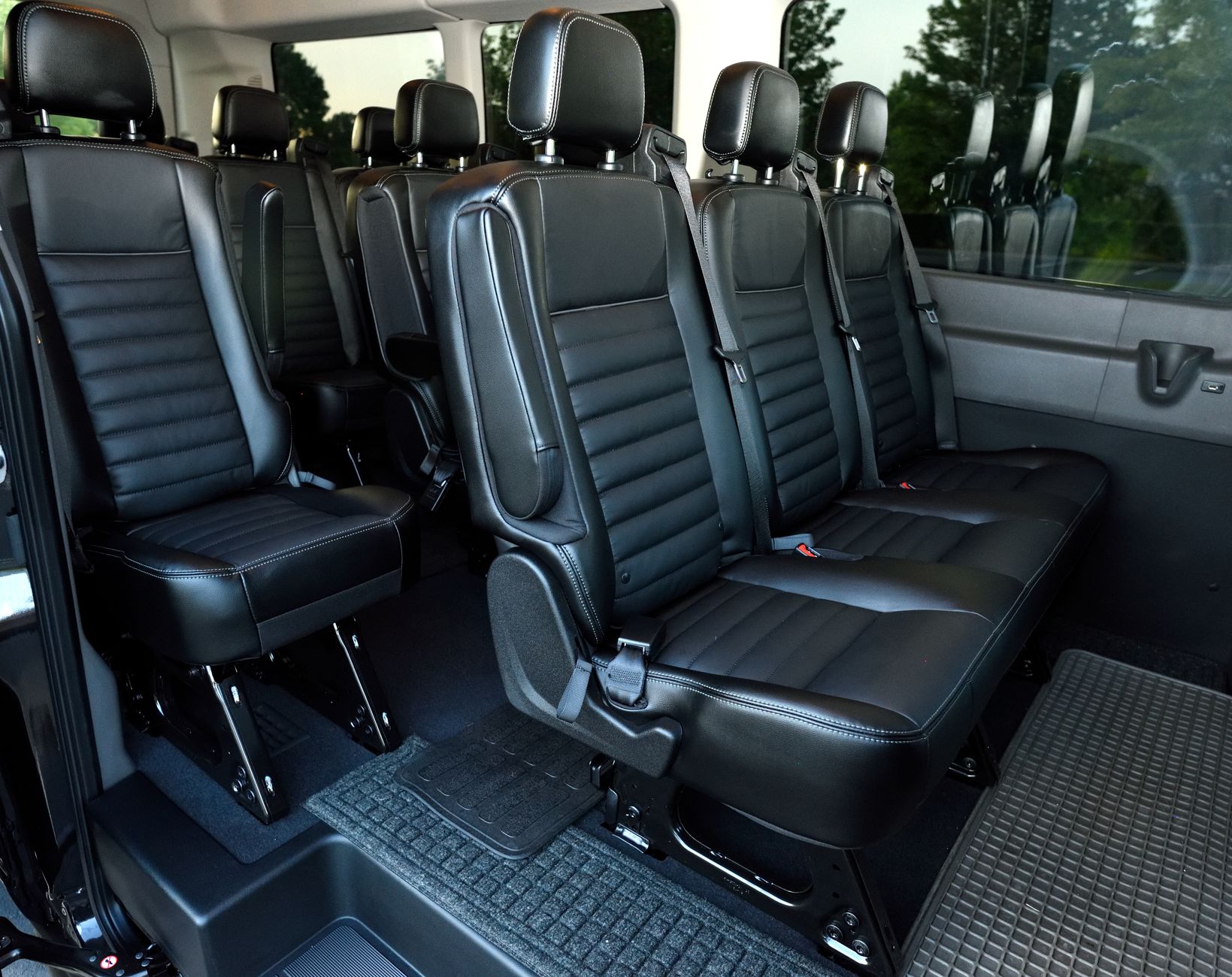
A 14-Passenger Sprinter is best for a small group that values direct routing, captain's-chair comfort, and easier loading than a motor coach. Executive Mercedes Sprinter and Ford Transit options commonly provide leather captain's chairs, WiFi, USB power, climate control, and limited cargo space. Fourteen passengers with light day luggage fit the vehicle's intended use, while a full suitcase load may call for fewer passengers, a trailer review, or a larger vehicle. The smaller footprint helps with hotel approaches and ordinary parking lots, but it does not make every Black Hills scenic road or event lot suitable for oversized equipment.
| Vehicle | Seats | Best For | Notes |
|---|---|---|---|
| Executive Mercedes Sprinter | Up to 14 passengers | Use it when the group wants a polished cabin and has moderate luggage for a multi-day itinerary. | Best comfort profile for VIP transfers and a compact group tour, with leather captain's chairs, USB power, WiFi, and small rear cargo capacity. |
| Ford Transit passenger van | Up to 14 passengers | Use it for value-focused group tours, airport transfers, and Black Hills sightseeing with controlled baggage. | A practical 14-passenger configuration with comfortable seating and useful maneuverability, but verify the specific interior and cargo layout before assigning full-size luggage. |
| Executive mini bus | 18-28 passengers | Use it when headcount, luggage, or comfort needs exceed a 14-Passenger Sprinter but the group still wants a smaller vehicle. | Adds more interior room and luggage tolerance than a Sprinter while remaining easier to place than a full motor coach at hotels and attractions. |
| Full-size motor coach | 40-56 passengers | Use it for a larger group tour or a multi-day run with substantial luggage and long intercity corridors. | Provides the strongest luggage capacity and onboard amenities, but requires larger turning radii, careful venue access checks, and confirmed bus parking. |
Routing, Timing, and On-the-Road Realities
Most long-haul itineraries enter the Black Hills through Rapid City on Interstate 90, then use US Highway 16, US Highway 16A, and South Dakota Highway 244 for the Mount Rushmore area. A pickup from Denver, Minneapolis, Omaha, or a remote rural origin can consume most of Day 1, so schedule a meal and fuel stop instead of promising same-day sightseeing after arrival. Rapid City is the logical reset point for airport pickups, driver relief, and supply runs, while Keystone shortens the early-morning approach to Mount Rushmore. For summer visits, target the memorial early in the day because the parking facility and surrounding roads become more congested as tour traffic builds. Keep the Sprinter's route specific: the vehicle should remain on open public roads and should not enter service roads, restricted pullouts, or areas signed for official use. If the schedule includes Crazy Horse, Custer State Park, or the Needles Highway, allow extra time for photo stops, wildlife traffic, and low-speed curves rather than using interstate travel assumptions.
The standard sightseeing day can start with Mount Rushmore, continue through Keystone or Iron Mountain Road, and then use Custer State Park or Crazy Horse Memorial as the afternoon block. Needles Highway has tight curves, tunnels, and seasonal or vehicle-fit considerations, so operations should confirm dimensions and conditions before assigning it to any Sprinter or motor coach. Build at least one protected meal window and avoid stacking a late memorial lighting event against a long return leg. Commercial bus parking at Mount Rushmore is not an overnight solution, and diesel idling in the commercial bus area is restricted except for active loading or unloading. Driver-hours compliance must account for the outbound pickup, deadhead, sightseeing, hotel moves, fueling, and return positioning across the entire duty period. If the itinerary would leave the driver with insufficient legal or practical rest, split the run, add a second driver, or stage the vehicle overnight in the Black Hills.
What This Typically Costs
A 14-Passenger Sprinter is usually quoted as a vehicle-and-driver charter, with a daily minimum plus mileage, deadhead, and any overnight requirements. A multi-day group tour commonly runs a few thousand dollars per day in most markets, while the full trip total depends heavily on the origin, route length, and whether the vehicle must travel empty to the pickup city. Distance is generally priced by loaded miles, minimum mileage, or a blended day rate, and long repositioning legs can add deadhead miles. Peak summer, holiday weekends, Sturgis Motorcycle Rally dates, and large Black Hills events can tighten availability and raise rates. Budget separately for driver lodging, meals or per diem, parking, tolls, fuel adjustments, and driver gratuity. Mount Rushmore charges no entrance fee, but commercial tour bus parking is a separate concession fee and bus parking tickets are valid for 24 hours; confirm the current amount when booking.
Frequently Asked Questions
Can 14 passengers and their luggage fit in one Sprinter?
Yes, but the fit depends on the exact itinerary and luggage. A 14-Passenger Sprinter works well for 14 passengers with day bags, but a full multi-day load of suitcases can reduce usable seating or require a support vehicle. Executive Mercedes Sprinter and Ford Transit configurations usually have leather captain's chairs, USB power, WiFi, and small cargo capacity rather than motor coach underfloor storage. For a group tour with checked-size luggage, provide bag count before quoting so operations can assess the vehicle layout.
What are the best months for a Mount Rushmore group tour?
The most reliable scenic window is generally late May through September, when Black Hills roads, visitor services, and major attractions are operating on their broadest schedules. June through August brings the heaviest traffic around Mount Rushmore, Custer State Park, Crazy Horse Memorial, and the Needles Highway. September often offers lighter crowds and workable weather, but confirm seasonal road conditions before routing. Mount Rushmore remains open year-round except December 25, while winter can limit scenic byways, lodging inventory, and roadside services.
How many days should a group plan for Mount Rushmore?
A practical group tour is usually four to six days from a regional origin and longer from the Midwest, Mountain West, or East Coast. Day 1 is normally a travel day with a controlled pickup, meal stop, and overnight staging in Rapid City, Keystone, or Custer. Day 2 can combine Mount Rushmore with the Avenue of Flags, memorial viewing areas, and the evening lighting program when scheduled. Additional days can cover Custer State Park, Needles Highway, Sylvan Lake, Crazy Horse Memorial, Wind Cave National Park, Deadwood, or Devils Tower. A motor coach may cover the same attractions, but a 14-Passenger Sprinter can handle a smaller group's flexible stop pattern more efficiently.
Does a 14-Passenger Sprinter need a Mount Rushmore bus permit?
Mount Rushmore does not charge a separate entrance fee, but vehicles use a concession-operated parking facility. The National Park Service identifies a commercial bus lane and commercial bus parking area, and the commercial tour bus fee is currently listed as a 24-hour parking charge. Reservations are not generally required for ordinary visits, but a scheduled special event, filming, ceremony, or organized activity may require a permit. The memorial allows only designated public roads and parking areas, and South Dakota vehicle size, weight, and load limits apply. Confirm current instructions with the park and the operator before dispatch, especially for unusual equipment or oversized vehicles.
Are there special routing rules for Sprinters near Mount Rushmore?
A Sprinter is not the same operating profile as a full-size motor coach, so the dispatcher should identify the vehicle's actual length, height, and commercial classification. Mount Rushmore directs buses and large vehicles to the bus lane, and parking for extra-long vehicles or trailers is limited. The driver should follow US Highway 16A and South Dakota Highway 244 as permitted rather than improvising on closed service roads or pullouts. Do not plan overnight parking inside the memorial, and avoid extended diesel idling in the commercial bus area. For Custer State Park and the Needles Highway, verify vehicle dimensions and seasonal restrictions before promising the route.
Where should a group stay for a Mount Rushmore itinerary?
Rapid City is the most practical regional base for airport arrivals, larger hotel inventory, fuel, and evening dining. Keystone is convenient for an early Mount Rushmore visit but has a smaller lodging supply and tighter peak-season availability. Custer works well when the itinerary emphasizes Custer State Park, Needles Highway, Wind Cave, or southern Black Hills stops. Deadwood is a useful northern staging point for Spearfish Canyon, Sturgis, or Devils Tower but adds repositioning to Mount Rushmore. For a multi-day group tour, many planners use Rapid City for the first or final night and split the middle nights between Keystone or Custer based on the sightseeing loop.
How are driver hours handled on a multi-day Sprinter trip?
Driver-hours planning starts before the vehicle reaches South Dakota because the driver's legal duty day includes the pickup and all charter movements. A long arrival leg followed by a full sightseeing day can exceed available driving time even when the map distance looks manageable. Build a real break schedule, protect the required off-duty period, and use a second driver or staged overnight when the origin creates an extended run. The driver also needs time for fueling, pre-trip inspection, passenger loading, hotel access, and parking the vehicle. A 14-Passenger Sprinter gives itinerary flexibility, but it does not remove federal or company hours-of-service limits.
How to Book
To quote a Mount Rushmore group tour, provide travel dates, pickup address, passenger count, luggage estimate, hotel plan, and every requested stop from the first pickup through the return. Include whether the group wants Rapid City, Keystone, Custer, Crazy Horse Memorial, Custer State Park, Deadwood, Devils Tower, or other Black Hills venues. US Bus Trips can typically return a preliminary quote within 4 business hours when the routing details are complete. The confirmation should identify the vehicle class, passenger capacity, pickup schedule, itinerary assumptions, driver lodging responsibility, parking and toll treatment, cancellation terms, and the dispatcher contact method.
Related Trips You Might Also Consider
- Choir Competition — Southeast Region
- Aurora, CO to Colorado Springs, CO
- Family Reunion — Mountain West Region
- Alumni Tour — Northeast Region
- San Francisco, CA to Sacramento, CA
- High School Band Tour — Mountain West Region
- Cross-Country Charter Bus Overview
- All Group Trip Types
- See the Full Fleet (Sprinters through 56-pax coaches)
- Get a Free Quote in 60 Seconds