
A Nashville Music group tour in a 14-Passenger Sprinter fits small corporate groups, family celebrations, artist teams, and VIP travelers who want direct hotel-to-venue service.
Overview
A Nashville Music group tour normally works best when the itinerary is built around confirmed showtimes rather than a list of attractions. A 14-Passenger Sprinter can move a small group between Music Row, the Country Music Hall of Fame, the National Museum of African American Music, the Ryman Auditorium, and the Grand Ole Opry without the circulation demands of a full motor coach. The typical customer is a corporate incentive group, family celebration, wedding-related party, church or alumni group, or music-focused travelers coming from several states. A multi-day booking should identify whether the driver remains with the group all day or performs scheduled transfers only. That decision changes the daily minimum, parking exposure, driver hours, and hotel requirements. Build realistic dwell time for bag loading, security, ticket pickup, and downtown congestion instead of treating each venue as a simple point-to-point stop.
The best Nashville Music months depend on the event calendar and the group's tolerance for heat and crowds. April, May, late September, and October generally provide more workable conditions for walking between attractions, although spring storms remain a planning concern. June brings CMA Fest and other major music demand, while September can include AmericanaFest and a full football and concert calendar; hotel rooms and curb space become harder to secure during those periods. July and August are hot and humid, so early outdoor stops and indoor midday programming are easier on passengers and the driver. November and winter may offer better availability, but holiday concerts, award-week activity, and occasional cold weather still affect pricing and operations. A 14-Passenger Sprinter is especially useful when the group wants several short transfers instead of one large scheduled movement.
For an out-of-state departure, a realistic group tour often needs three to five days, with the first day reserved primarily for travel. The first Nashville evening might include hotel check-in and a nearby dinner or show only if the driver arrives with adequate legal duty time and the group is not relying on a narrow arrival window. The core days can pair Music Row and studio history with the Country Music Hall of Fame, National Museum of African American Music, Ryman Auditorium, and Grand Ole Opry. Franklin, Belle Meade, or Opryland can be added, but each extra zone creates more repositioning and potential traffic delay. Downtown hotels may reduce transfer mileage but often have constrained loading and expensive parking, while Midtown, West End, airport, and Opryland properties can be easier for vehicle staging. US Bus Trips plans the route around actual entrances, loading instructions, event closures, and the driver's overnight location rather than assuming every Nashville venue handles buses the same way.
Fleet Options
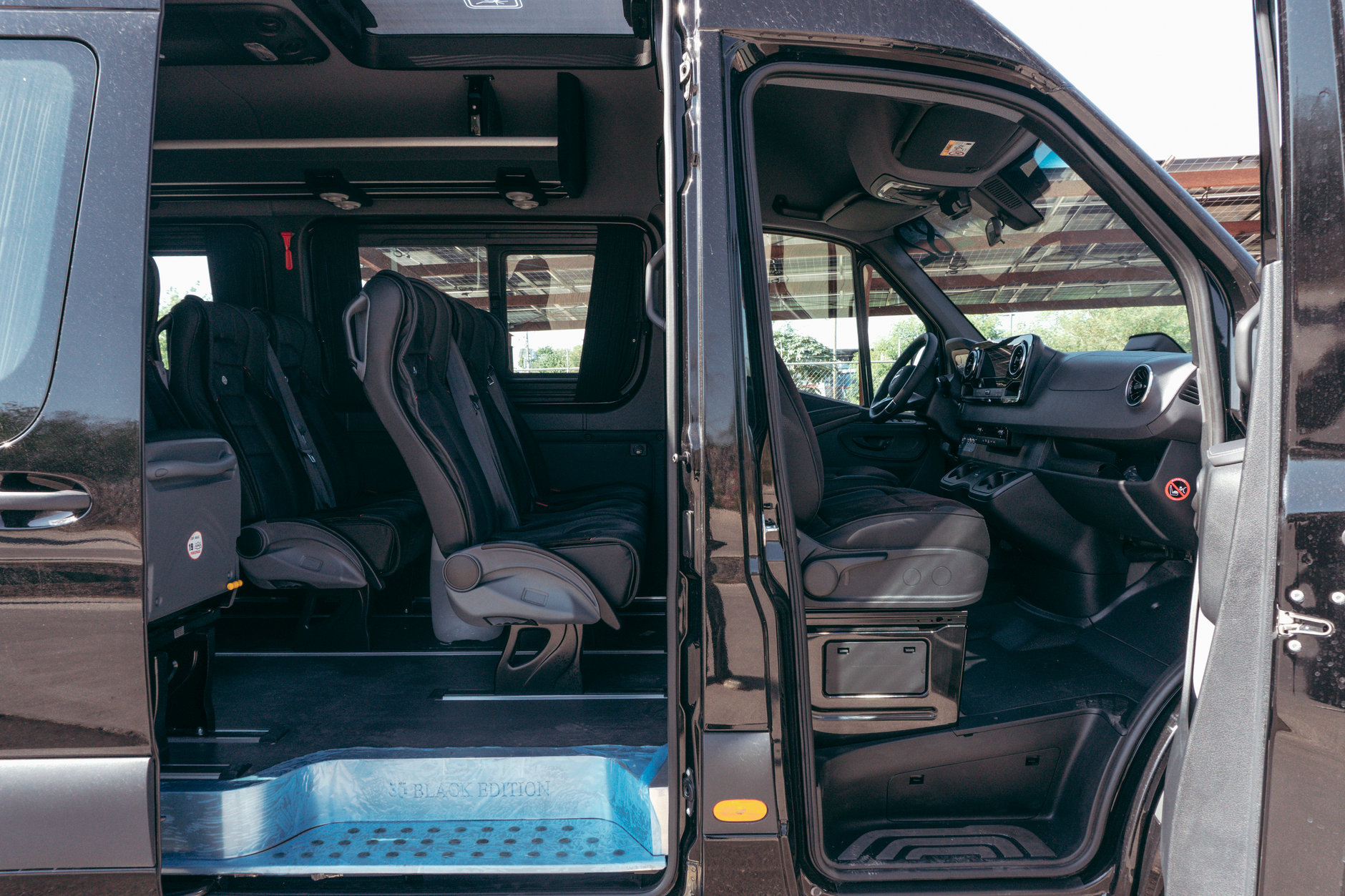
For a 14-person Nashville Music group tour, start with passenger count, luggage volume, and the number of daily stops rather than choosing by seat count alone. An Executive Mercedes Sprinter or Ford Transit typically offers leather captain's chairs, WiFi, USB power, climate control, and a small cargo area suited to VIP transfers and compact tour groups. It is easier to place near hotels, studios, restaurants, and venue loading points than a full motor coach, but it is not a substitute for coach-level luggage capacity. Tight downtown streets and limited curb space favor a smaller vehicle, while large suitcases, instruments, or production cases may justify a larger unit or a separate luggage solution.
| Vehicle | Seats | Best For | Notes |
|---|---|---|---|
| Executive Mercedes Sprinter | Up to 14 passengers | Best for a VIP Nashville Music group tour with compact luggage, frequent venue transfers, and passengers who value individual seating. | Leather captain's chairs, WiFi, USB power, and a premium cabin with limited luggage capacity; generally easier to stage downtown than a motor coach. |
| Executive Ford Transit | Up to 14 passengers | Fits small corporate, family, and music groups that need flexible local transportation rather than a high-capacity luggage coach. | Comfortable leather-style executive seating, WiFi or charging equipment when specified, and a small rear cargo area; useful where tight hotel and venue approaches matter. |
| Mini coach | Approximately 18 to 32 passengers | Use when the headcount may grow, luggage is substantial, or the group wants extra space without moving to a full motor coach. | More room for luggage and aisle movement than a Sprinter, but greater height, turning radius, and parking constraints at downtown hotels and venues. |
| Motor coach | Approximately 40 to 56 passengers | Choose for larger groups, extensive luggage, or a multi-day route where passenger comfort and baggage space outweigh tight-street flexibility. | Best cargo capacity and onboard comfort for long interstate legs, but requires confirmed bus routing, loading zones, and parking plans around Broadway and central venues. |
Routing, Timing, and On-the-Road Realities
Common approach corridors include I-24 from the southeast, I-40 from the east or west, I-65 from Louisville or Birmingham, and I-24 or I-65 connections from the north. Morning commuter traffic affects I-40, I-65, Briley Parkway, West End Avenue, and downtown approaches, while concert and football traffic can disrupt the same corridors later in the day. For a group tour arriving from out of state, pickup before the origin market's peak period is often preferable to trying to recover lost time near Nashville. Schedule fuel, meals, restroom breaks, and one contingency window before the first ticketed activity. A 14-Passenger Sprinter can use routes unavailable or inconvenient to a full motor coach, but the driver still needs a verified hotel entrance and venue approach. Lower Broadway, Broadway, Demonbreun Street, Music Circle, and arena-adjacent streets may have barricades, rideshare congestion, or no-wait loading during event periods.
Venue parking should be confirmed in writing before the itinerary is sold to the group. The Ryman Auditorium, Bridgestone Arena, Country Music Hall of Fame, Grand Ole Opry, and downtown hotels can each have different loading zones, time limits, garage clearances, and event-day instructions. A Sprinter may be able to use a short loading position where a motor coach cannot, but that does not guarantee permission to park or wait. When a venue cannot hold the vehicle, dispatch can use an agreed remote staging point and bring the Sprinter back on a call from the group leader. Driver-hours planning must cover interstate travel, local repositioning, venue waiting, post-show departures, inspections, and the required off-duty period. If the schedule combines a long arrival leg with a late concert and an early departure, a second driver, an extra overnight, or a simpler itinerary may be necessary. The final routing should also account for weather, festival closures, construction, and hotel access restrictions.
What This Typically Costs
A Nashville Music booking is usually priced from a daily vehicle minimum, mileage, and any deadhead between the carrier yard, pickup, Nashville, and the return point. A multi-day 14-Passenger Sprinter commonly carries a daily minimum even when the group is only moving a few hours, while longer interstate runs add mileage and driver time. June festival weeks, CMA Awards season, football weekends, major conventions, and holiday events can tighten equipment and lodging supply, so peak pricing is typical. Quote line items may include fuel adjustments, tolls, parking, driver lodging, taxes, and driver gratuity; gratuity is commonly handled separately unless written into the proposal. A driver overnight may require a room for each operating driver, and a second driver can become necessary when the schedule exceeds legal service limits. Deadhead miles matter because a 14-Passenger Sprinter may have to travel from another market before pickup and return after drop-off. US Bus Trips should receive the complete route and hotel plan before quoting because a low passenger count does not automatically make a multi-day trip inexpensive.
Frequently Asked Questions
What does a 14-Passenger Sprinter fit best in Nashville?
A 14-Passenger Sprinter is a strong fit for 10 to 14 travelers who want executive seating, WiFi, USB charging, and direct transfers between hotels, studios, restaurants, and venues. It works especially well for a Nashville Music group tour with compact luggage and a controlled itinerary. Small cargo space becomes the limiting factor when every passenger brings a large suitcase, instrument case, or production gear. For heavier luggage, a trailer, second vehicle, or larger motor coach may be needed.
How many days should a multi-day Nashville music trip take?
Plan on three to five days for a useful Nashville Music group tour from an out-of-state origin, depending on drive time and the number of sightseeing days. Day 1 is commonly the travel day, with a controlled arrival, hotel check-in, and one nearby stop rather than a packed downtown schedule. Days 2 through 4 can cover Music Row, the Country Music Hall of Fame, the National Museum of African American Music, the Ryman Auditorium, and a Grand Ole Opry performance. A fifth day helps when the origin is several states away or when the group wants Franklin, a studio visit, or a slower departure.
What are the best months for a Nashville group tour?
April, May, late September, and October generally offer the best balance of walking weather and manageable operating conditions. June is attractive for festival programming but includes CMA Fest and other major event demand, which can raise hotel, parking, and vehicle costs. July and August bring heat, humidity, and afternoon storm risk, so outdoor stops need earlier start times and indoor backups. November through February can be less crowded, but confirm concert calendars, holiday shows, and cold-weather contingencies before locking the route.
Do venues require permits or special parking for a Sprinter?
A 14-Passenger Sprinter still requires a workable commercial loading plan even though it is smaller than a motor coach. Downtown Nashville streets, hotel porte-cocheres, Broadway, Lower Broadway, and venue approaches may have restricted curb space, event barricades, or time-limited loading. The driver may need to stage away from the entrance and return on a dispatch call rather than wait curbside. Venues such as the Ryman Auditorium, Grand Ole Opry, Bridgestone Arena, and Country Music Hall of Fame should confirm group drop-off, parking, and ticket-holder procedures directly for the date. Permits, event credentials, or parking fees can apply, and oversize routing should be checked if the vehicle is a longer high-roof model.
How do driver hours affect a Nashville multi-day itinerary?
Federal hours-of-service rules still control a qualifying commercial operation, regardless of the vehicle's passenger capacity. A driver cannot simply work through a full travel day, evening show, and overnight return because the group wants one continuous service window. Dispatch normally builds driving time, meal stops, inspection time, traffic, and a usable off-duty break into the schedule. A second driver or split operation may be needed for long interstate legs, late concerts, or an early next-morning departure. The final plan must be reviewed against the carrier's operating status, duty records, and applicable exemptions before confirmation.
What is a realistic sample itinerary?
A practical arrival day might include pickup before the main morning traffic window, scheduled fuel and meal stops, hotel check-in, and one nearby activity such as the Country Music Hall of Fame or a prebooked dinner. Day 2 can combine Music Row, RCA Studio B if available, the National Museum of African American Music, and an evening show at the Ryman. Day 3 may use a later start for the Grand Ole Opry, Opry Mills, or a studio and songwriter-focused program. Day 4 can cover Franklin or Belle Meade before the group begins its return, provided the driver has legal rest and the route supports the timing.
Where should a Nashville group stay with a Sprinter?
Hotel staging is usually easier in Midtown, West End, Music Circle, near the airport, or around Opryland than directly on Lower Broadway. Downtown hotels can save local transfer time but may have tight loading zones, valet procedures, event congestion, and higher parking charges. Airport and Opryland hotels often provide more bus-friendly circulation, but they add transfer mileage to downtown venues. Ask the hotel where the Sprinter may load, whether overnight parking is available, and whether the driver receives a room. Keep the first and last daily stops near the hotel when possible to avoid burning driver hours on unnecessary cross-town repositioning.
How to Book
To quote a Nashville Music group tour, provide travel dates, pickup address, passenger count, luggage estimate, hotel, venue schedule, and whether the vehicle must remain on standby. Include all states and overnight stops on a multi-day route so deadhead, driver lodging, and legal rest can be planned correctly. US Bus Trips typically returns a realistic quote within 4 business hours when the itinerary is complete. The confirmation should identify the vehicle class, operating dates, pickup instructions, mileage or service assumptions, included line items, exclusions, cancellation terms, and dispatch contact; reach us with the itinerary before tickets and hotel commitments are finalized.
Related Trips You Might Also Consider
- Washington DC, DC to Philadelphia, PA
- San Antonio Riverwalk — 14-Passenger Sprinter
- Government Agency Shuttle — Mid-Atlantic Region
- Charleston — 36-Passenger Mini Coach
- Hershey — 56-Passenger Motor Coach
- Acadia — 14-Passenger Sprinter
- Cross-Country Charter Bus Overview
- All Group Trip Types
- See the Full Fleet (Sprinters through 56-pax coaches)
- Get a Free Quote in 60 Seconds