
This San Antonio Riverwalk group tour is built for families, corporate hosts, wedding parties, and small organizations traveling together.
Overview
A San Antonio Riverwalk group tour usually works best as a two- or three-day assignment for travelers starting in Texas, with additional days when San Antonio is one stop on a broader multi-day route. Typical customers include family reunions, church groups, corporate guests, wedding parties, alumni groups, and private VIP travelers who want one vehicle from airport or home pickup through the return. Day 1 is often travel, hotel check-in, and an evening meal, while later days combine downtown attractions with missions, the Pearl, museums, or Hill Country stops. The Alamo, La Villita, Hemisfair, the Henry B. Gonzalez Convention Center, and the Majestic Theatre are close geographically but do not function as one unrestricted bus stop. Dispatch needs the sequence, arrival windows, and walking tolerance before selecting curb locations and staging points.
Spring and fall are generally the easiest seasons for a walking-heavy San Antonio Riverwalk itinerary, while summer requires early outdoor starts, hydration planning, and protection from heat and thunderstorms. March and April can be constrained by spring break, Fiesta San Antonio, school travel, and event traffic, and downtown hotel inventory can tighten around conventions. The Alamodome and Henry B. Gonzalez Convention Center create event patterns that affect hotel rates, loading congestion, and vehicle availability even when the group is not attending the event. A group tour that includes a River Walk cruise should reserve the attraction window separately and allow time to walk from street-level unloading. A 14-Passenger Sprinter is efficient for a small group, but it still needs a legal curb plan instead of relying on ordinary car parking.
The downtown bus rules matter even for a smaller vehicle when the assignment is operated as commercial passenger transportation. San Antonio's designated bus information identifies loading and unloading areas, and motor coaches may not stand or park outside approved locations. The River Walk's visitor guidance identifies Travis Park parking meters and the Alamodome as options for out-of-town bus parking, subject to advance arrangements and availability. The Sprinter cannot descend to the pedestrian River Walk level, so passengers unload at street level and walk to the planned access point. Hotels, restaurants, and attractions should confirm their own loading instructions, especially during street closures, construction, parades, Fiesta events, and convention arrivals.
Fleet Options
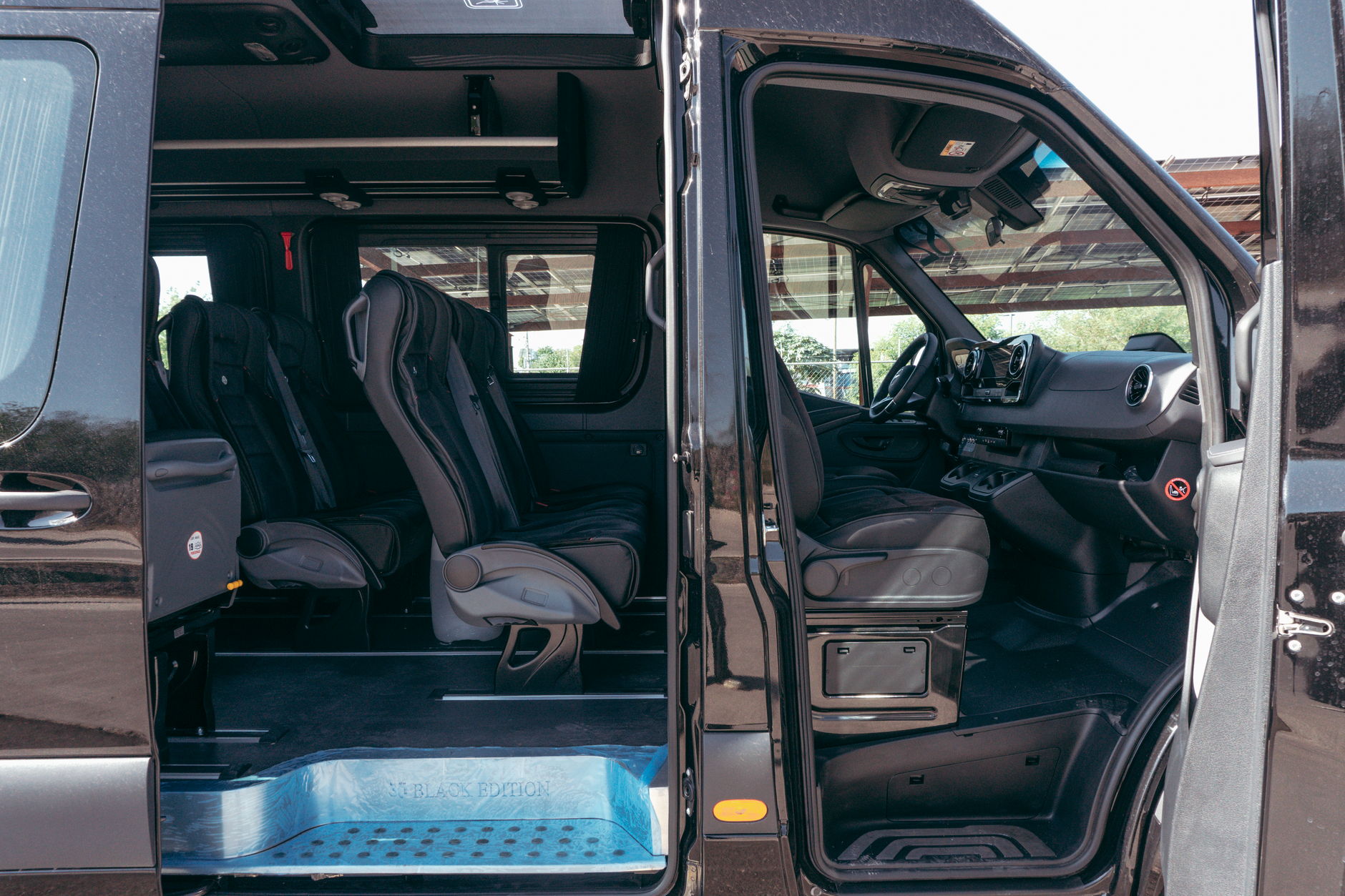
For 14 passengers, an Executive Mercedes Sprinter or Ford Transit is usually the best fit when comfort and private service matter more than maximum luggage capacity. Typical configurations offer leather captain's chairs, WiFi, USB charging, climate control, and a small cargo area, making them well suited to VIP transfers and small group tour work. Count suitcases, golf bags, coolers, and event cases before assigning every seat because a full cabin can leave limited cargo space. A 14-Passenger Sprinter is easier to route through hotel approaches and downtown streets than a full motor coach, but it still needs legal loading space and cannot use the pedestrian River Walk level. Move to a larger vehicle when passengers have substantial baggage, the itinerary needs onboard storage, or the group wants room to spread out between cities.
| Vehicle | Seats | Best For | Notes |
|---|---|---|---|
| Executive Mercedes Sprinter | 10-14 passengers | Best for a VIP group tour with moderate baggage, frequent hotel transfers, and a preference for individual reclining seats. | Leather captain's chairs, USB, WiFi, climate control, and small luggage capacity; confirm the exact seating and cargo layout before booking. |
| Executive Ford Transit | 10-14 passengers | Fits a smaller multi-day party traveling light through San Antonio, Austin, Houston, or Dallas corridors. | Compact high-roof footprint with comfortable seating and basic group amenities, but cargo space depends heavily on the installed seat configuration. |
| Mini bus | 18-28 passengers | Use when the headcount may grow beyond 14 or the group needs more baggage capacity without stepping up to a full coach. | Adds more upright seating and often more luggage room than a Sprinter, while remaining easier to place than a full motor coach at some hotels and venues. |
| Motor coach | 40-56 passengers | Use for a larger multi-day group tour, substantial baggage, or a route where passenger comfort over several long travel days outweighs downtown maneuverability. | Provides the strongest luggage capacity, restroom availability on many units, and space for larger parties, but requires designated bus access, loading, and parking. |
Routing, Timing, and On-the-Road Realities
For a Texas-origin group, common approaches are I-35 from Austin or Dallas, I-10 from Houston, and I-37 from the south; the final downtown segment should be timed around weekday commuter traffic, convention arrivals, and event release periods. A pickup before the morning peak is usually easier than asking a 14-Passenger Sprinter to cross the city during the busiest window, but the exact departure depends on the originating city and required arrival time. From the airport, confirm whether the hotel or terminal uses a commercial pickup zone and whether the group has checked luggage. Downtown routing should use the approved street-level stop nearest the planned River Walk access rather than circling for an open curb. The Alamo and River Walk are walkable from parts of downtown, but the driver needs a staging instruction after unloading. Keep the vehicle off the pedestrian river level and do not assume a convention-center garage accepts a full-size bus.
Build each day around a driver release time, not only attraction opening hours. Federal passenger-carrier rules generally allow up to 10 hours of driving after 8 consecutive hours off duty and prohibit driving after 15 hours on duty following that rest period, with weekly limits also applying. The clock can include pre-trip inspection, fueling, passenger loading, waiting, venue holds, and repositioning, so a day with a morning airport pickup, sightseeing, dinner, and a late return may require a second driver or a shorter itinerary. For a multi-day route from another state, plan an overnight before the first major sightseeing day when the approach would consume most of the driver's duty window. Provide the carrier with hotel addresses, parking dimensions, loading windows, and any no-idle requirements. A workable schedule protects the group from an avoidable last-minute vehicle move or driver-hours violation.
What This Typically Costs
A 14-Passenger Sprinter quote is usually built from a daily vehicle minimum, mileage, and any deadhead from the vehicle's home market to the pickup. In most markets, a multi-day group tour commonly runs a few thousand dollars per day before optional additions, with the final range changing substantially by season, route, and vehicle availability. The operator may apply a daily mileage allowance or bill actual miles, including repositioning between San Antonio, the pickup city, and the return point. Ask whether driver overnight lodging, parking, tolls, and meal policies are included or passed through separately. Peak demand around Fiesta San Antonio, spring break, major conventions, holiday weekends, and large Alamodome or convention-center events can raise rates and reduce vehicle choice. Typical line items also include fuel adjustments, tolls, downtown bus parking, driver gratuity, and extra waiting or charter hours.
Frequently Asked Questions
What does a 14-Passenger Sprinter include for a San Antonio group tour?
For 14 passengers, an executive Mercedes Sprinter or Ford Transit is usually the right starting point when the group wants a private vehicle rather than a full motor coach. These vehicles commonly provide leather captain's chairs, WiFi, USB charging, climate control, and a compact luggage area. They fit airport transfers, hotel moves, dinners, museums, and a San Antonio Riverwalk itinerary where a smaller footprint is easier to manage. Confirm the exact seat count and cargo layout because a fully occupied cabin leaves less room for large suitcases, coolers, or event equipment.
How many days should a group plan for the San Antonio Riverwalk?
For a short Texas-origin trip, two or three touring days in San Antonio is usually workable. A group coming from Dallas, Houston, Austin, or another nearby market may use day 1 for travel and an evening stop, then schedule one or two full sightseeing days. A longer multi-day trip makes more sense when San Antonio is one stop in a larger Texas route that includes the Alamo, Hill Country, Corpus Christi, Fredericksburg, or Austin. The 14-Passenger Sprinter remains practical when the same passengers stay together and baggage is moderate.
What are the best months for this group tour?
April through May and October through early November are generally the most comfortable planning windows for walking-heavy sightseeing, subject to event calendars and weather. Summer brings heat, strong sun, and afternoon thunderstorm risk, so schedule outdoor walking early and protect time for indoor venues. March and April can be busy around spring break, Fiesta San Antonio, and school travel, while November and December may tighten availability around conventions, holidays, and special events. Reserve early whenever dates overlap with Alamodome events, Henry B. Gonzalez Convention Center activity, or major downtown festivals.
What is a practical sample itinerary?
A realistic three-day plan is day 1 travel to San Antonio, hotel check-in, and an evening meal near the San Antonio Riverwalk if arrival time allows. Day 2 can combine an early Alamo visit, a designated downtown motorcoach or Sprinter drop-off, a River Walk boat cruise or guided walk, and dinner at an approved hotel or restaurant loading area. Day 3 can cover Mission San Jose and another Spanish colonial mission, the Pearl, a museum, or a Hill Country departure stop before the return drive. Build scheduled pickup windows rather than promising curbside access at every attraction. The driver should have the exact hotel entrance, venue loading instructions, and a staging plan before departure.
Can the Sprinter park beside the San Antonio Riverwalk?
The San Antonio Riverwalk is a pedestrian-level destination, so a vehicle unloads at street level and the group walks down to the river. Downtown motorcoaches may load or unload only at designated stops or approved hotel, restaurant, and attraction areas, and they may not stand or park wherever an open curb is available. The city identifies designated bus parking and loading locations, while the River Walk organization points visiting buses toward Travis Park parking meters or the Alamodome for parking arrangements. A 14-Passenger Sprinter is smaller than a full motor coach but should still follow the applicable commercial loading and curb rules. Confirm the current city map and venue instructions before the run because construction, special events, and street controls can change access.
How do driver hours affect a multi-day Sprinter charter?
Passenger-carrier hours must be planned around the driver's full duty window, not just wheel time. Federal passenger-carrier rules generally limit driving to 10 hours after 8 consecutive hours off duty and prohibit driving after 15 hours on duty following that rest period. A driver also needs the required break and weekly on-duty compliance, and loading, fueling, inspections, and waiting can consume the available window. For a long out-of-state approach, use a relief driver, split the run, or schedule a proper overnight instead of assuming the driver can complete a sightseeing day after an overnight arrival. The carrier should review the exact vehicle classification, operating authority, and itinerary before confirming a demanding schedule.
What information changes the price most?
The quote normally starts with the 14-Passenger Sprinter's daily minimum and then accounts for route miles, service hours, and deadhead. Deadhead includes the vehicle traveling empty to the pickup point, repositioning between days, and returning to its home market after the group is dropped off. In most markets, a short local charter may have a lower minimum than a multi-day interstate assignment, while peak dates can create a higher minimum or limited availability. Ask for separate treatment of tolls, fuel adjustments, downtown parking, driver lodging, meals, and gratuity. Providing the full route at request time is the best way to avoid a low initial estimate that changes after deadhead and overnight requirements are added.
How to Book
To request a quote, have the travel dates, pickup address, passenger count, luggage estimate, hotel information, and complete itinerary ready, including any Austin, Houston, Dallas, airport, mission, or Hill Country stops. Tell the reservation team whether the vehicle must remain with the group between activities and whether driver lodging or overnight parking is already arranged. US Bus Trips can commonly return a preliminary quote within 4 business hours when the route and dates are complete. The confirmation should identify the vehicle class, service hours, mileage or deadhead treatment, pickup instructions, cancellation terms, driver contact process, and known parking or venue restrictions. Reach us with the itinerary rather than only a destination name so dispatch can build a workable multi-day plan.
Related Trips You Might Also Consider
- Savannah — 24-Passenger Mini Bus
- San Antonio Riverwalk — 56-Passenger Motor Coach
- Veterans Group — South Central Region
- Las Vegas Casinos — 56-Passenger Motor Coach
- Arches — 56-Passenger Motor Coach
- Death Valley — 56-Passenger Motor Coach
- Cross-Country Charter Bus Overview
- All Group Trip Types
- See the Full Fleet (Sprinters through 56-pax coaches)
- Get a Free Quote in 60 Seconds