
A Savannah group tour in a 24-Passenger Mini Bus suits families, alumni groups, executive retreats, and other parties that want one vehicle without moving a full-size motor coach.
Overview
A Savannah group tour is easiest to operate when the passenger list, luggage count, and pickup city are known before the vehicle is selected. The 24-Passenger Mini Bus is a practical match for a family reunion, church group, alumni trip, small wedding party, or executive retreat that wants one dedicated vehicle. It is not the same as reserving 24 seats on a full-size motor coach: rear or roof cargo space varies, and a full complement of suitcases can reduce usable seating. For groups arriving from Atlanta, Charlotte, Raleigh, Jacksonville, or Orlando, the first day should include realistic interstate travel time and a controlled hotel check-in window. US Bus Trips also needs to know whether the bus returns home after drop-off or remains in Savannah for local touring, because deadhead changes the operating cost.
Savannah's core sightseeing area rewards a drop-and-walk plan rather than repeated vehicle circulation. A typical program may use Forsyth Park and the surrounding squares, the Cathedral Basilica area, City Market, River Street, a reserved house museum, and Bonaventure Cemetery, with the order set around timed admissions and bus access. The National Museum of the Mighty Eighth Air Force is outside the central district and needs separate drive time, while Tybee Island adds a coastal leg that can consume a large part of an afternoon. Spring demand is especially strong around St. Patrick's Day, weddings, school breaks, and festival weekends, so hotel and vehicle availability can tighten well before the trip. Fall weekends and major convention dates can create similar pressure even when general tourism appears moderate.
A sound multi-day plan stages the hotel near a dependable arterial or interstate approach instead of choosing solely for walking distance to River Street. Downtown properties may have limited bus loading, one-way approaches, low-clearance entries, or no overnight parking, while suburban hotels often provide easier turning space and a simpler driver rest plan. Ask each venue where a 24-Passenger Mini Bus may load and unload, whether reservations are required, and whether event barricades alter access. Historic District streets, construction, horse-carriage traffic, and festival closures can make the shortest map route unsuitable. The group should expect short walking transfers from approved drop zones and should not rely on curbside waiting while the driver searches for parking.
Fleet Options
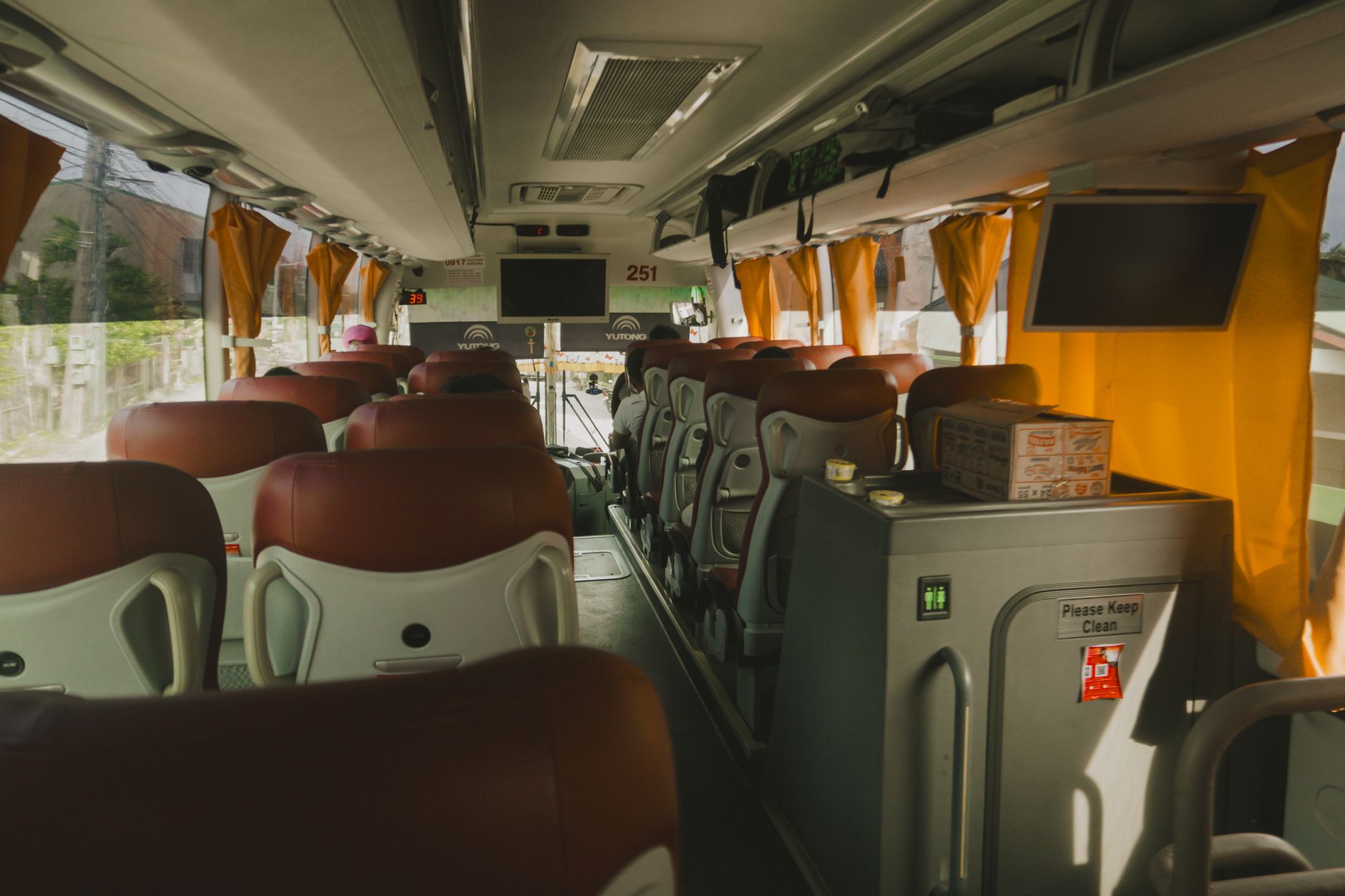
A 24-Passenger Mini Bus is the natural starting point when the confirmed count is close to 24 and the group values a compact footprint over maximum cargo capacity. This compact mini bus normally provides coach-style seats, easier boarding than a full-size motor coach, and luggage in the rear or on a roof carrier, depending on the carrier. It fits small tours, executive retreats, and first-class-only groups, but a full load of rolling bags can consume several seats or require a larger vehicle. Savannah's historic streets, event barricades, tight hotel approaches, and limited downtown parking make street fit and loading plans as important as seat count.
| Vehicle | Seats | Best For | Notes |
|---|---|---|---|
| 24-Passenger Mini Bus | Up to 24 passengers | Best for a compact Savannah group tour with one pickup base, moderate luggage, and planned venue drop-offs. | Coach-style seating with rear or roof luggage capacity; confirm cargo volume before filling every seat, especially for a multi-day tour. |
| Executive Sprinter | 8 to 14 passengers | Fits a smaller executive retreat or first-class-only group that needs a discreet vehicle for short local movements. | More flexible on narrow approaches and small parking areas, but luggage capacity and passenger comfort vary sharply by conversion. |
| Mini Coach | 25 to 35 passengers | Fits a group that has outgrown 24 seats or carries substantial luggage and equipment for several days. | Provides more luggage room and a wider aisle than many mini buses while remaining easier to position than a full-size motor coach. |
| Motor Coach | 40 to 56 passengers | Fits a larger multi-day tour, a split hotel operation, or a group that needs full underfloor cargo and onboard amenities. | The strongest choice for high passenger capacity and underfloor luggage, but it needs wider approaches, approved loading areas, and careful downtown routing. |
Routing, Timing, and On-the-Road Realities
For arrivals from the north and west, the usual approach is I-16 into Savannah, with I-95 serving groups coming from the Carolinas, Florida, or points farther north. Atlanta-origin groups should allow for I-16 congestion, construction, fuel stops, and a meal break rather than planning arrival from map mileage alone. Jacksonville and Orlando groups commonly use I-95, while Charleston and Hilton Head movements can involve US 17 or local coastal roads where traffic and bridge approaches affect timing. Schedule a morning departure early enough to clear the origin metro before peak traffic, but do not promise a late-night local tour after a full interstate driving day. A 24-Passenger Mini Bus should be routed to the hotel's actual bus entrance and staging point, not simply to the property's street address.
Local touring works best with timed loading windows and a driver who knows when to stage outside the busiest blocks. Forsyth Park, River Street, City Market, house museums, Bonaventure Cemetery, and Tybee Island should be sequenced so the bus is not crossing downtown repeatedly. Confirm parking or loading instructions with each venue because a permit, reservation, commercial vehicle fee, or designated lot may apply, and event operations can temporarily close normal areas. Oversize routing matters even for a smaller vehicle when roof equipment, mirrors, turning radius, or a hotel canopy creates a clearance issue. Driver hours remain active during repositioning and venue moves, so the schedule must preserve the required 8 consecutive hours off duty, the 10-hour driving limit, and the 15-hour on-duty limit for passenger operations.
What This Typically Costs
A Savannah group tour using a 24-Passenger Mini Bus is usually priced from a daily vehicle and driver minimum, then adjusted for route miles, travel days, and the amount of time the bus must remain available. A multi-day run commonly includes deadhead miles to reach the pickup city and return the vehicle to its home market, so the lowest-mileage estimate is not always the lowest-cost option. Seasonal demand rises during spring festivals, St. Patrick's Day, weddings, school breaks, fall weekends, and major convention periods. Budget separately for driver lodging, meals or per diem, tolls, parking, fuel adjustments, and driver gratuity; lodging should be clean, safe, and close to the vehicle's overnight staging area. In most markets, a multi-day charter commonly runs a few thousand dollars per day before unusually long deadhead, premium lodging, or special access requirements. Ask for a line-item quote showing daily minimums, included mileage, excess mileage, cancellation terms, parking, and any overnight charges.
Frequently Asked Questions
What does a 24-Passenger Mini Bus fit best?
A 24-Passenger Mini Bus works best for a compact group tour traveling from a common pickup point, such as a family reunion, alumni group, church tour, executive retreat, or wedding party. It normally has coach-style seats and luggage storage in a rear compartment or roof-mounted carrier, depending on the operator. The practical limit is 24 passengers only when luggage is light and evenly distributed. For rolling suitcases, coolers, mobility equipment, or several days of clothing, plan fewer occupied seats or request a larger motor coach. US Bus Trips can match the vehicle after reviewing passenger count, luggage volume, pickup streets, and overnight requirements.
How many days should a Savannah group tour take?
Most Savannah group tours need at least three days from a nearby Southeastern origin and four to six days when the group is coming from the Carolinas, Florida, Tennessee, or farther west. Day 1 is usually dominated by travel, meal stops, hotel check-in, and one low-stress Savannah stop. Two full local days allow the group to cover the Historic District, River Street, a house museum, Bonaventure Cemetery, and either Tybee Island or a nearby coastal excursion without rushing every meal. Longer multi-day programs work well for adding Charleston, Hilton Head, or a Georgia coast segment. The exact trip length should be based on origin city, not just the number of Savannah attractions.
What are the best months for visiting Savannah?
March through May and October through early November are commonly the most comfortable planning windows for walking-heavy Savannah itineraries. Spring brings heavy demand around St. Patrick's Day, school breaks, weddings, and festival weekends, so vehicles and hotels should be reserved early. Summer can be hot, humid, and storm-prone, but it may suit groups that schedule outdoor stops early and use indoor attractions during the afternoon. Winter is often workable for lower-demand tours, though holiday events and cooler evenings still affect hotel and restaurant availability. Check the event calendar before setting dates because a lower advertised room rate does not guarantee easy bus access or parking.
What is a realistic multi-day Savannah itinerary?
A practical sample itinerary is Day 1 travel to Savannah with a scheduled meal stop, hotel check-in, and an evening orientation ride or River Street drop-off if the driver has legal hours remaining. Day 2 can cover Forsyth Park, the Cathedral Basilica area, City Market, a reserved house museum, and a prearranged group dinner. Day 3 can combine Bonaventure Cemetery, the National Museum of the Mighty Eighth Air Force, and Tybee Island, with the order adjusted for tides, weather, and traffic. Day 4 is a departure day with a breakfast loading window, one planned stop, and enough buffer for interstate congestion. A motor coach should not be sent through every narrow historic street merely to provide sightseeing; use approved drop zones and walking segments.
How do driver hours rules affect this trip?
Passenger-carrier rules generally allow up to 10 hours of driving after 8 consecutive hours off duty and prohibit driving after 15 hours on duty in that work period. Weekly limits also apply, commonly 60 hours in seven days or 70 hours in eight days depending on the carrier's operating schedule. Loading, inspections, fueling, traffic-related waiting, and moving the bus between venues all affect the duty calculation. A driver cannot legally reset the day with a short nap or an informal break; the required off-duty period must be planned. For a long first day, US Bus Trips may recommend a relief driver, a split driving plan, or an overnight stop rather than promising a late arrival.
Do Savannah venues require bus permits or special parking?
Savannah does not treat a 24-Passenger Mini Bus as permission to stop anywhere in the Historic District. Hotels, museums, restaurants, cemeteries, and tour operators may have separate loading zones, reservation rules, height limits, or timed bus parking procedures. Confirm whether the vehicle's actual length, height, and turning radius fit the designated lot before finalizing the itinerary. River Street approaches, downtown one-way streets, low-clearance structures, construction, and event barricades can change the preferred route on short notice. For larger vehicles, use a motor coach operator familiar with approved staging areas and keep passenger loading off active travel lanes.
What should be confirmed with the hotel and bus operator?
The vehicle quote typically reflects the bus, commercial insurance, a qualified driver, and a planned service area, but it may not include every trip expense. Confirm whether parking fees, tolls, fuel surcharges, driver hotel, driver meals, gratuity, and deadhead miles are included or billed separately. Hotels should be staged near a usable arterial or interstate approach rather than selected only for proximity to a pedestrian attraction. A property may advertise bus parking but still have limited turning space, a low entrance, or a loading window that conflicts with breakfast operations. Send the operator the hotel name and address before booking rooms so the overnight plan can be checked.
How to Book
To request a quote, have the travel dates, pickup address, passenger count, luggage estimate, hotel plan, and complete Savannah itinerary ready, including any Tybee Island, cemetery, museum, or restaurant stops. Also identify whether the group needs a one-way transfer, a local shuttle, or continuous multi-day service with the bus remaining available overnight. US Bus Trips targets a quote turnaround within 4 business hours when these details are complete; the confirmation should show the vehicle class, driver schedule, included mileage, deadhead treatment, parking, lodging, cancellation terms, and payment schedule. Contact the booking team with the itinerary and a reachable phone number so dispatch can resolve street access or venue loading questions before the run is assigned.
Related Trips You Might Also Consider
- Corporate Roadshow — Pacific Northwest Region
- Alumni Tour — Mountain West Region
- College Band Tour — Mid-Atlantic Region
- San Diego, CA to Palm Springs, CA
- Non-Profit Fundraiser — Mountain West Region
- Fort Worth, TX to Dallas, TX
- Cross-Country Charter Bus Overview
- All Group Trip Types
- See the Full Fleet (Sprinters through 56-pax coaches)
- Get a Free Quote in 60 Seconds