
US Bus Trips arranges College Band Tour transportation for university marching bands, pep bands, choirs, and ensemble groups traveling to away games and festivals.
Overview
A Mid-Atlantic College Band Tour commonly combines an away football game, invitational, exhibition, or marching-band festival with airport and hotel movements. University groups may originate in Baltimore, Annapolis, College Park, Towson, Richmond, Charlottesville, Norfolk, Fairfax, Harrisonburg, Morgantown, Newark, Dover, Wilmington, or Washington, DC. Common destinations include M and T Bank Stadium and Oriole Park at Camden Yards in Baltimore, Audi Field, Nationals Park, FedExField, and the National Mall area in Washington, and campus venues at Maryland, Virginia, Virginia Tech, James Madison, George Mason, Delaware, West Virginia, and Howard. Choral groups also travel to university concert halls, churches, arts centers, and regional festival sites rather than only stadiums. A workable group travel plan connects the rehearsal schedule to the bus schedule, with enough time for uniform changes, instrument unloading, sound checks, and post-performance loading.
Most bookings fall into several size bands: a staff or chamber ensemble may need 10 to 25 seats, a touring choir or pep band often needs 25 to 45, and a full marching band with staff and chaperones can require 50 to 150 or more travelers. A single charter bus may carry the people, but large bands frequently use multiple motor coaches and a dedicated cargo vehicle for drums, sousaphones, cymbals, props, garment bags, and trunks. The passenger manifest should distinguish performers, directors, athletic staff, chaperones, and wheelchair users because loading order and seating affect departure time. Groups flying into BWI, DCA, or IAD need a meet-and-stage plan that accounts for baggage, flight changes, and commercial vehicle restrictions. Airport shuttle legs are often short, but they can control the entire day's schedule when a large group arrives in waves.
Seasonal demand is strongest from late August through November for football, homecoming, marching invitations, and fall festivals, with additional peaks during spring concert tours, choral festivals, commencement, and postseason events. The I-95 corridor links Baltimore, Washington, Richmond, Wilmington, Philadelphia, and points north, while I-81 and US 29 serve the Blue Ridge and Shenandoah corridor through Winchester, Harrisonburg, Staunton, Charlottesville, and Roanoke-area routes. Chesapeake Bay Bridge crossings can affect Eastern Shore and Annapolis movements, especially during holiday traffic, wind restrictions, incidents, or two-way operations. West Virginia trips may use I-81, I-66, I-68, or I-79 depending on the campus and event, with mountain grades requiring realistic timing. A senior dispatcher plans around the performance call time, not the nominal mileage, and leaves recovery time for traffic, meal stops, security checks, and equipment handling.
Fleet Options
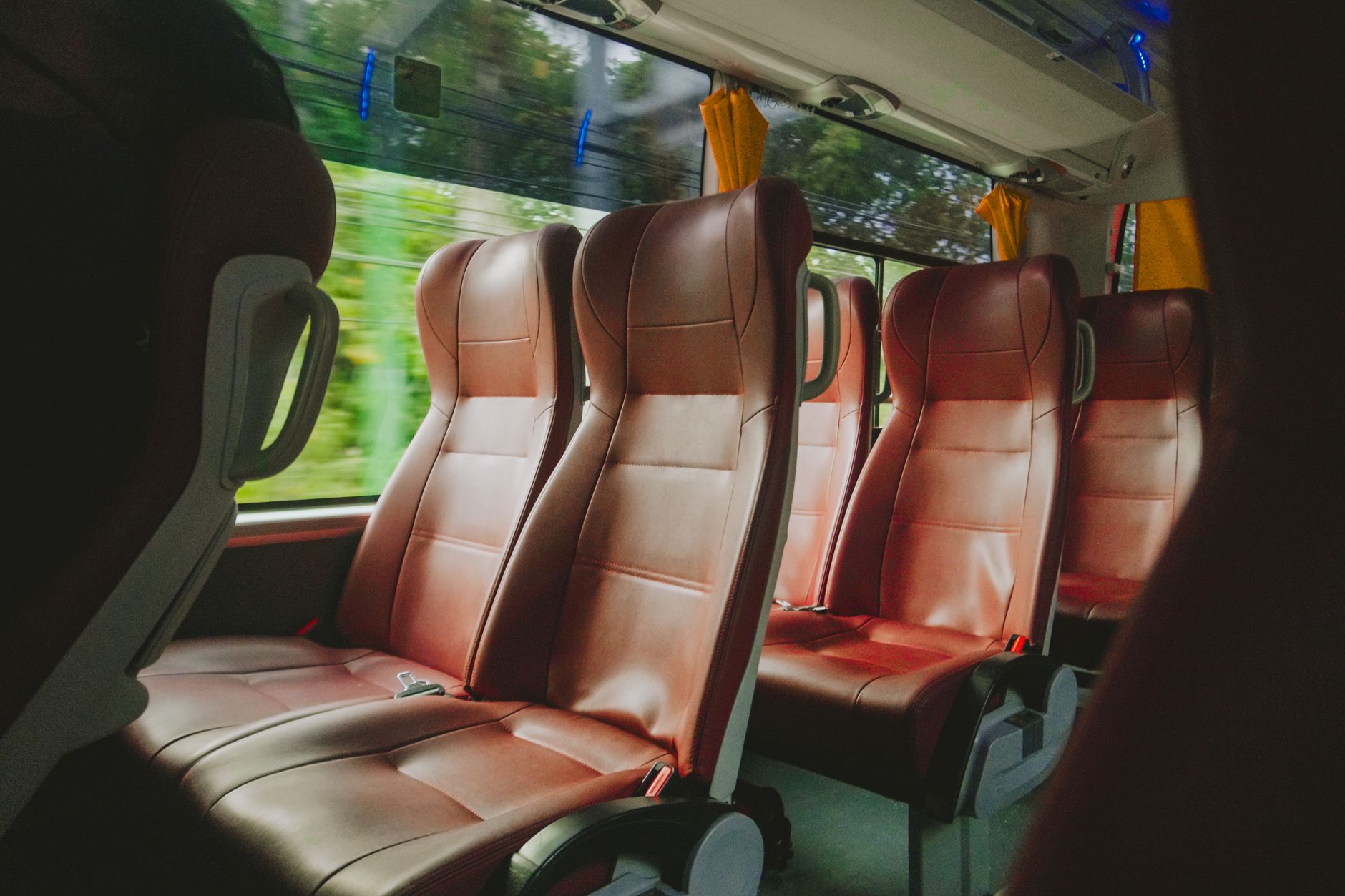
Vehicle selection starts with the headcount, the cargo list, and the longest duty day, not simply the number of seats. A full-size motor coach is usually the most comfortable option for a large College Band Tour, while a mini coach or mini bus can work for staff, sectional groups, or smaller choirs. Executive Sprinters are useful for directors, soloists, or airport subsets but rarely replace a coach for a full band with instruments and luggage. Tight streets around DC, older downtown hotels, campus service roads, and limited stadium parking can favor smaller vehicles or a planned split fleet. Confirm luggage-bay capacity, accessibility, restroom needs, and equipment loading before choosing the lowest seat count.
| Vehicle | Seats | Best For | Notes |
|---|---|---|---|
| 56-passenger motor coach | 40-56 passengers | Use for a full marching band, large choir, pep band, or combined student and staff group traveling between campuses, airports, hotels, and venues. | Best passenger comfort and underfloor storage for uniforms, luggage, and moderate instrument loads, but it needs a planned bus route and approved parking. |
| 35-40 passenger motor coach | 30-40 passengers | Use when the headcount is below full-coach capacity but the trip still includes long I-95, I-81, or interstate travel. | Provides coach comfort with a smaller footprint for campus loops and urban Mid-Atlantic streets, though bulky percussion and trunks may require a second vehicle. |
| 24-32 passenger mini coach | 20-32 passengers | Use for a chamber choir, reduced ensemble, staff group, or one section traveling between BWI, DCA, IAD, and a nearby venue. | Fits smaller hotel entrances and campus approaches more easily, with less cargo volume than a full motor coach and limited room for large cases. |
| Executive Sprinter or passenger van | 8-14 passengers | Use for faculty, clinicians, soloists, airport subsets, or split movements where a full charter bus would be inefficient. | Works for directors and small travel parties on short transfers, but personal luggage and instruments can consume the available rear space quickly. |
Routing, Timing, and On-the-Road Realities
The main Mid-Atlantic group travel problem is traffic concentration at the same hours as campus events. I-95 through Baltimore, the Fort McHenry Tunnel, Washington, and Northern Virginia can require substantial buffer time, while I-495, I-395, I-66, I-64, and the Baltimore-Washington Parkway create separate choke points around game-day windows. For Eastern Shore routes, the Chesapeake Bay Bridge can add unpredictable delay and may impose restrictions during high winds or poor visibility, so the dispatcher checks conditions before departure and avoids building a schedule around the fastest possible crossing. A practical pickup plan often starts before the morning commuter peak, with a second controlled departure after the group has loaded instruments and uniforms. For stadiums, request the charter entrance, bus lot, credential procedure, and post-event release plan in advance because a coach may not be able to wait at the public curb. The driver should receive one written itinerary with dispatch contacts, meal stops, fuel expectations, hotel address, and the exact return staging point.
Airport shuttle-heavy trips require different timing from a simple point-to-point charter bus move. At BWI, DCA, and IAD, the group coordinator should gather passengers and baggage before calling the bus into the commercial pickup area, rather than releasing several vehicles to circle the terminal. DCA is convenient for central DC and Arlington but involves constrained urban approaches; IAD adds distance to central Washington but can align well with western Virginia and Loudoun County routes; BWI often fits Baltimore, Annapolis, Delaware, and I-95 north-south itineraries. A large fleet should use a lead vehicle or dispatch contact so coaches arrive in sequence without blocking the loading zone. Driver-hours planning is critical when a band departs before dawn, performs in the afternoon, and returns after a late game; a second driver, relief plan, or overnight stop may be required. Blue Ridge and Shenandoah runs also need allowance for grades, rural fuel gaps, narrow campus roads, and weather that can slow a fully loaded coach.
What This Typically Costs
A College Band Tour is usually priced by vehicle day, service hours, mileage, and the number of calendar days the equipment and drivers are committed. In most Mid-Atlantic markets, a charter bus has a daily minimum, with longer moves priced by mileage or an hourly minimum, and multi-day work adding driver overnight lodging and per-diem requirements. Seasonal peaks around August through November football, October marching-band festivals, spring choral festivals, and commencement can reduce availability and raise rates. Quotes may also include deadhead miles from the operator base, tolls, parking, fuel adjustments, and additional staging time for airport or venue moves. Budget separately for driver gratuity, which is commonly handled as a percentage or a planned per-day amount rather than included in the base rate. A run from Baltimore to Washington, Richmond, Philadelphia, or the Shenandoah Valley commonly runs a few thousand dollars per day depending on vehicle count, mileage, and schedule complexity, but exact pricing requires the itinerary.
Frequently Asked Questions
How far ahead should a college band reserve buses for an away game or festival?
Most groups should reserve a motor coach or charter bus 8 to 16 weeks ahead for a normal away-game weekend and earlier for October festivals, rivalry games, homecoming, and postseason travel. Fall weekends fill quickly across the Mid-Atlantic because college athletics, weddings, airport transfers, and corporate events compete for the same equipment. A short-notice request can still work, but vehicle choice, pickup times, and hotel proximity may be less flexible. Provide the full itinerary before asking for a firm quote.
How many buses does a typical college marching band need?
A standard 40 to 56 passenger motor coach works for many marching bands, but seat count is not the only planning number. Add directors, staff, chaperones, student travelers, and any alternates, then account for instruments, uniforms, garment bags, percussion equipment, music stands, coolers, and personal luggage. Large groups often need one coach per 40 to 50 people plus a dedicated equipment vehicle or an additional coach with controlled loading. A choral group may fit more efficiently because its cargo is lighter, while a marching band generally needs more floor and underfloor capacity.
Can the bus carry instruments and marching equipment?
A College Band Tour can use one coach for people and a second vehicle for bulky equipment when the group carries marching percussion, sousaphones, cymbals, props, or large uniform trunks. A cargo van or box truck may be appropriate for cases and equipment, but it must be coordinated with the venue and may require a separate commercial driver. Do not assume every charter bus has enough underfloor bays for a full band load. The operations team should receive an itemized cargo list, approximate case dimensions, and loading order before assigning vehicles.
Can you arrange accessible transportation for a band or choir?
Yes, but the request must identify the number of wheelchair users, whether mobility devices fold, and whether anyone remains seated in a wheelchair during travel. Accessible motor coaches are limited compared with standard coaches, so they should be requested at the initial quote stage. A lift-equipped vehicle needs safe loading space and extra dwell time at hotels, airports, and venues. The group should designate one staff member to manage boarding and confirm that the hotel and performance venue have accessible paths and entrances.
Which airport is best for a Mid-Atlantic band trip?
Airport plans commonly involve BWI, DCA, or IAD, with the best airport determined by the airline schedule, hotel location, and final venue. BWI works well for Baltimore, Annapolis, Wilmington, and many I-95 itineraries; DCA is efficient for central Washington, Arlington, and Alexandria; IAD is generally better for western Fairfax, Loudoun, and Shenandoah routes. Commercial vehicle pickup locations and curb rules differ by airport, so the dispatcher confirms the designated bus zone rather than sending a coach to a passenger curb. Build time for baggage collection, delayed flights, and instrument cases before releasing the bus from staging.
Where can a motor coach park at Mid-Atlantic venues?
A charter bus can usually stage near a venue only where the property or city has approved commercial loading and parking. In Washington, DC, Capitol Hill, the National Mall, the White House area, and downtown event zones have tight security and changing restrictions, so the group may need a timed curb drop and remote bus parking. At stadiums such as Audi Field, FedExField, Oriole Park at Camden Yards, Nationals Park, and Lincoln Financial Field, the event organizer or venue transportation office should confirm the bus lot and entrance. Drivers need the exact loading address, not just the venue name, because large venues often have separate team, public, and charter entrances.
Can one bus cover several states and multiple performances?
Yes, a motor coach can cover an extended College Band Tour through Maryland, Virginia, West Virginia, Delaware, and DC, but the schedule must respect driver-hours rules and required breaks. A single driver may not legally or practically cover an early departure, full performance day, and late-night return without relief planning. Multi-day trips normally include hotel rooms for drivers near the overnight location and may require a second driver or vehicle rotation for long repositioning legs. The quote should show service dates, deadhead movement, overnight locations, and whether the bus remains with the group between events.
How to Book
To book, have the dates, pickup address, headcount, equipment list, accessibility needs, airport or hotel details, performance venues, and complete itinerary ready. Include whether the bus must remain with the group, the preferred departure windows, overnight cities, and any venue parking instructions. US Bus Trips typically returns a quote within 4 business hours when the request includes usable routing and contact information. Confirmation documents identify the vehicle type, passenger capacity, pickup times, service dates, driver contact process, cancellation terms, and known parking or staging notes; reach us through the US Bus Trips booking channel or phone team.
Related Trips You Might Also Consider
- Non-Profit Fundraiser — Pacific Northwest Region
- Veterans Group — Mid-Atlantic Region
- Veterans Group — Pacific Northwest Region
- Oklahoma City, OK to Tulsa, OK
- Grand Teton — 14-Passenger Sprinter
- Alumni Tour — South Central Region
- Cross-Country Charter Bus Overview
- All Group Tour Destinations
- See the Full Fleet (Sprinters through 56-pax coaches)
- Get a Free Quote in 60 Seconds