
US Bus Trips arranges Alumni Tour service for university associations, prep-school classes, HBCU homecoming groups, reunion committees, and destination-wedding parties.
Overview
A South Central Alumni Tour is usually a scheduled series of campus visits, alumni receptions, football weekends, reunion meals, and hotel transfers rather than a single charter bus ride. University groups commonly originate in Dallas-Fort Worth, Houston, Austin, San Antonio, Oklahoma City, Little Rock, Baton Rouge, New Orleans, Jackson, or nearby smaller towns. The Texas triangle can be a three- or four-city circuit, while a New Orleans extension adds event traffic, hotel loading restrictions, and longer driver coverage. Prep-school alumni often need a smaller vehicle for a class reunion, board dinner, or destination wedding, while large university associations may require multiple motor coaches. HBCU homecoming and classic-weekend programs can include campus parades, tailgates, alumni receptions, and stadium service at venues such as Panther Stadium in Prairie View, Grambling's Eddie G. Robinson Stadium, Southern's A.W. Mumford Stadium, Jackson State's Veterans Memorial Stadium, and Simmons Bank Field in Little Rock. The itinerary should separate passenger movements from equipment movements when bands, cheer squads, uniforms, or event displays are involved.
Homecoming demand is concentrated from late summer through fall, when alumni groups combine a football game with class-year gatherings, chapter meetings, and hotel hospitality events. In Louisiana, schedules may involve Baton Rouge, Grambling, Lafayette, Monroe, or New Orleans, with the Bayou Classic creating a particularly concentrated citywide movement pattern. In Mississippi, Jackson State in Jackson, Alcorn State in Lorman, and Mississippi Valley State near Itta Bena can require rural campus transfers with fewer convenient hotel clusters. Arkansas programs may stage through Little Rock, Pine Bluff, Fayetteville, or Jonesboro, while Oklahoma requests often connect Oklahoma City, Norman, Tulsa, Stillwater, and Dallas. Rodeo travel adds bulky gear, early departures, and venue-specific bus parking, while destination weddings may require separate ceremony, reception, airport, and hotel movements. A credible charter bus plan accounts for heat, thunderstorms, Gulf Coast storm disruptions, tailgate loading, and passengers who need more time to board.
Group size varies from a dozen alumni officers in an executive Sprinter to several hundred attendees spread across a fleet. A single full-size motor coach commonly serves 40 to 56 passengers, but usable capacity drops when travelers bring garment bags, instruments, coolers, mobility devices, or several nights of luggage. Large group travel programs may combine full-size coaches for the intercity legs with mini coaches, mini buses, or Sprinters for airport transfers, VIPs, overflow, and narrow hotel approaches. Campus access must be checked against actual bus routes, event-day road closures, stadium security procedures, and designated motor-coach lots. Wedding planners and reunion committees should identify whether passengers need continuous service or only scheduled departures, because standby time changes both vehicle assignment and cost. The best booking information includes each pickup address, hotel, venue, passenger count, equipment list, driver rest plan, and a responsible onsite contact.
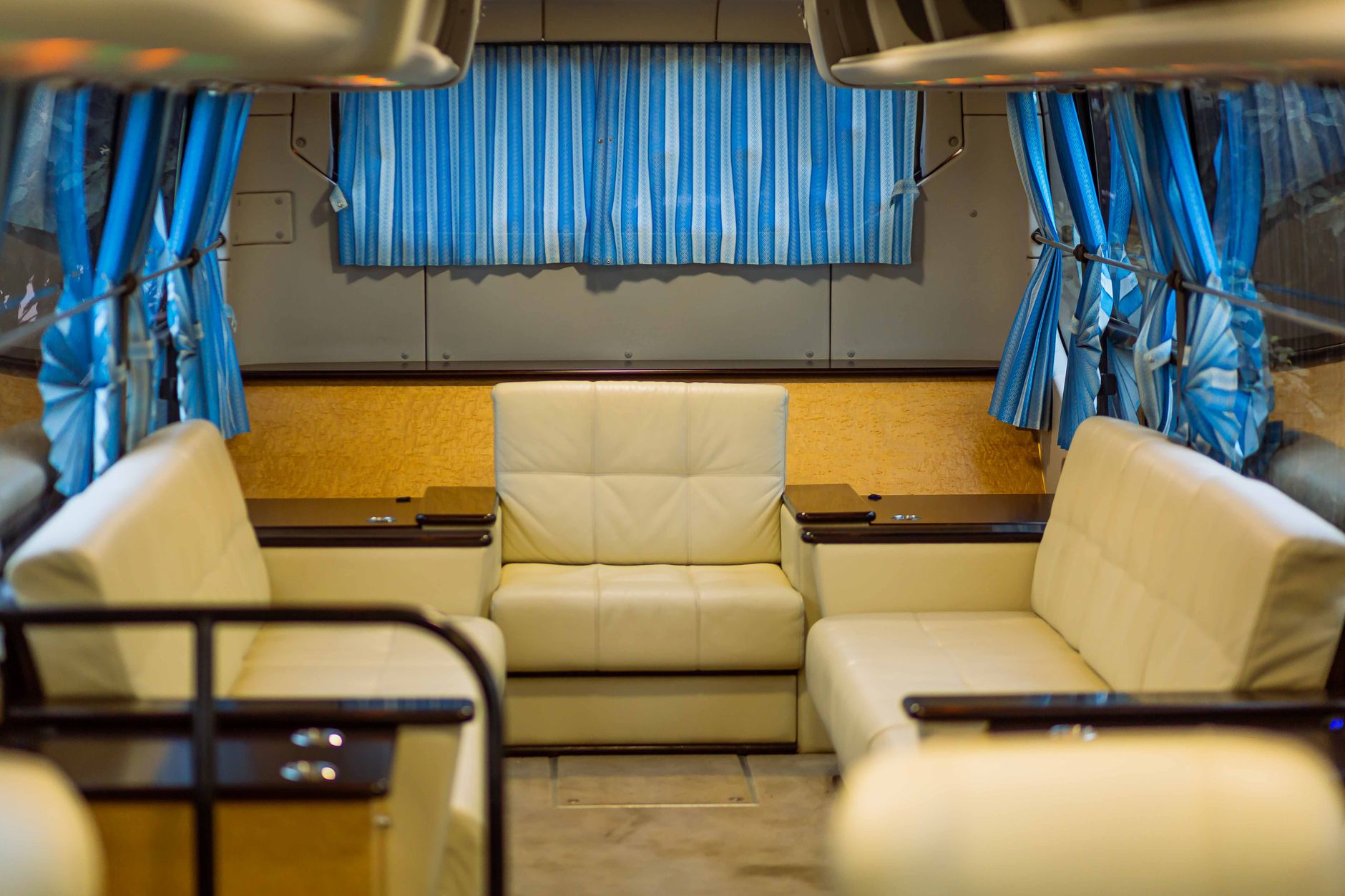
Fleet Options
Vehicle selection for a South Central Alumni Tour starts with headcount, luggage volume, and how often passengers will board and unload. A full-size charter bus is usually the most efficient choice for 35 or more travelers on long I-10, I-35, I-45, or I-30 legs, while a mini coach or Sprinter can work better for a short hotel loop or a small reunion. Comfort matters on Dallas-Houston, Houston-New Orleans, and Oklahoma-to-Texas runs, where passengers may spend several hours aboard. Tight campus streets, French Quarter restrictions, stadium lots, and wedding-venue drives can favor smaller vehicles for the last mile. Equipment, wheelchair access, and overnight luggage should be confirmed before choosing a seat count.
| Vehicle | Seats | Best For | Notes |
|---|---|---|---|
| Full-size motor coach | 40-56 passengers | Use it for the main Alumni Tour, multi-day campus loop, HBCU classic, rodeo group, or wedding party traveling between South Central metros. | Best for long corridors and luggage-heavy groups, with reclining seats, climate control, overhead storage, and underfloor bays; verify lift availability for wheelchair users. |
| Mini coach | 24-38 passengers | Choose it for medium reunions, overflow from a primary coach, or routes linking hotels with stadiums and alumni events. | Provides coach-style seating with a smaller footprint for campus approaches, hotel loops, and venues where a full-size bus has limited turning or staging space. |
| Mini bus | 18-28 passengers | Use it for smaller groups, airport runs, VIP transfers, or local shuttles around Austin, Baton Rouge, Little Rock, or Jackson. | Useful for short transfers and compact hotel circuits, but cargo capacity varies and may be limited when passengers bring banquet supplies, uniforms, or event gear. |
| Executive Sprinter | 8-14 passengers | Use it for alumni officers, family groups, wedding VIPs, or a small point-to-point transfer where maneuverability matters more than cargo volume. | Fits narrow streets and quick curbside movements, with limited luggage space and less protection from overloading than a full-size coach. |
Routing, Timing, and On-the-Road Realities
The main South Central routing pattern is the Texas triangle: Dallas-Fort Worth to Austin, Austin to San Antonio, San Antonio to Houston, and Houston back toward Dallas or east toward Baton Rouge and New Orleans. I-35 can slow around Waco, Temple, Austin, and San Antonio, while I-45 traffic affects Dallas-Houston service and I-10 creates recurring delays through Houston, Beaumont, Lake Charles, Baton Rouge, and the New Orleans approach. For a game or ceremony, pickup should generally be scheduled with a meaningful buffer rather than at the posted start time, especially when the coach must clear hotel loading, security screening, or a remote stadium lot. Houston sports and convention traffic can alter arrival times around NRG Park and downtown, while Austin events can affect access near Darrell K Royal-Texas Memorial Stadium and the University of Texas campus. San Antonio itineraries should distinguish downtown hotel access from Alamodome or campus staging, and Dallas-Fort Worth plans should separate hotel locations from AT&T Stadium, Cotton Bowl, or campus routes. A dispatcher will also check construction, weather, toll roads, venue bus instructions, and whether the group needs a relief vehicle for a long day.
Longer group travel legs commonly use I-30 between Dallas and Little Rock, I-35 between Texas and Oklahoma, I-40 toward Oklahoma City and western Arkansas, and I-55 through Jackson toward Memphis or New Orleans. Oklahoma City, Norman, Tulsa, Fayetteville, Little Rock, Pine Bluff, Jackson, Baton Rouge, and New Orleans can serve as overnight or transfer points, but hotel capacity may tighten during football weekends, rodeos, conventions, and weddings. Drivers must plan within federal hours-of-service rules, so an itinerary with an early Dallas departure, a full-day event, and a late return may require a second driver or an overnight stop. Stadiums and fairgrounds often require buses to use a remote lot, unload once, and remain staged rather than make repeated curbside trips. New Orleans routes need special attention to French Quarter restrictions, narrow streets, parade closures, and hotel-specific bus access; a smaller vehicle may handle the final connection while the full-size coach stages elsewhere. For a multi-day Alumni Tour, the operating plan should lock in pickup windows, meal and fuel stops, driver lodging, daily vehicle assignment, and a backup contact before the first passenger boards.
What This Typically Costs
Pricing for an Alumni Tour is built from vehicle type, service days, mileage, and the time the motor coach is committed, not just the miles between campuses. In most South Central markets, a full-size charter bus commonly runs a few thousand dollars per day, while smaller vehicles may price lower but can require more units. Daily minimums are common, especially for a one-day homecoming shuttle or a hotel loop with long standby periods. Peak pricing is more likely during September through November football weekends, major rodeo dates, spring reunion weekends, destination-wedding season, and holiday events. Quotes also account for deadhead miles to reach Dallas, Houston, Austin, San Antonio, Oklahoma City, Little Rock, New Orleans, Jackson, or another origin, plus driver lodging and meals when the run crosses multiple days. Typical line items can include tolls, venue parking, fuel adjustments, cleaning for food or equipment, driver gratuity, and additional service hours.
Frequently Asked Questions
How many passengers fit on an alumni tour charter bus?
For most Alumni Tour and reunion-weekend work, plan around 35 to 55 passengers per full-size motor coach. Smaller reunions may fit an executive Sprinter, mini bus, or mini coach, while a school alumni association may need several coaches for separate hotel clusters and airport arrivals. Headcount should include chaperones, musicians, staff, spouses, and guests rather than only registered alumni. A final passenger count is especially useful when wheelchairs, instruments, uniforms, or banquet supplies will occupy storage space.
What South Central cities can an Alumni Tour include?
The Texas triangle is usually planned as a sequence of Dallas-Fort Worth, Austin, San Antonio, and Houston, with New Orleans added when the itinerary includes a Bayou Classic, wedding, or reunion extension. I-35 handles the Austin-San Antonio and Dallas-Austin legs, while I-10 connects San Antonio, Houston, Lake Charles, Baton Rouge, and New Orleans. Other common corridors include I-45 between Dallas and Houston, I-30 toward Little Rock, I-40 or US-412 into Oklahoma, and I-55 through Jackson toward Memphis or New Orleans. A dispatcher will usually price the route as separate operating days instead of treating the entire loop as one transfer.
When is the busiest season for homecoming coach service?
September through November is the main homecoming and HBCU football season, with heavy demand around stadium weekends, classics, campus parades, and alumni tailgates. Examples include Texas Southern and Prairie View A&M events near Houston and Prairie View, Grambling State in north Louisiana, Southern University in Baton Rouge, Jackson State in Jackson, Alcorn State in Lorman, and Arkansas-Pine Bluff in southeast Arkansas. Spring brings class reunions, commencement-related alumni events, rodeos, and destination weddings. Summer can be steadier for school-group reunions, regional association meetings, and multi-city family travel, but heat and storm planning matter across Texas and the Gulf Coast.
Can a motor coach carry instruments, uniforms, and wheelchairs?
A full-size charter bus usually carries luggage, but it is not an unlimited freight vehicle. Marching instruments, drum cases, garment bags, uniforms, coolers, tailgate supplies, and mobility equipment must be listed before dispatch so the operator can verify underfloor-bay capacity. A wheelchair lift or accessible coach should be reserved in advance, and the number of chairs, scooters, and transfer passengers affects the usable seating plan. If the group is bringing a band, cheer squad, or substantial wedding equipment, a second coach, cargo van, or dedicated equipment vehicle may be safer than filling passenger bays.
How are large alumni groups split across multiple vehicles?
Large South Central group travel programs often use a vehicle mix rather than one oversized vehicle. One full-size motor coach may carry the main alumni group, while mini coaches or executive Sprinters handle airport transfers, VIPs, overflow, campus shuttles, or hotel loops. Separate vehicles can stage at different properties in Dallas, Houston, Baton Rouge, New Orleans, or Jackson without forcing every passenger through one pickup point. For HBCU classics, rodeos, and stadium events, the operating plan should identify lead and sweep vehicles, radio or phone contacts, loading zones, and a reunification point if parking is remote.
Can a charter bus run a hotel loop in New Orleans or downtown Texas?
Yes, but the hotel loop must be designed around actual loading zones, not just a list of properties. Downtown New Orleans, the French Quarter perimeter, campus streets in Austin, and older districts in San Antonio can restrict bus turns, curb access, or standing time. A charter bus may need to stage at a designated motor-coach lot while smaller vehicles make final hotel pickups. Confirming hotel bus access, passenger-ready times, luggage staging, and the return sequence prevents a coach from circling a block during a tight reunion schedule.
What information is needed to book South Central group travel?
A quote should start with the service date, passenger count, pickup address, destination, hotel names, event venue, equipment list, and whether the group needs a one-way transfer, round trip, shuttle, or multi-day Alumni Tour. Include campus buildings, stadium gates, tailgate areas, wedding venues, meal stops, and the time passengers must be back at the hotel. US Bus Trips can generally return a realistic preliminary quote within 4 business hours when those details are complete. The confirmation should identify the vehicle class, service window, pickup instructions, contact process, luggage or accessibility notes, and any known parking or lodging assumptions.
How to Book
To book, have the dates, pickup address, headcount, destination, hotel list, event venue, equipment needs, and complete itinerary ready. Tell us whether the service is a transfer, round trip, hotel loop, campus shuttle, or multi-day group travel program, and identify wheelchair users, instruments, uniforms, or oversized luggage. US Bus Trips can typically return a preliminary quote within 4 business hours when the operating details are complete. Confirmation will outline the vehicle class, service window, pickup instructions, contacts, accessibility notes, and known parking or driver-lodging assumptions; reach us through the US Bus Trips booking team.
Related Trips You Might Also Consider
- Great Smoky Mountains — 56-Passenger Motor Coach
- Dance Competition — Pacific Region
- Seattle, WA to Portland, OR
- Philadelphia, PA to Washington DC, DC
- Milwaukee, WI to Wisconsin Dells, WI
- Mammoth Cave — 24-Passenger Mini Bus
- Cross-Country Charter Bus Overview
- All Group Tour Destinations
- See the Full Fleet (Sprinters through 56-pax coaches)
- Get a Free Quote in 60 Seconds