
A NYC Theater group tour works best when the transportation plan is built around show times, hotel access, and legal driver duty limits.
Overview
A NYC Theater group tour is usually sold around a fixed performance schedule, not open-ended sightseeing. Schools may pair a Broadway matinee with a theater workshop, while senior groups often combine a show with Radio City Music Hall, Rockefeller Center, or a museum visit. Corporate and association groups may need a timed dinner transfer, private reception, or second performance rather than a standard city loop. The 56-Passenger Motor Coach is well suited to origins along I-95, I-78, I-80, the New Jersey Turnpike, the Pennsylvania Turnpike, and the New York State Thruway. From New England, the coach may use I-95 or I-91 and I-84 depending on the pickup city, weather, and planned stops. Every reservation should separate the long-haul travel days from the local Manhattan operating days so the quote reflects actual use.
The trip length depends on where the group starts and whether the program includes one performance or several. A regional departure from Connecticut, eastern Pennsylvania, New Jersey, or the Hudson Valley may fit a two- or three-day schedule, while Ohio, western Pennsylvania, Virginia, the Carolinas, or New England often benefits from three to five days. A realistic three-day plan is travel and hotel staging on Day 1, a full NYC Theater program with an evening show on Day 2, and breakfast, one final stop, and the return leg on Day 3. A four-day group tour creates room for a second performance, a workshop, or a weather buffer. Do not promise an early curtain after a same-day interstate arrival unless the driver schedule includes legal rest and substantial traffic margin. The show ticket may be fixed, but the bus schedule must absorb congestion at the George Washington Bridge, Lincoln Tunnel, Holland Tunnel, New Jersey Turnpike, and Midtown approaches.
Hotels should be selected for coach access before room rates are compared. Groups commonly stage in Long Island City, Jersey City, Secaucus, Newark, Brooklyn, Yonkers, or outer Manhattan locations where a full-size motor coach can reach the property and park or deadhead to a nearby lot. A Manhattan hotel may shorten the local transfer but can create loading restrictions, security procedures, narrow approaches, and expensive or unavailable bus parking. For a 56-Passenger Motor Coach, request the property's exact loading instructions, clearance information, bus-lot arrangement, and driver-room policy in writing. Theater blocks near Times Square, Broadway, Radio City Music Hall, Lincoln Center, and Carnegie Hall have different curb conditions and event controls. December holiday shows, spring school travel, weekend matinees, conventions at the Javits Center, and major parades can make curb space and hotel staging especially difficult.
Fleet Options
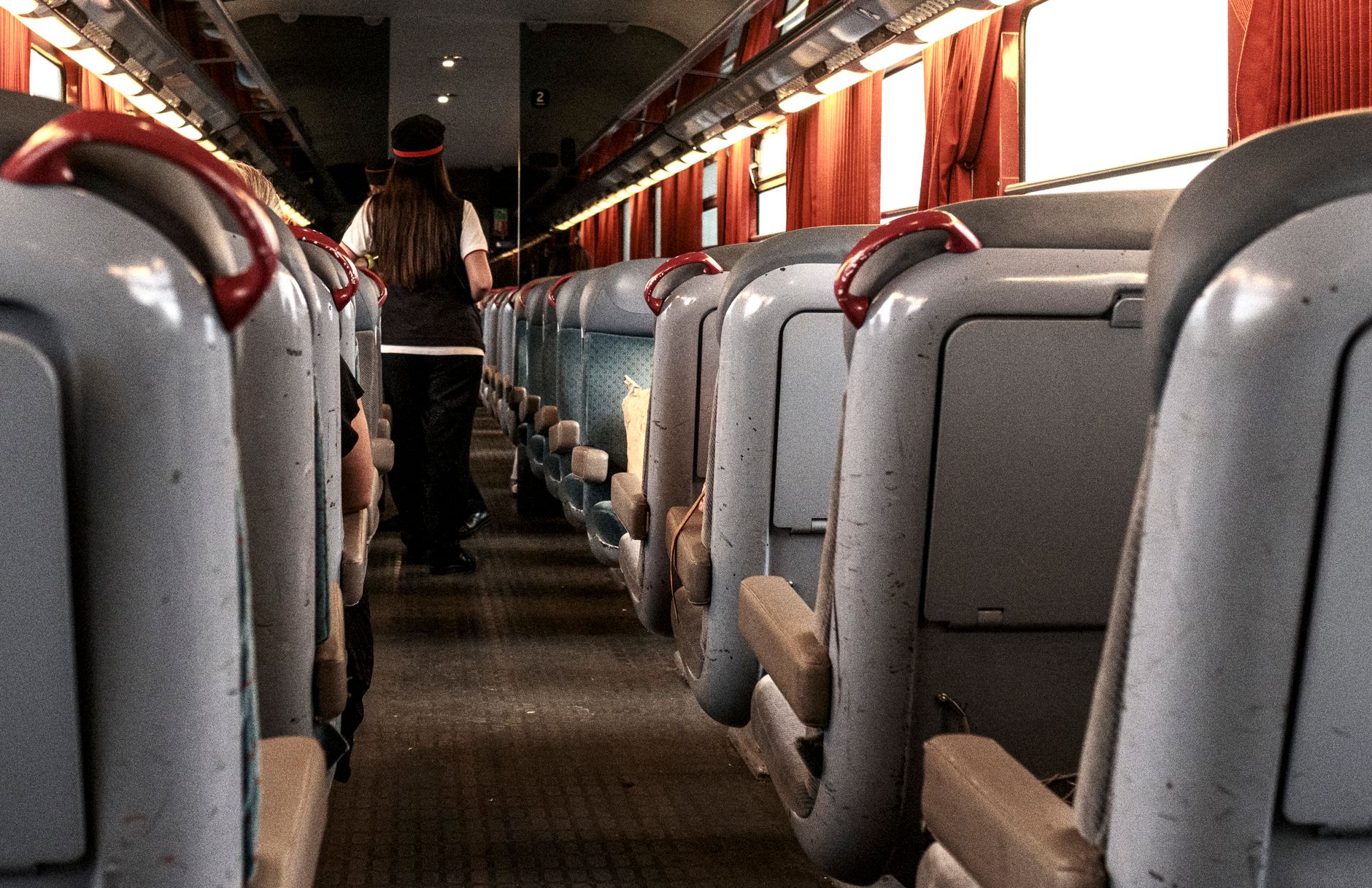
For a full 56-person enrollment, the 56-Passenger Motor Coach is normally the best starting point because it keeps the group together and carries luggage below deck. Reclining seats, overhead storage, a restroom, entertainment connections, and underfloor bays make long interstate legs more manageable. If the headcount drops, compare the baggage load and daily operating pattern rather than choosing seats alone. Midtown streets, hotel entrances, and theater curb space can favor a smaller vehicle for local shuttles, while the long-haul segment still favors the motor coach. Build the quote around actual luggage, mobility equipment, costumes, instruments, and the amount of time the coach must wait near Manhattan.
| Vehicle | Seats | Best For | Notes |
|---|---|---|---|
| 56-Passenger Motor Coach | 49-56 passengers | Use when the group is near full size and needs one vehicle for interstate travel, luggage, and repeated theater transfers. | Best long-haul comfort and capacity, with reclining seats, restroom, overhead storage, entertainment connections, and large underfloor luggage bays; requires planned truck-route access and authorized parking in NYC. |
| 40-50 Passenger Motor Coach | 40-50 passengers | Use when enrollment is below full capacity but the group still has substantial luggage or wants restroom-equipped highway equipment. | Provides similar highway comfort and luggage capacity with a little less seating, but still needs commercial loading zones, venue coordination, and a route suitable for a full-size coach. |
| 24-35 Passenger Mini Coach | 24-35 passengers | Use for a smaller group or a local shuttle when Manhattan access and curb timing matter more than maximum luggage capacity. | Easier to place at smaller hotels and neighborhood stops than a full-size coach, although cargo volume and restroom availability vary by vehicle and operator. |
| Executive Sprinter Van | 8-14 passengers | Use for executives, staff, airport transfers, or a small satellite group rather than a 56-person theater departure. | Works for compact groups and short transfers, with easier curb access but limited luggage space, fewer onboard amenities, and less efficient economics for a long multi-day origin. |
Routing, Timing, and On-the-Road Realities
For a New Jersey approach, dispatch commonly evaluates the New Jersey Turnpike, I-78, I-80, or I-95 before selecting the Lincoln Tunnel or George Washington Bridge, with the choice driven by the hotel's location and current restrictions. A coach coming from the north may use I-87, the New York State Thruway, I-95, or I-84, but the final Manhattan approach must account for low clearances, truck-route rules, and venue access. Pickup should be early enough to cover loading, headcount, rest stops, toll queues, and a realistic traffic buffer rather than the posted highway travel time. For a matinee, the group should generally be in the city well before the theater's recommended arrival window, with the coach dropping at an approved location and then moving to a legal waiting area. Buses must use NYC designated truck routes except for the nearest practical access to a destination, and the operator should carry a detailed route slip. Fifth Avenue restrictions, FDR Drive and parkway permit rules, security zones, construction, and event closures can change the planned path. Dispatch should validate the route shortly before the trip and give the driver current venue and hotel instructions.
The theater curb is a transfer point, not a guaranteed parking space. NYC DOT guidance identifies specific Midtown drop-off and layover locations, and operators must obey posted signs, avoid bus stops and no-stopping zones, prevent double parking, and shut down rather than idle while waiting. Rockefeller Center and Radio City Music Hall require group-sales or venue-specific pickup and drop-off coordination, while Broadway houses may be reached by a short pedestrian transfer from an approved curb. Bus parking meters and time limits apply in authorized Manhattan spaces, and private off-street lots are often the better choice for a long dinner or performance wait. A driver who reaches the theater early may need to leave the district and return at a timed pickup, which adds mileage and duty time. Under federal passenger-carrier rules, the driver can have up to 10 hours of driving after 8 consecutive hours off duty but cannot exceed 15 hours on duty in that work period; the carrier also tracks the 60- or 70-hour rolling limit. If the group arrives from far away, a second driver or a pre-trip overnight stop may be necessary before the theater day.
What This Typically Costs
A 56-Passenger Motor Coach quote usually combines a daily charter minimum with mileage, deadhead, and driver-duty calculations rather than one flat ticket price. In most markets, a multi-day NYC Theater group tour commonly runs a few thousand dollars per operating day, with higher totals when the coach must travel empty to the pickup city or return empty after the final drop. Ask whether the quote uses a daily mileage allowance, a per-mile overage, or a blended day rate, and confirm how hotel nights for the driver are handled. Seasonal peaks around December theater programs, spring school travel, holiday weekends, and major conventions can tighten equipment supply and raise rates. Typical line items include tolls, parking or bus-lot fees, fuel adjustments, driver lodging, taxes, and a customary driver gratuity. The lowest quote is not useful if it omits deadhead miles, required overnight rest, venue parking, or a second driver for an aggressive schedule.
Frequently Asked Questions
How many days should a 56-Passenger Motor Coach NYC Theater group tour take?
A practical NYC Theater group tour is usually three to five days, depending on the origin. Day 1 is primarily travel, with scheduled rest stops and an early evening arrival if the route permits. Days 2 through 4 can combine a Broadway or Off-Broadway performance with backstage, museum, dining, or neighborhood programming. A five-day plan gives more recovery time for distant origins and protects the theater schedule from highway delays. The right length depends on drive time, show time, hotel location, and whether the group wants a full day in Manhattan.
What are the best months for an NYC Theater group tour?
For most groups, April through June and September through early November offer the best operating balance. December is popular for holiday shows and Radio City Music Hall programs, but Midtown traffic, limited bus space, and demand around Christmas can complicate the schedule. July and August can work, though heat, summer construction, and heavier tourist traffic require more buffer. January and February may offer easier theater availability outside holiday periods, but winter weather can disrupt corridors such as I-80, I-78, I-95, and the New York Thruway. Book well ahead for school groups, senior programs, and weekend performances.
What does a 56-Passenger Motor Coach fit well?
A 56-Passenger Motor Coach is the workhorse of long-haul group travel: reclining seats, overhead storage, a restroom, DVD or USB capability, and luggage bays underneath. It fits a full group traveling together, especially when everyone has checked luggage or performance materials. The coach is less convenient for tight residential streets, small hotel driveways, or venues without a bus loading plan. A full passenger load also leaves less room for bulky instruments, costumes, wheelchairs, or production cases. Confirm the actual passenger count, baggage volume, accessibility needs, and whether any seats must remain open.
Does a motor coach need permits or special routing in NYC?
NYC requires charter and tour buses to use designated truck, through, or local bus routes except for the shortest access to a destination. The operator must carry a route slip identifying the origin, destination, and planned streets. Buses may not use parkways or FDR Drive without the applicable Highway Travel Permit, and permit availability is limited for certain eligibility categories. In Manhattan, parking is restricted to authorized spaces, with posted meter rates and time limits; private off-street lots may be more practical for a multi-hour stop. The carrier should verify current NYC DOT rules, posted signs, venue instructions, and any event-specific restrictions before dispatch.
How do driver hours affect a multi-day NYC Theater trip?
The driver must plan around passenger-carrier hours-of-service rules, including up to 10 hours of driving after 8 consecutive hours off duty and no more than 15 hours on duty in that work period. The carrier also tracks the 60-hour or 70-hour rolling on-duty limit, depending on its operating schedule. A day that includes loading, traffic control, parking, waiting, and a late theater return can consume duty time even when the coach is moving slowly. Long origins may require a second qualified driver, an overnight stop before Manhattan, or a split itinerary. Never schedule a theater curtain, dinner reservation, and return departure on the assumption that highway miles equal available driver time.
Where should a group stay when visiting NYC theaters by bus?
Most groups stage outside the core theater blocks, using hotels in Long Island City, Jersey City, Secaucus, Newark, Brooklyn, Yonkers, or other locations with coach access and a workable overnight plan. Manhattan hotels can reduce local transfer time but may have loading restrictions, narrow approaches, high parking costs, and limited space for a 56-Passenger Motor Coach. A hotel near a highway corridor can simplify the first and last travel days while the coach shuttles the group into Midtown. Confirm bus parking or a nearby secure lot before signing the room block. Give the hotel the coach dimensions, arrival window, luggage plan, and driver-room requirement.
What is a realistic sample itinerary for this group tour?
A common plan is Day 1 travel from the home city with meal and rest stops, followed by hotel check-in and a low-risk neighborhood dinner. Day 2 can use a morning workshop or theater education program, an afternoon Times Square or museum visit, and an evening Broadway performance. Day 3 may include Radio City Music Hall, Rockefeller Center, the Museum of Broadway, or a second performance, with loading and parking handled outside the theater curb. On the final day, load after breakfast, schedule one controlled Manhattan departure, and allow time for outbound traffic before the long return leg. The itinerary should show exact pickup windows, walking transfers, meal locations, show times, and the coach's waiting location.
How to Book
To quote this multi-day group tour, send the travel dates, pickup address, passenger count, luggage estimate, hotel information, show times, theater addresses, meal stops, and any wheelchair or equipment requirements. US Bus Trips can usually return a realistic preliminary quote within 4 business hours when the itinerary is complete enough to price deadhead, mileage, driver lodging, parking, and duty time. Confirmation should identify the motor coach class, pickup and drop-off windows, routing assumptions, included mileage, driver plan, cancellation terms, and pass-through charges. Contact US Bus Trips with the itinerary and a reachable trip coordinator so dispatch can validate the NYC Theater access plan before the group commits.
Related Trips You Might Also Consider
- Boston, MA to New York, NY
- Savannah — 14-Passenger Sprinter
- Alumni Tour — Southeast Region
- High School Band Tour — Mountain West Region
- Sports Team Travel — Pacific Northwest Region
- Wichita, KS to Oklahoma City, OK
- Cross-Country Charter Bus Overview
- All Group Trip Types
- See the Full Fleet (Sprinters through 56-pax coaches)
- Get a Free Quote in 60 Seconds