
US Bus Trips arranges Sports Team Travel for JV and varsity programs, club teams, showcase tournaments, college squads, and bowl-game groups moving through Washington, Oregon, and Alaska.
Overview
Pacific Northwest Sports Team Travel often follows the I-5 spine between Seattle, Tacoma, Olympia, Portland, Salem, Eugene, and Medford, with branches toward Spokane, Bellingham, Bend, Boise, and coastal tournament sites. Youth customers include JV and varsity programs, school districts, club organizations, and parent-managed teams traveling for league play, showcases, and state events. College groups may move between campus facilities, neutral-site competitions, airports, hotels, and bowl-game destinations. Common Seattle-area venues include Lumen Field, Climate Pledge Arena, Husky Stadium, and facilities around the University of Washington. Portland itineraries may use Providence Park, Moda Center, Veterans Memorial Coliseum, or the Oregon Convention Center, while Eugene trips often center on Autzen Stadium and Hayward Field. The bus is frequently the team's mobile base between practices, meals, hotels, and competition sites.
A normal group travel request includes athletes, coaches, athletic trainers, managers, parents, and sometimes school administrators or band members. Headcounts can range from fewer than a dozen people in an executive Sprinter to 50 or more passengers requiring a full-size motor coach, and large programs may need several vehicles. Cargo planning is critical because uniforms, ball bags, hockey or lacrosse gear, coolers, medical kits, folding tables, instruments, and personal luggage compete for storage. If a wheelchair or mobility device travels with the group, it should be listed before vehicle assignment so the operator can provide lift access and appropriate securement. Sports teams may also need early hotel departures, post-game meal stops, and a bus held nearby while the roster is inside a venue. Those details affect the vehicle, driver schedule, and staging plan more than the city name alone.
The Pacific Northwest creates more than one type of route. Seattle to Portland is a predictable intercity corridor, but coastal and mountain trips can add narrow approaches, elevation changes, winter weather, and fewer legal stopping locations. Puget Sound itineraries may involve Washington State Ferries between Anacortes and the San Juan Islands or between Port Townsend and Coupeville; vehicle reservations are available on those routes, and the reservation is separate from the ferry ticket. Alaska assignments are commonly airport, hotel, venue, or cruise-port work in Anchorage, Fairbanks, Juneau, Ketchikan, and Skagway rather than a continuous road circuit. Cruise-ship shore-excursion coach work requires tight coordination with ship arrival windows, port staging, passenger manifests, and local operating rules. A dispatcher should build time for loading, ferry check-in, weather, venue security, and the return movement instead of treating the itinerary as simple point-to-point mileage.
Fleet Options
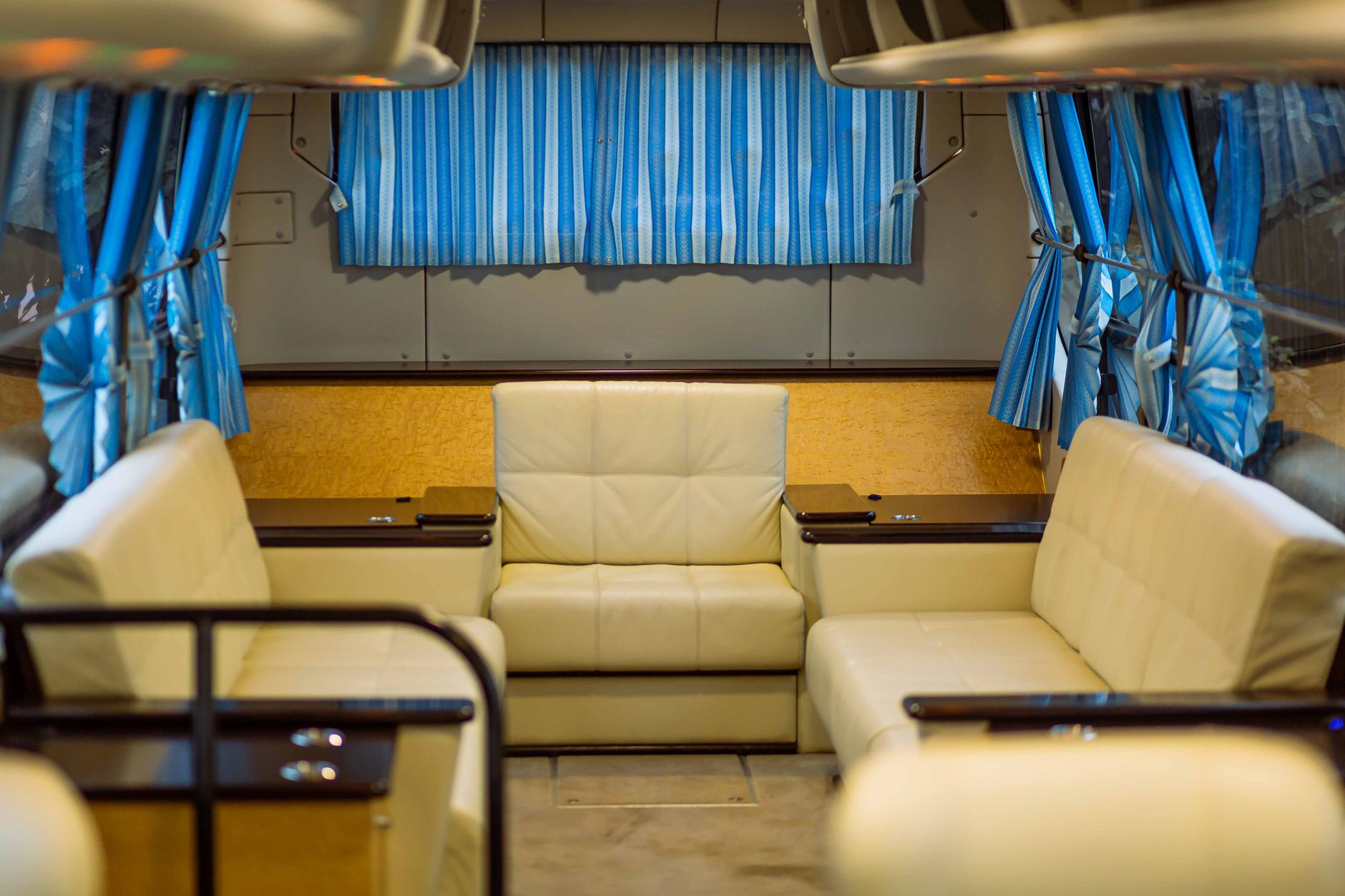
Choose the vehicle around the complete load: athletes, coaches, staff, luggage, uniforms, balls, cases, coolers, and accessibility equipment. A charter bus or motor coach is usually the most comfortable option for long I-5 segments and multi-day group travel because passengers can stay together and equipment can ride in underbody bays. Smaller vehicles fit hotel shuttles and narrow venue approaches but can run out of cargo space quickly. Seattle, Portland, Eugene, and downtown Alaska port areas may require a legal curbside unload followed by off-site staging rather than on-site parking. For large rosters, dispatch may assign multiple vehicles with a lead coach, consistent radio or phone procedures, and coordinated departure times.
| Vehicle | Seats | Best For | Notes |
|---|---|---|---|
| Full-size motor coach | 40-56 passengers | Use for varsity or college teams, large club rosters, and multi-day I-5, mountain, or cross-state itineraries where the group needs to stay together. | Best long-distance comfort with reclining seats, climate control, restroom availability on some units, and substantial underbody cargo space; verify equipment volume and accessible loading needs. |
| Mid-size motor coach | 24-38 passengers | Use for a club team, JV squad, or split roster traveling between Portland, Salem, Eugene, Tacoma, and Seattle. | Provides coach-style seating and useful luggage capacity in a shorter body that can be easier at smaller venues, although cargo space must be measured against team gear. |
| Mini bus | 18-30 passengers | Use for airport, hotel, practice, and venue shuttles or a secondary vehicle supporting a larger multi-bus movement. | Works well for short transfers and smaller loads, but limited underfloor storage means uniforms, coolers, wheelchairs, and equipment cases need an advance fit check. |
| Executive Sprinter | 8-14 passengers | Use for coaches, recruiters, officials, medical staff, or a small club group on short urban transfers and airport runs. | Comfortable for staff or small groups and useful on tight streets, but cargo and passenger capacity are limited; it is not a substitute for a team coach with substantial gear. |
Routing, Timing, and On-the-Road Realities
For I-5 Sports Team Travel, schedule Seattle, Tacoma, Olympia, and Portland departures outside the heaviest commute windows whenever the competition schedule allows. The corridor can slow sharply near Seattle, Tacoma, Joint Base Lewis-McChord, Vancouver, and Portland, so a game-day arrival should include a meaningful buffer rather than relying on navigation-app travel time. A morning pickup from a hotel may need separate loading windows for athletes, equipment, and accessibility devices. For venues such as Lumen Field, Climate Pledge Arena, Providence Park, Moda Center, and Autzen Stadium, confirm the coach entrance, curb restrictions, bus staging, and post-event pickup location in advance. Eugene, Salem, Bend, Spokane, and coastal destinations can require earlier departures because there are fewer alternate roads and longer stretches between fuel or meal stops. Mountain routes through the Cascades or central Oregon should be checked for snow, chain requirements, construction, and wind before dispatch.
Ferry and Alaska routing needs its own clock. Washington State Ferries recommends early arrival for vehicle reservations, with roughly 30 to 45 minutes for Port Townsend and Coupeville and 45 to 60 minutes for Anacortes and the San Juan Islands; reserved vehicles still need separate tickets. Reservations are route-specific, and drive-up or standby space may not protect a large coach from a missed sailing, so the sailing should be treated as a fixed appointment. Commercial or oversized vehicles can require advance review, and vehicle length, height, and width must be accurate. At Alaska cruise ports, the motor coach may have only a defined staging window, making manifest checks and passenger counts part of the departure procedure. Driver-hours planning should cover the full duty period, overnight hotel access, split shifts, and a second driver or relief vehicle when the itinerary cannot fit within legal rest limits.
What This Typically Costs
Pacific Northwest Sports Team Travel pricing is usually built from a daily vehicle minimum, mileage or route time, and the number of service days. A short Seattle to Portland run may price differently from a multi-day circuit through Spokane, Bend, Eugene, Boise, or Alaska, where deadhead miles and repositioning can materially change the quote. Seasonal peaks commonly include spring club tournaments, summer showcases, fall football, winter basketball, and bowl-game travel, with limited availability around major event weekends. Driver overnight lodging, parking, ferry charges, tolls, fuel adjustments, and extra layover or standby time may appear as separate line items. Driver gratuity is commonly budgeted separately rather than folded into the base rate. In most markets, a multi-day charter bus or motor coach assignment commonly runs a few thousand dollars per day before variable items, but the final range depends on vehicle size, dates, and the operating plan.
Frequently Asked Questions
Can a charter bus ride a Washington State ferry?
Yes, when the itinerary is built around the sailing schedule and the bus meets the ferry's vehicle requirements. For Anacortes to Friday Harbor, Orcas Island, Lopez Island, or Shaw Island, vehicle reservations are available and strongly recommended, but the reservation is not the passenger ticket. Washington State Ferries advises reserved vehicles to arrive roughly 45 to 60 minutes early on the Anacortes route, and commercial or oversized vehicles may require advance processing. The dispatcher also needs the exact vehicle length, height, and width before confirming the sailing plan.
What size bus works for a Pacific Northwest sports team?
The best fit depends on headcount, equipment volume, and whether the bus must remain with the team between games. A 24 to 35 passenger motor coach often works for club teams with rolling bags and limited equipment, while a full-size coach is more practical for varsity groups, college teams, and long legs on I-5. Large delegations may need two or more buses so athletes, coaches, staff, and equipment can be separated without blocking aisles. Wheelchair users should be identified before quoting so an accessible vehicle can be assigned rather than added at the last minute. For teams carrying bulky cases, request underbody storage and confirm whether the equipment exceeds normal compartment capacity.
Should a team use a charter bus or multiple smaller vehicles?
Most teams use a charter bus or motor coach for airport transfers, hotel-to-venue shuttles, and the intercity legs between Seattle, Tacoma, Portland, Eugene, and Spokane. Youth groups often add a smaller coach or executive Sprinter for coaches, officials, or a split schedule. College teams with trunks, ball bags, coolers, treatment tables, or equipment cases generally benefit from a full-size coach with substantial underfloor storage. A mini bus can handle short urban movements but may not have enough luggage space for a tournament weekend. The correct vehicle is determined by passengers plus cargo, not seats alone.
Can one bus stay with a team for a multi-day tournament?
Yes, if the itinerary includes enough dwell time and a legal driver schedule. A driver can remain with the group for several days, but required rest, maximum on-duty limits, and hotel access must be planned before the first departure. A second driver or vehicle may be needed for overnight travel, long game-day movements, or a schedule that exceeds normal service limits. The quote should identify whether the bus is parked at the hotel, staged near the venue, or released between movements. For multi-state group travel, dispatch should also account for state lines, mountain weather, ferry queues, and venue loading restrictions.
How does venue parking work for sports team travel?
Yes, but the venue must be contacted before arrival because coach parking is not the same as passenger drop-off. Seattle venues such as Lumen Field, Climate Pledge Arena, and Husky Stadium can involve event traffic, curb controls, and restricted staging. In Portland, teams may route to Providence Park, Moda Center, Veterans Memorial Coliseum, or the Oregon Convention Center, each with different bus access and event-day congestion. Spokane teams commonly use venues around the downtown sports district, while Eugene trips often involve Autzen Stadium, Hayward Field, or the University of Oregon campus. The operating plan should name a legal unload point, a separate pickup point, and a place for the motor coach to wait or park.
Can US Bus Trips arrange Alaska sports or cruise-port transportation?
Alaska work is usually arranged as port-to-venue transportation, airport transfers, or scheduled shore excursions rather than a continuous lower-48 road trip. Anchorage, Fairbanks, Juneau, Ketchikan, and Skagway each create different operating conditions, including limited staging, steep grades, seasonal weather, and cruise-port timing. A cruise shore-excursion coach must match the ship's arrival and departure windows, passenger manifest, port instructions, and guide requirements. Juneau, Ketchikan, and Skagway assignments may involve short city movements but tight coordination because multiple ships can discharge passengers at once. For school or college groups, confirm whether the bus carries the team only or shares a pre-arranged excursion with other passengers.
Can the bus handle wheelchairs and sports equipment?
Yes, provided the accessibility requirement is stated during the initial request. A lift-equipped vehicle can require more planning for loading time, storage, aisle clearance, and venue access. Wheelchairs, athletic equipment, musical instruments, uniforms, and medical supplies should be listed separately because they consume different types of space. If one coach cannot carry both passengers and equipment safely, two vehicles or a dedicated gear van may be the better operating plan. The confirmation should identify the accessible vehicle, loading order, pickup curb, and any hotel or venue limitations.
How to Book
To request a quote, have the dates, pickup address, headcount, equipment list, hotel, venues, ferry or cruise details, and complete itinerary ready. Include whether the team needs one bus, multiple vehicles, an accessible coach, airport service, or a dedicated equipment vehicle. US Bus Trips targets a realistic quote turnaround within 4 business hours when the routing information is complete. Confirmation normally identifies the vehicle type, passenger capacity, pickup and drop-off points, driver contact process, operating dates, included services, and known extra charges. Reach us with the itinerary and dispatch can turn the request into a practical group travel plan.
Related Trips You Might Also Consider
- Louisville, KY to Nashville, TN
- Williamsburg — 56-Passenger Motor Coach
- Corpus Christi, TX to Austin, TX
- Church Retreat — South Central Region
- College Band Tour — South Central Region
- Long Beach, CA to Los Angeles, CA
- Cross-Country Charter Bus Overview
- All Group Tour Destinations
- See the Full Fleet (Sprinters through 56-pax coaches)
- Get a Free Quote in 60 Seconds