
US Bus Trips coordinates College Band Tour transportation for marching bands, choral groups, directors, and chaperones traveling to away games, festivals, HBCU classics, rodeos, and destination weddings.
Overview
A South Central College Band Tour is often a multi-day movement rather than a simple game transfer. A school may load in Houston, travel through Austin or San Antonio, continue to Dallas-Fort Worth, and add Oklahoma City, Tulsa, Little Rock, Baton Rouge, New Orleans, or Jackson before returning home. The Texas Triangle alone creates long I-45, I-35, and I-10 legs between Houston, Dallas, Austin, and San Antonio, while an eastern extension can add Shreveport, Baton Rouge, New Orleans, or Jackson. Common customers include university marching bands, pep bands, concert bands, choral departments, alumni organizations, HBCU programs, athletic departments, and festival organizers. The group may need buses for students and staff plus separate movements for instruments, uniforms, directors, and accessible passengers. The itinerary should distinguish rehearsal time, hotel transfer time, venue load-in, performance call, game release, meal stops, and the return leg.
Away-game and festival patterns vary by season and campus calendar. Fall demand is driven by football, homecoming, HBCU classics, state-fair weekends, and band showcases; the State Fair Classic uses the Cotton Bowl and Fair Park area in Dallas, while the Bayou Classic centers on Caesars Superdome and a larger New Orleans weekend program. Other South Central movements can involve Texas Southern and Prairie View events around Houston, Southern University in Baton Rouge, Grambling State, Jackson State at Mississippi Veterans Memorial Stadium, Arkansas-Pine Bluff, Oklahoma State or Oklahoma events, and regional festival venues in Little Rock or northwest Arkansas. Spring brings concert festivals, collegiate music assessments, choir invitations, and destination weddings that may require several hotel-to-venue runs instead of one stadium arrival. Rodeo travel can add fairgrounds, livestock facilities, arenas, and equipment staging to a normal performance itinerary. The vehicle request should identify whether instruments ride with passengers or require a dedicated cargo solution.
Operational planning starts with a written equipment manifest. Brass and woodwind cases are usually manageable in underfloor bays, but percussion, sousaphones, tubas, timpani, drumline hardware, rolling trunks, risers, garment bags, and uniforms can consume the space expected for ordinary luggage. Wheelchairs and other mobility devices must be declared when booking because lift-equipped inventory and secure storage need to be assigned in advance. Large groups are commonly divided across several charter bus vehicles, with a lead bus, section assignments, synchronized departures, and a single trip contact responsible for final headcounts. Stadiums, fairgrounds, campuses, convention centers, and downtown hotels may impose separate coach entrances, unloading points, parking permits, or no-idling rules. The dispatcher needs the exact venue gate, load-in appointment, hotel address, and release plan before selecting the fleet. That level of detail keeps a South Central group travel plan from failing at the curb after a long highway run.
Fleet Options
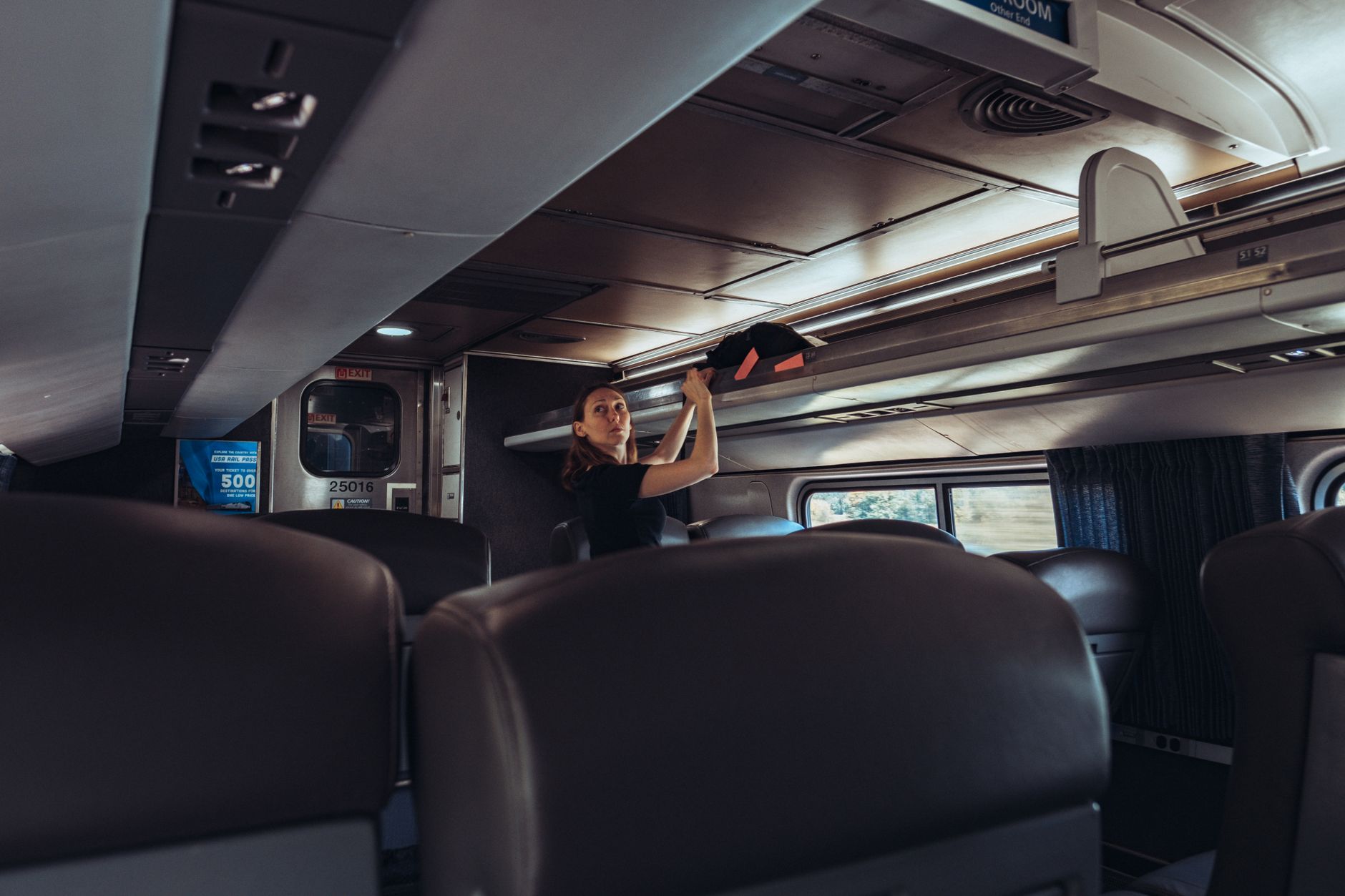
Start with the headcount, then subtract the space that instruments, uniforms, luggage, wheelchairs, and chaperone supplies will occupy. A motor coach is generally the practical choice for long I-10, I-35, or Texas Triangle legs because it gives passengers consistent seating and usually has substantial underfloor storage. Smaller groups may fit a mini coach or charter bus, but a compact vehicle can become overloaded when percussion cases and rolling trunks are added. Tight streets, hotel loading zones, campus service roads, French Quarter approaches, Fair Park access, and downtown venue parking may favor a split fleet rather than one oversized bus.
| Vehicle | Seats | Best For | Notes |
|---|---|---|---|
| Full-size motor coach | 40-56 passengers | Use this for a full marching band, choir, or combined student-and-chaperone group traveling between major South Central metros or across several states. | Best long-haul comfort and usually the strongest underfloor storage; confirm the exact luggage-bay layout for percussion, tubas, risers, and wheelchairs. |
| Mid-size charter bus | 30-40 passengers | Choose this for a smaller ensemble, staff group, or one section of a larger fleet when the equipment manifest is controlled. | Useful for a moderate group and more manageable at campus or hotel loading areas, but cargo capacity varies and may not support a large instrument inventory. |
| Mini coach | 20-35 passengers | Use it when the group is below full-coach size or when multiple pickup points and restricted venue access make a smaller vehicle useful. | A practical split-fleet vehicle for staff, singers, or overflow, with better street fit than a full-size coach but less room for cases and personal luggage. |
| Executive Sprinter or mini bus | 8-24 passengers | Use this for leadership travel, airport transfers, small choral groups, wedding-related movements, or a support unit traveling alongside the main charter bus. | Works for directors, soloists, chaperones, or a light-travel subgroup; it is not a replacement for a cargo-capable coach carrying a full band inventory. |
Routing, Timing, and On-the-Road Realities
The standard South Central loop is Houston to Dallas on I-45, Dallas to Austin on I-35, Austin to San Antonio on I-35, and San Antonio back to Houston on I-10, with New Orleans added eastbound through Houston, Baton Rouge, and I-10. Other common routes run Dallas or Fort Worth to Oklahoma City and Tulsa, Dallas to Little Rock through I-30, Houston to Shreveport on US-59 or I-69 and I-20 connections, and Baton Rouge or New Orleans to Jackson on I-10 and I-55. Austin I-35 is especially sensitive during morning and afternoon peaks, while Houston, Dallas-Fort Worth, Baton Rouge, and New Orleans need event-day buffer beyond normal map estimates. For a game-day arrival, the bus should reach the venue or designated staging lot before the student call, leaving time for unloading cases, changing uniforms, security screening, and walking to the band room or seating area. Pickups should generally avoid the worst commuter windows when the itinerary allows, but an earlier departure is only useful if the venue will accept the group and the bus has a legal place to wait. A dispatcher should also verify construction, toll-road preferences, weather exposure, and whether a campus escort is required.
Venue access is often the limiting factor after the interstate portion is complete. The Cotton Bowl and Fair Park can experience heavy traffic during State Fair operations, while Caesars Superdome travel requires coordination with downtown New Orleans streets, event security, and coach staging. Baton Rouge campus events, Jackson State events near Mississippi Veterans Memorial Stadium, Oklahoma stadium districts, and large Texas campuses may direct buses to remote lots rather than the public entrance. Historic districts, French Quarter-area hotels, narrow downtown streets, and wedding properties may require a mini coach or a walking transfer from a legal bus stop. Multi-day runs must account for driver hours, required breaks, hotel check-in, vehicle parking, and whether the same driver can legally cover the next movement. If the itinerary requires late-night returns followed by early rehearsals, dispatch may use a second driver or stage a relief vehicle. Keeping the equipment bus, passenger coaches, and staff vehicle on a shared release plan prevents one unit from departing while cases or wheelchairs remain at the venue.
What This Typically Costs
Pricing for a South Central College Band Tour usually starts with a daily minimum, then changes with mileage, vehicle count, trip length, and the number of service days. A short Texas Triangle move may price differently from a multi-day I-10 or I-35 run because deadhead miles, repositioning, and overnight staging can add service time. Fall football, State Fair Classic weekends, Bayou Classic weekend, major rodeos, spring festivals, and wedding-heavy dates commonly tighten availability and raise seasonal pricing. For overnight work, the quote may include driver lodging, parking, meal-related operating costs, and relief-driver planning when the schedule exceeds one driver's legal duty limits. Common line items include fuel adjustments, tolls, venue parking, driver gratuity, cleaning, and extra loading or standby time. In most markets, a full-size motor coach commonly runs a few thousand dollars per day, while a multi-vehicle package is priced from the combined fleet and operating days rather than a single seat rate.
Frequently Asked Questions
How far ahead should we book a College Band Tour in the South Central region?
Most college band and choral groups should reserve buses several months ahead, especially for fall football and festival weekends. State Fair Classic travel in Dallas, Bayou Classic travel in New Orleans, homecoming weekends, spring music festivals, rodeos, and destination weddings can consume local inventory quickly. A short-notice request may still work, but it can require vehicles from another market, creating deadhead miles and a higher operating cost. The earlier the dates, pickup address, equipment count, and hotel plan are known, the more accurately dispatch can protect the schedule.
How many people fit on a charter bus with band equipment?
A full-size charter bus commonly carries about 40 to 56 passengers, but the usable capacity depends on instruments, garment bags, coolers, and personal luggage. A band with tubas, percussion cases, sousaphones, timpani, or large choral riser equipment may need fewer seated passengers per vehicle than a standard athletic group. The equipment manifest should identify hard cases, oversized pieces, rolling trunks, uniforms, and wheelchairs before the vehicle is assigned. For some groups, a second bus or separate support vehicle is operationally better than filling every seat and blocking aisles with gear.
Can you coordinate several buses for one college band?
Yes, multiple buses are common for a large College Band Tour. Dispatch normally separates the group by section, departure location, hotel, or equipment assignment and designates one lead vehicle and one trip contact. The buses need coordinated pickup windows, radio or phone communication, venue arrival instructions, and a loading plan that prevents one bus from waiting while another is unloaded. For stadium events, the fleet may stage in different lots because Cotton Bowl, Caesars Superdome, campus stadium, convention-center, and downtown access rules rarely match.
Which South Central routes are typical for away-game and festival travel?
The main South Central corridors are I-35 between San Antonio, Austin, Waco, and Dallas-Fort Worth; I-45 between Houston and Dallas; and I-10 linking Houston, San Antonio, and New Orleans. Common extensions include US-59 or I-69 toward Houston and Shreveport, I-20 toward Tyler, Longview, and Jackson, and I-40 or I-44 for Oklahoma City and Tulsa connections. Austin I-35 congestion can disrupt a tight schedule, while Houston approaches, Dallas-Fort Worth interchanges, Baton Rouge, and New Orleans require extra event-day buffer. A dispatcher should build the itinerary around venue load-in times rather than assuming the posted highway drive time will hold.
What vehicle is best for a college choir or marching band?
The best vehicle depends on passenger count, equipment volume, hotel pattern, and whether the route enters tight urban streets or event lots. A 40- to 56-seat motor coach suits a large band or chorus traveling several hours with underfloor luggage space, reclining seats, climate control, and onboard restroom availability on many models. A 24- to 35-seat mini coach works well for a smaller ensemble, staff, or a split fleet, but its cargo bay is usually less forgiving for instruments. Executive Sprinters and mini buses help with directors, soloists, chaperones, or overflow but should not be treated as a substitute for dedicated instrument capacity. A site check may be needed for historic districts, hotel alleys, campus service roads, French Quarter approaches, and venues with restricted coach parking.
Can a charter bus accommodate wheelchairs and mobility equipment?
A wheelchair can usually be accommodated when a lift-equipped vehicle is reserved in advance, but accessible inventory is limited compared with standard coaches. The request should state the number of wheelchair users, whether each rider remains in the chair, chair dimensions, and whether boarding assistance is required. Wheelchairs and mobility devices also consume storage or lift space, so the manifest must be reviewed with instruments and luggage together. Accessible service should be confirmed in writing before dispatch, particularly for multi-state travel and peak fall weekends.
What should we expect when traveling to an HBCU football classic?
The Bayou Classic is a recurring New Orleans example where transportation must account for more than the football game. The weekend can include a battle of the bands, pep rallies, concerts, hospitality events, and game-day movement around the Caesars Superdome. Dallas travel for the State Fair Classic commonly involves the Cotton Bowl, Fair Park, State Fair crowds, and restricted event-day bus access. Houston, Prairie View, Baton Rouge, Jackson, and Memphis-area HBCU events can also involve band showcases, tailgates, and staged arrivals that require a detailed parking and release plan.
How to Book
To book, provide travel dates, pickup address, passenger count, instrument and luggage inventory, accessible-service needs, hotel locations, venue names, and the complete movement schedule. Include whether the group needs one motor coach, several buses, a separate equipment vehicle, airport transfers, rehearsal shuttles, or post-event returns. US Bus Trips can typically return a workable quote within 4 business hours when the itinerary and headcount are complete. Confirmation should identify the vehicle type, passenger capacity, pickup times, operating dates, driver and lodging assumptions, parking or toll exclusions, cancellation terms, and the assigned trip contact; reach us with the itinerary and dispatch questions before the dates are released.
Related Trips You Might Also Consider
- Poconos — 36-Passenger Mini Coach
- Choir Competition — Northeast Region
- Albuquerque, NM to Santa Fe, NM
- Nashville Music — 36-Passenger Mini Coach
- Wichita, KS to Oklahoma City, OK
- Mount Rushmore — 56-Passenger Motor Coach
- Cross-Country Charter Bus Overview
- All Group Tour Destinations
- See the Full Fleet (Sprinters through 56-pax coaches)
- Get a Free Quote in 60 Seconds