
US Bus Trips arranges charter bus and motor coach service for school, college, and community choirs traveling to competitions, festivals, exchanges, and performances across the Northeast.
Overview
A typical Northeast Choir Competition trip may be a same-day school run, a weekend festival, or a multi-day tour combining adjudication, concerts, campus exchanges, and community appearances. School groups often leave from suburban districts for venues in Boston, Worcester, Providence, Hartford, New Haven, Fairfield, Albany, or Philadelphia. College and community choirs are more likely to build a performance loop through New York City, Boston, Philadelphia, and Connecticut, with hotel nights between engagements. A documented collegiate touring pattern has linked Boston, Fairfield, Philadelphia, and New York City for performances and community activities. The transportation plan must cover singers and directors as well as chaperones, accompanists, uniforms, personal bags, and any mobility equipment.
Northeast group travel often involves 30 to 55 passengers, but combined festivals can require multiple vehicles serving different schools or ensembles. Common destinations include churches and performing arts spaces in Boston, college venues around Worcester and Springfield, Sacred Heart University in Fairfield, and campuses in Providence, New Haven, Hartford, Burlington, Manchester, and Portland. New York City programs may use churches, universities, theaters, or public performance sites where a coach cannot remain curbside. Philadelphia routes may involve university, church, or civic venues near Center City, while upstate New York circuits commonly connect Albany, Syracuse, Rochester, and Buffalo. Directors should send a full cargo description because a choir with costumes, keyboard cases, risers, music stands, and rolling equipment needs different storage than a group carrying only garment bags.
Seasonality is driven by spring adjudication and festival calendars, fall collegiate and school programs, and December concerts and holiday appearances. Friday departures and Sunday returns create pressure on I-95, the Connecticut Turnpike, the New Jersey Turnpike, the Massachusetts Turnpike, and I-90 approaches. Urban venues in Boston and New York City commonly require a timed curb arrival, a fast unload, and off-site coach staging rather than all-day parking. A charter bus may need to drop the choir near the venue and reposition while singers rehearse, perform, or attend awards. US Bus Trips plans the vehicle count, loading order, driver relief, hotel location, and legal duty-day limits before confirming a multi-city Northeast itinerary.
Fleet Options
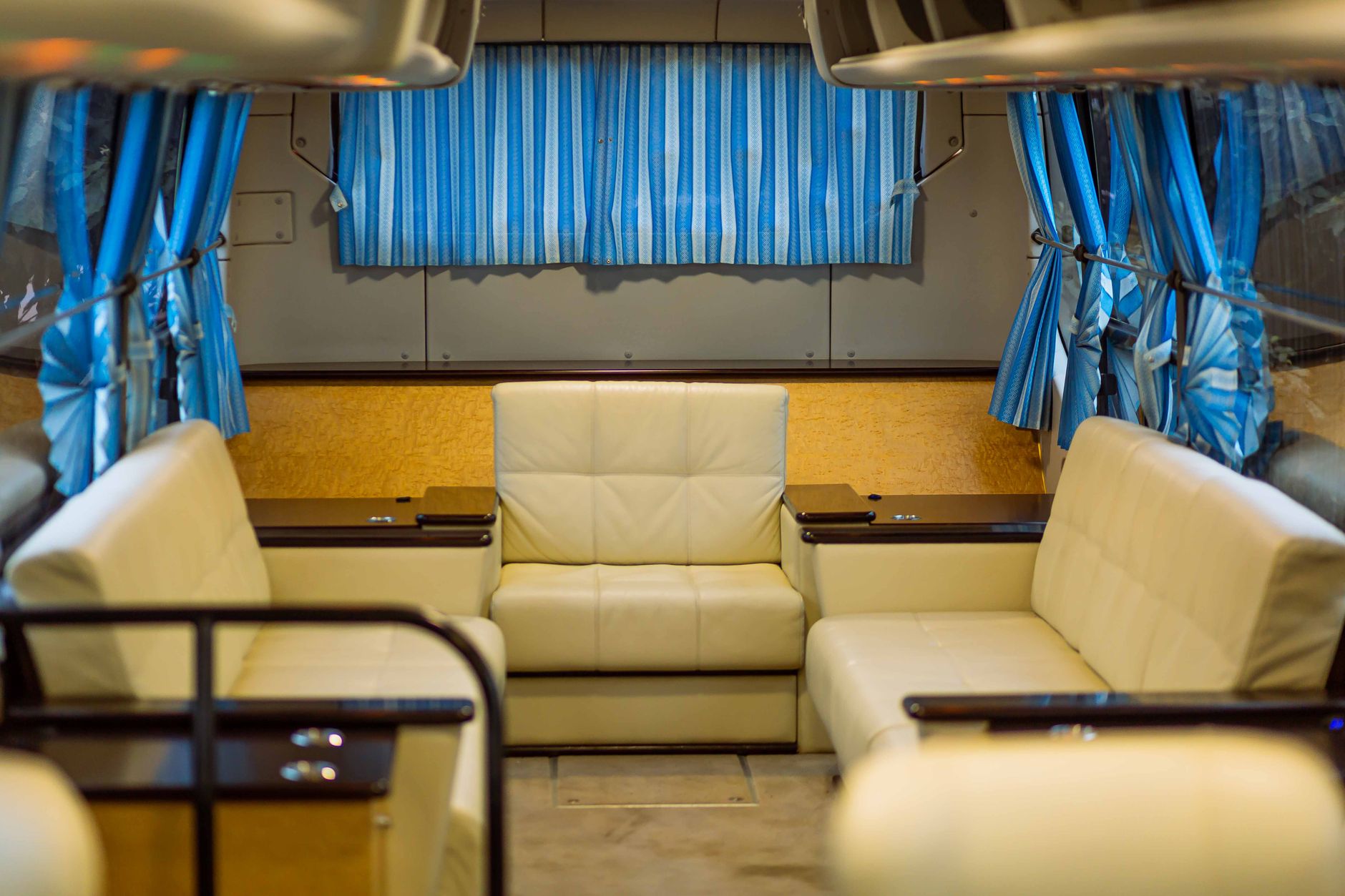
Choose the vehicle around passenger count, cargo volume, and the number of venue moves, not just the distance between cities. A charter bus offers the best fit for a full choir, overnight bags, uniforms, and underfloor equipment storage. A motor coach is usually more comfortable for long Northeast group travel because it provides reclining seats, climate control, and restroom access on many models. Smaller vehicles are easier to place near tight urban venues, but they usually trade away luggage space and onboard amenities. For dense Boston or New York City itineraries, confirm the carrier's loading and staging plan before finalizing the fleet.
| Vehicle | Seats | Best For | Notes |
|---|---|---|---|
| Full-size motor coach | 40-56 passengers | Use for a complete school, college, or community choir traveling between cities or staying overnight. | Best comfort and underfloor storage for overnight luggage, uniforms, music cases, and longer I-95 or I-90 legs; verify venue clearance and staging access. |
| Mini coach | 24-38 passengers | Use when the group is below full-coach size or the itinerary includes smaller campuses and tighter streets. | Useful for smaller ensembles and narrower approaches, with more limited luggage capacity than a full-size motor coach and no assumption of restroom availability. |
| Mini bus | 18-28 passengers | Use for local shuttles, satellite parking, or a small choir moving between a hotel, rehearsal site, and venue. | Works for short transfers, airport moves, or split loads, but cargo space can be limited for costumes, instruments, and overnight bags. |
| Executive Sprinter | 8-14 passengers | Use for leadership teams, accompanists, accessibility support, or a compact community choir with light baggage. | Easy to position at urban curbs and suitable for directors or a small ensemble, but it has limited equipment and luggage capacity compared with a charter bus. |
Routing, Timing, and On-the-Road Realities
The main Northeast group travel corridors are I-95 and its connected parkways between Boston, Providence, New Haven, Stamford, New York City, Newark, and Philadelphia, plus I-90 between Boston, Worcester, Albany, Syracuse, Rochester, and Buffalo. Routes into Vermont, New Hampshire, and Maine commonly use I-89, I-93, I-91, I-95, or regional highways, with Burlington, Manchester, Concord, Portland, and Bangor requiring separate timing assumptions. Short map distances do not guarantee short bus days because toll plazas, construction, weather, bridge approaches, and metro bottlenecks affect a full-size motor coach differently from a passenger car. For morning performances, pickups should usually be early enough to clear the first peak before the group reaches the venue district. For afternoon or evening concerts, avoid placing a long transfer through Stamford, the Bronx, Newark, or Philadelphia inside the weekday peak.
Venue access is often the controlling issue. Boston streets around Back Bay, downtown churches, and college districts can restrict coach movement, while New York City requires a precise passenger drop and a legal staging plan rather than an assumption that the driver can wait outside. Philadelphia's Center City, Providence's downtown core, New Haven campuses, and older college streets in New England can present similar curb and turning constraints. Ask the venue for bus entrance instructions, clearance limits, loading windows, security procedures, and the location of coach parking before departure. A driver-hours review is essential when a Choir Competition includes several cities, because a group can exceed a comfortable operating day even when each individual leg is short. For multi-day routing, place the overnight near the next morning's venue when practical and keep toll, parking, and weather contingencies in the working schedule.
What This Typically Costs
Choir Competition transportation is priced from the vehicle's daily minimum, then adjusted for mileage, routing, season, and the time the coach remains committed. A one-day local movement may price differently from a multi-day Northeast loop because the carrier may need to cover deadhead miles, toll roads, driver lodging, and vehicle positioning. Spring festival season and December concert travel commonly tighten availability, especially around Boston, New York City, Philadelphia, and college campuses. Typical line items include tolls, parking or staging fees, driver lodging, fuel adjustments, and a customary driver gratuity handled separately from the transportation charge. In most markets, a multi-day motor coach assignment commonly runs a few thousand dollars per day, while a larger multi-vehicle movement increases with each vehicle and driver team. Request an itemized quote so the group can distinguish transportation, lodging, tolls, parking, and optional waiting time.
Frequently Asked Questions
Can a charter bus stay at a Northeast choir venue all day?
Yes, but the itinerary should be built around the performance call time rather than the posted concert time. Boston, New York City, Philadelphia, and other dense Northeast destinations often require an early arrival for unloading, security, changing, and warmup. The driver may need a separate staging location while the choir rehearses because curb space is rarely available for all-day parking. A charter bus can then return for a scheduled pickup after the performance, subject to the driver's legal hours and the venue's loading rules.
How many passengers usually travel to a Choir Competition?
A practical planning range is often 35 to 55 passengers per school or community group, although college touring choirs may be smaller and combined festivals can require several vehicles. Headcount should include singers, directors, chaperones, accompanists, accessibility aides, and any guests riding with the group. Seat count alone is not enough because garment bags, keyboard cases, risers, percussion, luggage, and mobility equipment consume storage space. Provide the carrier with the final passenger count and a cargo list before selecting the vehicle.
What equipment can the bus carry?
A standard motor coach generally works for a full choir with overnight luggage when the cargo is limited to personal bags and uniforms. If the group carries keyboards, music stands, rolling cases, portable risers, or substantial costumes, reserve underfloor capacity and avoid filling every seat. A mini coach can fit a smaller ensemble but may have less luggage volume and fewer amenities. For a large festival, two or more charter bus vehicles may be safer operationally than one overloaded coach.
What Northeast cities are common for choir tours?
Common Northeast group travel patterns include Boston to Providence and New Haven, New York City to Fairfield or Philadelphia, and college circuits linking Albany, Syracuse, Rochester, and Buffalo. Other movements connect Hartford, Worcester, Springfield, Burlington, Manchester, Portland, and southern Maine with festivals at colleges, churches, civic theaters, and performing arts centers. One documented collegiate tour pattern has included Boston, Fairfield, Philadelphia, and New York City, showing how choir itineraries can combine performances with exchanges and community appearances. The exact route should account for venue access, driver hours, tolls, and overnight location rather than relying only on map distance.
How do you coordinate several buses for one festival?
Large groups should use a movement plan that identifies vehicle numbers, passenger manifests, cargo assignments, lead staff, and separate loading windows. Two charter bus vehicles can stage at different access points or divide singers from instruments when a venue has limited curb space. In Manhattan, Boston, and Philadelphia, one coach may need to drop passengers while another waits at an approved off-site location. Keep all vehicles on the same radio or phone plan and assign one group leader to communicate with each driver.
When should our group leave for a Northeast performance?
The Northeast is most demanding during weekday morning and afternoon peaks, Friday departures, spring festival weekends, and holiday concert periods. I-95 through Connecticut, Rhode Island, Massachusetts, New York, New Jersey, and Pennsylvania can lose substantial time around Stamford, New Haven, Hartford-area connectors, Providence, Boston, the Bronx, Newark, and Philadelphia. I-90 and its approaches create similar planning issues around Albany, Worcester, the Berkshires, and western Massachusetts. Build recovery time into the itinerary and avoid scheduling a performance immediately after a long peak-period transfer.
Can accessible transportation be arranged for choir members?
Yes. A school, college, or community choir should disclose mobility requirements when requesting the quote, including wheelchair dimensions, whether a passenger remains seated during travel, and whether a lift or ramp is required. Not every vehicle in every market has the same accessibility configuration, and an accessible coach may require earlier sourcing. Wheelchairs, walkers, and medical equipment also need a storage plan that does not block emergency aisles or other luggage. Confirm boarding time, venue ramp access, and return procedures with both the carrier and the event site.
How to Book
Start with the travel dates, pickup address, passenger count, cargo list, accessibility needs, and complete itinerary, including rehearsal, performance, hotel, meal, and return times. Include every city and venue, especially if the Choir Competition combines Boston, New York City, Philadelphia, New England, or upstate New York stops. US Bus Trips can usually return an initial quote within 4 business hours when the schedule and headcount are complete. Confirmation materials identify the vehicle type, pickup instructions, routing assumptions, driver contact process, and known toll, parking, lodging, or waiting-time items; reach us through the booking request or phone team to review the operating plan.
Related Trips You Might Also Consider
- New Orleans, LA to Baton Rouge, LA
- Robotics Competition — Southeast Region
- Corporate Roadshow — Midwest Region
- Academic Decathlon — Northeast Region
- Aurora, CO to Denver, CO
- Boston, MA to New York, NY
- Cross-Country Charter Bus Overview
- All Group Tour Destinations
- See the Full Fleet (Sprinters through 56-pax coaches)
- Get a Free Quote in 60 Seconds