
US Bus Trips coordinates Corporate Roadshow transportation for sales teams, incentive groups, leadership retreats, and executive off-sites moving between Midwest cities.
Overview
A Midwest Corporate Roadshow usually combines customer meetings, product demonstrations, sales training, dinners, and executive travel across several cities in one operating block. A common customer is a technology, medical, manufacturing, financial, or consumer brand moving a sales team from Chicago to Milwaukee, Madison, Minneapolis, Des Moines, Indianapolis, Detroit, Columbus, or Cleveland. Other programs pair a national meeting with client stops near McCormick Place, Navy Pier, the Donald E. Stephens Convention Center, Huntington Place, the Indiana Convention Center, the Greater Columbus Convention Center, the Huntington Convention Center of Cleveland, or the Minneapolis Convention Center. The vehicle may serve as a daily transfer unit, a secure gear carrier, or a rolling meeting base between scheduled stops. A charter bus keeps the group together, but dispatch still needs realistic loading windows and venue access instructions.
Chicago is often the practical Midwest starting point because routes fan out along I-90, I-94, I-80, I-88, and I-65. A team may run Chicago to Milwaukee and Madison, continue to Minneapolis, then return through Des Moines or Iowa City, or travel east through South Bend, Ann Arbor, Detroit, Toledo, Cleveland, and Columbus. Indianapolis adds common stops at the Indiana Convention Center, Lucas Oil Stadium, Gainbridge Fieldhouse, and large suburban office campuses, while St. Louis and Kansas City are frequent western extensions for national sales meetings. Big Ten athletics and high-school marching-band schedules create additional demand around campuses such as Northwestern, Wisconsin, Michigan, Michigan State, Ohio State, Indiana, Purdue, Illinois, Iowa, Minnesota, and Missouri. Those event movements often need earlier staging, controlled loading, uniform bags, instruments, mobility equipment, and parking plans that differ from an ordinary corporate transfer.
Group size varies from a senior leadership team of fewer than 15 to a full sales organization of 50 or more, with larger programs using several buses. Executive off-sites usually prioritize quiet cabins, direct routing, and flexible stops, while sales incentives may add dinners, brewery visits, golf resorts, stadium tours, or evening entertainment. Equipment changes the calculation: product cases, pop-up displays, sample kits, garment bags, instruments, uniforms, coolers, and wheelchairs occupy space that is not shown in the seat count. A motor coach is generally the right long-haul platform when the group wants luggage bays, reclining seats, climate control, and onboard restrooms, but smaller vehicles can work better at constrained office campuses and hotel docks. For a multi-vehicle movement, one dispatcher should control manifests, bus order, driver contacts, staging locations, and release times.
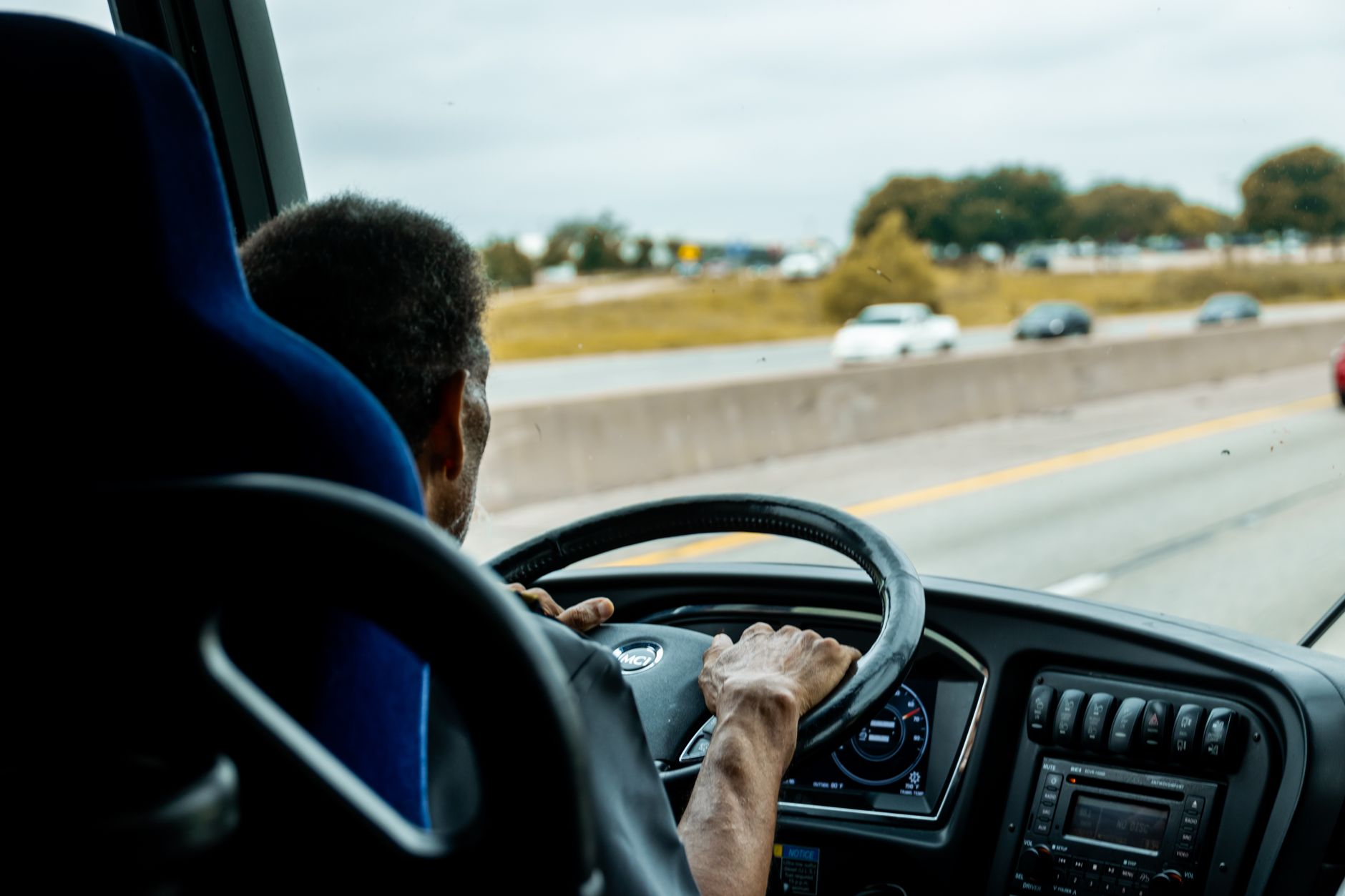
Fleet Options
Vehicle selection starts with headcount, luggage, equipment, and the number of daily stops, not just the advertised seat count. A charter bus or motor coach gives the best comfort for long I-80, I-90, and I-94 legs, while a mini coach or executive Sprinter is easier at office campuses, hotel docks, and tight downtown loading areas. Leave capacity for garment bags, display cases, instruments, uniforms, wheelchairs, and personal luggage instead of planning to fill every seat. Chicago, Detroit, Minneapolis, St. Louis, and campus venues may impose curb, height, staging, or parking restrictions that influence the final vehicle mix.
| Vehicle | Seats | Best For | Notes |
|---|---|---|---|
| Executive Sprinter | 8-14 passengers | Use it for a leadership off-site, airport transfer, client dinner circuit, or small roadshow crew making frequent urban stops. | Best for light luggage and small executive groups; limited cargo space means large displays, instruments, or many garment bags require a separate plan. |
| Mini bus | 18-32 passengers | Choose it for a compact sales team, incentive group, or support unit traveling between nearby Midwest metros. | More maneuverable than a full motor coach and useful at office parks, hotels, and campuses, but storage is less forgiving when every passenger has substantial luggage. |
| Mini coach | 33-40 passengers | Use it for a regional Corporate Roadshow with moderate luggage, product cases, and repeated hotel or client-site movements. | Provides a useful middle ground for comfort and capacity; confirm underfloor storage, wheelchair access, and venue clearance before assigning it to equipment-heavy work. |
| Motor coach | 50-56 passengers | Choose it for a full sales team, incentive group, college athletics movement, marching band, or multi-state group travel itinerary. | Offers the strongest long-haul comfort and luggage capacity, but requires larger turning space, designated loading zones, and advance parking coordination at downtown venues. |
Routing, Timing, and On-the-Road Realities
The core Midwest routing network follows I-80 across northern Illinois and Iowa, I-90 through Wisconsin, Illinois, Indiana, and Ohio, and I-94 from Chicago through Milwaukee and Michigan toward Detroit. I-80 and I-94 around Joliet, the Borman Expressway, and the Illinois-Indiana state line can absorb substantial commuter and freight traffic, so a motor coach should not be scheduled with sedan-style margins. Chicago hotel pickups near the Loop, River North, McCormick Place, or O'Hare require a confirmed curb or loading zone rather than an assumed street stop. Detroit itineraries should account for the I-94 corridor, DTW access, downtown event traffic, and construction-related lane shifts; Cleveland and Columbus plans should identify arena, convention-center, campus, or hotel loading procedures. Minneapolis, Des Moines, St. Louis, and Kansas City often offer easier large-vehicle staging, but venue-specific restrictions still need confirmation. For morning meetings, dispatch commonly targets an early pickup and builds a substantial arrival buffer for tollway incidents, work zones, weather, and security checks.
Venue timing matters as much as highway mileage. McCormick Place, United Center, Wrigley Field, Huntington Place, the Indiana Convention Center, Nationwide Arena, Ohio Stadium, Kinnick Stadium, Camp Randall Stadium, and other major sites may use separate bus entrances, remote staging, or timed unloading. College football Saturdays and high-school band competitions can fill campus lots and close normal curb space, so the bus may unload at a designated perimeter point and reposition. Fall weather, winter snow, and spring construction can slow I-90 and I-94 movements across Wisconsin, Minnesota, Michigan, Illinois, Indiana, and Ohio. Drivers also need a legal service plan for long days, including breaks, meal periods, overnight lodging, and a second driver when the itinerary requires it. For large group travel, schedule buses in waves rather than sending every vehicle to one curb at once, and maintain a lead contact who can approve route or staging changes.
What This Typically Costs
A Midwest Corporate Roadshow is usually priced around a daily vehicle minimum, total mileage, service days, and the number of buses required. In most markets, a charter bus or motor coach is commonly billed with a one-day or multi-day minimum, while long I-80, I-90, or I-94 moves add distance and may require deadhead miles to position equipment. Seasonal peaks around May graduations, summer incentive programs, college football, and fall high-school band travel can tighten availability and raise market pricing. Multi-day runs normally include driver overnight lodging and may require a second driver when the schedule exceeds safe service limits. Typical line items include fuel adjustments, tolls, parking, permits, driver gratuity, baggage handling, and hotel access charges. A practical quote should show vehicle days, included mileage, overtime terms, cancellation rules, and any separate lodging or parking costs rather than presenting one unexplained total.
Frequently Asked Questions
What information is needed to quote a Midwest corporate roadshow?
For a Midwest Corporate Roadshow, send the full city sequence rather than only the first pickup and last drop-off. Useful examples include Chicago to Milwaukee to Minneapolis, Detroit to Cleveland to Columbus, or Indianapolis to St. Louis to Kansas City. Include meeting times, venue addresses, hotel locations, airport transfers, meal stops, evening functions, and whether the vehicle stays with the group between events. The schedule determines driver-hours planning, vehicle days, deadhead, parking, and whether one charter bus can cover the work.
What size charter bus should a corporate sales team book?
A 20 to 30 passenger executive Sprinter or mini bus often works for a small leadership team with light luggage. A 35 to 40 passenger mini coach fits regional sales teams and roadshow crews when the itinerary includes frequent hotel and office stops. A motor coach with roughly 50 to 56 seats is more practical for larger teams, incentive groups, or equipment-heavy travel. The correct choice depends on passenger count, checked luggage, display cases, garment bags, instruments, wheelchairs, and whether everyone must ride together.
Which Midwest cities are common stops for corporate group travel?
Chicago is a common Midwest hub because groups can connect to Milwaukee, Madison, Indianapolis, Detroit, Grand Rapids, Cleveland, Columbus, Minneapolis, Des Moines, St. Louis, and Kansas City. Typical patterns use I-90 toward Milwaukee, Madison, and Cleveland, I-94 toward Milwaukee, Detroit, and the Indiana-Illinois corridor, and I-80 across Joliet, Davenport, Des Moines, and Omaha. A charter bus serving downtown Chicago should not be routed like a sedan because loading zones, hotel docks, height limits, and event traffic affect the stop plan. Pickup windows are usually set before commuter peaks, while venue arrival buffers account for tollway incidents, weather, construction, and security screening.
Can a charter bus carry instruments, trade-show gear, or wheelchairs?
Yes, but the equipment plan must be built into the reservation. Marching bands may need instrument storage, uniform bags, percussion cases, and separate loading time, while sales teams may carry product samples, booth materials, banners, and rolling cases. Wheelchairs should be identified before assigning vehicles because an accessible motor coach may need a lift or ramp and interior securement space. Oversize cases can reduce usable passenger capacity even when the seat count appears sufficient. For heavy cargo, a trailer or a second vehicle may be more reliable than filling the aisle or restricting emergency exits.
How are multi-vehicle Midwest group travel movements coordinated?
A large group may use several matching motor coaches plus one smaller support vehicle for executives, staff, or late movements. Dispatch should assign passenger manifests, vehicle numbers, radio or phone contacts, lead and sweep vehicles, and a single loading sequence. Each bus needs a defined parking location and departure time because several large vehicles cannot always stage together at a downtown hotel, arena, campus, or convention center. For Big Ten games and high-school marching-band travel, buses may be split among remote lots with timed walks or shuttle movements. A spare vehicle or local replacement plan can protect the schedule when a bus is delayed or a driver must address a mechanical issue.
When are Midwest charter bus rates and availability most affected?
The busiest periods commonly include spring graduations, May and June incentive travel, summer sales meetings, August and September college move-in and orientation activity, fall Big Ten football weekends, and October and November high-school marching-band competitions. Winter adds weather exposure on I-80, I-90, and I-94, especially across Iowa, Wisconsin, Minnesota, northern Illinois, Michigan, and northern Ohio. Availability can tighten when corporate events overlap with college football, conventions, concerts, and school tournaments. Booking several weeks ahead is better for ordinary dates, while large fleets, accessible equipment, or multi-state tours should be requested months ahead. Final availability still depends on the exact cities, event calendar, and number of service days.
Is driver gratuity included in the charter bus price?
A driver gratuity is commonly handled separately from the transportation rate unless the quote states otherwise. For a multi-day motor coach trip, the operating plan may include driver lodging, meals or per diem, tolls, parking, fuel adjustments, and overnight security requirements. Gratuity is generally based on service quality and trip complexity, with the customer deciding the final amount. Ask whether the quote includes the driver hotel or merely assumes the customer will arrange it. Confirming these items before signing prevents a low initial estimate from becoming a larger final invoice.
How to Book
To start a booking, provide the travel dates, pickup address, headcount, complete city sequence, hotel and venue addresses, event times, luggage or equipment details, and any wheelchair requirements. US Bus Trips can typically return a realistic quote within 4 business hours when the itinerary is complete and vehicle needs are clear. Confirmation should identify the vehicle type, passenger capacity, service dates, pickup instructions, routing assumptions, included mileage, driver arrangements, cancellation terms, and known parking or toll items. Reach us through the US Bus Trips booking team by phone or online request, and flag any schedule that may change so dispatch can protect the run.
Related Trips You Might Also Consider
- Great Smoky Mountains — 14-Passenger Sprinter
- Robotics Competition — Northeast Region
- Corpus Christi, TX to San Antonio, TX
- Corporate Roadshow — Pacific Northwest Region
- Arches — 56-Passenger Motor Coach
- Fresno, CA to Los Angeles, CA
- Cross-Country Charter Bus Overview
- All Group Tour Destinations
- See the Full Fleet (Sprinters through 56-pax coaches)
- Get a Free Quote in 60 Seconds