
US Bus Trips books Philadelphia Historic group tour movements for schools, churches, alumni groups, senior organizations, and private travel parties.
Overview
A Philadelphia Historic group tour works best when the itinerary separates coach movements from walking attractions. Independence National Historical Park is the core operating area, with Independence Hall, the Liberty Bell Center, Congress Hall, the National Constitution Center, and the Museum of the American Revolution close enough to combine into a planned pedestrian day. The coach should not be scheduled to circle Old City while passengers tour interiors. Philadelphia motor coaches use designated loading and unloading points, while the Callowhill Bus Center is the practical nearby parking location. A 36-Passenger Mini Coach can make the approach more manageable than a full-size coach, but it still needs commercial-vehicle routing and adequate curb time.
The typical customer is a school, church, senior, alumni, civic, or family group traveling from the Northeast, Mid-Atlantic, Ohio Valley, or Southeast. Common corridors include I-95 from New York, Baltimore, Washington, and Richmond; I-76 from Harrisburg and Pittsburgh; I-78 from the Lehigh Valley; and the New Jersey Turnpike or Atlantic City corridor for groups entering from the east. A three-day Philadelphia Historic plan often uses Day 1 for travel and an arrival activity, Day 2 for Independence Mall and Old City, and Day 3 for museums, neighborhoods, or an outbound stop. Groups adding Valley Forge, Longwood Gardens, Lancaster, or Gettysburg should expect extra mileage and longer driver service windows. Hotel location matters because Center City, the airport area, King of Prussia, and the suburban corridor produce different morning deadhead and traffic exposure.
Venue timing controls the day more than the map distance. Independence Hall visits use timed windows, and security screening means the group should arrive before the ticket time rather than at it. The Liberty Bell Center and neighboring sites can create pedestrian congestion during school-tour season, summer weekends, holiday periods, and major city events. The National Constitution Center, Museum of the American Revolution, African American Museum in Philadelphia, Franklin Institute, and Philadelphia Museum of Art each have separate group-entry procedures and bus access considerations. Dining at Reading Terminal Market or South Street is easier when the coach drops passengers once and the group walks rather than requesting repeated curb approaches. A multi-day group tour should reserve attractions, hotel rooms, guide services, and coach parking in the same planning cycle.
Fleet Options
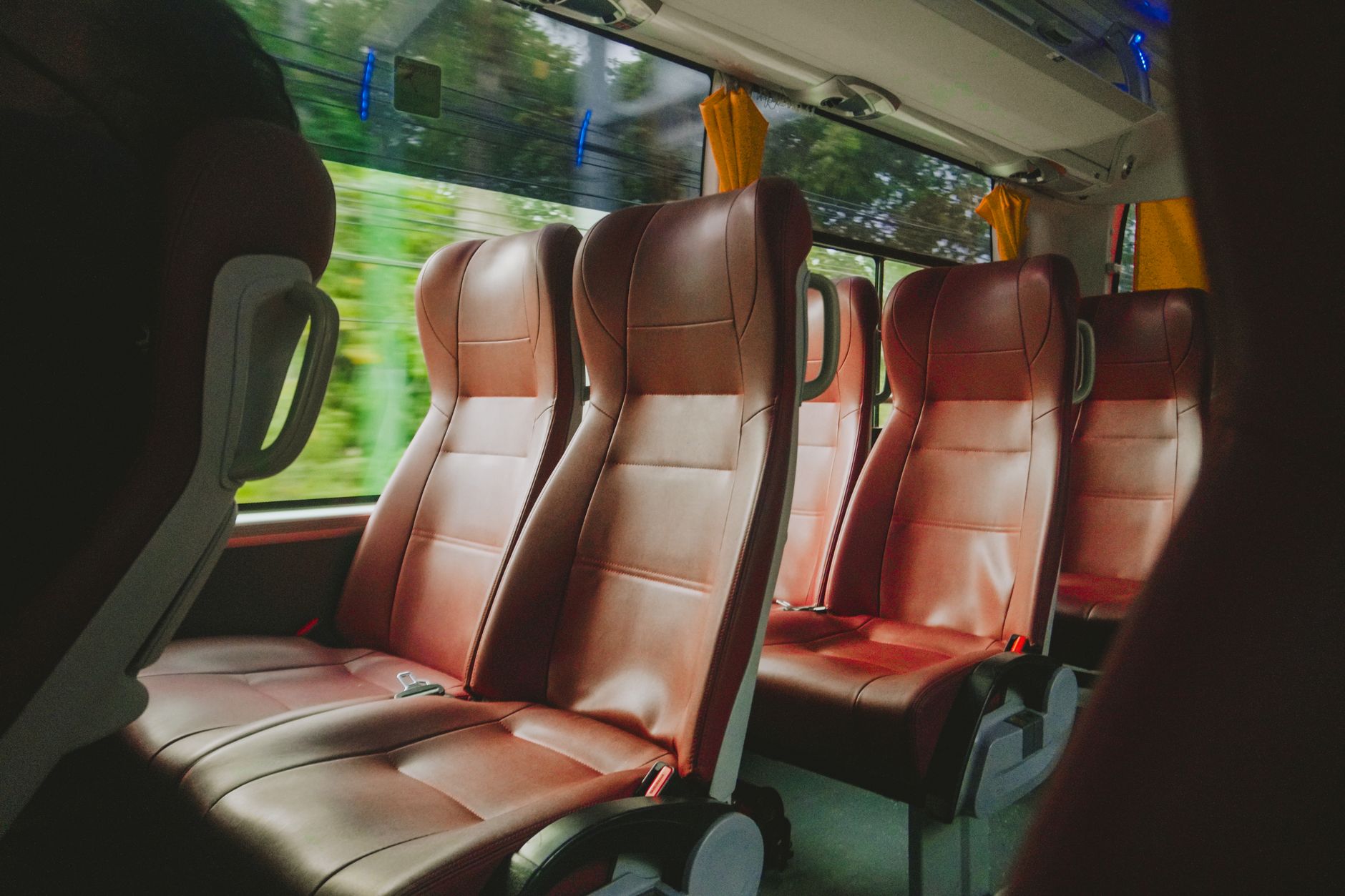
For 36 passengers, choose a 36-Passenger Mini Coach when the group needs coach-style seating, a high floor, and luggage-bay capacity without the footprint of a full-size motor coach. It works well for medium groups with day bags or moderate luggage, but a full multi-day baggage load should be checked against the carrier's actual bay layout. A smaller executive Sprinter may navigate tighter streets more easily, while a 56-passenger motor coach offers more cargo and capacity but can be harder to stage in Old City. Any bus remains subject to designated loading zones, parking restrictions, height limits, and driver-hour planning.
| Vehicle | Seats | Best For | Notes |
|---|---|---|---|
| 36-Passenger Mini Coach | Up to 36 passengers | Best for a medium group tour that needs more comfort and luggage capacity than a shuttle but does not need a full-size motor coach. | High-floor body, coach-style seats, and underfloor luggage bays; confirm bay capacity when every passenger carries a full suitcase. |
| 24-Passenger Mini Bus | Up to 24 passengers | Fits a smaller group or a split movement plan where the passenger count and baggage volume stay well below 36. | More maneuverable for city positioning and smaller hotel approaches, but typically has less luggage capacity and fewer coach amenities. |
| 56-Passenger Motor Coach | Up to 56 passengers | Fits a larger group, substantial baggage load, or an itinerary where spare seats and full coach amenities matter more than compact positioning. | Provides the most seating and cargo space, but requires more room at loading zones, tighter attention to height and turning clearances, and earlier parking coordination. |
| Executive Sprinter | Typically 10 to 14 passengers | Fits a small executive group, guide transfer, or overflow movement rather than a 36-passenger group tour. | Compact and useful for short transfers, but cargo space is limited and the seating, aisle, and ride profile are not equivalent to a high-floor coach. |
Routing, Timing, and On-the-Road Realities
For an I-95 arrival, schedule the Philadelphia approach outside the heaviest weekday peak whenever possible, especially near the Walt Whitman and Ben Franklin bridge approaches, the Girard Avenue area, and Center City ramps. From New York or northern New Jersey, the New Jersey Turnpike and Delaware River crossings can add unpredictable delay around commuter periods and event traffic. From Baltimore or Washington, allow time for the Delaware and Chester County sections before the city approach. The dispatcher should route the 36-Passenger Mini Coach to the approved Old City loading location rather than relying on passenger navigation to find curb space. The Independence Transportation Center uses Race Street access near Fifth and Sixth Streets and limits loading and unloading time, so the group should be ready before the coach arrives. After unloading, send the motor coach to its assigned parking facility instead of leaving it in the attraction district.
A workable day uses one or two planned coach drops, with the group walking between nearby Philadelphia Historic venues. Callowhill Bus Center on Callowhill Street between Front and Second Streets is the principal coach parking reference near Old City, while Old City bus spaces can be limited and may not accept advance reservations. The driver needs a clear manifest, group leader contact, hotel address, and next-move time because the coach may be several blocks or about a mile from the visitors. Avoid promising a continuous curbside wait at Independence Mall, the Museum of the American Revolution, or the National Constitution Center. Build 15 to 30 minutes beyond the nominal venue transfer for loading, pedestrian crossings, security, and traffic control, with more time during school-season mornings and event closures. For multi-day service, place the driver near the hotel and attractions in a way that preserves the required off-duty period instead of moving the bus after every dinner.
What This Typically Costs
A Philadelphia Historic group tour is usually quoted by vehicle day, mileage, and deadhead rather than by passenger alone. A 36-Passenger Mini Coach commonly carries a daily minimum, with the minimum covering the driver's service window and the coach being held for the group. Longer repositioning from the operator's base adds deadhead miles and may add a travel day, especially for a multi-day run entering Philadelphia from New England, the Midwest, or the South. Distance, tolls, parking, and any required overnight driver lodging are normally separate line items or built into the operating quote. Spring school trips, summer weekends, autumn foliage itineraries, holiday periods, and major event dates can create seasonal peaks and tighter availability. Typical additional charges include driver gratuity, fuel or fuel-price adjustments, tolls, venue parking, guide fees, and special permits, so ask for an all-in quote rather than comparing only the base daily rate.
Frequently Asked Questions
How many days should a Philadelphia Historic group tour take?
Plan on a minimum of two full operating days for a Philadelphia Historic group tour from a nearby Mid-Atlantic origin, and three to five days for a regional multi-day itinerary. Day 1 is often the travel day, with an arrival stop or dinner if the driver has legal hours remaining. Groups coming from New England, western Pennsylvania, Ohio, the Carolinas, or the Washington region may need an overnight en route or a reduced sightseeing schedule. The final length depends on origin, hotel location, reserved admission times, and whether the group adds Valley Forge, Longwood Gardens, or Lancaster.
What are the best months for a Philadelphia Historic group tour?
The most reliable sightseeing windows are generally late spring and early fall, when walking conditions are more comfortable and school or senior groups can use longer outdoor blocks. Summer supports longer daylight but brings heat, humidity, weekend demand, and heavier visitor traffic around Independence Mall. Winter can reduce crowds, but weather, shortened hours, and holiday closures require confirmation with every venue. Avoid building a tight schedule around major conventions, parades, sports events, graduation weekends, and holiday festivals. Reserve timed attractions and hotel rooms before assigning the final motor coach schedule.
What is a realistic sample itinerary?
A practical three-day plan is Day 1 travel to Philadelphia, hotel check-in, and an afternoon stop at the Museum of the American Revolution or a prearranged Old City walking orientation if arrival time permits. Day 2 can center on Independence National Historical Park, including the Liberty Bell Center, Independence Hall, Congress Hall, and the National Constitution Center, with timed entries and walking blocks. Day 3 can cover the National Museum of African American History and Culture themes through local sites, the African American Museum in Philadelphia, Reading Terminal Market, or the Museum of the American Revolution if it was not used on Day 1. A step-on guide can provide a 60-to-90-minute city overview on the group's motor coach, but traffic can change the duration. The coach should stage at approved loading areas rather than wait curbside between stops.
What does a 36-Passenger Mini Coach fit best?
A 36-Passenger Mini Coach is a mid-size, high-floor vehicle with coach-style seats and luggage bays, sized between a 24-passenger shuttle and a full 56-passenger motor coach. It fits a group of 36 passengers when the itinerary uses day bags, soft luggage, or a controlled baggage plan. For a multi-day trip with full-size suitcases, mobility equipment, or equipment cases, confirm the carrier's actual bay dimensions and reduce the booked passenger load if needed. The vehicle is easier to position than a full-size coach, but it is still a commercial bus and cannot treat narrow Old City streets as ordinary curbside parking. A 36-Passenger Mini Coach is usually a strong match for alumni groups, church groups, school programs, and senior organizations that want assigned seating without paying for unused capacity.
Where can a motor coach park near Philadelphia Historic sites?
Philadelphia's major attractions use designated loading and unloading locations for motor coaches, and buses are generally prohibited from parking on city streets. The Independence Transportation Center near the National Constitution Center provides designated loading space on Race Street, with short loading windows rather than all-day staging. The Callowhill Bus Center between Front and Second Streets is the practical coach parking option near Old City and can support overnight parking for an added charge, although drivers cannot sleep in the facility. Old City parking capacity is limited, and some facilities operate first come, first served. Confirm the coach's height, turning needs, arrival window, and any current city or venue instructions before dispatch.
Do Philadelphia Historic attractions require bus permits or reservations?
Independence Hall, the Liberty Bell Center, and related National Park Service sites require timed planning, and admission arrangements should be made directly with the applicable venue or park program. A bus parking reservation is not the same as an attraction reservation. The AutoPark at Independence Mall is convenient for ordinary vehicles but has a published clearance of six feet, six inches, so a 36-Passenger Mini Coach normally should not be assumed to fit there. Use designated coach loading zones and the Callowhill Bus Center for bus parking unless current officials direct otherwise. If the itinerary includes a private historic house, museum, school campus, parade route, or special event, the group may need a separate permit, appointment, or traffic plan.
How do driver hours affect a multi-day Philadelphia trip?
Driver hours are governed by federal commercial-driver rules and the carrier's safety policy, not by the group's preferred sightseeing schedule. The driver needs a compliant off-duty period, and a long origin-to-Philadelphia reposition can consume the available driving window before the first attraction. A day with early hotel departure, multiple Old City stops, evening dining, and a return to a distant hotel may require a second driver, a split schedule approved by the carrier, or a shorter itinerary. Build realistic dwell time for passenger loading, venue security, downtown traffic, and the walk from coach drop-off points. Ask the broker to show the planned driver service window, relief plan, and overnight location in the quote.
How to Book
To book, provide travel dates, pickup address, passenger count, luggage estimate, hotel area, and every planned venue or meal stop. Include whether the group needs Independence Hall timed entry coordination, a step-on guide, wheelchair accommodations, or an overnight coach parking plan. US Bus Trips can typically return a quote within 4 business hours when the origin, dates, itinerary, and headcount are complete. The confirmation should identify the vehicle class, service dates, pickup and drop-off instructions, driver-hour assumptions, parking or toll allowances, cancellation terms, and major exclusions; contact US Bus Trips by phone or its online request channel to start the itinerary review.
Related Trips You Might Also Consider
- Denver, CO to Aspen, CO
- Senior Tour Group — Mountain West Region
- Zion — 56-Passenger Motor Coach
- Hershey — 36-Passenger Mini Coach
- Lexington, KY to Cincinnati, OH
- Arches — 14-Passenger Sprinter
- Cross-Country Charter Bus Overview
- All Group Trip Types
- See the Full Fleet (Sprinters through 56-pax coaches)
- Get a Free Quote in 60 Seconds