
A Yellowstone group tour in a 14-Passenger Sprinter fits families, corporate groups, alumni travelers, and VIP parties that want one vehicle without motor coach capacity.
Overview
A 14-Passenger Sprinter Yellowstone group tour is usually built around a gateway city rather than a single park hotel. Common launch points include Bozeman Yellowstone International Airport and downtown Bozeman to the north, Jackson and Teton-area hotels to the south, Cody to the east, and West Yellowstone or Gardiner at the park boundary. A group arriving by air may need a first-day transfer from Bozeman to West Yellowstone, Jackson to a southern gateway, or Cody into the east entrance area before sightseeing begins. Yellowstone roads are scenic but slow, and the distance between Old Faithful, Canyon Village, Mammoth Hot Springs, and Lake Yellowstone makes an ambitious same-day loop unreliable. The 14-Passenger Sprinter works well when the group values one dedicated vehicle, controlled stops, and a smaller footprint at hotels and pullouts. It needs a disciplined schedule because small-vehicle convenience does not eliminate park congestion or mountain-road drive time.
A realistic multi-day group tour usually starts with day 1 as a travel and orientation day rather than a full park circuit. From Bozeman, the vehicle might collect the group, make a food and restroom stop, enter near West Yellowstone, and stage overnight there; from Jackson, the route can use the south entrance if open and include Jackson Lake or Grand Teton stops before reaching Yellowstone lodging. Day 2 can cover Old Faithful, the Upper Geyser Basin, and Midway Geyser Basin, with an overnight near Old Faithful, West Yellowstone, or another planned base. Day 3 can run toward Canyon through Yellowstone Lake, the Fishing Bridge area, or Norris, while leaving time for boardwalk walking and wildlife delays. Day 4 can cover Canyon, Hayden Valley, Mammoth, or the northeast corridor depending on the lodging plan and open roads. A five- to seven-day multi-day schedule is more comfortable when the group wants both a full Yellowstone itinerary and a return transfer to Bozeman, Jackson, Cody, or another distant origin.
Commercial operation inside Yellowstone requires more than simply arriving at an entrance station with a passenger van. The National Park Service uses commercial travel permits, commercial tour fee procedures, and Commercial Use Authorizations for different operating models, and guided interpretive services have separate conditions. A road-based commercial tour may be limited to approved road, visitor-center, pullout, and boardwalk activity, while hiking, photography workshops, backcountry use, or other services can trigger additional requirements. Commercial vehicles other than those using U.S. Highway 191 may require a park permit, and oversize or overweight vehicles can face special routing or time restrictions. The 14-Passenger Sprinter is generally easier to place than a motor coach, but it still must use legal parking, avoid blocking traffic, and follow current entrance, road, and vehicle rules. Permit status, insurance, guide credentials, and the current superintendent's conditions should be verified before the final dispatch plan is issued.
Fleet Options
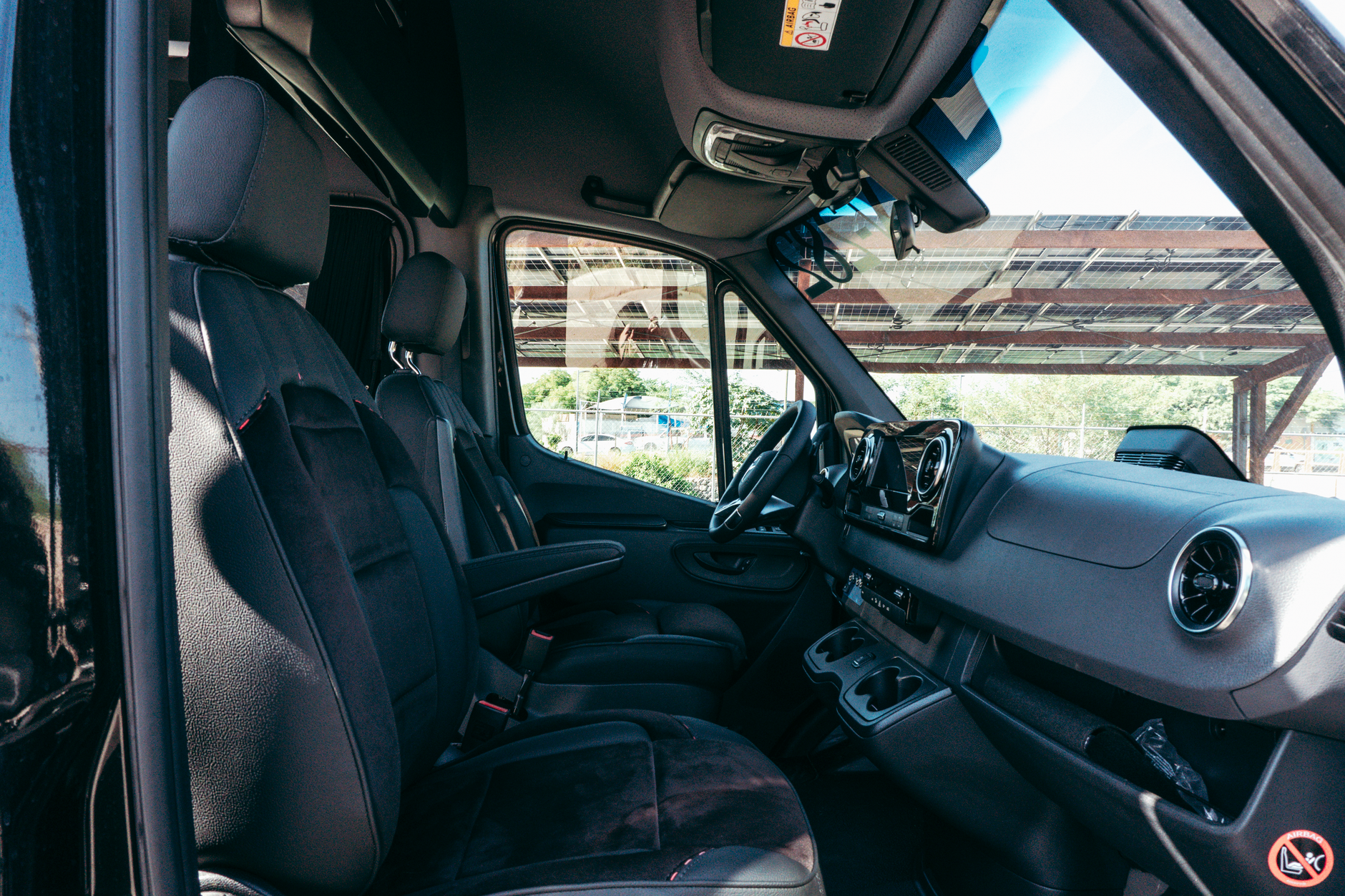
Vehicle selection for a Yellowstone group tour starts with passenger count, luggage, and how often the group will unload at crowded sites. An Executive Mercedes Sprinter or Ford Transit 14-Passenger Sprinter provides leather captain's chairs, WiFi, USB charging, and a quieter small-group layout, but cargo space remains limited once all seats are occupied. It fits VIP transfers, family groups, and compact multi-day tours better than a motor coach when the group wants one vehicle and flexible loading. Mountain roads are manageable, but tight gateway streets, hotel lots, thermal-area parking, and full summer lots reward a smaller footprint and a driver who knows where legal pullouts are available.
| Vehicle | Seats | Best For | Notes |
|---|---|---|---|
| Executive Mercedes Sprinter | Up to 14 passengers | Best for a Yellowstone group tour that prioritizes comfort, direct service, and a compact vehicle for gateway hotels and crowded park lots. | Leather captain's chairs, WiFi, USB power, and a premium cabin suit VIP transfers and small tour groups, but luggage space is limited at full seating and no onboard restroom is assumed. |
| Ford Transit Passenger Van | Up to 14 passengers | Best when the itinerary includes frequent hotel transfers, airport pickups, and shorter in-park legs without motor coach-level amenities. | A practical high-roof layout offers easy boarding and small-group flexibility, with cargo capacity that must be checked against suitcases, coolers, and outdoor gear. |
| Executive Mini Bus | Approximately 18 to 24 passengers | Best when the group may grow beyond 14 or carries substantial luggage and wants more space than a 14-Passenger Sprinter provides. | Adds more usable luggage room and seating flexibility than a standard Sprinter, while remaining easier to place than a full motor coach at many gateway properties. |
| Motor Coach | Approximately thirty-five to fifty-six passengers | Best for a larger Yellowstone group tour or shared departure where capacity, luggage, and onboard facilities outweigh small-vehicle flexibility. | Provides the strongest capacity and often the most luggage volume, but large dimensions require advance checks for hotel access, park lots, turnarounds, and oversize routing. |
Routing, Timing, and On-the-Road Realities
The best pickup time depends on the origin and the first overnight, not just the park opening hour. A Bozeman departure toward West Yellowstone or Gardiner should leave enough margin for airport baggage, fueling, mountain traffic, and a meal stop, while Jackson departures need a realistic allowance for Grand Teton and south-entrance congestion. Cody departures through the east entrance can be affected by weather, construction, wildlife, and long distances between services. During July and August, early starts are useful for Old Faithful, Grand Prismatic, Canyon, and popular wildlife corridors, but the group should not be promised an exact arrival time after a long transfer. At each attraction, the Sprinter must use designated parking or a legal pullout, keep the roadway clear, and avoid occupying loading zones longer than necessary. A dispatcher should build a fixed passenger meeting point and a maximum wait time for every major stop because cellular service is inconsistent across the park.
Driver-hours planning is the main constraint on a long-haul Yellowstone group tour. Federal passenger-carrier rules generally cap driving at 10 hours after 8 consecutive hours off duty and prohibit driving after 15 hours on duty following that rest period, with 60-hour or 70-hour weekly limits depending on the carrier's operating schedule. A day beginning with an intercity transfer from Salt Lake City, Denver, Boise, or another distant market should not also include a full Yellowstone sightseeing loop. The practical plan is to use a travel day, stage the driver near the next route segment, and keep in-park days to a manageable operating window with meal, restroom, fueling, and wildlife-delay reserves. A second driver may be required for compressed schedules, but changing drivers does not remove the need for proper rest and compliant logs. Oversize routing matters more for a motor coach, yet even a Sprinter should be checked against seasonal road closures, entrance restrictions, construction, snow, and limited turnaround space.
What This Typically Costs
A Yellowstone 14-Passenger Sprinter is usually quoted from a daily vehicle-and-driver rate, a mileage component, or a blended package, with a daily minimum applying even on short park days. Long-distance departures often add deadhead miles for positioning the vehicle to the pickup city and returning it after the group tour. Multi-day pricing also includes driver overnight lodging, per diem, parking, tolls, park entry or commercial tour fees, and any required guide or permit administration. Seasonal peaks in June through September, holiday weekends, and major events in Jackson, Bozeman, Cody, West Yellowstone, or Yellowstone airport markets can materially tighten supply and raise rates. Fuel adjustments may apply when diesel or gasoline prices move after contracting, and driver gratuity is commonly handled as a separate line item. In most markets, a multi-day Yellowstone charter commonly runs a few thousand dollars per day before long-haul mileage, deadhead, lodging, and incidentals, so the final quote depends on the complete routing rather than passenger count alone.
Frequently Asked Questions
What is a realistic length for a Yellowstone group tour in a 14-Passenger Sprinter? A minimum of four days works for a focused loop from Jackson, Bozeman, Cody, or West Yellowstone, but five to seven days is more practical for a multi-day trip with substantial driving. Yellowstone roads are slow, attractions are spread across a large park, and wildlife stops can add unplanned time. A longer itinerary also gives the driver room to manage weather, road work, entrance delays, and restroom stops without turning every day into a race.
How many days should a 14-Passenger Sprinter Yellowstone group tour take?
When should a group book a Yellowstone 14-Passenger Sprinter? Late May through June offers improving access and fewer peak-summer crowds, although some high-elevation roads and services may still be limited. July and August provide the broadest road and facility access but bring the heaviest traffic, full lodging, and tighter vehicle availability. September is often a strong operating month because crowds ease and daytime conditions can remain favorable, while October through April requires a different plan because many park roads close to regular vehicle travel and winter operations are restricted. Always verify current road openings before finalizing a multi-day schedule.
When are the best months for a Yellowstone group tour?
What is the right use case for a 14-Passenger Sprinter Yellowstone tour? An Executive Mercedes Sprinter or Ford Transit works well for up to 14 passengers traveling with moderate luggage, leather captain's chairs, WiFi, USB charging, and a small cargo hold. It is a good match for family reunions, alumni groups, corporate incentive travel, wedding-related transfers, and small guided tours that value direct routing and fewer passengers. It is not the same as a motor coach for luggage volume, onboard restroom capacity, or large-group staging. If everyone carries large checked bags, coolers, photography equipment, or outdoor gear, the group may need a trailer assessment, luggage transfer, a larger vehicle, or a second unit.
What does a 14-Passenger Sprinter fit well for this trip?
What Yellowstone permits or commercial authorizations are involved? Commercial operations in national parks generally require authorization, and Yellowstone distinguishes between commercial travel, commercial tour entry, and Commercial Use Authorization activities. A commercial road-based tour may use the applicable commercial tour fee structure, while guided interpretive services or other regulated activities can require a CUA. The park states that a permit is required for commercial vehicles on park roads other than U.S. Highway 191, and required permits must be carried and shown when requested. US Bus Trips should confirm the exact operating model, guide services, vehicle classification, insurance, and current park conditions before dispatch.
Does the Yellowstone group tour need a park permit?
Where does a 14-Passenger Sprinter park during a Yellowstone group tour? Parking is generally first come, first served, and commercial vehicles cannot reserve spaces, block traffic, occupy multiple spaces, or wait in the roadway for passengers. Loading zones should be used only long enough to load or unload, and the vehicle must be fully off the travel lane when stopping at a pullout. Popular areas such as Old Faithful, Midway Geyser Basin, Canyon Village, Norris, and Mammoth can fill early during summer days. The driver should drop passengers only where legal, then use an available lot or pullout, with the group assigned a clear meeting point and a realistic walking window.
Can a 14-Passenger Sprinter park at Yellowstone attractions?
What are the driver-hours realities for a long-haul Yellowstone group tour? Passenger-carrier rules generally limit a driver to 10 hours of driving after 8 consecutive hours off duty and 15 hours on duty after that rest period, with weekly on-duty limits also applying. A day that looks short on a map can consume the available window through mountain grades, wildlife congestion, road construction, meal breaks, fueling, and repeated scenic stops. The itinerary should separate long transfer days from in-park sightseeing days and avoid scheduling a late arrival followed by a dawn departure. A second qualified driver or an additional overnight may be necessary when the group combines a distant origin with a full Yellowstone touring day.
How do driver hours affect a multi-day Yellowstone itinerary?
How should lodging be staged for a 14-Passenger Sprinter Yellowstone itinerary? Inside-park lodging at locations such as Old Faithful, Canyon Village, Lake Yellowstone, Mammoth Hot Springs, or Grant Village reduces backtracking but has limited inventory and strict seasonal availability. Gateway lodging in West Yellowstone, Gardiner, Cody, Jackson, Bozeman, or nearby resort communities may offer more room types, but daily park crossings can add substantial drive time. A practical itinerary often uses two or three bases instead of changing hotels every night, with the route aligned to the open entrances and the next day's attractions. Confirm Sprinter parking, overnight vehicle access, passenger loading rules, and driver lodging before accepting the hotel plan.
Where should a Yellowstone group tour stay overnight?
How to Book
To book, provide the travel dates, pickup address, passenger count, luggage estimate, preferred vehicle, and a working itinerary with Yellowstone entrances, lodging, and planned stops. Include whether the group needs airport service from Bozeman or Jackson, gateway transfers from Cody or West Yellowstone, a step-on guide, or multiple hotel bases. US Bus Trips can typically return a quote within 4 business hours when the dates and routing are complete, subject to vehicle and driver availability. Confirmation should identify the vehicle class, service window, mileage or deadhead assumptions, driver lodging, permits or park fees, cancellation terms, and payment schedule; reach us through the US Bus Trips booking team to finalize the run.
Related Trips You Might Also Consider
- Badlands — 56-Passenger Motor Coach
- Yosemite — 14-Passenger Sprinter
- Sequoia — 24-Passenger Mini Bus
- Robotics Competition — Northeast Region
- Wedding Guest Block — Southeast Region
- Arlington, TX to Dallas, TX
- Cross-Country Charter Bus Overview
- All Group Trip Types
- See the Full Fleet (Sprinters through 56-pax coaches)
- Get a Free Quote in 60 Seconds