
A Yellowstone group tour in a 36-Passenger Mini Coach suits church groups, alumni trips, family reunions, senior organizations, and escorted travel programs with roughly 25 to 36 travelers.
Overview
A Yellowstone group tour is usually built around a gateway rather than a single park address. West Yellowstone, Montana is the cleanest staging point for groups entering from the west, while Gardiner supports Mammoth Hot Springs and northern loops, Cody supports an east-side approach when Sylvan Pass is open, and Jackson can pair Yellowstone with Grand Teton. Groups commonly arrive from Salt Lake City, Boise, Denver, Billings, Bozeman, or Idaho Falls, and each corridor changes the first and last operating day. A 36-Passenger Mini Coach is well suited to church groups, alumni associations, family reunions, senior travel programs, and escorted tours that need assigned seating and below-deck luggage. The booking should identify whether the coach is carrying one suitcase per passenger, extra equipment, coolers, or mobility aids because cargo volume can become the limiting factor before seats do. Yellowstone is a high-elevation road operation, not a point-to-point city shuttle, so the itinerary needs recovery time for weather, wildlife, construction, and visitor congestion.
A realistic six-day group tour might use day 1 for pickup in Salt Lake City or Bozeman, an overland move to West Yellowstone, and a short first stop such as Idaho Falls, the Montana state line, or West Yellowstone's visitor area. Days 2 and 3 can cover Madison, Norris, Old Faithful, and the geyser basins, with early departures to improve parking odds and avoid placing all major stops in the afternoon. Day 4 can run toward Canyon Village, Hayden Valley, Yellowstone Lake, and the Lake or Fishing Bridge area, subject to the seasonal road network and the coach's approved routing. Day 5 can cover Mammoth Hot Springs and Lamar Valley from Gardiner, or shift to Grand Teton from a Jackson staging plan, but attempting both distant ends in one day is usually a poor motor coach schedule. Day 6 is the return or onward move, often through Idaho Falls, Cody, Bozeman, or Salt Lake City depending on the original corridor. A group tour may need seven or more days when it starts in Denver, Minneapolis, Chicago, or another distant market, because legal driver time and hotel staging matter more than drawing a compact map.
The best road-based months are generally late May through September, with July and August offering the widest access but the strongest demand for rooms, coaches, and attraction parking. June can still have snow and delayed high-pass openings, while September brings cooler nights, changing weather, and fewer daylight hours even though traffic may ease. The National Park Service publishes staged opening dates and warns that weather can change road status; most Grand Loop roads close to regular wheeled traffic from early November through late April, while the North Entrance through Cooke City is the principal year-round regular-vehicle corridor. Winter sightseeing is a different product using commercially guided snowcoaches or snowmobiles, not a standard 36-Passenger Mini Coach on the normal loop. Commercial operations also need the correct park authorization, and a commercial travel permit should not be confused with a commercial tour authorization or fee. Lodging should be contracted with coach parking, passenger loading, driver rooms, breakfast timing, and late-arrival procedures in writing, especially in West Yellowstone, Gardiner, Cody, Jackson, and in-park properties.
Fleet Options
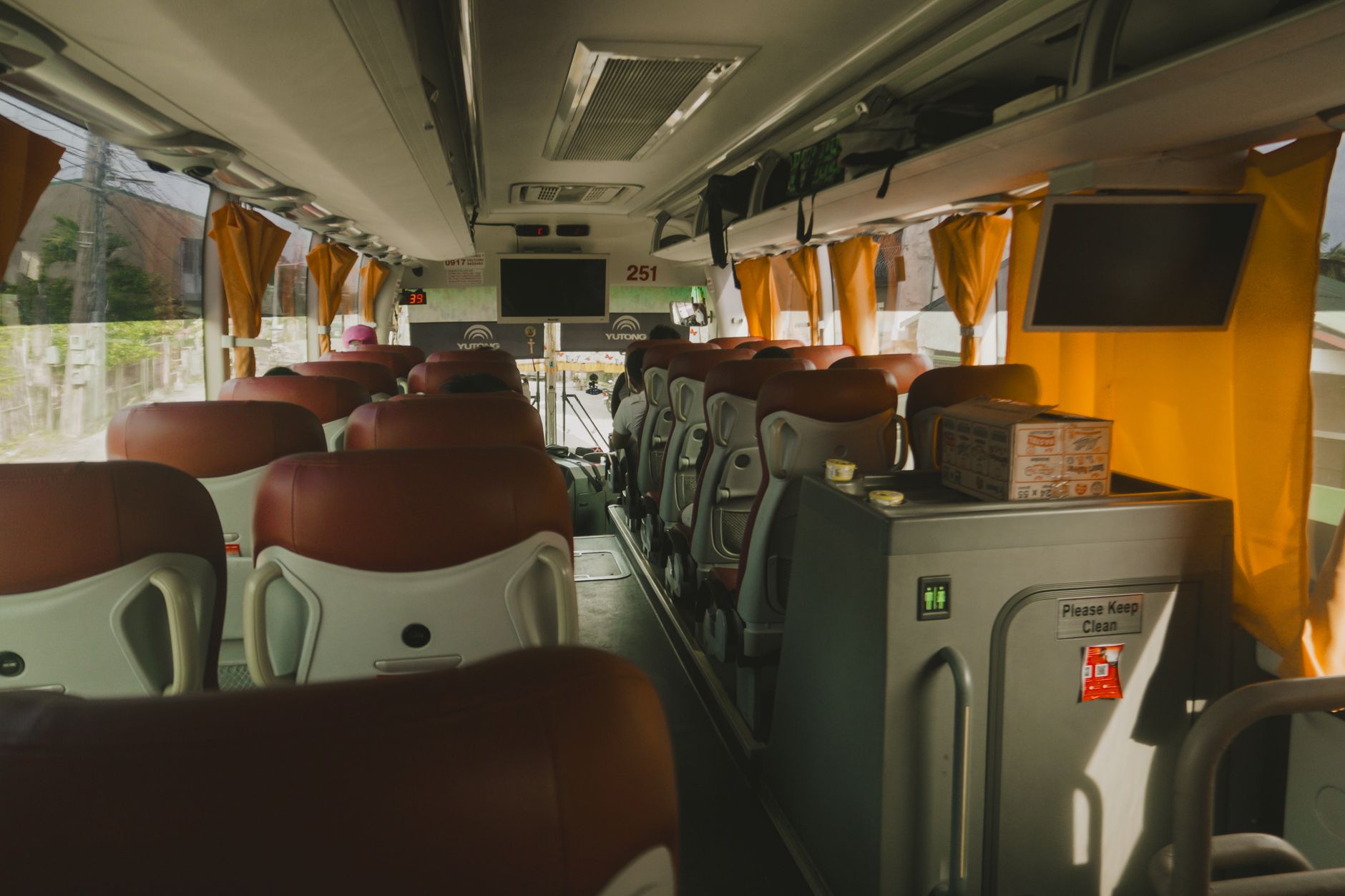
A 36-Passenger Mini Coach is a mid-size coach with high floor, luggage bays, and coach-style seats, making it a strong fit for a medium group where a 56-passenger motor coach is too large and a 24-passenger vehicle is too small. It works well for 25 to 36 travelers carrying multi-day luggage, but the usable seat count can change when the group brings coolers, equipment, strollers, or mobility devices. Confirm the coach's exterior dimensions before routing narrow park roads, side drives, hotel lots, and attraction pullouts. For a group tour with full occupancy, request the carrier's actual luggage-bay layout rather than assuming every suitcase will fit below deck.
| Vehicle | Seats | Best For | Notes |
|---|---|---|---|
| 36-Passenger Mini Coach | 25-36 passengers | Best when the group needs coach comfort and luggage capacity but does not justify a 56-passenger motor coach. | High-floor coach seating and underfloor luggage bays suit a full medium group, but confirm bay capacity and exterior dimensions for Yellowstone roads and hotel lots. |
| 24-Passenger Mini Bus | 18-24 passengers | Fits a smaller group or a 36-passenger roster split into a lighter-load operation. | More maneuverable for tight hotel approaches and smaller parking areas, though luggage space and seat comfort vary widely by model. |
| 56-Passenger Motor Coach | 45-56 passengers | Fits groups above 36, large luggage loads, or schedules requiring spare seats for staff and equipment. | Provides more seats and cargo capacity, but its longer body can complicate tight turns, small lots, and limited attraction parking. |
| Executive Sprinter | 10-14 passengers | Fits a small leadership, scouting, or airport-transfer group rather than the main 36-passenger movement. | Useful for small VIP groups and short transfers, but limited luggage capacity and a less spacious cabin make it a poor choice for a full multi-day Yellowstone tour. |
Routing, Timing, and On-the-Road Realities
The approach corridor determines how much sightseeing can safely fit on day 1. From Salt Lake City, I-15 north and US-20 toward West Yellowstone is a common west-side run; from Boise, groups often use US-20 through eastern Idaho; from Bozeman or Billings, US-191, US-89, and the North or West Entrance can shape the plan; from Denver, I-25, I-90, and the Cody or Gardiner approach may require an intermediate overnight. Pickup timing should avoid urban commute periods and should allow a real meal and restroom stop before the park entrance. Inside Yellowstone, the two-lane roads, 45-mph maximum in places, lower curves, wildlife stops, and long gaps between services make map mileage misleading. The driver should use legal pullouts and designated lots rather than stopping in the travel lane, and the dispatcher should not promise that a 36-Passenger Mini Coach can park directly beside every trailhead. Early starts are especially useful for Old Faithful, Canyon Village, and high-demand overlooks, while late-afternoon wildlife viewing must still fit the driver's legal duty window.
Commercial motor coach routing requires more than choosing the shortest road. Yellowstone states that commercial vehicles generally need a permit on park roads other than US-191, and vehicles over 8 feet 6 inches wide or 75 feet long need an oversize permit; the carrier should verify the actual 36-Passenger Mini Coach dimensions before final routing. Firehole Canyon Drive is closed to wheeled buses, trailers, and recreational vehicles, and side roads can have weight, width, or seasonal restrictions. Oversize and overweight permitted vehicles may face restricted travel hours during the main summer period, so a late-night reposition should never be assumed without park approval. The driver-hours plan should account for the initial deadhead, pickup, gateway travel, in-park driving, passenger stops, meals, and the return leg across state lines. In practice, a relief driver or a staged overnight can be safer and less expensive than forcing one operator to cover a long approach plus a full loop day. Confirm park road status immediately before departure because opening dates and closures can change with weather.
What This Typically Costs
A Yellowstone 36-Passenger Mini Coach quote is usually built from a daily charter rate, a mileage component, and any deadhead needed to position the motor coach for pickup and return. Multi-day work commonly carries a daily minimum, even when the vehicle has a short sightseeing day, because the driver and equipment remain assigned to the group. Peak summer demand, especially June through September and holiday or festival weekends, raises availability pressure and can require earlier deposits. Deadhead miles from the coach yard to the pickup city and back are a normal line item, particularly for rural gateway staging. Driver lodging, parking, tolls, park-related fees, fuel adjustments, and driver gratuity may be listed separately or folded into the proposal depending on the carrier. In most markets, a multi-day Yellowstone group tour commonly runs a few thousand dollars per operating day before trip-specific additions, with the final range driven by dates, route, vehicle availability, and total miles.
Frequently Asked Questions
How many days should a Yellowstone group tour take?
A 36-Passenger Mini Coach works best for 25 to 36 travelers who need coach-style seating and luggage capacity without assigning a full-size 56-passenger motor coach. A typical group tour needs enough room for checked bags, day packs, coolers, and mobility equipment, so the exact usable capacity depends on the coach layout and luggage load. The vehicle is a high-floor mid-size coach, not a shuttle van, and is generally more comfortable for long corridors such as Salt Lake City to West Yellowstone or Denver to Cody. If every seat is occupied and the group carries substantial luggage for a multi-day trip, a carrier may recommend limiting onboard items or moving to a larger motor coach.
What are the best months for a Yellowstone motor coach trip?
A practical Yellowstone group tour usually needs five to seven days when the group starts outside Wyoming or Montana. One travel day is commonly used to reach a gateway such as West Yellowstone, Gardiner, Cody, or Jackson, followed by three to four in-park operating days and a return or onward travel day. A short four-day plan can work from nearby staging cities but leaves little margin for weather, wildlife delays, or long waits at Old Faithful and Grand Canyon of the Yellowstone. Multi-day routing should avoid promising every major basin in a single day because the Grand Loop is slow, two-lane, and subject to congestion. The final length also depends on whether the group wants Jackson, Grand Teton, Cody, or Beartooth Highway included.
Does a commercial motor coach need a Yellowstone permit?
Late May through September is the normal operating window for a road-based Yellowstone group tour, with July and August offering the broadest access but the heaviest traffic and lodging demand. June can still bring snow, construction, and partial access at higher passes, while September often offers cooler weather and fewer visitors but shorter daylight and earlier winter conditions. Many park roads open in stages, and dates can change with weather; the National Park Service lists the North Entrance through Cooke City as the only generally year-round regular-vehicle corridor. Roads such as Dunraven Pass and Beartooth Highway typically have narrower seasonal windows than lower routes. Winter trips require a different plan using permitted oversnow operators rather than a standard wheeled 36-Passenger Mini Coach on the Grand Loop.
Can a 36-Passenger Mini Coach park at Yellowstone attractions?
Yes, commercial transportation in Yellowstone requires the correct park authorization, and the paperwork depends on whether the vehicle is providing a commercial tour, traveling through, or moving oversize or hazardous cargo. A commercial travel permit is not the same as the authorization or commercial tour fee used by commercial tour groups. Yellowstone states that a permit is required for commercial vehicle operation on park roads other than US-191, and permits must be carried and shown when requested. Vehicles wider than 8 feet 6 inches or longer than 75 feet are prohibited unless the Superintendent issues an oversize permit, although the exact dimensions of the selected 36-Passenger Mini Coach still need to be confirmed with the carrier. US Bus Trips coordinates the operating plan with the motor coach company, but the group should provide the final vehicle specifications and itinerary early.
Where should a Yellowstone group stay overnight?
The coach can use designated parking lots and pullouts where the vehicle physically fits, but parking is not guaranteed at busy attractions. Drivers should not stop in the travel lane for photographs or wildlife; they must use a legal pullout, lot, or safe shoulder without blocking traffic. Old Faithful, Canyon Village, Mammoth Hot Springs, Norris, and other major areas can fill quickly during summer midday periods, so early arrival is operationally better than relying on late-morning parking. Firehole Canyon Drive is closed to wheeled buses, trailers, and recreational vehicles, and other narrow or weight-restricted side roads may not fit the itinerary. A dispatcher should build stops around the approved road network and confirm any venue or gateway-town loading instructions separately.
How do driver hours affect a Yellowstone group tour?
West Yellowstone is the most straightforward base for groups using the West Entrance and provides direct access toward Madison, Old Faithful, Norris, and the central loop. Gardiner works well for Mammoth Hot Springs, Lamar Valley, and northern itineraries, while Cody supports an East Entrance approach when Sylvan Pass is open and offers a useful gateway program. Jackson or Teton Village can pair Yellowstone with Grand Teton, but the added distance makes an already long motor coach day longer. In-park lodging at Old Faithful, Lake, Canyon, or Mammoth can reduce repositioning but has limited inventory and requires early planning. For a multi-day booking, the hotel must confirm coach parking, passenger loading, driver rooms, late arrival procedures, and whether the group can stage luggage before rooms are ready.
What information is needed for a Yellowstone charter quote?
The driver cannot simply work from sunrise through the last wildlife stop because federal hours-of-service rules limit driving and on-duty time. A long approach from Denver, Salt Lake City, Boise, or Minneapolis may require a split operation, relief driver, or overnight stop before the park portion begins. Within Yellowstone, low speeds, construction, animal crossings, congestion, and repeated passenger stops consume the duty window even when the mileage looks modest. A practical schedule leaves the driver a legal break plan and avoids booking a sunrise start followed by a late-night return without relief. For a multi-day itinerary, the carrier should review each operating day, hotel location, expected deadhead, and any early airport or event transfer before confirming the 36-Passenger Mini Coach.
How to Book
To price the trip, have the dates, pickup address, passenger count, luggage expectations, preferred gateway, overnight hotels, and every planned park or venue stop ready. Include whether the group needs airport transfers, a guide seat, mobility-device space, Grand Teton, Cody, Jackson, or a return through a different city. US Bus Trips can commonly return a preliminary quote within 4 business hours when the routing and dates are complete. Confirmation should identify the vehicle class, operating dates, pickup instructions, mileage or deadhead treatment, driver lodging plan, park-related responsibilities, cancellation terms, and major inclusions. Reach US Bus Trips through the booking request or phone channel listed by the company so dispatch can validate the final schedule with the assigned carrier.
Related Trips You Might Also Consider
- Church Retreat — Mid-Atlantic Region
- Mammoth Cave — 14-Passenger Sprinter
- College Band Tour — Southeast Region
- Branson — 24-Passenger Mini Bus
- High School Band Tour — Mid-Atlantic Region
- Acadia — 56-Passenger Motor Coach
- Cross-Country Charter Bus Overview
- All Group Trip Types
- See the Full Fleet (Sprinters through 56-pax coaches)
- Get a Free Quote in 60 Seconds