
US Bus Trips coordinates charter bus and motor coach service for youth retreats, women's and men's ministry weekends, mission trips, and church camp shuttles across the Mid-Atlantic.
Overview
A Mid-Atlantic Church Retreat may begin at a suburban congregation in Montgomery County, Fairfax, Prince George's County, Baltimore County, Delaware's New Castle County, or the Eastern Panhandle of West Virginia. Youth groups often travel for one or two nights to Shepherd's Spring near Sharpsburg, MD, retreat and camp properties near Winchester or Front Royal, Virginia, or Christian conference facilities around Williamsburg and the Tidewater region. Women's and men's ministry weekends commonly use hotel conference space in Baltimore, Annapolis, Alexandria, Fredericksburg, Richmond, or Virginia Beach rather than a remote camp. Mission teams may depart from DC, Baltimore, Wilmington, or Northern Virginia for service work in Appalachia, the Delmarva Peninsula, or the Carolinas. The transportation plan must account for adults supervising minors, meal stops, gear loading, and a firm return deadline. That combination makes group travel planning more detailed than a simple point-to-point transfer.
The region's main movement pattern follows I-95 between Wilmington, Baltimore, Washington, Fredericksburg, Richmond, and Petersburg, with I-64 continuing toward Williamsburg, Newport News, and Norfolk. Routes to West Virginia and the Shenandoah corridor often use I-66, I-81, US 340, or US 522, depending on the camp address and bus-accessible roads. Eastern Shore trips may cross the Chesapeake Bay Bridge from Annapolis toward Easton, Salisbury, Ocean City, or Delaware, and coastal Virginia itineraries can use US 13 and the Chesapeake Bay Bridge-Tunnel. Church groups frequently combine a retreat with a worship service, museum stop, volunteer project, or regional conference, creating several timed movements rather than one transfer. Baltimore and Washington airport arrivals add another layer because BWI, DCA, and IAD have different curb, staging, and terminal procedures. A motor coach can cover the highway mileage comfortably, but the pickup window still needs room for baggage, attendance checks, and late flights.
Summer is the busiest period for youth retreats, church camps, and mission trips, especially from June through August. Spring weekends fill around Easter programs, school breaks, and women's ministry calendars, while September through November brings men's retreats, leadership weekends, fall conferences, and leaf-season travel toward the Blue Ridge. Peak traffic is common on Friday afternoons leaving DC, Baltimore, Northern Virginia, and Philadelphia-area approaches, with Sunday afternoon congestion affecting return trips. Groups carrying instruments may include worship bands with keyboards, guitars, drums, amplifiers, and sound cases; mission teams may add tools, work clothing, food, and coolers. Uniforms and sports gear can consume storage even when every passenger travels with only a small bag. Travelers using mobility devices should request an accessible vehicle early because lift-equipped inventory is more limited than standard seating. These details determine whether one charter bus is sufficient or whether a second vehicle, trailer review, or staggered loading plan is needed.
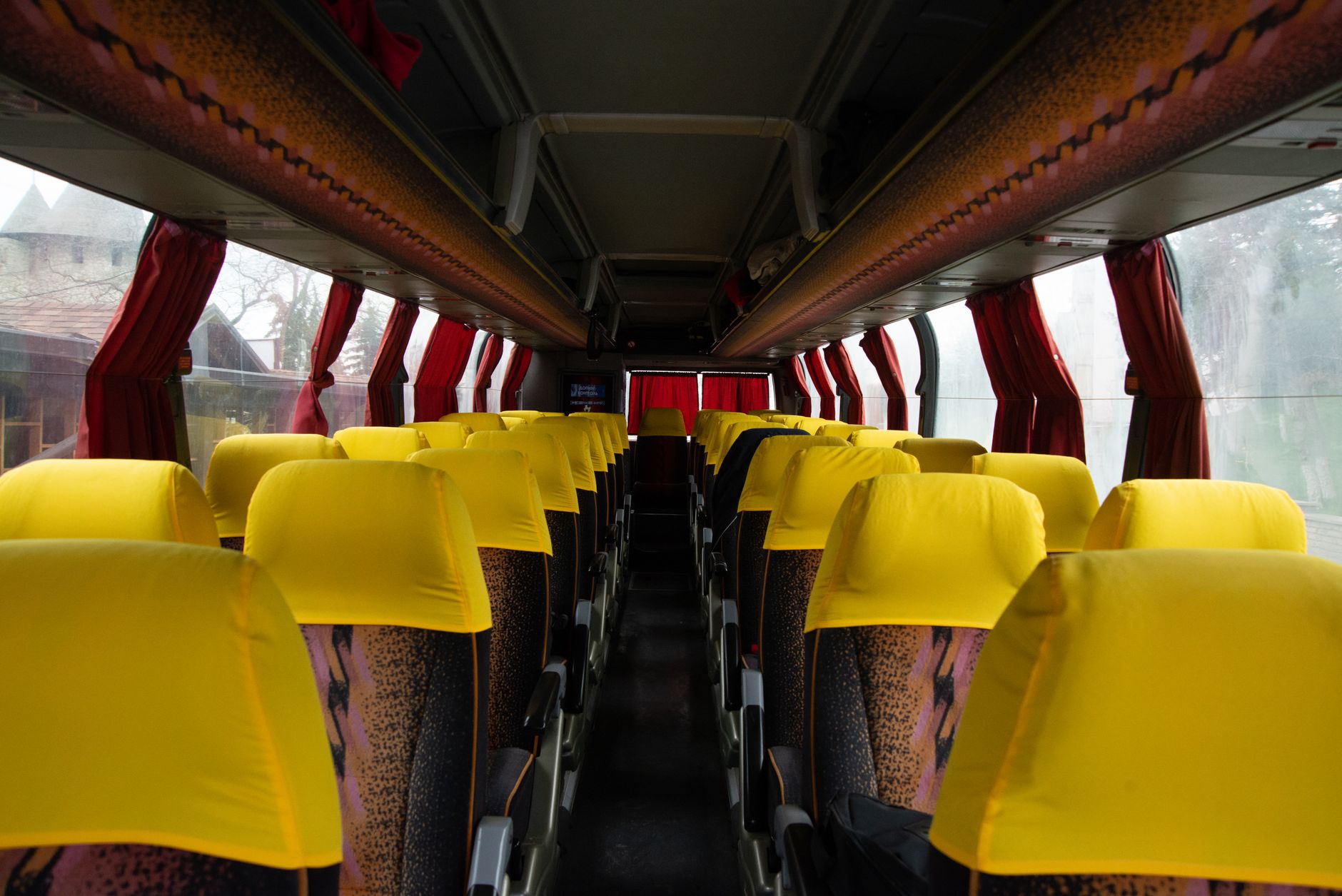
Fleet Options
Choose the vehicle from the headcount, baggage volume, route length, and access conditions rather than seats alone. A motor coach is usually the cleanest fit for long I-95, I-81, or Shenandoah runs, while a charter bus or minibus can work better for shorter shuttles and split departures. Count instruments, uniforms, coolers, tools, wheelchairs, and luggage because cargo often determines the real capacity. Tight church lots, camp roads, DCA curb areas, and older retreat properties may favor smaller vehicles or staged loading.
| Vehicle | Seats | Best For | Notes |
|---|---|---|---|
| Full-size motor coach | 49-56 passengers | Use for a large Church Retreat, multi-day mission trip, or airport-to-camp movement with substantial luggage. | Best underfloor storage and highway comfort; verify restroom, lift, and clearance requirements before assigning it to a rural camp. |
| 40-passenger charter bus | 35-40 passengers | Use when the group needs one practical coach for a regional Mid-Atlantic route without the full capacity of a standard motor coach. | Balances highway seating and cargo for medium groups, but storage and restroom specifications vary by vehicle. |
| Mini coach or minibus | 24-32 passengers | Use for women's or men's ministry weekends, local church camp shuttles, or a short airport transfer with moderate baggage. | Handles church driveways, hotel loops, and smaller camp entrances more easily, with less luggage capacity than a full-size coach. |
| Executive Sprinter | 8-14 passengers | Use for leadership teams, volunteer crews, airport connectors, or a small group traveling between DC, Baltimore, Northern Virginia, and nearby venues. | Fits smaller groups and tight urban streets, but passengers must share limited luggage space and there is usually no underfloor bay. |
Routing, Timing, and On-the-Road Realities
Plan I-95 departures around the DC Beltway, Baltimore, and Fredericksburg traffic rather than relying on map mileage alone. A morning pickup from Fairfax, Rockville, or Baltimore may need an early departure to reach a retreat site before lunch, while Friday afternoon departures can lose substantial time near the Capital Beltway, Baltimore Beltway, and I-95 construction zones. DCA pickups are close to central Washington but have tighter urban curb conditions; BWI and IAD usually need a defined commercial staging and passenger-call procedure. International arrivals at IAD may need 45 to 75 minutes after landing for customs and baggage before the bus is brought forward. Build a headcount check and restroom stop into long runs, especially for youth groups traveling toward Richmond, the Shenandoah Valley, or West Virginia. Drivers also need a legal-hours plan for multi-day itineraries, including relief, overnight parking, and the location of the next duty start.
The Chesapeake Bay Bridge can control the schedule for Annapolis, Eastern Shore, and Delmarva routes, with summer weekends and holiday periods requiring more buffer. A Blue Ridge or Shenandoah itinerary may involve steep grades, narrow approaches, gravel lots, and limited turning space near camps, so the final mile should be checked rather than estimated from a major highway exit. Venues such as Shepherd's Spring near Sharpsburg and retreat properties near Williamsburg may have different bus loops, gate hours, unloading areas, and parking rules. At churches, reserve a loading lane and keep private vehicles away from the bus's turning path; at airports, follow the terminal's commercial-vehicle instructions instead of using a rideshare curb. For two or more vehicles, assign lead and follow order, separate passenger manifests, and a single onsite coordinator who can release each coach. The itinerary should include a realistic departure buffer for worship services, meal cleanup, luggage count, and weather before the return leg.
What This Typically Costs
Pricing for a Mid-Atlantic Church Retreat usually combines a daily vehicle minimum with mileage, service hours, and the number of operating days. A charter bus or motor coach commonly runs a few thousand dollars per day in most markets, while a short local shuttle may price differently because of minimum hours. Summer camps, spring retreats, Easter season, graduation weekends, and fall church conferences can tighten availability and raise rates. Ask the quote to identify deadhead miles from the bus yard, tolls, parking, driver overnight lodging, meals or per diem, and any fuel adjustment. Driver gratuity is commonly handled as a separate line item, and multi-vehicle group travel adds dispatch, staging, and coordination requirements. A realistic comparison should use the full trip total rather than only the base daily rate.
Frequently Asked Questions
What vehicle is best for a church retreat in the Mid-Atlantic?
A full-size motor coach is usually the best starting point for groups traveling between Baltimore, Washington, Richmond, and retreat facilities in the Shenandoah Valley. It provides reclining seats, climate control, a restroom on many vehicles, and underfloor storage for bags and ministry equipment. A charter bus is especially useful when the itinerary includes several hours on I-95 or I-81. Confirm restroom availability if the group includes younger children, older adults, or long stretches between stops.
Can you coordinate airport pickups for a mission trip?
Yes. Church groups frequently use a charter bus for airport arrivals at BWI, DCA, and IAD, then continue to a camp, hotel, or retreat center. BWI works well for Baltimore, Annapolis, Columbia, and northern Washington routes, while DCA is convenient for central DC and nearby Virginia; IAD often suits Northern Virginia and international arrivals. Airport plans need a flight list, terminal instructions, baggage time, and a staging plan because the bus may wait in a commercial area rather than remain at the curb.
How many people can travel on a Church Retreat bus?
A typical youth group retreat may range from about 20 to 50 travelers, with larger church networks and summer camps requiring several vehicles. Women's and men's ministry weekends often use 15-passenger-style executive vans, Sprinters, minibuses, or one motor coach depending on the headcount and luggage. Mission trips can have uneven loads because tools, food boxes, coolers, and personal bags travel together. Give the planner the actual passenger count plus equipment dimensions instead of relying only on seat capacity.
Can the bus carry instruments, uniforms, and wheelchairs?
Mission teams should inventory guitars, keyboards, drums, sound cases, uniforms, sports equipment, tool bags, coolers, and mobility devices before selecting a vehicle. Full-size coaches normally offer the most underfloor capacity, but unusually tall or fragile items may need seats removed, a trailer assessment, or a second vehicle. Wheelchairs require advance notice so an accessible coach can be assigned and boarding time can be planned. Keep aisles and emergency exits clear; cargo cannot simply be stacked in passenger walkways.
How should we plan a retreat route across the Chesapeake Bay?
For a Chesapeake Bay crossing, build extra time around the Bay Bridge and approach roads, especially on summer Fridays, holiday weekends, and Sunday return periods. Routes between the Eastern Shore, Annapolis, Baltimore, and Washington may use US 50 and the Chesapeake Bay Bridge, while coastal Virginia trips can continue toward Norfolk and the Chesapeake Bay Bridge-Tunnel. A dispatcher will check the planned crossing, weather exposure, bridge restrictions, and the location where the group can safely load. Do not schedule a tight airport connection immediately after a bridge crossing.
How do you manage transportation for a large church group?
Large groups are commonly split into two or more charter buses or motor coaches when one vehicle cannot meet the headcount, cargo, or accessibility requirement. Every vehicle needs its own driver instructions, passenger manifest, emergency contact, radio or phone coordination plan, and loading sequence. Use one lead coach and assign a clear convoy order, but allow independent routing if traffic or venue access separates the vehicles. At camps and churches, reserve room for staged unloading because two buses cannot always use the same narrow loop at once.
What information is needed to book Mid-Atlantic group travel?
The quote should be finalized before deposits, hotel blocks, or nonrefundable retreat commitments are made. Provide dates, pickup address, headcount, age range, baggage and equipment details, destination, intermediate stops, airport flight information, and whether the bus returns or stays overnight. The confirmation should identify vehicle type, seating capacity, pickup windows, driver contact process, cancellation terms, included mileage or hours, tolls, parking, lodging responsibility, and accessibility details. US Bus Trips can review the itinerary and return a practical quote within 4 business hours when these details are complete.
How to Book
To request a quote, prepare the travel dates, pickup address, headcount, destination, intermediate stops, return plan, and a complete equipment list. Add flight numbers for BWI, DCA, or IAD pickups, plus information about wheelchairs, instruments, uniforms, coolers, and oversized gear. US Bus Trips can return a realistic quote within 4 business hours when the itinerary is complete. The confirmation will show the assigned vehicle class, pickup windows, routing assumptions, included services, payment schedule, cancellation terms, and the dispatch contact process; reach us through the US Bus Trips booking team by phone or online request.
Related Trips You Might Also Consider
- College Band Tour — Northeast Region
- Family Reunion — Southeast Region
- DC Monuments — 14-Passenger Sprinter
- Veterans Group — Pacific Region
- Senior Tour Group — Mid-Atlantic Region
- Tulsa, OK to Kansas City, MO
- Cross-Country Charter Bus Overview
- All Group Tour Destinations
- See the Full Fleet (Sprinters through 56-pax coaches)
- Get a Free Quote in 60 Seconds