
US Bus Trips books College Band Tour transportation for marching bands, concert bands, and choral groups traveling to away games, festivals, campus exchanges, and performances across the Northeast.
Overview
A Northeast College Band Tour commonly combines an away football game, pep rally, halftime performance, rehearsal, festival appearance, or concert exchange with hotel stays and campus transfers. University bands and choirs may travel from Boston, Worcester, Providence, Hartford, New Haven, Albany, New York City, Newark, Philadelphia, Pittsburgh, or northern New England to a host campus several states away. The Collegiate Marching Band Festival at J. Birney Crum Stadium in Allentown is an example of the regional showcase pattern, bringing collegiate bands from multiple Northeast states into one performance day. Other itineraries center on NCAA stadiums, performing arts centers, college quads, parade routes, and large event venues such as MetLife Stadium, Gillette Stadium, Fenway Park, Lincoln Financial Field, and Delaware Stadium. A charter bus keeps the group together between the hotel, warm-up site, performance entrance, and meal stop. The operational risk is usually not the highway distance alone; it is the combination of equipment, fixed call times, security screening, and a full bus waiting through the event.
Typical group size ranges from a compact choir or pep ensemble of 15 to 30 passengers to a 50-person marching band with directors, staff, and chaperones. Larger university programs may move 100 to 250 people and need two to five buses, depending on instruments, uniforms, accessibility needs, and whether staff travel separately. A 56-passenger motor coach may carry a standard ensemble, but filling all seats can leave inadequate room for garment bags, music folders, personal luggage, and instrument cases. Groups with substantial percussion, sousaphones, drum majors' equipment, sound gear, or choir risers should provide an itemized cargo list before the vehicle is assigned. Wheelchairs, walkers, and medical equipment also affect the fleet plan and loading sequence. For large group travel, one lead bus should carry the tour manager or dispatcher contact, while every vehicle receives the same manifest, venue map, hotel instructions, emergency contacts, and departure times.
Northeast routing is shaped by dense metros and several toll corridors rather than long open-road stretches. Typical paths use I-95 between Boston, Providence, New Haven, New York, Newark, and Philadelphia; I-90 and the Massachusetts Turnpike between Boston, Worcester, Springfield, Albany, and western New York; and I-87, I-80, I-76, I-84, and the New York State Thruway for upstate, New Jersey, and Pennsylvania connections. Northern itineraries may include Burlington, Manchester, Portland, Bangor, and Boston, while Pennsylvania movements may include Allentown, Bethlehem, Harrisburg, Hershey, State College, and Pittsburgh. Turnpike, bridge, tunnel, and electronic toll charges are common, and E-ZPass planning does not remove the need to budget for every crossing. New York City and Boston require curbside discipline because a bus may unload, relocate, and return later rather than remain at the venue. The practical booking question is where the bus waits during rehearsal or performance, not only where passengers are dropped off.
Fleet Options
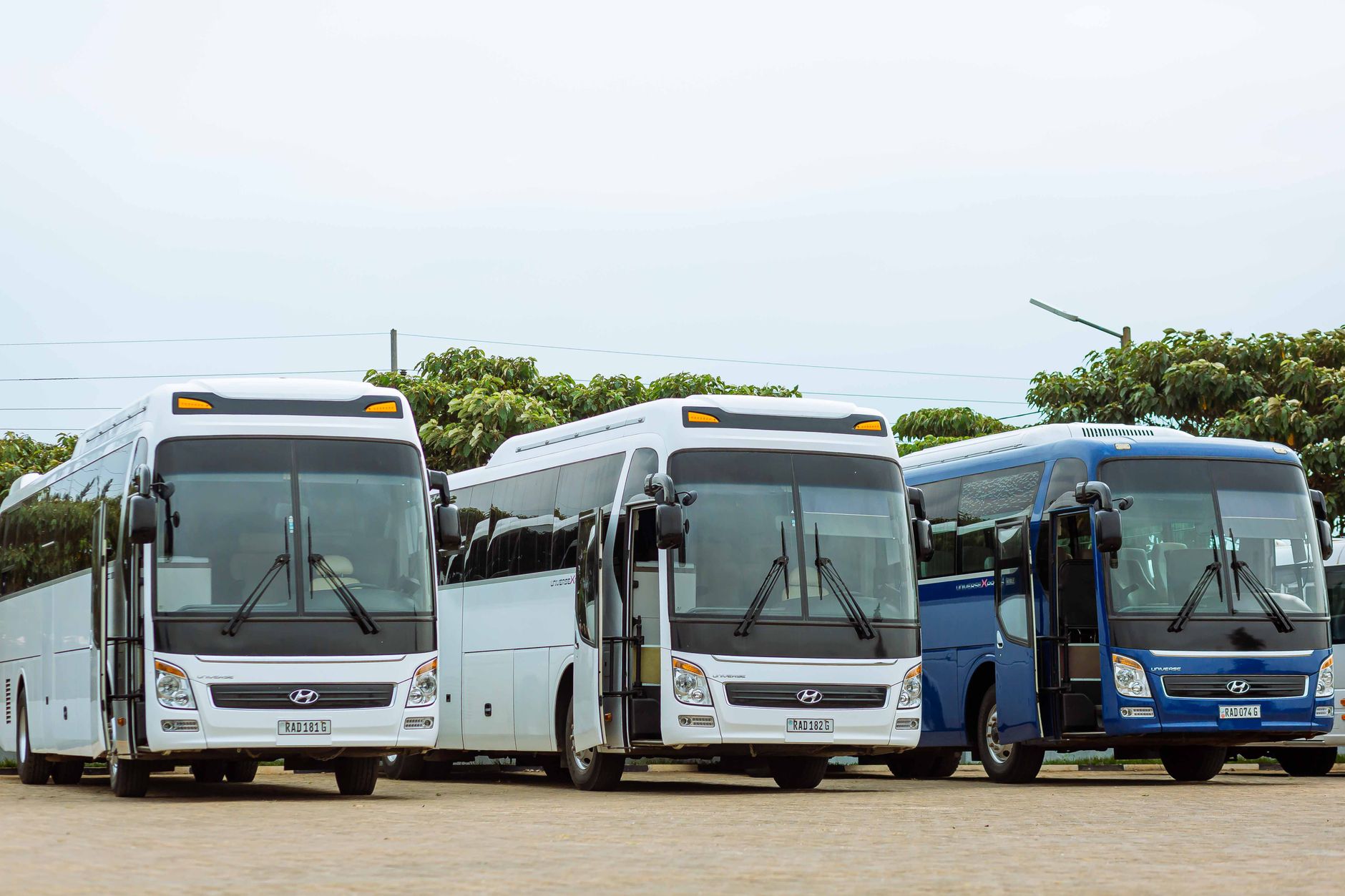
Vehicle selection for a Northeast group travel itinerary starts with headcount, cargo volume, and the time spent in tight city streets. A motor coach gives college performers the best ride comfort and underfloor storage, but seats should not be filled to the last position when uniforms, instruments, choir folders, and personal bags are traveling together. A smaller charter bus or executive Sprinter can work for staff, soloists, chaperones, or a compact ensemble, while a dedicated equipment vehicle may protect passenger seating. Boston, Manhattan, Providence, and older campus districts can have restrictive turns, low-clearance approaches, and limited bus parking, so the vehicle must match the confirmed access route.
| Vehicle | Seats | Best For | Notes |
|---|---|---|---|
| 56-passenger motor coach | 50-56 passengers | Use for a full college band, choir, or combined group traveling between campuses, stadiums, hotels, and festivals. | Best comfort and underfloor storage for full ensembles, but confirm bay capacity for percussion, garment bags, and bulky cases before filling every seat. |
| 40-passenger motor coach | 34-40 passengers | Use for a mid-size ensemble with staff, chaperones, uniforms, and standard instrument or choir luggage. | Provides more usable space per passenger than a full bus when equipment is moderate and is easier to position at smaller campuses and regional venues. |
| 25-35 passenger mini coach | 24-35 passengers | Use for a chamber choir, pep ensemble, section, or overflow movement between a hotel and a nearby venue. | A useful compromise for smaller ensembles and support personnel, with better street fit than a full-size bus but less luggage capacity and fewer onboard amenities. |
| Executive Sprinter van | 10-14 passengers | Use for conductors, administrators, soloists, accessibility support, or a small advance team moving through dense Northeast districts. | Fits narrow approaches and quick staff movements, but limited cargo space makes it unsuitable for a full band or large instrument inventory without another vehicle. |
Routing, Timing, and On-the-Road Realities
Build the schedule backward from the performance call time, not from a map application's optimistic drive estimate. On I-95, allow additional time for Connecticut approaches, the George Washington Bridge, the New Jersey Turnpike, the Bronx, and Philadelphia-area congestion; on I-90, allow for Massachusetts Turnpike traffic, Albany interchanges, weather, and western New York construction. A Boston pickup before a weekday class day may need an early departure, while a Manhattan or Newark pickup should avoid relying on a narrow morning window. For Fenway Park, Gillette Stadium, MetLife Stadium, Madison Square Garden, Lincoln Financial Field, and campus stadiums, obtain the motorcoach entrance and parking instructions from the venue or event organizer before dispatch. Boston and New York streets can prohibit long curb occupancy, and some campuses route buses through service gates that are separate from passenger entrances. Schedule a legal meal and rest plan, plus time for uniform changes, instrument checks, security screening, and loading after the event.
Multi-city College Band Tour loops require a written movement plan for every bus, especially when one group performs while another bus stages equipment or transports staff. A Boston to Providence to New Haven to New York sequence may look short on paper but can consume a full operating day once campus access, toll plazas, hotel check-in, and rehearsal holds are included. A New York, Newark, Philadelphia, and Allentown loop should identify whether the bus uses the New Jersey Turnpike, Lincoln Tunnel, George Washington Bridge, or an alternate crossing, because traffic and commercial bus restrictions can change the arrival plan. In Pennsylvania, I-76 and I-80 tolls, football traffic, and venue parking procedures can add time even between nearby cities. Portland, Manchester, Burlington, and upstate New York routes need weather reserves in late fall and winter, particularly for early departures and mountain approaches. For two or more vehicles, assign a lead contact, stagger loading if the venue has limited curb space, maintain a shared passenger manifest, and set a single emergency communication procedure. The dispatch plan should also state where drivers park, when they are relieved, and whether an overnight hotel is within legal and practical reach of the final venue.
What This Typically Costs
Northeast College Band Tour pricing is usually built from a daily minimum, total mileage, vehicle count, and the number of service days. A short Boston to New York or Philadelphia run may still carry a full-day minimum when the bus must stage for rehearsal, a game, or a late festival exit. Multi-city loops add deadhead miles, tolls, parking, and driver overnight and lodging costs, especially on I-95, the Massachusetts Turnpike, the New York State Thruway, I-76, and I-80. Fall football, September and October festivals, homecoming weekends, and late-November performances are seasonal peaks, so availability and rates commonly tighten. Typical line items include fuel adjustments, tolls, venue parking, driver gratuity, hotel rooms for drivers, and extra service days. In most markets, a full-size motor coach commonly runs a few thousand dollars per day, while the total trip cost rises with additional buses, longer staging windows, and overnight routing.
Frequently Asked Questions
How much equipment can a college band or choir bring on a charter bus?
Most groups need a motor coach for students, staff, uniforms, personal bags, and instruments that can safely travel inside the passenger compartment. Large brass, percussion, sousaphones, cymbals, drum cases, music stands, choir risers, and garment bags can consume the underfloor bays quickly. A detailed equipment inventory should be sent before quoting because standard luggage capacity is not the same as dedicated cargo space. Oversize instruments may require an additional charter bus, a separate equipment vehicle, or a trailer arrangement approved in advance. Keep wheelchairs and mobility equipment identified so the operator can assign accessible equipment and loading time.
When should a college group book two buses instead of one?
A 56-passenger charter bus is usually a practical starting point for a band, choir, or combined ensemble with moderate luggage and equipment. It fits best when most large instruments can use the luggage bays and the group has one primary pickup and drop-off location. A second motor coach is often better than overcrowding one bus when the headcount approaches capacity or musicians need room for uniforms and personal bags. For percussion-heavy groups, two buses or a passenger bus plus a dedicated equipment vehicle is more operationally reliable. Final capacity depends on the vehicle model, bay dimensions, driver, and the venue's loading rules.
What Northeast cities are commonly included in a band tour itinerary?
Common Northeast loops include Boston, Providence, Hartford, New Haven, New York City, Newark, Philadelphia, Allentown, Harrisburg, Albany, and Buffalo. A Massachusetts group may combine Boston University or Fenway-area events with Providence, New Haven, and Manhattan performances. New York and New Jersey groups often route through Newark, Rutgers, Madison Square Garden, MetLife Stadium, Philadelphia, or Delaware Stadium. Pennsylvania itineraries frequently include Allentown's J. Birney Crum Stadium, Philadelphia venues, Hershey, Penn State, and western points on I-80 or I-76. Northern routes can connect Burlington, Manchester, Portland, and Boston, but mountain weather and longer state-border travel need schedule protection.
How does parking work for charter buses in Boston and New York?
Plan Boston, New York City, Philadelphia, and other dense downtown stops around a specific bus approach, unloading point, and departure window. A venue may permit only curbside unloading before moving the motor coach to a remote lot, and a driver may not be able to wait on a narrow residential or campus street. Manhattan and major New England corridors can lose significant time to weekday congestion, construction, tunnels, bridges, and event traffic. Provide the exact venue entrance, staging address, parking contact, and group movement plan rather than only a venue name. For football stadiums, confirm whether buses use a team entrance, a service gate, or a designated motorcoach lot.
What months are busiest for Northeast college band travel?
A College Band Tour is commonly scheduled from late August through November for football away games, homecoming weekends, exhibitions, and marching festivals. September and October are the busiest periods for outdoor marching events, including regional competitions and collegiate showcases such as the early-October festival at J. Birney Crum Stadium in Allentown. Choral groups add spring concert exchanges, adjudicated festivals, campus invitations, and holiday performances from late November through December. Winter Northeast trips need extra buffer for snow, freezing rain, and weather-related road restrictions, particularly in northern New England and upstate New York. Reserve vehicles several months ahead when dates fall on football Saturdays, major city events, or festival weekends.
How do driver hours affect a Northeast multi-city band tour?
A group can often travel between nearby Northeast metros in a few hours, but the schedule must include loading, traffic, toll facilities, meal stops, venue security, and post-performance boarding. Drivers must follow applicable hours-of-service rules and need a legal rest plan rather than simply being given a nominal arrival time. A Boston to New York to Philadelphia loop can create driver-hours pressure when the bus waits through a game or festival and then moves again late at night. For multi-day trips, a second qualified driver or a planned overnight stop may be necessary. Give the broker every rehearsal, performance, meal, hotel, and deadhead movement so the itinerary can be checked for feasibility.
Can a Northeast charter bus accommodate wheelchairs and mobility equipment?
Wheelchair users, injured performers, and passengers with limited mobility should be identified during the initial request, not after the vehicle is assigned. Ask for the number of wheelchair spaces, whether passengers transfer to seats, and the size and weight of each mobility device. Accessible motor coaches may require longer loading times and may not be available at the same rate or in every market, especially for a large fleet on a peak fall weekend. Keep accessible boarding locations clear and coordinate with campus and venue security before arrival. If the group uses several buses, place accessible passengers and support staff on the vehicle with the appropriate lift or ramp.
How to Book
To start a College Band Tour request, have the travel dates, pickup address, headcount, equipment list, hotel locations, performance schedule, and every planned stop ready. Include whether the group needs wheelchair access, multiple buses, a dedicated equipment vehicle, early staging, or a late return after a game or festival. US Bus Trips can typically return a quote within 4 business hours when the itinerary and passenger count are complete. The confirmation should identify the vehicle plan, pickup instructions, service dates, routing assumptions, parking or toll responsibilities, and cancellation terms. Reach us through the US Bus Trips booking team by phone or online request so an operations specialist can review the Northeast group travel plan before dispatch.
Related Trips You Might Also Consider
- Tampa, FL to Miami, FL
- Sports Team Travel — Southeast Region
- Colorado Springs, CO to Pueblo, CO
- Family Reunion — Midwest Region
- San Antonio, TX to Dallas, TX
- Non-Profit Fundraiser — Southeast Region
- Cross-Country Charter Bus Overview
- All Group Tour Destinations
- See the Full Fleet (Sprinters through 56-pax coaches)
- Get a Free Quote in 60 Seconds