
US Bus Trips coordinates charter bus and motor coach transportation for college marching bands, choirs, pep bands, directors, and festival groups traveling across the Southeast.
Overview
A Southeast College Band Tour commonly combines an away football game, halftime or pregame performance, rehearsal, alumni event, and hotel stay across one to four days. Groups may depart from campuses in Charlotte, Raleigh, Durham, Greensboro, Columbia, Clemson, Athens, Atlanta, Auburn, Tuscaloosa, Knoxville, Nashville, Louisville, Orlando, Tampa, or Jacksonville. Football volume is concentrated from late August through November, while spring brings concert tours, adjudicated festivals, HBCU showcases, and campus invitationals. A choral group usually travels with fewer bulky cases, but robes, risers, keyboards, folders, sound equipment, and personal luggage still affect capacity. The customer is typically a university music department, athletics office, band director, student affairs department, alumni organization, or tour coordinator. The booking should be treated as a moving production schedule rather than a simple point-to-point ride.
Southeast group travel follows a few repeat patterns, including I-85 between North Carolina, South Carolina, Georgia, and Alabama; I-95 along the Carolinas, Georgia coast, and Florida; and I-75 from Chattanooga and Knoxville through Atlanta, Macon, Gainesville, Tampa, and South Florida. The Atlanta-Charlotte-Nashville-Orlando triangle creates long repositioning legs, with I-24 and I-40 supporting Nashville and Knoxville connections and I-4 linking Orlando, Tampa, and central Florida. In North Carolina, common destinations include Kenan Memorial Stadium in Chapel Hill, Carter-Finley Stadium in Raleigh, Truist Stadium in Winston-Salem, and Bank of America Stadium in Charlotte. South Carolina routing often includes Williams-Brice Stadium in Columbia, Memorial Stadium in Clemson, and venues in Greenville or Charleston, while Georgia movements may involve Mercedes-Benz Stadium, Sanford Stadium, Bobby Dodd Stadium, or downtown Atlanta performance sites. Florida trips frequently center on Camping World Stadium, UCF venues, Raymond James Stadium, EverBank Stadium, loanDepot park-area events, and beach destinations requiring extra loading and parking coordination. Alabama, Tennessee, and Kentucky demand similar planning around Bryant-Denny Stadium, Jordan-Hare Stadium, Neyland Stadium, Nissan Stadium, Kroger Field, and Louisville-area venues.
Equipment planning drives the number of vehicles on a College Band Tour. A marching unit may carry sousaphones, marching brass, woodwinds, drumline cases, cymbals, uniforms, garment bags, flags, props, music stands, medical supplies, and personal luggage. A choir may need robe racks, risers, keyboards, folders, microphones, and portable sound equipment, even when the passenger count is smaller. Wheelchairs and other mobility equipment need to be identified before assignment because accessible loading and aisle space can reduce usable seating. Large groups often use several motor coaches for people plus a dedicated cargo vehicle, while smaller groups may consolidate soft luggage and instruments in underfloor bays after a case-by-case review. At stadiums and festivals, the driver may need a timed unload, remote staging lot, or second movement after the performance because pedestrian and security controls change during game day. A detailed manifest and loading sequence prevent the common failure of arriving with enough seats but nowhere to safely place the equipment.
Fleet Options
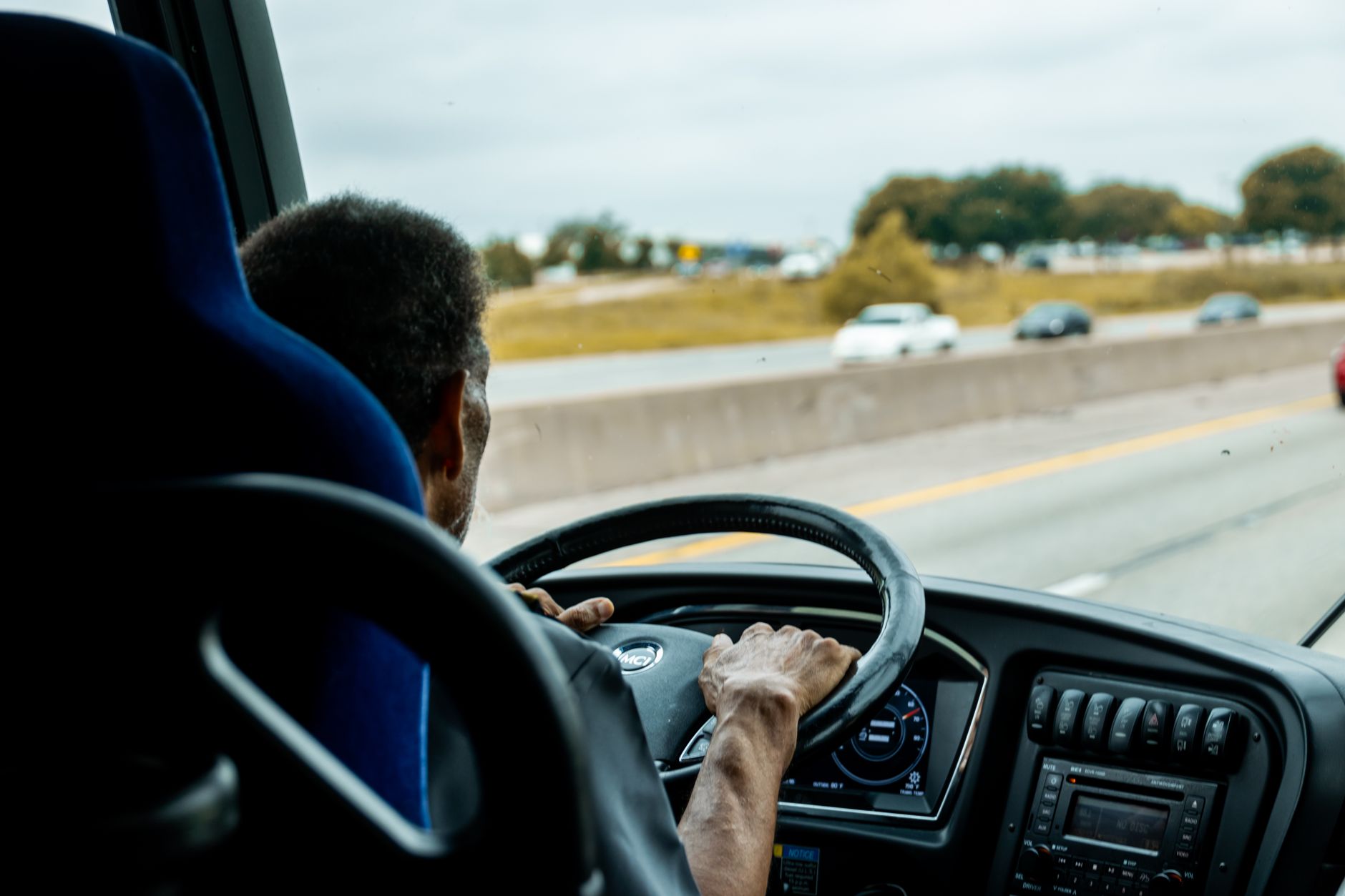
Vehicle selection for Southeast group travel starts with both passenger count and cargo volume. A full-size motor coach is usually the most comfortable choice for long I-95, I-75, and I-85 legs, but a band may need a second vehicle when instruments and uniforms fill the bays. Smaller mini coaches and Sprinters help move directors, section leaders, or overflow groups through tight campus streets and limited venue parking. Confirm wheelchair needs, aisle equipment, garment racks, percussion cases, and hotel luggage before choosing a fleet plan.
| Vehicle | Seats | Best For | Notes |
|---|---|---|---|
| Full-size motor coach | 40-56 passengers | Use for a primary student, choral, or marching-band movement traveling between major Southeast metros or staying on a multi-day itinerary. | Best long-distance comfort with reclining seats, restroom availability on many models, climate control, and underfloor bays; verify bay capacity for percussion, uniforms, and large instruments. |
| Mini coach | 24-38 passengers | Use for a smaller choir, pep band, staff group, or a second vehicle supporting a larger College Band Tour. | Easier on campus loops and tighter venue approaches than a full-size coach, but cargo space is limited and restroom availability is uncommon. |
| Mini bus | 18-28 passengers | Use for airport, hotel, rehearsal, and venue shuttles when the group does not need full-size coach amenities. | Useful for short transfers and compact groups, with modest luggage capacity and limited room for bulky instruments or garment racks. |
| Executive Sprinter | 8-14 passengers | Use for small leadership groups, VIP movement, section staff, or a separate accessible and fast-moving unit within a larger trip. | Comfortable for directors, alumni, soloists, or accessibility support, but not suitable for full marching-band cargo or large personal-bag loads. |
Routing, Timing, and On-the-Road Realities
Plan Southeast College Band Tour departures around the actual performance call, not the kickoff or concert start alone. A group leaving Charlotte for Columbia, Atlanta for Auburn, or Raleigh for Clemson should allow time for meal stops, security screening, uniform changes, instrument unload, and a possible remote stadium shuttle. I-85 is generally efficient between the Piedmont metros but becomes slow around Atlanta, Charlotte, Greenville-Spartanburg, and major game-day interchanges. I-75 carries heavy traffic through Chattanooga, Knoxville, Atlanta, Macon, and Florida, while I-95 combines student travel, freight, beach traffic, and seasonal congestion along the coast. Atlanta's I-75 and I-85 Downtown Connector, I-285, airport approaches, and Athens game-day routes require meaningful schedule padding. For Florida, account for I-4 congestion, Orlando event traffic, Jacksonville approaches, and beach access roads that can take longer than the interstate segment.
Venue access should be confirmed before the charter bus leaves the campus. Stadiums and arenas often assign motor coach entry through a specific gate, require credentials, or direct buses to a remote lot after a timed curbside unload. Mercedes-Benz Stadium and downtown Atlanta require attention to event security and city traffic, while Sanford Stadium in Athens, Williams-Brice Stadium in Columbia, Bank of America Stadium in Charlotte, Neyland Stadium in Knoxville, and Jordan-Hare Stadium in Auburn all have game-day restrictions that can change the final approach. Festival sites may be at fairgrounds, high-school stadiums, university athletic complexes, or performing-arts centers with narrow drives and limited turning space. Driver-hours planning should account for the full duty day, not only highway time, because loading, rehearsals, waiting, parking, and post-event pickups consume the schedule. For multi-day group travel, dispatch may stage drivers overnight near the destination, use a relief-driver arrangement, or keep the coach parked between events rather than repositioning it empty.
What This Typically Costs
Southeast College Band Tour pricing is built from vehicle days, route mileage, market availability, and the amount of time the equipment must stay with the group. Daily minimums commonly apply even on short repositioning days, while long I-95, I-75, or I-85 moves add mileage, deadhead, tolls, and additional driver time. Fall football weekends, spring festival calendars, holiday periods, and Florida beach demand can tighten capacity and raise seasonal rates. Multi-day itineraries usually include driver overnight lodging, meal arrangements where required, parking, and possible split-driver planning for longer legs. Common line items include fuel adjustments, tolls, venue parking, driver gratuity, and equipment-handling requirements. In most markets, a full-size motor coach commonly runs a few thousand dollars per day, while the total trip price depends more on itinerary complexity than on headcount alone.
Frequently Asked Questions
Can a charter bus take our band to an away game several states away?
Yes, if the itinerary is built around legal driver hours, scheduled breaks, and a realistic arrival window. A motor coach can cover long Southeast legs, but a same-day run from Charlotte to Orlando or Nashville to Atlanta may require an early departure, a relief-driver plan, or an overnight stop. The dispatch plan accounts for traffic through Atlanta, Charlotte, Jacksonville, and other bottlenecks before assigning pickup and performance times. For multi-day group travel, keeping the same coach and driver team can reduce loading changes and simplify equipment control.
How many buses does a college band or choral group usually need?
A typical college marching band may require several charter buses or motor coaches, depending on enrollment, staff, guests, and equipment volume. A 40- to 56-passenger motor coach often carries people and personal bags, but uniforms, percussion cases, music stands, garment racks, and larger instruments can consume underfloor capacity quickly. Choral groups may fit more efficiently because they usually have less bulky gear, although risers, keyboards, and sound equipment change the calculation. Final vehicle count should be based on both passenger seats and cubic cargo space, not seats alone.
What vehicle mix works best for marching bands and choirs?
Most large College Band Tour movements use full-size motor coaches for students, directors, and personal luggage, with an additional charter bus or equipment vehicle when cargo is substantial. A mini coach can work for a smaller choir, pep band, staff unit, or overflow group, while executive Sprinters suit directors, alumni, or small ensembles rather than a full marching band. Some itineraries use a separate box truck or trailer for sousaphones, marching percussion, cymbals, uniforms, props, and staging equipment. The right mix depends on whether gear travels under the coach, in a dedicated vehicle, or through venue-arranged freight support.
Can instruments, uniforms, and marching equipment travel on the bus?
Yes, but the equipment plan must be explicit before dispatch. Coaches have underfloor bays, but bay doors, weight distribution, case dimensions, and loading order limit what can be carried safely. Large percussion instruments, tubas, cymbals, props, risers, and garment racks may require a separate vehicle or an approved trailer arrangement. Provide an inventory with case sizes, approximate weights, wheelchairs, and any loading restrictions so the charter bus assignment is based on usable cargo volume.
Which Southeast cities and corridors are common for college group travel?
Common Southeast routings include Charlotte, Greensboro, Raleigh, Durham, and Chapel Hill to Columbia, Clemson, Greenville, Atlanta, Athens, Knoxville, Nashville, or Virginia destinations. I-85 is the usual spine through North Carolina, South Carolina, Georgia, and into Alabama, while I-95 serves Raleigh, Fayetteville, Florence, Charleston-area connections, Savannah, Jacksonville, and Florida. I-75 links Chattanooga, Knoxville, Atlanta, Macon, Gainesville, Tampa, and South Florida, with I-4 connecting Orlando and Tampa. Beach and festival movements also commonly use I-26, I-16, I-20, I-24, I-40, and coastal approaches that can be slower than the interstate mileage suggests.
When should we reserve a charter bus for a Southeast away game?
Book as soon as the football or festival calendar is firm, especially for September through November weekends. Capacity tightens around SEC and ACC home games, rivalry weekends, HBCU classics, spring music festivals, and Florida beach-season demand. A quote can often be returned within 4 business hours when dates, pickup details, passenger count, equipment inventory, and overnight needs are complete. Early booking improves the chance of keeping one vehicle group together instead of splitting the movement across multiple suppliers or vehicle types.
Can the bus park at the stadium or festival venue?
A bus can usually reach a stadium or performing-arts venue, but the final approach may require a designated motor-coach entrance, staging lot, curbside unload, or timed permit. Stadiums such as Mercedes-Benz Stadium in Atlanta, Sanford Stadium in Athens, Bank of America Stadium in Charlotte, Williams-Brice Stadium in Columbia, Neyland Stadium in Knoxville, and Jordan-Hare Stadium in Auburn have game-day traffic and restricted parking patterns. Festival sites may use school bus loops, fairgrounds, athletic complexes, or remote lots rather than a standard passenger drop-off. The operations team should receive the exact venue entrance, performance call time, unloading duration, and post-event pickup location before the final itinerary is issued.
How to Book
To start a quote, provide travel dates, pickup address, headcount, equipment inventory, accessibility needs, hotel details, performance times, and every planned stop. Include whether the group needs one-way service, a dedicated coach throughout the trip, a separate equipment vehicle, or staged venue transfers. With complete information, US Bus Trips can typically return a realistic quote within 4 business hours, subject to vehicle availability and route review. The confirmation should identify the vehicle type, passenger capacity, pickup and drop-off points, driver plan, estimated schedule, inclusions, exclusions, and contact process for day-of changes.
Related Trips You Might Also Consider
- Veterans Group — Midwest Region
- Agriculture FFA/4-H — Pacific Northwest Region
- Senior Tour Group — Northeast Region
- Senior Tour Group — Mountain West Region
- Corporate Roadshow — Mountain West Region
- Sports Team Travel — Mid-Atlantic Region
- Cross-Country Charter Bus Overview
- All Group Tour Destinations
- See the Full Fleet (Sprinters through 56-pax coaches)
- Get a Free Quote in 60 Seconds