
A Yellowstone group tour in a 56-Passenger Motor Coach suits churches, schools, alumni groups, escorted vacations, and family reunions that need one vehicle for a long multi-state run.
Overview
A 56-Passenger Motor Coach is designed for the group that wants one cabin, one manifest, and one coordinated schedule across a multi-day Yellowstone group tour. Common customers include church travel ministries, senior and alumni associations, school and university groups, family reunions, and professional tour operators selling escorted western itineraries. The vehicle is especially useful on long approaches from Denver over I-25 and I-90, from Salt Lake City over I-15 and US 20, or from Boise through Idaho Falls and West Yellowstone. It also works for groups combining Yellowstone with Grand Teton, Jackson, Cody, Glacier, or a regional rodeo and museum stop. The tradeoff is maneuverability: a full-size motor coach needs bus-capable hotels, wide loading areas, and a deliberate plan at every attraction.
A realistic Yellowstone group tour usually starts with day 1 as the pickup and positioning day, rather than pretending the group can leave a distant city in the morning and tour Old Faithful that afternoon. A Salt Lake City departure might use Idaho Falls as a meal or overnight control point before entering through West Yellowstone, while a Denver departure may require an overnight near Rock Springs, Casper, or a northern gateway depending on the final park plan. The in-park sequence commonly assigns one day to Old Faithful and the Upper Geyser Basin, one to the Madison and Norris corridors, and one to Canyon, Hayden Valley, Yellowstone Lake, or Mammoth. Grand Teton is best treated as a dedicated transfer or sightseeing day, not a casual add-on between congested Yellowstone stops. Lodging should be reserved early in West Yellowstone, Gardiner, Jackson, Cody, Bozeman, or Idaho Falls, with room for the driver and a legal overnight.
Season choice changes both the visitor experience and the transportation product. July and August provide the broadest access to summer roads and services but also produce the highest pressure on hotel inventory, gateway traffic, wildlife-jam delays, and attraction parking. Late May, June, and September can be more manageable, but snow, construction, limited services, and short-notice road changes remain possible at elevation. Most roads for regular wheeled vehicles operate seasonally, while the North Entrance through Gardiner and toward Cooke City is generally the year-round exception. Winter Yellowstone travel is normally an oversnow operation using commercially guided snowcoaches or snowmobiles, not a conventional 56-Passenger Motor Coach touring the summer loop. Build the proposal around current road opening dates and verify conditions shortly before the run.
Fleet Options
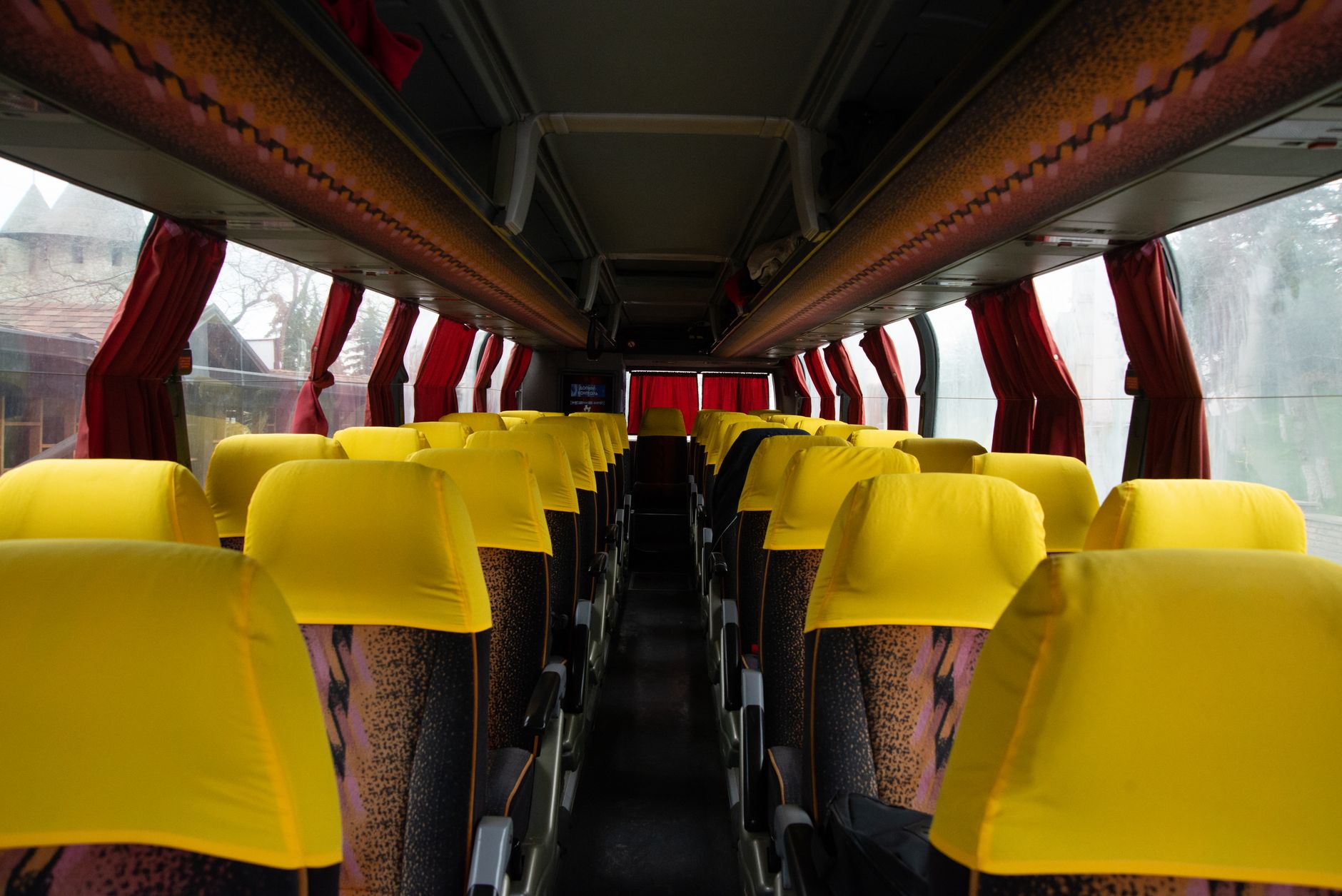
The 56-Passenger Motor Coach is the workhorse of long-haul group travel for a full 56-passenger party, with reclining seats, overhead storage, a restroom, DVD or USB features, and luggage bays underneath. It fits church groups, alumni tours, school and university travel, escorted vacations, and family reunions that need everyone riding together over multiple states. Confirm the actual passenger count and suitcase volume because a full coach with checked luggage, coolers, mobility equipment, or event materials can use its underfloor capacity quickly. Yellowstone also has tight pullouts, seasonal road restrictions, and busy attraction lots, so a large coach needs a planned unloading and staging method rather than improvised stops.
| Vehicle | Seats | Best For | Notes |
|---|---|---|---|
| 56-Passenger Motor Coach | Up to 56 passengers | Choose it when nearly the entire group travels together and the itinerary includes long interstate legs, multiple hotel nights, and substantial luggage. | Reclining seats, overhead storage, restroom, DVD or USB features, and underfloor luggage bays make it the workhorse for a full-group multi-day tour, but it needs confirmed bus parking and approved routing. |
| 40 to 50 Passenger Motor Coach | 40 to 50 passengers | Choose it when the roster is below full capacity or when extra luggage, equipment, or comfort space matters more than maximum seating. | It preserves coach comfort and luggage-bay capacity with more seating margin, while still requiring full-size bus access at Yellowstone attractions and hotels. |
| 24 to 35 Passenger Mini Coach | 24 to 35 passengers | Choose it for a smaller tour, split departures, or a group whose baggage count is modest and whose route includes tighter local streets. | A mini coach can be easier at smaller lodging drives and some urban pickup points, but it offers less cargo volume and may require a second vehicle for a large group. |
| Executive Sprinter Van | 10 to 14 passengers | Choose it for airport transfers, executive subgroups, or a local Yellowstone feeder leg rather than a 56-passenger multi-day tour. | It handles compact groups and short transfers well, but luggage space, restroom availability, passenger capacity, and long-haul comfort are limited compared with a motor coach. |
Routing, Timing, and On-the-Road Realities
Routing should be built from the actual pickup city, not from a generic Yellowstone map pin. From Salt Lake City, the I-15 and US 20 approach to West Yellowstone is a common corridor; from Bozeman, US 191 and the West Yellowstone approach or US 89 through Livingston and Gardiner may be appropriate; from Jackson, US 191 and Grand Teton access can pair naturally with a south-side itinerary. Denver and Front Range groups usually need a longer first day and a planned overnight before the park, while Boise groups often stage through Idaho Falls or West Yellowstone. Schedule early departures for park entry, but do not place a 56-Passenger Motor Coach at a narrow attraction pullout before the lot or unloading procedure is ready. Summer traffic builds around entrances, Old Faithful, Canyon Village, wildlife corridors, and Grand Teton road segments, so the driver needs slack for stops that are operationally necessary rather than optional sightseeing.
A motor coach itinerary should give the driver a legal duty-day plan, not only passenger departure times. Under federal hours-of-service rules, the driver generally has an 11-hour driving limit after 10 consecutive hours off duty and a 14-hour on-duty window, with weekly limits that depend on the carrier schedule. Passenger loading, park queues, fueling, inspections, hotel maneuvering, and wildlife delays consume the operating day even when the coach is not moving. Yellowstone commercial and oversize rules also need review: vehicles wider than 8 feet 6 inches or longer than 75 feet require specific authorization, commercial vehicles generally require permission on park roads other than US Highway 191, and seasonal oversize travel restrictions may apply. Firehole Canyon Drive is closed to wheeled buses, and heavier vehicles can face restrictions on Firehole Lake Drive. Use designated bus areas and approved staging at Old Faithful, Canyon, Mammoth, Yellowstone Lake, and other major stops, and confirm current parking controls before issuing the final passenger schedule.
What This Typically Costs
A Yellowstone group tour in a 56-Passenger Motor Coach is usually priced from a daily vehicle minimum, mileage, and any deadhead required to position the motor coach before pickup and return it after the trip. In most markets, a multi-day charter commonly runs a few thousand dollars per day, with the final range moving higher for peak summer dates, long western repositioning, and limited vehicle availability. Ask whether the quote uses a mileage allowance, a per-mile rate, or a blended daily and mileage structure, because those models price the same itinerary differently. Budget separately for driver lodging, meals or per diem, park commercial entry or tour fees, tolls, parking, and any fuel adjustment written into the proposal. Driver gratuity is commonly handled as a separate line item or paid at the end of the run. A Yellowstone group tour also needs contingency for weather, road delays, layovers, and an extra hotel night if the planned return exceeds legal driving limits.
Frequently Asked Questions
How many days should a Yellowstone group tour take?
A practical Yellowstone group tour usually needs 5 to 8 days from a western gateway and 7 to 10 days from cities such as Denver, Salt Lake City, Boise, or Seattle. The motor coach must cover long approach corridors before the group reaches the park, and Yellowstone roads are slow because of wildlife stops, construction, elevation, and congestion. A 6-day plan might use day 1 for pickup and travel, days 2 through 4 for the park, day 5 for a gateway or regional attraction, and day 6 for the return. Add a day when the itinerary includes Grand Teton, Jackson, Glacier, or a distant home city. A 56-Passenger Motor Coach works best when the group accepts scheduled stops rather than trying to cover every basin in one day.
What are the best months for a 56-Passenger Motor Coach trip to Yellowstone?
June through September is the most workable season for a conventional 56-Passenger Motor Coach, with July and August bringing the heaviest demand, traffic, and lodging pressure. Late May and early June can offer fewer crowds, but snow, delayed road openings, and cold nights remain realistic concerns at higher elevations. September is often operationally attractive because daylight remains usable and demand begins to ease, though weather can change quickly. Most park roads for wheeled vehicles operate seasonally, while the North Entrance through Gardiner and Cooke City is generally the year-round corridor. Winter is a different product: regular motor coaches cannot circulate through the park on the summer road network, and groups typically need commercially guided snowcoaches or snowmobiles.
What permits does a commercial bus need in Yellowstone?
A commercial tour group should confirm the correct National Park Service authorization before arrival. A commercial motor coach tour is not handled like an ordinary private visitor, and a commercial travel permit is not a substitute for the commercial tour fee or other required authorization. Commercial motor coach entry fees are based on vehicle seating capacity, so a 56-Passenger Motor Coach falls in the 26-or-more-seat category even if some seats are empty. Carry the required permits or receipts on the vehicle and verify current conditions with the park before departure. The operator should also confirm whether any added guided activity requires a separate Commercial Use Authorization or concession arrangement.
Can a 56-Passenger Motor Coach use every Yellowstone road?
The operator should obtain the current oversize and commercial routing direction before dispatch. Yellowstone rules prohibit vehicles wider than 8 feet 6 inches or longer than 75 feet on park roads unless the Superintendent issues a permit, and a commercial vehicle generally needs authorization on park roads other than US Highway 191. Seasonal oversize restrictions can limit permitted oversize or overweight travel to nighttime hours from the Friday before Memorial Day through September 15 unless the Superintendent allows otherwise. Firehole Canyon Drive is closed to wheeled buses, and Firehole Lake Drive can be restricted for heavier vehicles. A 56-Passenger Motor Coach may need to bypass narrow or weight-limited side roads even when a smaller shuttle could use them.
Where does a motor coach park at Yellowstone attractions?
The vehicle can use designated visitor parking areas only where its size and route are allowed, and the driver should not assume that a car-lot space is usable for a full-size coach. Popular stops such as Old Faithful, Canyon Village, Mammoth Hot Springs, Yellowstone Lake, and Grand Prismatic require a parking plan, unloading discipline, and enough dwell time for the group to clear the roadway. During summer, a coach may need to stage at the designated bus area, unload passengers, and move or wait under staff direction rather than occupy general parking. Do not schedule roadside loading near wildlife jams, pullouts, or narrow overlooks. The dispatcher should confirm current bus parking, construction, and traffic controls with the park and venue operations teams before finalizing the run sheet.
How do driver hours affect a Yellowstone group tour?
The driver must plan the run under applicable U.S. hours-of-service rules, including the 11-hour driving limit after 10 consecutive hours off duty, the 14-hour on-duty window, and the 60 or 70-hour weekly limit depending on the carrier schedule. A multi-day Yellowstone itinerary can consume the clock faster than the mileage suggests because passengers may board early, stop frequently, wait at entrances, and load luggage at hotels. The driver cannot simply extend the day because the group wants one more geyser basin or wildlife pullout. Build a legal overnight into the route, use a relief driver when the schedule requires it, and keep the motor coach parked during the driver's required break. Passenger travel time is not automatically the same as driving time, so the carrier should validate each day's duty status before confirming departures.
What itinerary works for a large Yellowstone group tour?
A typical summer plan is day 1 pickup and travel to a gateway such as West Yellowstone, Gardiner, Cody, Jackson, or Bozeman, with a controlled first stop on the corridor. Days 2 through 4 can cover Old Faithful and the Upper Geyser Basin, Midway Geyser Basin and Madison, Hayden Valley and Yellowstone Lake, and the Canyon area, subject to road status and parking. Day 5 can use the North Entrance, Mammoth Hot Springs, or Grand Teton if the group is staged south. Day 6 is normally the return leg, with an early departure and a planned meal stop outside the park. A 56-Passenger Motor Coach keeps the group together, but the itinerary must leave room for wildlife delays and slow park circulation.
How to Book
To book a Yellowstone group tour, have the travel dates, passenger count, pickup address, luggage estimate, hotel plan, and desired park stops ready. Include whether the group starts near Denver, Salt Lake City, Boise, Seattle, Bozeman, Jackson, or another city, because deadhead and driver lodging can materially change the quote. US Bus Trips can typically return a preliminary quote within 4 business hours when the itinerary and headcount are complete. The confirmation should identify the vehicle class, pickup and drop-off details, operating dates, routing assumptions, included mileage or daily minimums, driver lodging responsibility, cancellation terms, and known park or venue fees; contact US Bus Trips with those trip details for dispatch review.
Related Trips You Might Also Consider
- Saint Paul, MN to Duluth, MN
- Dance Competition — Pacific Northwest Region
- Arches — 36-Passenger Mini Coach
- Robotics Competition — Pacific Northwest Region
- Senior Tour Group — Mountain West Region
- Henderson, NV to Las Vegas, NV
- Cross-Country Charter Bus Overview
- All Group Trip Types
- See the Full Fleet (Sprinters through 56-pax coaches)
- Get a Free Quote in 60 Seconds